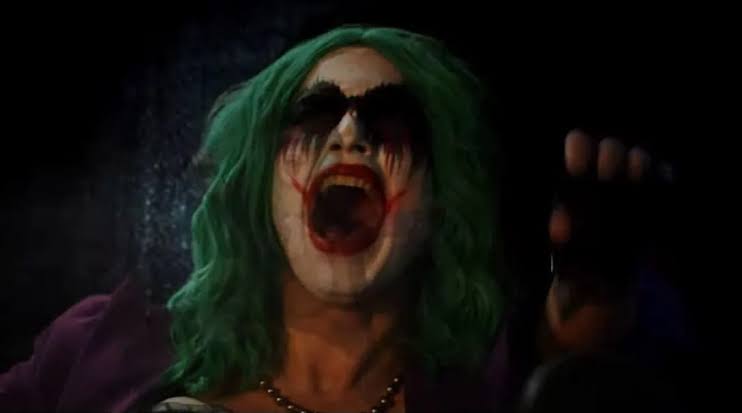
In the midst of preparing for the 2022 Fantasia Film Festival, one film stood out above many others. Fantasia always has its impressive share of science fiction, horror, and genre films, yet Vera Drew’s trans-superhero and metaphoric fable, The People’s Joker, was one that I, and I think a lot of other critics had at the top of their lists that year. Of course, we never got to see it. The night before it premiered at the Toronto International Film Festival, The People’s Joker director received a cease-and-desist letter from Warner Brothers and needed to pull the film over the legality of Vera’s use of their DC characters. It took a while, and it seemed for a moment that The People’s Joker would end up having its premiere on YouTube before it ever received a theatrical release. That would have been a shame, honestly.
Last year, Vera Drew’s The People’s Joker premiered at LGBTQ+ film festival OutFest in LA, and the outpouring of positive reviews has not stopped coming her way since. And this review is not about to stop the hype train, either.
The People’s Joker is sensational. It’s hilarious, witty, heartwarming, touching, poignant, and visually mesmerizing. Vera Drew manages to package her own experiences into the popularity of a comic book film. It is almost a joke in and of itself that Warner Bros. had to review the content of the movie before allowing its release. While DC fans are getting ready for Warner to somehow let them down with new Justice League tie-in films, Vera Drew has made the queerest and most satisfyingly original superhero film on a shoestring budget. Is comicsploitation a thing? Because I think it might be now.
Granted, if it wasn’t for Joel Schumacher and David Ayer’s panned Batman and Suicide Squad renditions, Vera Drew’s film may not even exist. Nevertheless, it’s impressive how this mockingly creative film utilizes green screen, cell animation, computer animation, and a host of other techniques filmmakers and audiences typically avoid to create an epic, larger-than-life, and one-of-a-kind moving portrait that resonates with heroes, villains, and comic-book lovers everywhere.
Vera Drew’s The People’s Joker is a bit autobiographical under the surface, telling it through a take-no-prisoners punk-rock fable. The underlying story about a child from Smallville struggling to find their true identity, their mother (Lynn Downey) who won’t listen, their absent father, and their dream of being a “jokeman” on a prestigious late-night comedy stage is intertwined with the familiar faces of Gotham City. In Gotham, comedy has been outlawed, yet the traditions of a late-night variety show that is glaringly Saturday Night Live, though never called that, entrances the young Joker (Griffin Kramer) to make their way to the big city. Joker (Vera Drew) finds that the late-night stage is really for elitist comedians who can afford it while taking numerous shots at Lorne Michaels.
Joker makes friends with The Penguin (Nathan Faustyn), and the two venture into creating an underground comedy club where more familiar villains and anti-heroes partake in the illegal act of telling jokes. While finding herself as a comedienne, Joker meets a fellow standup, Mr. J (Kane Distler), and the two begin a romantic relationship. Mr. J helps Joker realize she wants to become a Harlequin, and her transition comes in the most Batman-inspired way possible. An allegory that everyone painted as a villain doesn’t deserve demonization emerges.
Described as “an editor who thinks like a writer,” according to her IMDB and website biographies, I have to assume Vera Drew lives on the cusp of wanting to be a comedienne. She’s done voiceover work on Tim Robinson’s I Think You Should Leave and held multiple roles behind the camera on IFC’s Comedy Bang! Bang! And Adult Swim comedies like Tim Heidecker’s Beef House and a special Eric Andre episode known as KRFT PUNK’s Political Party! These are all comedic artists putting out some of their best work right now when other comedians worry about being canceled.
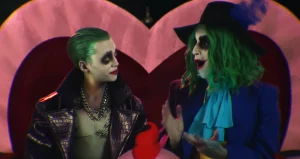
How, then, does The People’s Joker find a way to be achingly funny, searingly intelligent, and charming? Vera Drew’s style is everything. While her “saddest story ever told” bit in the film relies heavily on the trauma of others, the satirical aspects of numbing oneself with prescription drugs become a hefty indication of hurt people hurting people and central to the thematic abuse Joker the Harlequin reckons with. The topic of the film, as serious as it is, is told from the perspective of finally living out loud and finding some happiness while riffing on the cancel culture comedians who can’t get a laugh in the process.
Vera Drew has certainly learned more than a few things on her way to the director’s chair. Still, her commitment to telling this story with its comic book framing helps The People’s Joker feel inviting, like familiar ground for the cisgender crowd, though the film isn’t made to appease them. The film’s childhood aspects deal with the confusion of knowing the body you were born in isn’t representative of who you are. In a time when lawmakers are burning and banning books with LGBTQ+ themes and making it illegal to even say the word “gay” in certain states, Vera Drew’s The People’s Joker will be one of the most important films for many growing up and experiencing difficulty describing their gender-confusion. It’s also on a shortlist for one of my favorite movies of the year.
Leave a Reply