This review is going to feel like a time capsule of sorts. I’m constructing this article on January seventeenth, shortly after seeing Dada, and while the thoughts are still fresh in my head. But it feels kismet to have seen this film today, the day after David Lynch passed. Dada is a potent reminder of the stories that can be told through a surreal (or, in this case, Dadaist) narrative and abstract artistry. In his farewell to Lynch on this site, Andrew Grevas wrote about how Lynch paved the way for renegade filmmaking, and lo and behold, Aaron Poole’s Dada is certainly a mold-breaking independent film from the same cinema of the Avant-Garde. Dada is poignantly beautiful and gorgeously heartbreaking, a transcendent experience derived at the crossroads of childhood and adulthood.
The only thing you will find online about Dada is that it’s essentially a father-daughter road trip film about Kai (Ciara Alexys) and her father, Adam (James Gilbert), driving around the perimeter of a nuclear power plant in the days leading up to Kai’s sixteenth birthday. The two read books, discuss them, and play games where they pretend to ignore each other. Sometimes, it’s fun, though it later becomes upsetting. The whole concept sounds as if something is going to propel the film into an abject nightmare, and while that’s true in some ways, it doesn’t happen at all as you’d expect.

Let me be honest. I’m trying to tip-toe around giving anything about this film away, as it seems to be pretty damn effective that way. When I reached out to review Dada, I had secret hopes the nuclear power plant aspect was a hint about the film leaning into strange territory. Never in my life did I think I’d find one of my first favorites of the year. I wish I could properly dissect and divulge all of the infused nuances and minor setups that build upon each other and lead to the rapturous ending that superbly recalls teenage awakenings to our parents’ flaws. So, if you’re considering Dada for your viewing pleasure, prepare for a dramatic art-house genre film and not a radioactive sci-fi B-movie.
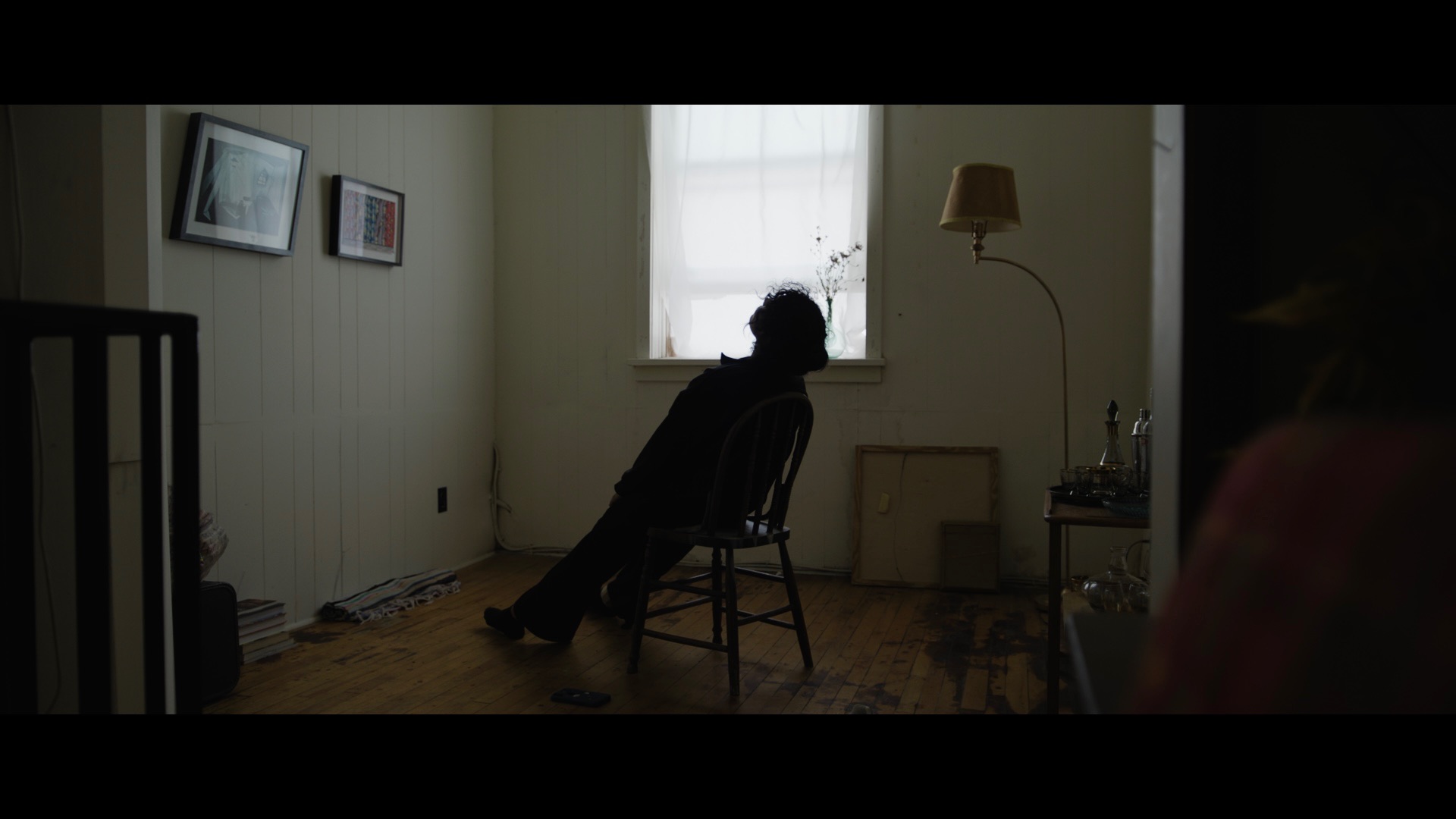
You may have seen the film’s director, Aaron Poole, at the start of 2020’s The Empty Man or as the star of Jeremy Gillespie and Steven Kostanski’s 2016 cosmic horror film, The Void. Dada is Poole’s feature-length debut behind the camera, and what a remarkable achievement. The imagery and sound design alone are enough to pull you in, but how they’re used within the confines of the story is extraordinary. This is where much of that relatability to Lynch comes in. Consider the close-ups of the severed ear or the sound of the bugs fighting just underneath the grassy surface in Blue Velvet. They’re designed to inform just as much as they’re there to make you feel uneasy. Poole, who also wrote the film, designs many of Dada’s scenes similarly, as it’s meant to evoke emotional connections to familiar sensations rather than follow a typical plot structure.
Ciara Alexys’ multifaceted performance should also be praised. The actress is just starting to make a name for herself, lending her voice talents to kids’ show Luna Petunia, and momentarily featured in Lifetime’s The Gabby Douglas Story as a young version of the Olympic gold medal winner. Dada is the first starring feature for the young actress, who showcases her talents and charms through magnificent father-daughter chemistry alongside Saw VI actor James Gilbert. Alexys makes Dada a compelling watch, especially as the relationship between the characters starts to deteriorate. That affects Kai in a variety of fascinating ways as Kai begins to see things differently, and the audience is allowed to see them, too.

Communication is critical throughout the film. The games where Kai pretends her father doesn’t exist and asks if he’s there rest in parallel to the silent alarm being tested daily by the nuclear power plant. However, it’s the breakdown of communication, as both will occasionally say things to each other that don’t make sense to the audience or the characters, that is just as important—a differentiation in hearing versus listening. Adam’s demeanor toward a group of guys walking through the area is filled with camaraderie, though it doesn’t seem suited to how we’d seen him with Kai prior to that. Adam presents himself as more adult-oriented as Kai pours her attention into something else. These little moments stay with Kai as she tries to make sense of her relationship with her father.
Complex sentiments are built into this film: a parent manipulating narratives, the thin membrane of trust between parents and their children, and the existentialism in uncovering hypocrisy from someone meant to teach you right from wrong. It’s all set up against the ominous backdrop of a nuclear power plant, which provides an enthralling atmosphere in all of this as Kai comes into her own. While we often consider films like this “coming of age” stories, we rarely consider the adults in the story. Dada considers the psychological damage parents inflict when obscuring the truth and absurdly trying to control how fast a child grows up.
A true marvel of how we remember an event before, during, and after the truth about someone we revere is revealed, Dada is sensationally realized as it finds itself at an intersection where the events of the film are seen from a place of youthful nostalgia, teenage resentment, and adult trauma all at the same time. Like any piece of art we fondly remember and return to later, things can look different, warped, or distorted. Dada isn’t your typical narrative feature. Because of that, some viewers may have trouble understanding the film as it comes to a close.
As I said before, Dada seeks to strike a chord with audience memories of their own familial epiphanies. Some won’t understand Kai’s actions, why Adam’s pleas to stop have little effect on her, or what the nuclear plant and a historic kiln fire mean in relation to any of this, which is part of its mysterious allure. In some respects, I think the film is more of a traumatic psychological incarnation of 2024’s Good One, which bridges many of the same themes in a similar setting.
However, I maintain that Lynch fans will fall for Dada’s originality, beautiful imagery, and innovative, emotionally resonant storytelling techniques. This movie is unlike anything else out there and packs a wallop for those willing to give it the attention it deserves. I, for one, hope we get more films like this in the future that are true works of art, garnering a visceral reaction by cinematically capturing an uncomfortable and often overlooked moment that typically becomes blocked out—one that’s waiting to be addressed, just under the surface.
Leave a Reply