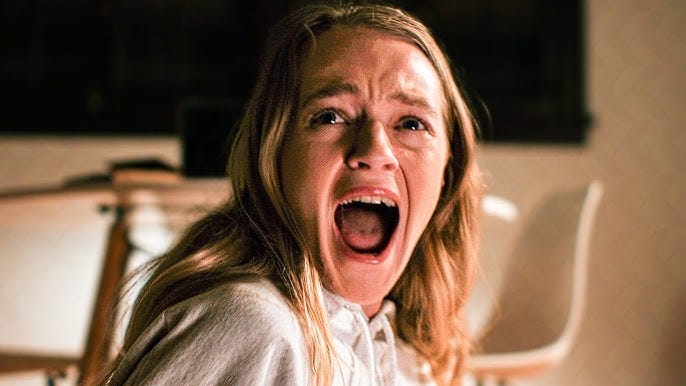
No two things are as intertwiningly paradoxical as Christianity and guilt. When I think of God, I think of the belief first—a relationship with the mystical pieces of the universe. This is something none of us can prove or deny: belief is immutable. While watching Matt McClung’s Inhabitants, I was surprised to see similar thoughts on display. The film, about a crystal-adorned new-age woman (Stranger Things’ Anna Jacoby-Heron) moving in with her lapsed catholic boyfriend (American Sports Story’s Josh Rivera), has a lot to say about belief, particularly when punishment is such a substantial part of Biblical theology from a religion that promotes itself saying “Jesus is Love,” but is very quick to demonize acts of love as hedonistic and become dismissive of other belief systems.
Writer-Director Matt McClung quickly tosses us into the deep end of these values as we watch the couple move in together, throwing in an unwanted box of childhood religious effects sent by Francis’ (Rivera) mother. Meanwhile, Olivia (Jacoby-Heron) aims to get a job from local metaphysical storekeeper Denny (Kevin Nealon). The pronounced gap between imbuing crystals with energy clashes with religious ideals. However, the two seem content with their individual beliefs, neither putting stock in the Christian elements until it becomes clear something is haunting them, causing Francis to reexamine his Catholic abandonment.
After several nights of restlessness caused by Francis’ stirring, sleepwalking, and talking in his sleep, their troubles come to a head through a violent self-infliction that causes them to discontinue bedroom intimacy, followed by a seriously haunting display of paranormal activity that turns the couple’s world upside down. Looking for guidance, each reaches out to their spiritual advisors for guidance on what to do next, leading to dissonance in their relationship.
A ghost story on the surface, McClung gets a lot of points for pitching this conversation because it isn’t an easy one to broach in the current climate. Inhabitants is ultimately about belief systems and how not everyone shares the same religious or theological beliefs. The film arrives on VOD just in the wake of the White House establishing the “Faith Office” working against “anti-Christian bias” (which I will remind you is unconstitutional based on First Amendment rights). While the movie isn’t exactly anti-Christian, it’s more than a little satirical to the tropes of horror films that exclusively consider Catholic spiritual practices in a world with approximately ten thousand distinct religions.
Olivia’s beliefs in crystals may not be a belief I align with, but then again, neither is Catholicism. But, when in Rome, or, in this case, while searching for ways out of the haunting, I’d be willing to dabble in them all. Essentially, that is the way the film starts to go, ultimately revealing Francis’ incredulity of Olivia’s new age assertions before pulling a thirteenth-hour one-eighty on Catholicism in hopes of returning to the religion and owning his guilt for an accident involving the death of a youth pastor will allow him to resume his everyday life, even if it means losing Olivia.
McClung is effective in pressing on the horror elements at the right time. The isolated cabins of an abandoned campground at the end of the film and the sound elements surrounding bodily grooming will resonate and carve out a nook in your brain to remember these scenes when brought up in conversation. McClung also fills the void with guilt. A notebook page lists Francis’ irrational sins and shows the mindset of someone committed to their religion at the time it was written, while his mother’s burdensome box of religious aggregations, Olivia’s crystals, and the haunting itself leads to subtext navigating a one-eighty back to devout behavior to save himself, even if he doesn’t know if he fully aligns with the religion. Guilt and fear drive him back. Olivia doesn’t have that problem. She’s unapologetically herself and calls Francis out for crawling back to a religion that she knows he doesn’t believe in.
Yet, one glaring issue hit me right away. Olivia’s beliefs align with Paganism or Wicca, which historically have been undermined by Christianity, even if it adopted many of their traditions (Christmas trees, Easter eggs, etc.). St. Patrick, for example, is said to have driven the snakes out of Ireland, a place scientists say had no snakes. The snakes, which biblically represent evil (looking at you, Garden of Eden), are likely to metaphorically represent Druids and/or Pagans, as St. Patrick is also credited with bringing Christianity to Ireland. And it seems a more brazen unfurling of religion may have been brimming on the surface. Even the youth pastor angle is poised to make McClung’s story darker, but Inhabitants plays it safe and stays out of the Spotlight, so to speak.
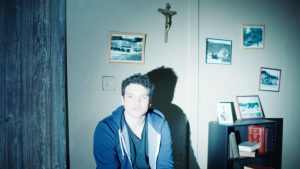
Additionally, much of the film’s first act is heavy with unnecessary transitions between exposition pieces. The film’s second act is frustratingly antagonizing, making Inhabitants somewhat challenging to get through for both believers and non-believers, especially as Oliver grants the keys to his spiritual reawakening to his passive-aggressive mother (Ana Auther). Inhabitants isn’t unlike anything we’ve seen before, but it is trying to come from a place of understanding and tolerance. The sort of “Whatever you believe, don’t be a dick” message Heretic supplied.
The lead actors are a hell of a find, too. Both are individually skilled, though their chemistry together could be better. Not everyone is going to like Inhabitants. I’m on the fence myself. I admire the message, and McClung is guaranteed to stir up the audience and create conversation with the Inhabitants. Still, it is relatively generic, mashing up concepts from The Exorcist to The Conjuring and differentiating itself through religious subtext. McClung has an eye for crafting a scene, and some incredible shots in the film show off cinematographer Pearce Healey’s abilities. Inhabitants isn’t a bad movie, but I would’ve liked to see its less inhibited concept.
Leave a Reply