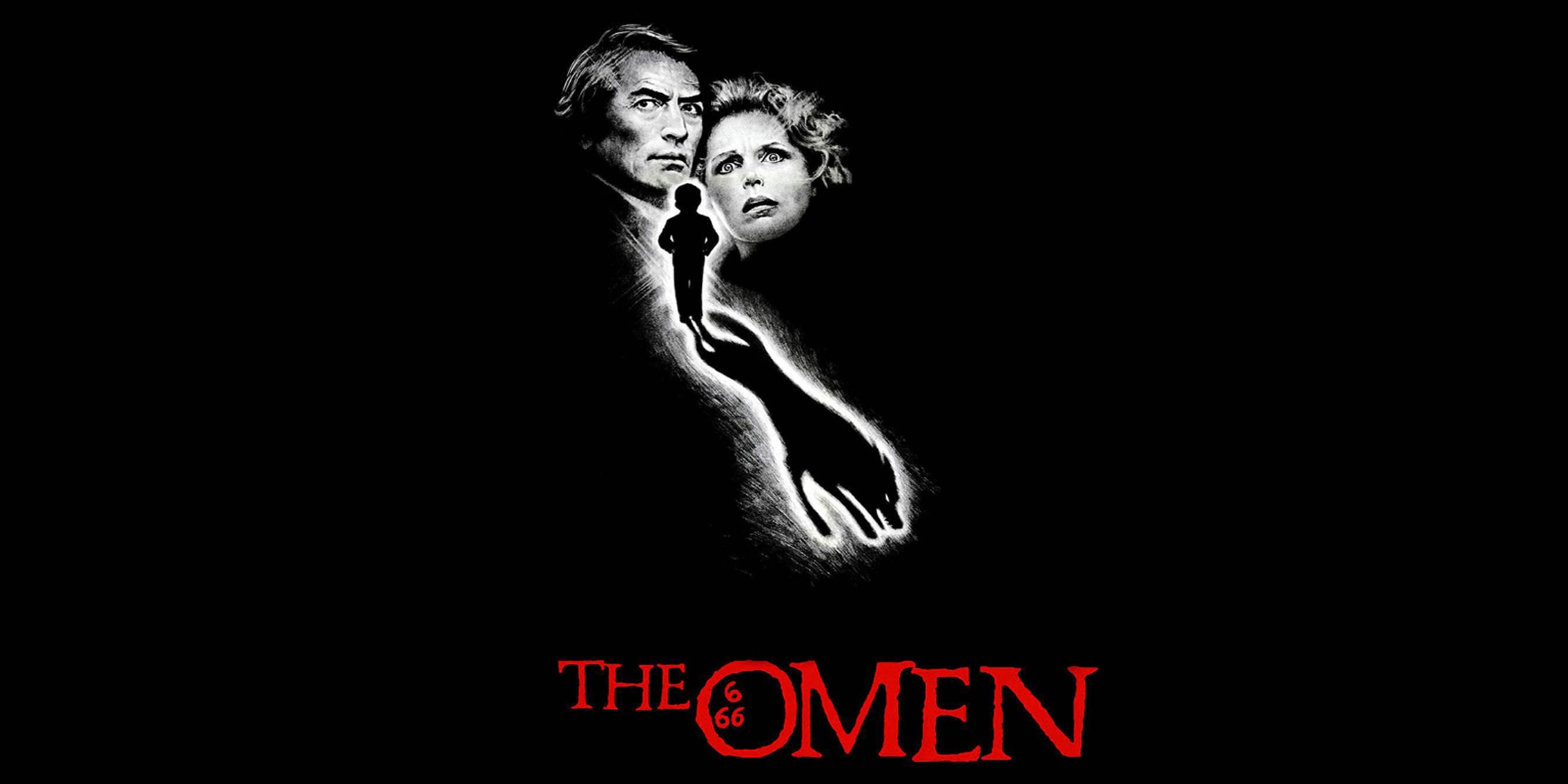
There are a few hills, as a writer, I will die on. For example, Ed Wood is the greatest director to ever live because he was so terrible at what he did, Sophie Thatcher can become the next big scream queen if she decides to stick it out in the genre, and The Omen remains the most chilling entry in the unholy child subgenre. And it has nothing to do with the creepy kid tropes that modern horror has beaten into a bloody pulp. No, it’s because it understands something that modern horror seems too terrified to admit: Evil doesn’t always come for us with a snarl and a green-pea-soup spray. Sometimes, it arrives with a trust fund, a diplomatic passport, and a smile that says it owns the world.
Every time I see some elevated horror fanboy praising yet another movie because it’s a metaphor for some garbage they read on Psychology. com, instead of because about 14 people had their heads lopped off, I want to scream. The Omen looks at that sensitive, therapeutic nonsense and laughs. This isn’t a movie about a troubled family. It is a movie about the absolute sovereignty of Fate. It is about pure fucking evil manifested as a political inevitability. If you think you can negotiate with Damien Thorn, you’re as delusional as the critics who think a movie needs a social-justice thesis to be important. The message is simple: the end of the world will be televised, and it will be brought to you by the people you voted for.
The Horror of the Global Elite
I see The Omen for what it truly is: a tragedy of lineage and the corruption of the aristocracy. While most horror movies of the 70s were rooted in the grit of the streets or rural America—think Texas Chainsaw Massacre —director Richard Donner took us into the gilded cages of the global power structure. Robert Thorn (Gregory Peck) is a man who has everything—influence, wealth, a beautiful wife—and his fatal flaw isn’t malice; it’s his desperate, cowardly desire to maintain the status quo.
The hospital scene in Rome is where the rot begins to take hold. Thorn’s decision to swap his dead son for an orphan isn’t just a plot point; it’s an act of supreme arrogance. It’s the belief that you can bypass the natural order of life and death through a backroom deal. The lighting in these early scenes is warm and golden, but it feels like the gold on a funeral casket. There is a strange, almost biblical, current under the surface: the Antichrist wasn’t born in a gutter. He was born into the very institutions we are taught to trust.
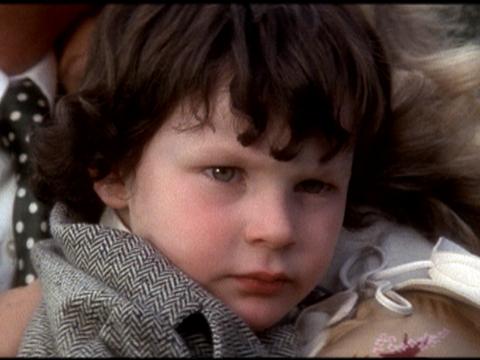
By placing the Prince of Darkness in the heart of the American embassy, the film instantly gives Damien total infiltration. It reminds us that the most dangerous predators don’t live in the woods; they live in the suburbs of London and the halls of D.C. They wear velvet suits and attend birthday parties where the nannies hang themselves from the roof. It suggests that evil is not an intruder in our society; it is the landlord.
The Rube Goldberg of Hell
To paraphrase Salt n’ Pepper: Let’s Talk About Death (Baby), because this is where The Omen establishes its distinctive, rhythmic, and dramatic authority. These aren’t slasher kills. There is no masked killer chasing people through the night with a machete. Instead, the film presents a universe that has been weaponized against the protagonists. I call this mechanical providence (because I like to show off the fact I know big words whenever I can)—the idea that once you are marked by Damien, the laws of physics themselves become your executioner.
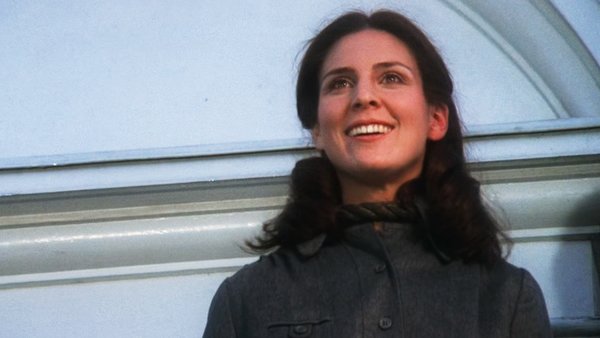
Think about the lightning rod that impales Father Brennan. Think about the sheet of glass that decapitates Jennings (David Warner). Think about the tricycle that knocks Katherine over the railing.
They suggest a cold, calculated inevitability. When Jennings is decapitated, it isn’t a cheap shock. It is the literal, physical manifestation of a prophecy fulfilling itself. The glass doesn’t just fall; it operates with a surgical, ideological conviction. It treats the human body as something fragile and expendable in the face of a cosmic clock that is ticking toward midnight.
Donner’s background in high-stakes action gives these scenes a weight and a momentum that modern studio garbage can’t replicate. There is no CGI here to soften the blow. It is the viscious beauty of practical effects—the weight of the real glass, the coldness of the lightning rod. It’s the soul of the film. It tells the audience that your morality won’t save you from gravity or momentum. When Hell wants you, it doesn’t need a demon; it just needs a loose screw or a well-timed gust of wind.
Geographic Necromancy
We must also address the geographic necromancy at play. See, big words. The film moves with a ceremonial gravity from the ancient, dusty streets of Rome to the sterile, stone-cold hallways of the London embassy, and eventually to the desolate ruins of Megiddo. This isn’t just travelogue; it is a mapping of the Devil’s conquest.
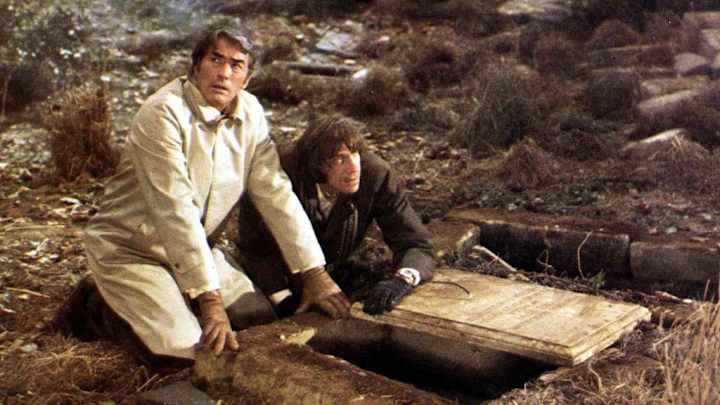
The scene at the cemetery in Cerveteri is the black, poisoned heart of this geography. When Robert Thorn and Jennings descend into the crypt, they aren’t just looking for a body; they are looking for the truth of our existence. Finding the remains of the jackal is the ultimate middle finger to them. It is a biological sacrilege. It proves that Damien is a rupture in the natural order—a beast born of a beast to rule over men.
I love the grit of this scene. The snarling dogs—Rottweilers that famously turned so aggressive they nearly mauled the stuntmen—provide a sharp contrast to the velvet-lined world of the embassy. It strips away the pretense and shows us the marrow of the prophecy. This architecture of the profane suggests that Robert Thorn is trapped in a maze built by the Hell itself. Whether he is in a cathedral or a modern apartment, he is surrounded by the stones of a world that has already chosen its king. Every location is a station of the cross in reverse, leading him inevitably to the moment where he must choose between his son and his soul.
The Sonic Inversion: The Liturgy of Jerry Goldsmith
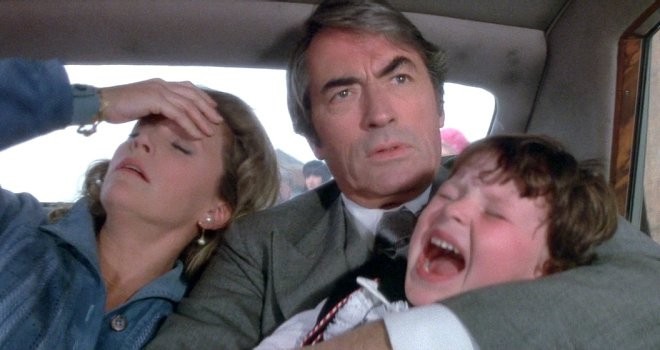
If The Exorcist attacked the nervous system with the sound of the abattoir, The Omen attacks the spirit through the corruption of the sacred. Jerry Goldsmith’s score—specifically Ave Satani—is the work of Lucifier in musical form. It is a brilliant, confrontational inversion of the Gregorian chant.
This isn’t just spooky music. It is a formal, rhythmic, and dramatic declaration of war. Goldsmith, working with a London choirmaster, took the rite of consecration and turned it into a rite of desecration. The lyrics—Sanguis bibimus, Corpus edimus (We drink the blood, we eat the body)—are a direct, visceral inversion of the Latin Mass. When that choir kicks in, you aren’t just watching a movie; you are witnessing a Black Mass performed for a global audience. It provides the sense that we are participating in a ritual that began long before the cameras started rolling. The music acts as the rejection of the characters’ denial. While Robert Thorn tries to act like a rational man, the score tells us the truth: he is a man walking through a graveyard, and the dead are already singing his name. It is the sound of the abyss looking back at the listener and laughing.
The “Curse”
We cannot have an honest conversation about The Omen without addressing its “cursed” production.
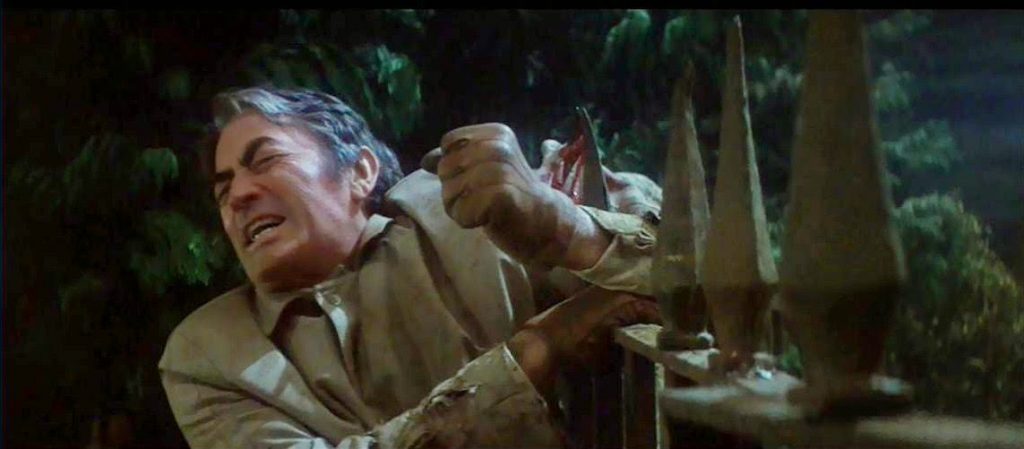
The incidents are documented, repeated, and unsettling enough that even skeptics lower their voices when recounting them: Gregory Peck’s plane was struck by lightning while he was flying to London. Three days later, writer David Seltzer’s plane was also struck. Then executive producer Mace Neufeld’s plane was hit. Producer Harvey Bernhard was nearly struck by a bolt on set in Rome. A restaurant where Peck and Neufeld had reservations was bombed by the IRA; a hotel where Donner was staying was also bombed.
And then there is the dark heart of the curse: John Richardson, the special effects designer who built the decapitation scene. On Friday, August 13, 1976, while working on A Bridge Too Far in the Netherlands, Richardson was in a head-on collision. His assistant, Liz Moore, was decapitated in a manner that eerily mirrored David Warner’s death in The Omen. Richardson reportedly stumbled from the wreckage and saw a road sign: Ommen, 66.6 km.
Are these just coincidences?
Of course they are. Curses aren’t real. Grow up.
But they do make for a very entertaining yarn.
The Failure of the Father
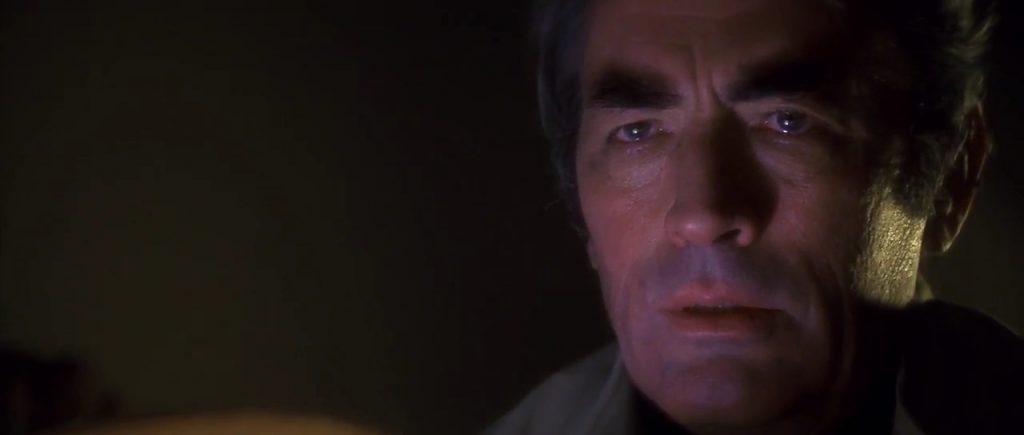
Robert Thorn is the ultimate symbol of the safe world’s failure. He is a man who is too civilized to do what needs to be done until it is too late. His morality and his desire to protect his status leads to the end of the world. He had the Seven Daggers of Megiddo in his hand, and he hesitated because of a human attachment to a creature that had none.
Harsh? Perhaps, but you should see this as a warning: when you are facing a force of uncompromising resistance, your hesitation is a death sentence. You cannot defeat the ungodly with moderate solutions. You cannot negotiate with a predator that sees you as nothing but a stepping stone to the throne. Thorn’s failure is a direct indictment of the liberal, secular world that thinks it can reason with evil.
Final Thoughts
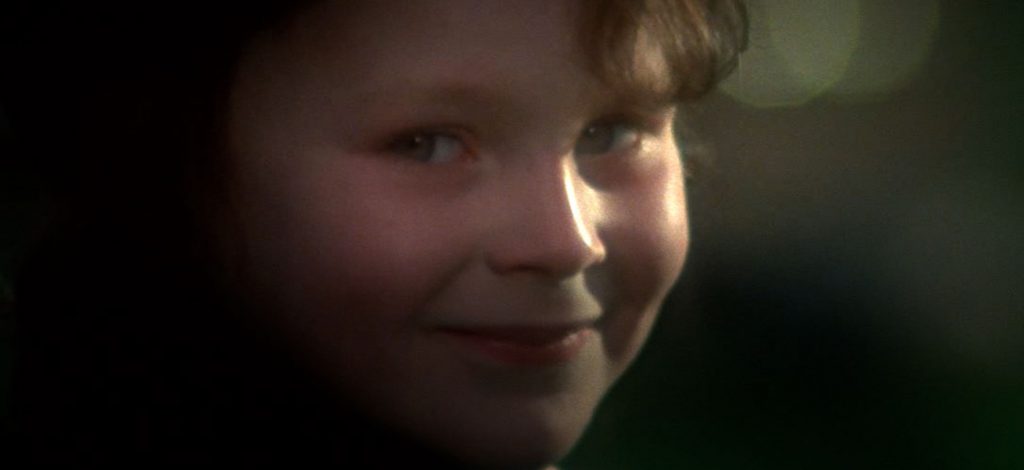
The ending of The Omen is one of the most unapologetic moments in cinema history. Robert Thorn is dead, the good guys have failed, and Damien is standing at the grave of his parents, holding the hand of the President of the United States.
He looks back at the camera and he smiles.
Little shit.
Damien is mocking the audience’s hope for a happy ending. He acknowledges that we, the spectators, have watched the coronation of the end. It is a direct, confrontational connection that says: “The game is over, and you lost.”
People think that because The Omen has a big Hollywood feel, it’s not raw. But there is a spiritual core to the inevitability of this film that is more terrifying than any gross-out slasher. It is the reminder that power is the ultimate camouflage for the profane.
Horror doesn’t get more dangerous than that. Not the monster in the shadows—but the one already seated at the table, smiling for the cameras.
Leave a Reply