
The Abominable Dr. Phibes is pure, unfiltered chaotic genius. A world where revenge is measured in mechanical organs, brass animals, and the kind of set design that looks like Salvador Dalí went on a shopping spree with a draftsman from Metropolis. Released in 1971, Robert Fuest didn’t care about realism, grit, or subtlety, he cared about spectacle, rhythm, and style. This is a film where the architecture, the colors, the props, and even the lighting feel like characters in their own right, each conspiring with Vincent Price’s Anton Phibes to create a nightmare that’s equal parts hilarious, horrifying, and hypnotic. Buckle up, because this isn’t a movie you watch, it’s a world you step into, and once you’re in, there’s no turning back.

The Art Deco Architecture of Agony
When I talk about wonderful filmmaking, I’m talking about The Abominable Dr. Phibes. It is the benchmark. This film is a visual assault in the best way possible. Released in 1971, it arrived at a time when the horror genre was shifting toward grit and realism, yet Robert Fuest decided to go in the complete opposite direction. He gave us a film that looks like it was designed by a committee of mad architects, 1920s fashionistas, and high-opera set designers.
The production design isn’t just a backdrop; it’s breathes and pulses with Phibes’ own vengeful heart. The landscape of his underground lair is a vividly colored, Art Deco fantasy. Every curve of the architecture and every splash of purple and gold light is intentional. It creates a rhythmic, visual language that tells us everything we need to know about Phibes: he is a man of extreme discipline, extreme wealth, and extreme insanity.
This isn’t the shaky cam horror of the modern era. Fuest uses wide, sweeping shots to let the audience soak in the sheer ridiculousness of the production. From the mechanical Clockwork Wizards band to the sprawling pipe organ that Phibes plays with frantic intensity, the film embraces a more is more philosophy. It’s a twisting of aesthetics, mixing the silent film era’s theatricality with the 1970s obsession with camp and color. It’s filmmaking that prioritizes the experience of the macabre over boring, grounded logic.
Vincent Price: The Master of the Silent Snarl
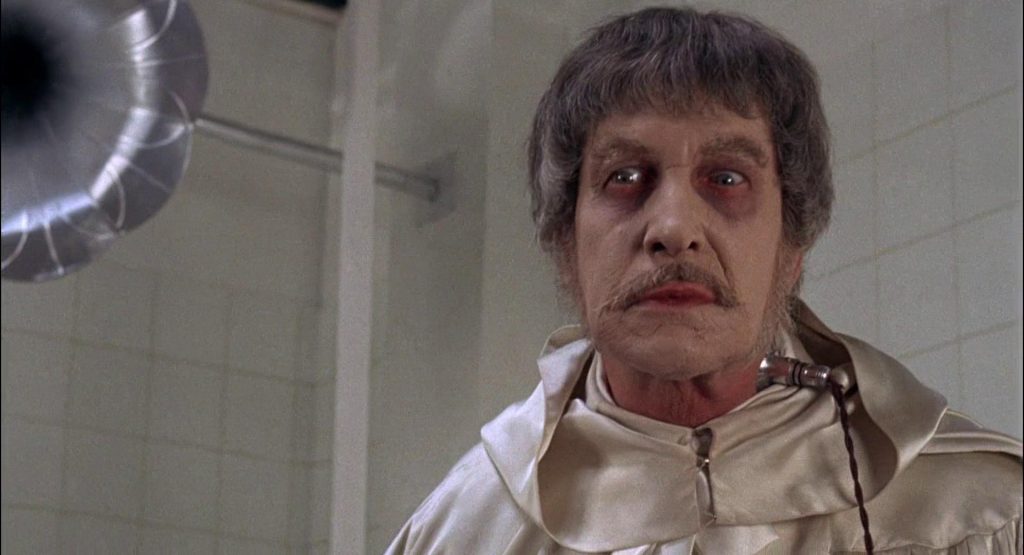
We have to do a deep dive into what is arguably Vincent Price’s most challenging and brilliant performance, next to the Witchfinder General, Anton Phibes. Price is playing a man who survived a horrific car crash only to be left hideously disfigured and unable to speak. His voice is projected through a gramophone needle plugged into a port in his neck. Because of this, Price spends the entire film behind a prosthetic mask, unable to move his lips.
This is where the 70s horror meets legendary acting. Price has to convey a world of grief, aristocratic snobbery, and murderous rage entirely through his eyes and his physical posture. It’s a masterclass in gleeful absurdity and theatrical terror. Watching him tilt his head with a predatory curiosity or sip champagne through a tube in his neck is both hilarious and deeply unsettling.
The rhythm of his performance is fascinating. He moves with a stiff, courtly grace, like a man who has practiced his vengeance in a mirror for years. When he sits at that organ, he isn’t just playing music; he is conducting a symphony of death. The commitment Price brings to a role where he can’t even use his most famous asset, his voice, is what makes me adore this film. He brings a sophisticated wit to a man who is essentially a walking corpse, proving that you don’t need dialogue to be the most charismatic person in the room.
A Symphony of Biblical Slaughter: The Ten Plagues
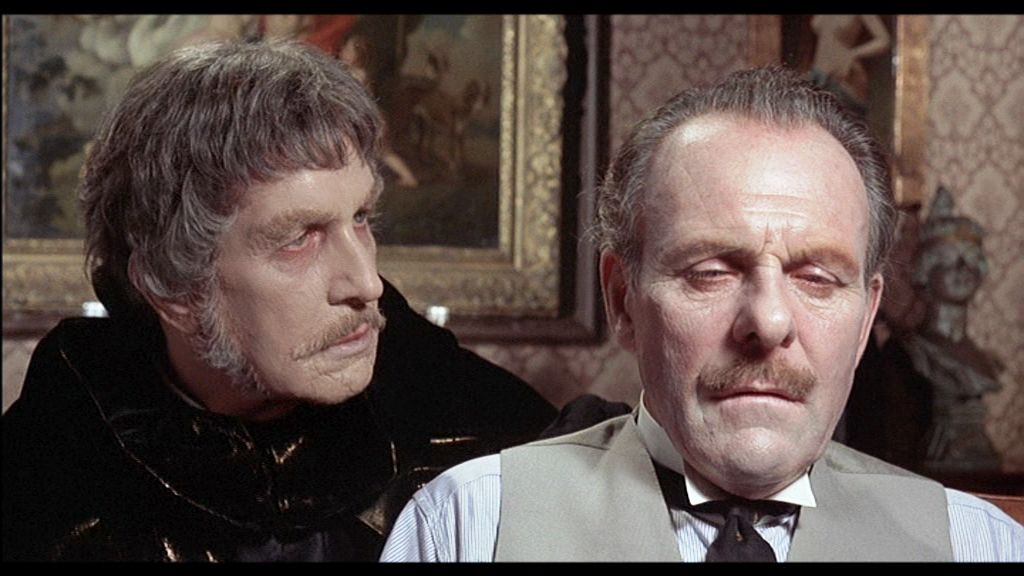
The structural brilliance of Dr. Phibes lies in its commitment to a theme. Phibes isn’t just killing the doctors who failed to save his wife; he is executing them according to the Ten Plagues of Egypt. This allows the film to indulge in some of the most creative, high-fidelity practical effects of the era. Each death is a self-contained work of dark art, a wonderful display of production ingenuity.
Let’s break down my three favourites:
The Curse of the Bats: The film kicks off with a doctor being swarmed by bats in his sleep. It’s a classic trope, but Fuest films it with a frantic energy that sets the tone for the chaos to come.
The Curse of the Frogs: This is a fan favorite for a reason. At a high-society masquerade ball, a doctor is fitted with a brass frog mask that slowly tightens, crushing his skull. The visual of the ornate, unblinking frog head is peak cult horror geek fuel. It’s stylish, it’s absurd, and the execution is flawless.
The Curse of the… Unicorn? : Perhaps the most out there kill in the film, and my undisputed champion, involves a brass unicorn head launched from a catapult through a door to impale a doctor in his study. It is the apex of darkly theatrical spectacle. It makes no logical sense, but in the world of Phibes, it is the only logical conclusion.
Each of these kills is a beat in a larger composition. The film doesn’t rush them; it savors the setup, the mechanical precision of the trap, and the final, flamboyant payoff. It prioritizes the fun of the production over deep philosophical analysis, leaning into the frantic joy of seeing how Phibes will top his last performance.
Vulnavia: The Ethereal Strange Visitor
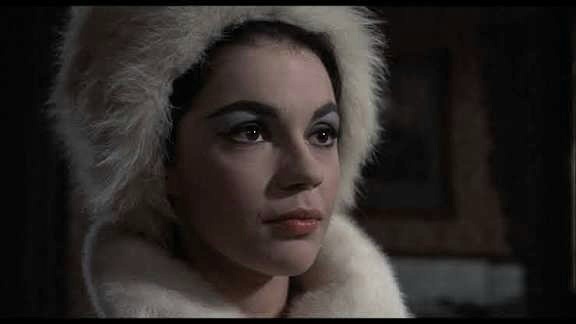
No discussion of Phibes is complete without Vulnavia, played by Virginia North. She is the silent muse to Phibes’ madness, a woman who moves through the film with the grace of a clockwork doll. Much like Phibes, she never speaks, but her presence is felt in every frame.Her wardrobe alone is a jaw dropping. She appears in a constant rotation of avant-garde 1920s headgear, furs, and silks that look like they were pulled from the pages of a high-fashion magazine from a parallel dimension. She is the strange visitor in this narrative, an enigma who assists Phibes in his most gruesome tasks with an air of detached, artistic elegance.
The relationship between Phibes and Vulnavia is never explained, and it doesn’t need to be. Their chemistry is purely visual. Whether they are dancing a lonely waltz in the lair or she is helping him adjust his prosthetic face, there is a sense of shared, silent history that adds a layer of tragic beauty to the film. She represents the world Phibes lost, a world of beauty and art, now weaponized for revenge.

The Police: A Dry-Witted Counterpoint
To balance out the high-drama and neon-lit insanity of Phibes’ lair, the film gives us the grounded, cynical world of Scotland Yard. Peter Jeffrey as Inspector Trout is a stroke of casting genius. He is the everyman caught in the middle of a maddening conundrum of a case.
The dialogue in these scenes is sharp, dry, and quintessentially British. While Phibes is playing a pipe organ and summoning rats, Trout is dealing with bureaucratic incompetence and doctors who are too arrogant to believe they are in danger. This creates a fantastic counterpoint to the film, alternating between the slow, theatrical horror of Phibes and the fast-paced, witty frustration of the police investigation.
It provides a necessary release valve for the tension. We laugh at Trout’s deadpan reactions to the increasingly bizarre crime scenes, which only makes the death scenes hit harder when we switch back to Phibes. It’s a mixture of procedural drama and Grand Guignol horror that shouldn’t work, yet it feels perfectly balanced.
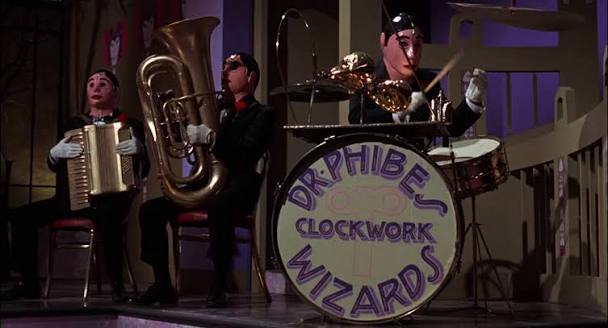
The Clockwork Wizards and the Mechanical Organ
One of the most iconic elements of the production is the Dr. Phibes Clockwork Wizards, an animatronic band that plays upbeat jazz and ballroom music while Phibes prepares his various instruments of death. These aren’t just props; they are a testament to the attention to detail that Robert Fuest demanded.
The movement of the mechanical musicians adds a layer of creepiness to the lair. It reinforces the idea that Phibes has completely replaced the living world with a clockwork imitation. The rhythm of the music, often cheerful and bouncy, contrasts sharply with the gruesome nature of the kills, creating an irreverent, darkly comedic atmosphere that I absolutely adore.
And then there is the organ itself. Rising from the floor on a hydraulic lift, bathed in colored light, it is the center of Phibes’ universe. The way Price plays it, with his whole body leaning into the keys as if he’s trying to squeeze the very soul out of the instrument, is high-energy cinema at its best. It’s a visual and auditory feast that defines the midnight movie experience.

A Legacy of Art-Deco Death
Ultimately, The Abominable Dr. Phibes is a triumph because it is a movie that knows exactly what it wants to be. It doesn’t apologize for its campiness, nor does it shy away from its genuine sense of tragedy. It is a bold, uncompromising vision of revenge that treats horror as an aesthetic choice rather than just a series of jump scares.
It works so well because it is cohesive. From the costumes to the kills to the mechanical parakeets and clockwork bands, everything feels like it belongs to the same fever dream. It celebrates the joy of the practical effects era while layering it with a level of sophistication and wit that is rare in the genre.
It’s the kind of movie that reminds us why we love cult horror. It’s fast-paced, it’s gorgeous to look at, and it features a legendary actor giving one of his most unique performances. Whether you’re geeking out over the frog mask or the way Vincent Price glares at a doctor through a hole in the wall, there is something in Dr. Phibes for every lover of this thing of ours. It hits like a jolt of electricity straight to the brain, a neon-soaked, gleefully twisted masterpiece that still dazzles, terrifies, and delights exactly as it did back in 1971.
Leave a Reply