In 1973, William Friedkin’s The Exorcist didn’t just win at the box office; it fundamentally altered the DNA of the horror genre. It was a cold, terrifying kick to the kadiddlehoppers, that fucked up a generation of movie-goers. So, when Warner Bros. sat down to plan the sequel, they had a choice: they could double down on the grit, or they could hire John Boorman (Deliverance) to turn the franchise into a metaphysical, psychedelic, globe-trotting odyssey about Good vs. Evil locusts.
They chose the latter. And in doing so, they created one of the most fascinatingly expensive failures in the history of cinema. This isn’t just a bad movie; it is a masterpiece of misguided ambition. It is the a movie I genuinely love because it tries so hard to be classic, and misses the mark so spectacularly that you would think it was made on a drunken bet.
The Directorial Mutiny: John Boorman vs. The Devil
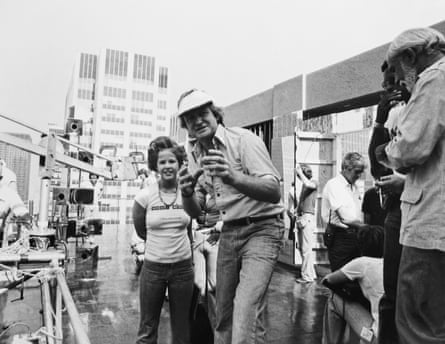
To understand why this movie feels like it was written by an alien who once had a fever dream about Catholicism, you have to look at John Boorman. Boorman was openly critical of the original film and wanted to take the sequel in a more spiritual, metaphysical direction. Most directors would take that as a sign not to touch the film with a 12 foot barge pole, but Boorman took it as a challenge to fix the franchise.
He wanted to replace the pea soup with poetry. He wanted to replace the crucifix with technology. He turned the Exorcist II into a sequel that is actively hostile toward its predecessor. It’s like a child who burns down their parents’ house because they didn’t like the wallpaper. You have to admire the sheer, unadulterated gall of a man who takes a possession franchise and decides the real villain is a lack of telepathic communication.
The Plot: A Telepathic Travelogue
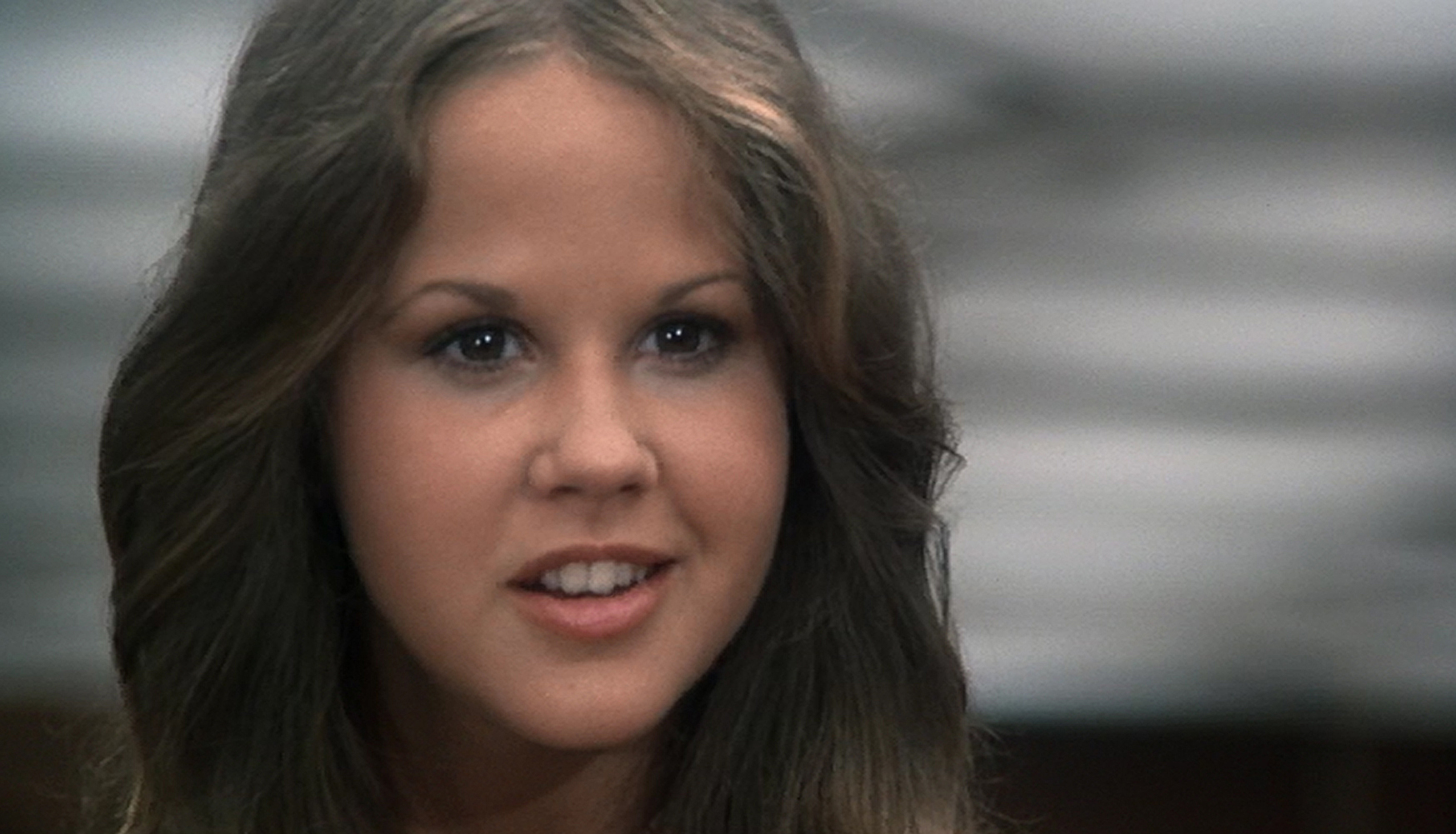
We pick up four years later. Regan MacNeil (Linda Blair) is now a teenager living in New York. She looks healthy, she’s tap-dancing, and she’s undergoing observation at a high-tech psychiatric clinic run by Dr. Gene Tuskin (Louise Fletcher).
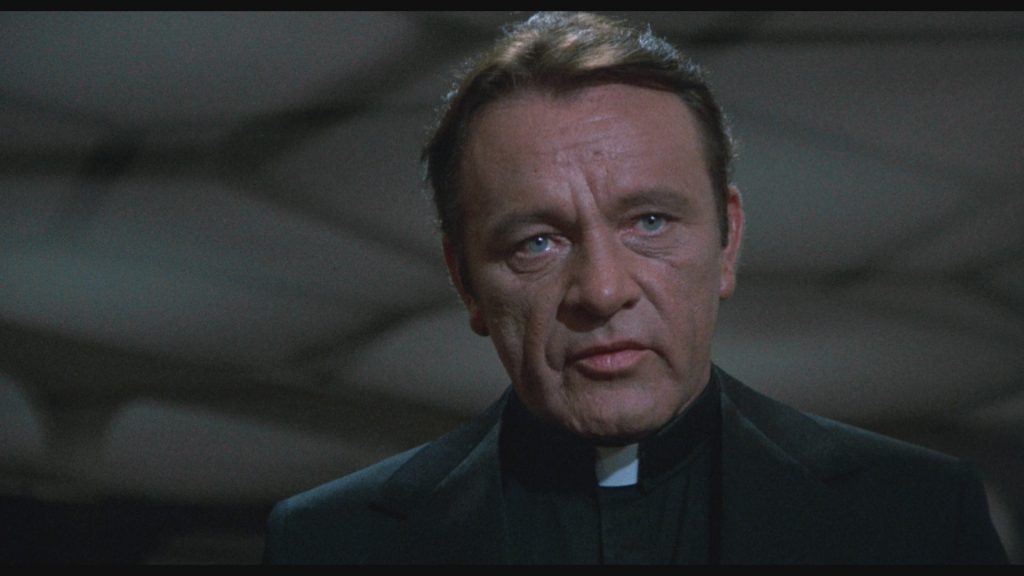
Enter Father Lamont (Richard Burton). Lamont is a man who carries the weight of the world on his shoulders, mostly because he’s played by Richard Burton, who carries the weight of every drink he’s had since the 1950s. The Church is worried that Father Merrin (Max von Sydow, returning in flashbacks) was a heretic because of his fascination with an African boy named Kokumo who survived a demonic possession.
Lamont’s mission is to find out the truth. But instead of reading books or praying, he decides to use the Synchronizer.
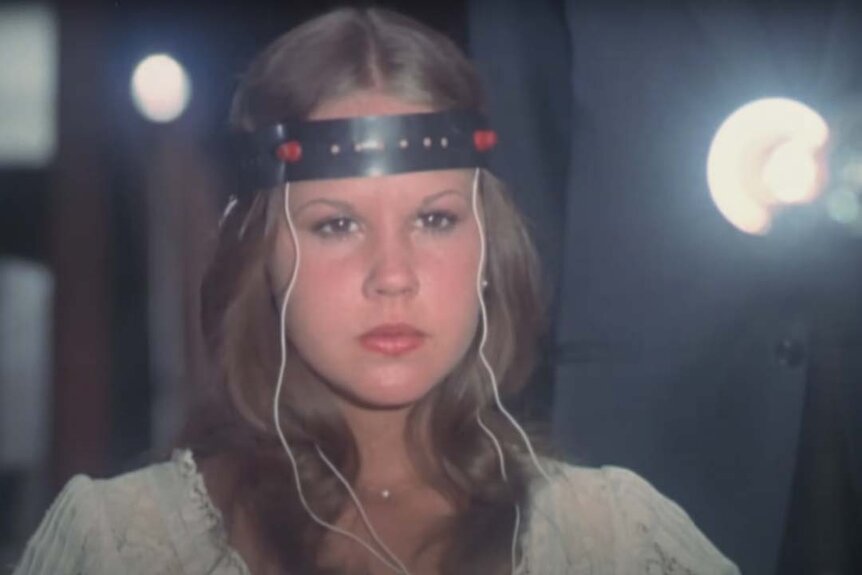
The Synchronizer: The Ultimate 70s Gadget
If there is one thing that defines the ridiculousness of this film, it is the Synchronizer. In the 1970s, people were obsessed with biofeedback, ESP, and the idea that technology could bridge the gap between souls. Boorman leans into this hard.
The Synchronizer consists of two silver headbands connected to a box with a strobing light. When two people wear them and stare at the light, their heartbeats sync up, and they enter a shared telepathic state. Which would be fine and dandy if the Synchronizer didn’t look like a prop from a low-budget Star Trek rip-off.
The effects here are minimal, just a blinking light and a thrumming sound, but the narrative damage is massive. It takes the supernatural element of the first movie and turns it into a clinical science-fiction experiment. Every time they sync up, the movie shifts into a dreamscape that looks like a progressive rock album cover. It’s so absurd you can not help but revel in its absurdity. You can almost see the cult value rising with every blink of the LED.
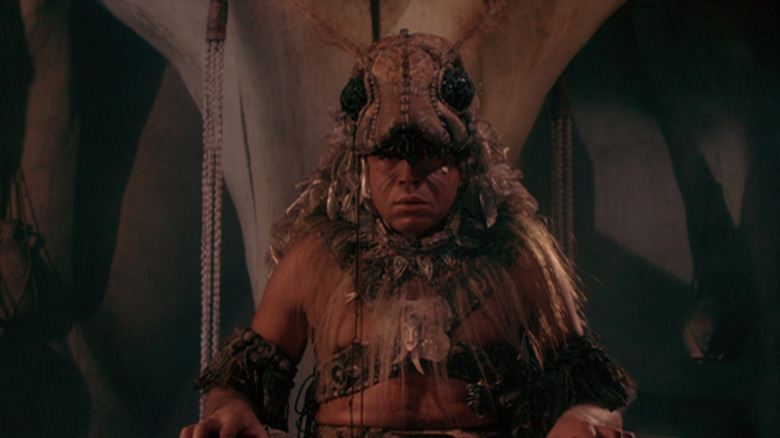
The Locusts: Nature’s Most Philosophical Pest
Let’s talk about the bug in the room. In the first movie, Pazuzu was a terrifying, ancient demon of the wind. In Exorcist II, Pazuzu is a locust. Not just any locust but a Great Locust that can lead its swarm into a healing or destroying formation, because why the fuck not?
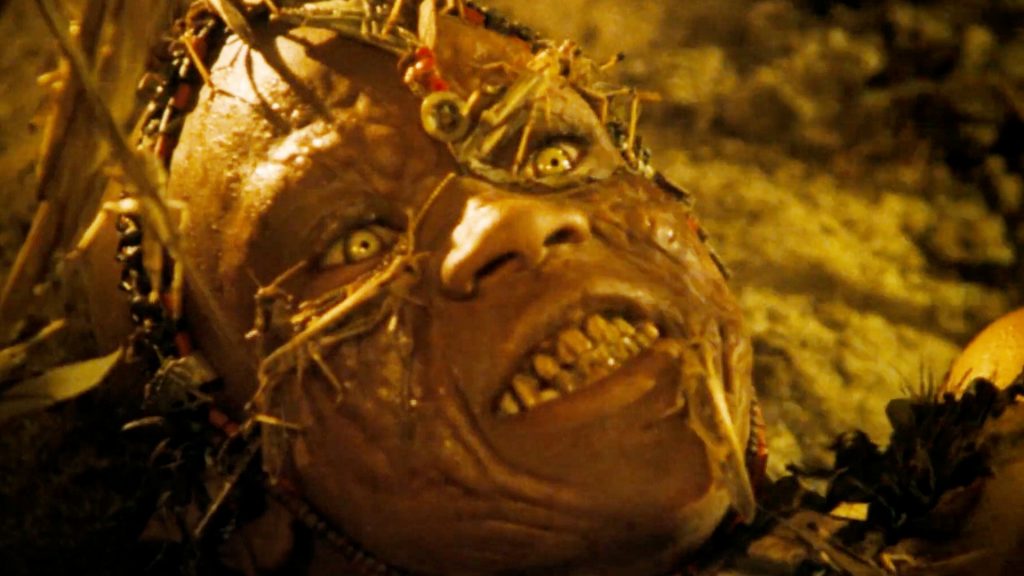
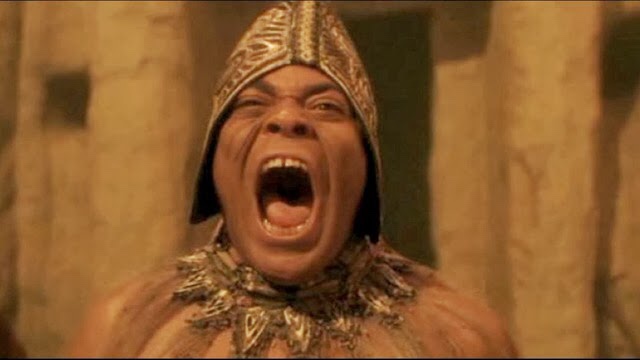
We spend an agonizing amount of time in Ethiopia (recreated on a soundstage in Hollywood with an incredible amount of fake rocks). Lamont travels there to find Kokumo. He meets the adult Kokumo (James Earl Jones), who is now a scientist/shaman who wears a a suit that looks like a cross between a locust and roadkill.
Yes, James Earl Jones is in a fucked up costume, and it is a sight to behold.
He spits on a locust to show Lamont how to tame the swarm. The metaphor is as subtle as a brick to the head: The Evil locusts are those who follow the demon, and the Good locusts are those who… stay in their lane? It turns the cosmic battle between Heaven and Hell into a segment from A Bug’s Life as directed by a man on a heavy dose of hallucinogens.
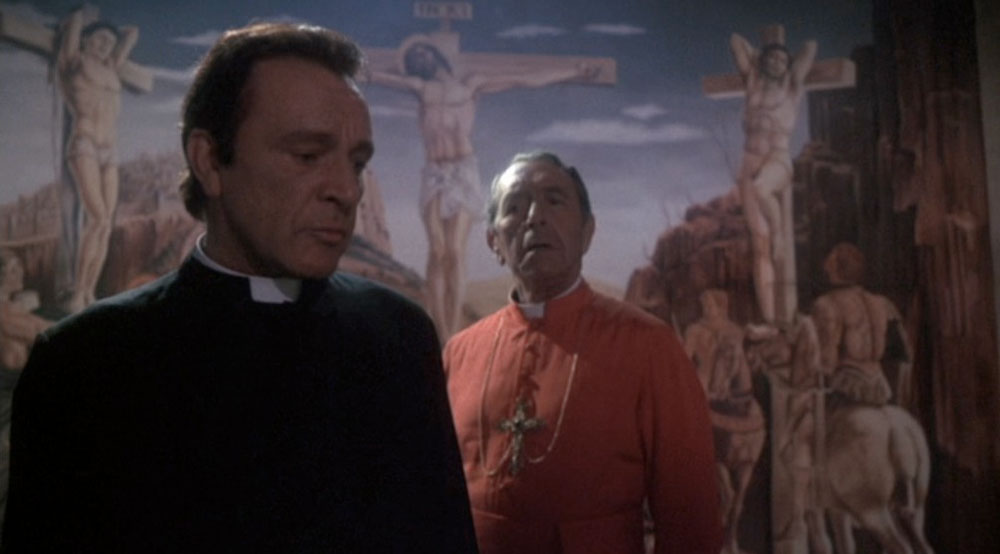
With all the Grace of a Glacial Drift
If you’re looking for a film that is a thril a minute plane ride, then brothers and sisters, you have come to the wrong place. The movie moves with the speed of a locust stuck in a jar of molasses.Boorman loves long, sweeping shots of glass buildings and desert landscapes. He loves scenes where characters stare at each other with intensity while a haunting, discordant Ennio Morricone score plays in the background. As a horror fan, you’re waiting for the punch. You’re waiting for the head-spin. But instead, you get Richard Burton shouting “Pazuzu!” at the top of his lungs.
The lack of traditional scares makes the movie feel longer than its 118-minute runtime. In fact, it’s the kind of movie you watch at 2:00 AM in the midst of an ether binge just to see if it actually manages to make a point (it doesn’t).
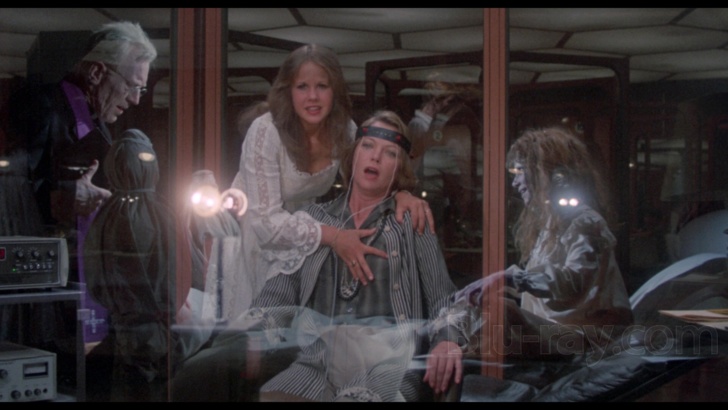
The Two Regans: No. Really
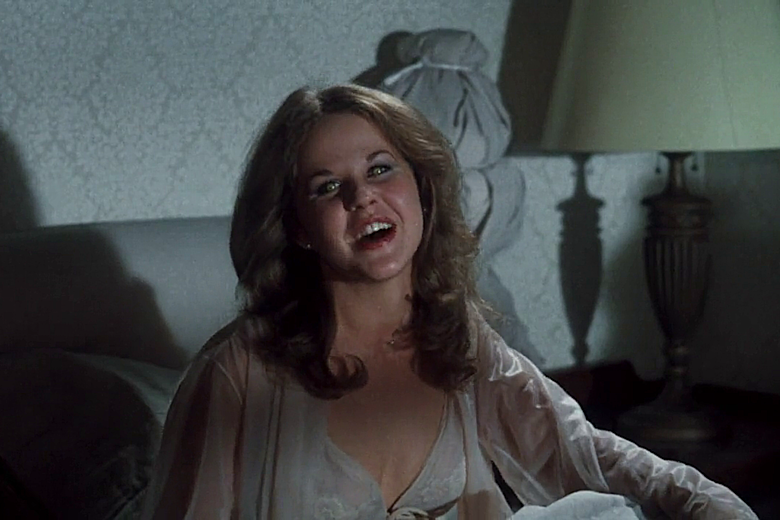
Eventually, the Exorcist 2 realizes it needs a climax. It remembers it’s a horror movie and decides that Regan should have a Demon Double.
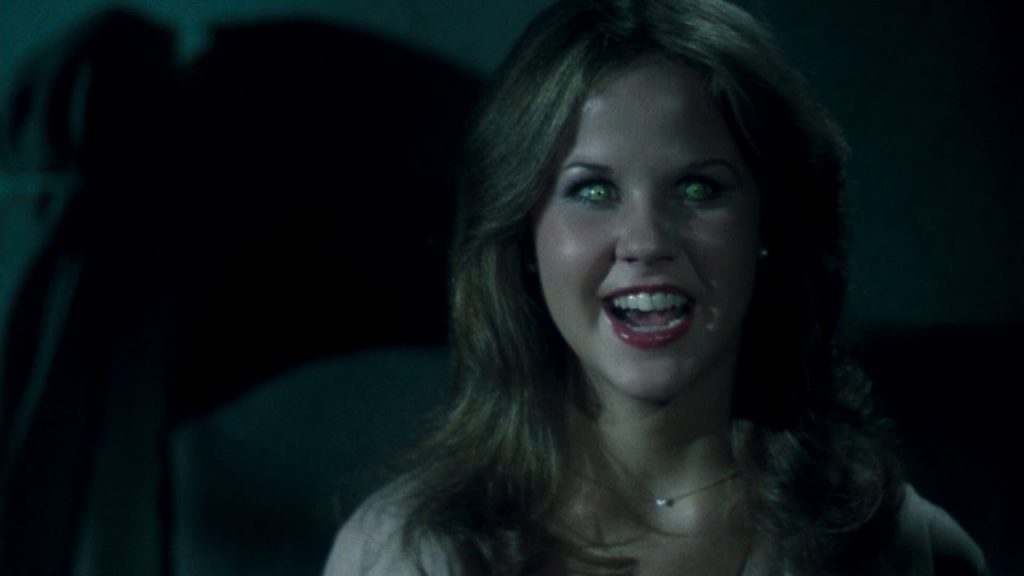
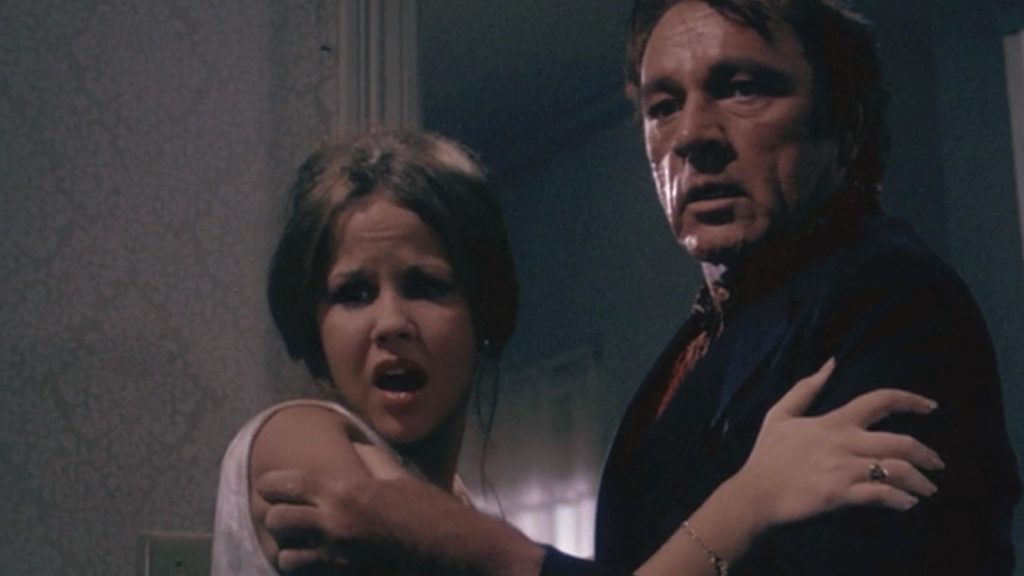
In the final act, Lamont and Regan return to the original Georgetown house, only to discover it is being torn apart by a metaphysical wind. Inside, they find a Demon Regan sitting on the bed. This is meant to be the bad part of Regan that was left behind from the good film.
It’s meant to be scary, it’s meant to make up for the previous hour and a half of your wasted life and it might, if the Demon Regan didn’t look like a wax figure that’s been left too close to a heater.
Lamont has to reach in and pull the heart out of the demon to save the real girl. It is a confusing and hilariously staged sequence that involves a lot of screaming and very little actual terror. It’s proof that John Boorman had no idea how to end this story, and that feeding a group of script writers’ a mountain of coke that would make Tony Montana double-take probably wasn’t the greatest way to get a cohesive ending.
Richard Burton: The Mahogany Titan
I love Richard Burton. He is easily in my Top 10 actors of all time, and definitely in my Top 5 hellraisers, but let’s be honest, at this point in his career, Burton was… shall we say well-hydrated. Even so he still brings a level of Shakespearean gravitas to lines that are fundamentally nonsense.
When he says:
“I’ve been to the mountain”
he says it with enough power to shake the theater walls. But he’s saying it to a man in a fucking locust suit. The contrast between Burton’s immense talent and the absolute crapfest of the script is one of the joys of the movie. He is sweating. He is intense. He is completely, 100% committed to the idea that he is fighting a bug-demon through a silver headband, and it is a highlight for the ages.
The Morricone Factor: The Sound of Madness
If there is one classic element in this sea of shit, it’s the score by Ennio Morricone. The first movie used Tubular Bells, which became synonymous with horror. Morricone decides to go in the opposite direction. He gives us a score that is part tribal chant, part disco, and part lullaby. The Pazuzu theme is a chaotic, aggressive wall of sound that actually manages to be more unsettling than anything happening on screen.
For me, the score is a candidate for MVP. It’s weird, it’s irreverent, and it’s experimental. It’s the only part of the movie that feels like it’s actually exploring the metaphysical themes Boorman was obsessed with.
The Production Disasters: The Real Horror Story
The making of Exorcist II was as cursed as the house in Georgetown.
The Illness: John Boorman became seriously ill during production, halting filming and contributing to budget overruns.
The Locusts: They had thousands of locusts on set. They had to be kept in specific conditions, but when these locusts failed to behave, as locusts are known to do, the production resorted to practical substitutes and blown debris to simulate swarms. (Look closely—it’s hilarious).
The Script: It was being rewritten daily. Linda Blair reportedly had no idea what was happening from one day to the next.
This production chaos gives the sense that everyone involved was on the verge of a nervous breakdown.
The Movie That Broke the Fans
When Exorcist II premiered, it was a bloodbath. Audiences didn’t just dislike it; they were insulted by it. In 1977, if you went to see a sequel to The Exorcist, you wanted scares. You didn’t want a 2-hour lecture on African entomology and synchronized breathing.
It was so poorly received that the studio pulled it from theaters and re-edited it, trying to make it scarier. They added more gore and cut out some of the slower bits, but it didn’t help. The damage was done. It became a cautionary tale of what happens when you lose sight of what made the original great.

Why You Have to Watch
So, why in the blue hell am I telling you that you have to sit through this thing? Because it is magnificent and utter garbage.
It represents a time when studios were willing to take massive, stupid risks. It’s a movie that is visually stunning, intellectually bankrupt, and unintentionally hilarious. It features:
- A tap-dancing Regan
- A psychic locust/man hybrid in James Earl Jones
- A locust-themed climax
- The best shouting performance of Richard Burton’s late career
You watch it with friends, you drink every time someone says Synchronizer, and you marvel at the fact that $14 million (in 1970s money!) was spent on this.
A Swarm of Misguided Choices
Exorcist II: The Heretic is a genuine “What-the-fuck” experience, full to the brim with locust-spitting, the sheer directorial insanity of John Boorman, the beauty of the Morricone score, and the bizarre set designs.
It’s not scary, but it is unforgettable. It’s a movie that tries to fly like a good locust but ends up splattered against the windshield of cinematic history.
Leave a Reply