WARNING: SPOILERS AHEAD
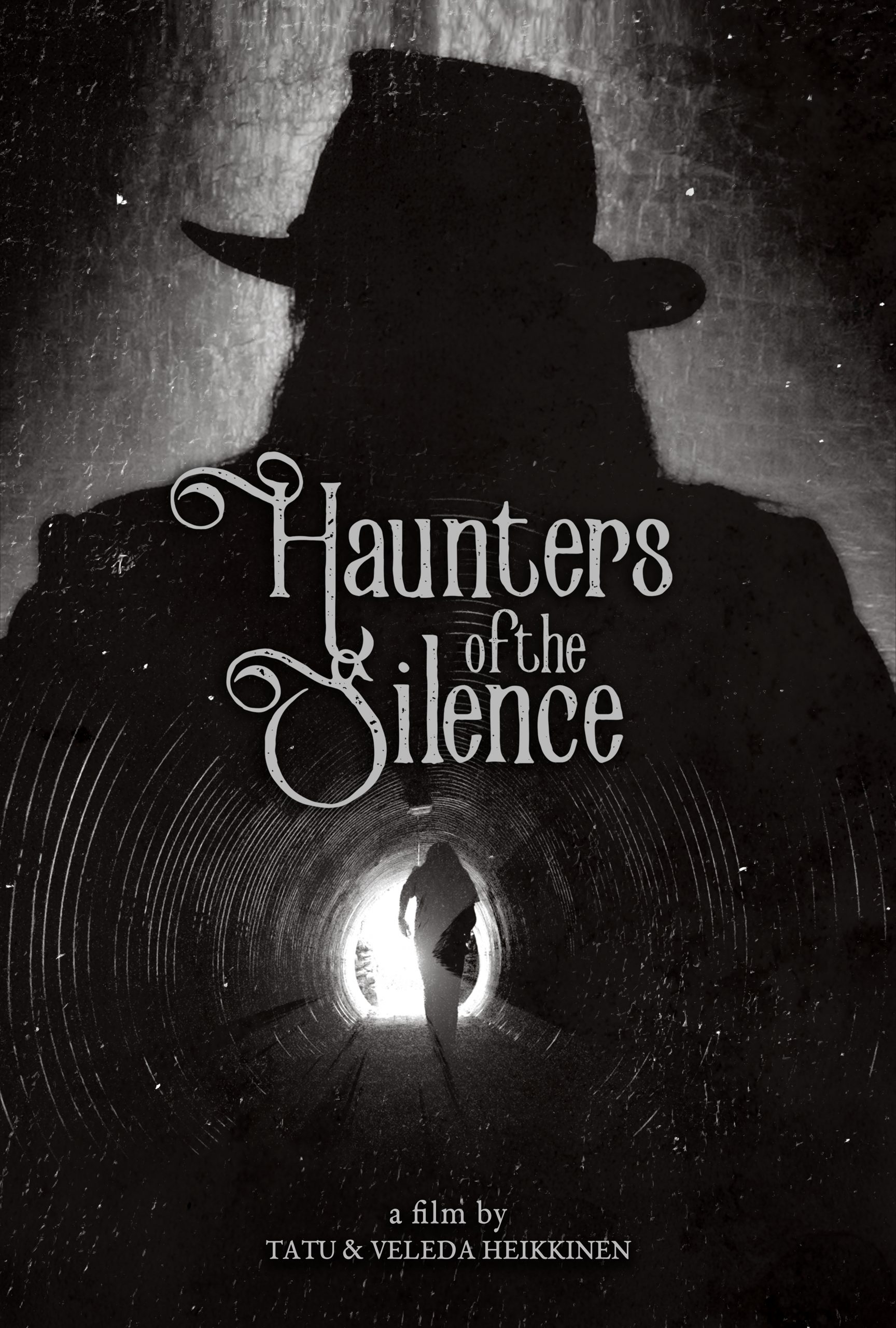
Haunters of the Silence is a 2026 surrealist folk-horror film by Finnish husband and wife duo Tatu Heikkinen and Veleda Thorsson-Heikkinen. Their debut feature proves to be an interesting piece of work, forgoing buckets of blood and jump scares in favor of a slow-burn, atmospheric approach, telling a visually poetic story about loss and the nature of existence.
Haunters tells the story of K, a young widower grieving the death of his wife. The film introduces us to him through the spreading of her ashes, followed by the emptiness of his new daily routine. This opening act can feel sluggish at points, but the filmmakers keep the proceedings from feeling listless by punctuating them with strong and unnerving imagery, great sound design, and the overwhelming feeling important exposition is being subtly expressed.
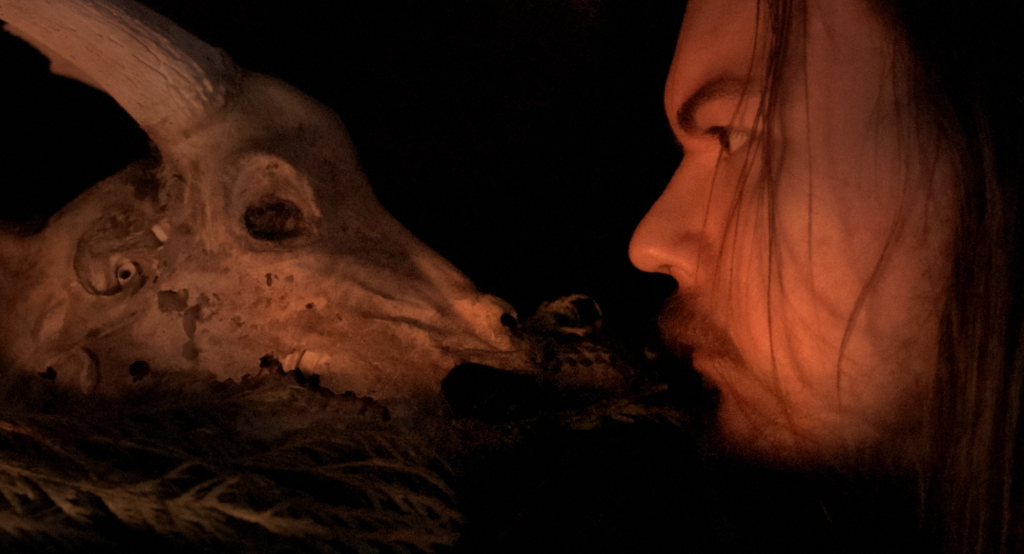
The filmmakers proudly display their influences, threading references to classics like Trilby and The Great God Pan into the protagonist’s motivations, establishing him as an occult enthusiast who may have even sought to invoke his wife’s spirit through arcane ritual. More modern influences, or at least confluences, also abound. The film shares DNA with Kyle Edward Ball’s 2022 film Skinamarink and the Brazilian web series Oakburn Opus. The film not only establishes its aesthetic mission statement and protagonist’s worldview through nearly wordless visual storytelling, it also introduces us to the film’s core conceit. There are “haunters in the silence”, beings beyond the veil of life, death, and the third dimension which surround us at all times, much like dark matter. These things uphold a hidden scaffolding upon which the reality we think we know rests.
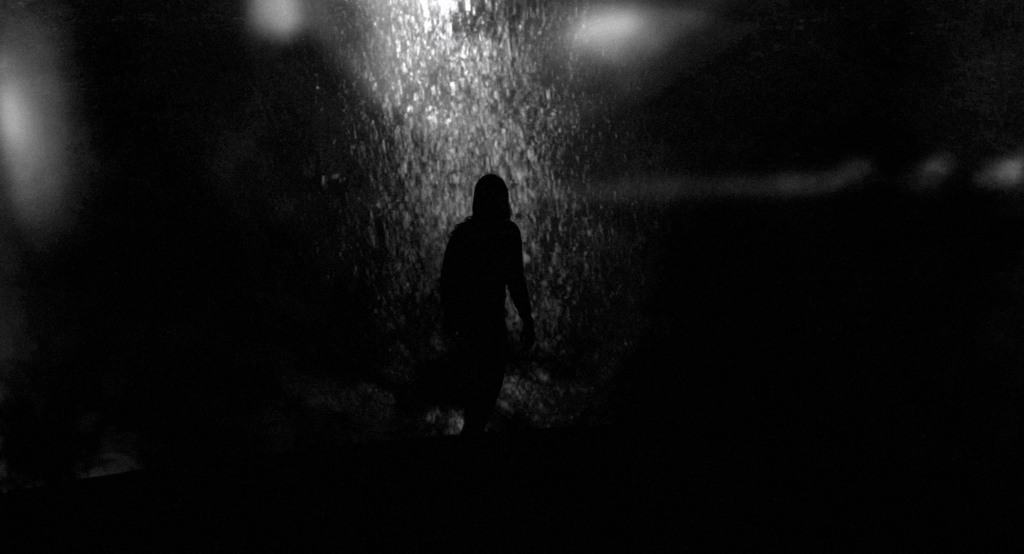
The staccato rhythm of the opening act eventually gives way when K is greeted by a visitor, though we suspect not the visitor he was hoping to see. It’s here the film’s true journey begins, as K embarks on an odyssey beyond the frail trappings of the physical world and into the esoteric. While the film’s pace quickens considerably, Tatu and Veleda never lose focus on finding the poetic within the thrilling. The film is replete with moments of pure cinema, the truth of a moment expressed cinematically. A spider caught in a web of its own creation, the sudden shock of daylight after being in extended darkness, the hazy glow of streetlights through a rain-streaked windshield. The film’s cinematography is often breathtaking, with inspired use of texture, space, and soft focus. The film’s score and sound design fares just as well. Much of the film is thrilling to experience.
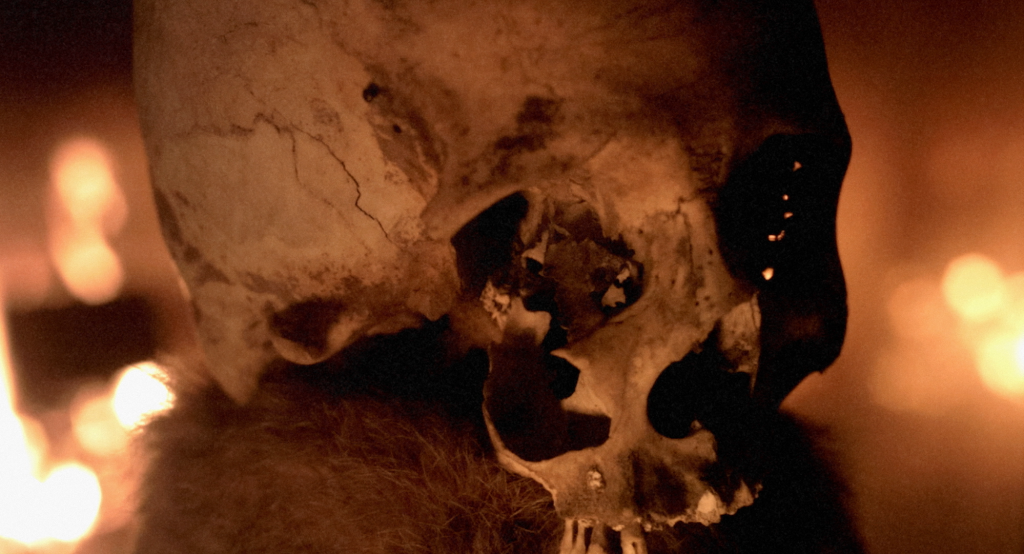
Beyond the study of loss, Haunters invites us to think about the nature of life. Does death and decay confer finality, or is it merely transitory, a brief stop on a larger cosmic journey? If it is transitory, should we see it as terrifying or beautiful? It’s beyond anyone’s ability to truly answer such existential questions, but Haunters does a great job of challenging the aesthetic assumptions we hold about the process. It ends on a nicely ambiguous note as well. If there is something beyond, a hidden cosmic scaffolding, can you go back to the mundane after experiencing it? Is there something more powerful than merely reconnecting with our personal loved ones? Haunters can be viewed as an inversion of the aesthetic of the traditional religious experience with the conclusion being much the same: the power of promise of seeing your loved ones again leaving you open to manipulation from malevolent actors.
The film, of course, is not without flaws. Some moments are less effective than others and occasionally you get the sense the filmmakers’ reach exceeds their current grasp. The weakest element of the film is perhaps the design of the antagonist, which is essentially the “hat man” sleep paralysis meme. Something so well-established, already an internet punchline by the time of this film’s release, feels like a misstep. It feels quantified, reductive, inferior to the boldness and nearly boundless creativity exemplified by the rest of the film. Still, it’s hard to really hold this against the movie too much. One suspects the filmmakers’ subsequent efforts will increase in ambition and scope, even more fully realizing their mythic, phantasmagoric, and surreal vision.
I recommend Haunters of the Silence to anyone with an interest in the uncanny, the obscure, or the poetic. I’d recommend it to anyone who likes to see vital, unvarnished cinematic creativity in the style of 2022’s The People’s Joker. It’s a fascinating, often transfixing piece of work, worthy of unpacking through multiple viewings and yet quite brief, running at just around 70 minutes. More than anything, Haunters of the Silence is the kind of film we need right now. Films made with passion, purpose, and care. Films made because a human being needed to make it by any means necessary, not because a committee saw it as a four-quadrant moneymaking venture or because it had just enough passing resemblance to a decades-old board game to bolt the name on and hope brand recognition might drive people to the theater. David Lynch is gone now, may we all embody his spirit.
Leave a Reply