
Listen up, creeps, mutants, and late-night monster-kids. Before the Big G started doing gravity-defying dropkicks, flying like a scaly paraglider, and playing soccer with Anguirus, he was something much more terrifying. He wasn’t a hero, he wasn’t a protector, and he certainly wasn’t fun for the folks on the ground to be around. In 1954, Japan was a nation of ghosts, still picking radioactive glass out of its collective psyche less than a decade after the sun dropped twice on Hiroshima and Nagasaki and that is what Godzilla reflects.
When director Ishirō Honda sat down to dream up the original Gojira, he wasn’t looking to sell vinyl figures or lunchboxes. He was conducting a 96-minute funeral march. This isn’t just a Creature Feature, it’s a cinematic exorcism of nuclear dread, wrapped in 200 pounds of latex and hand-stirred rubber.
The Genesis: Headlines Written in Blood and Ash
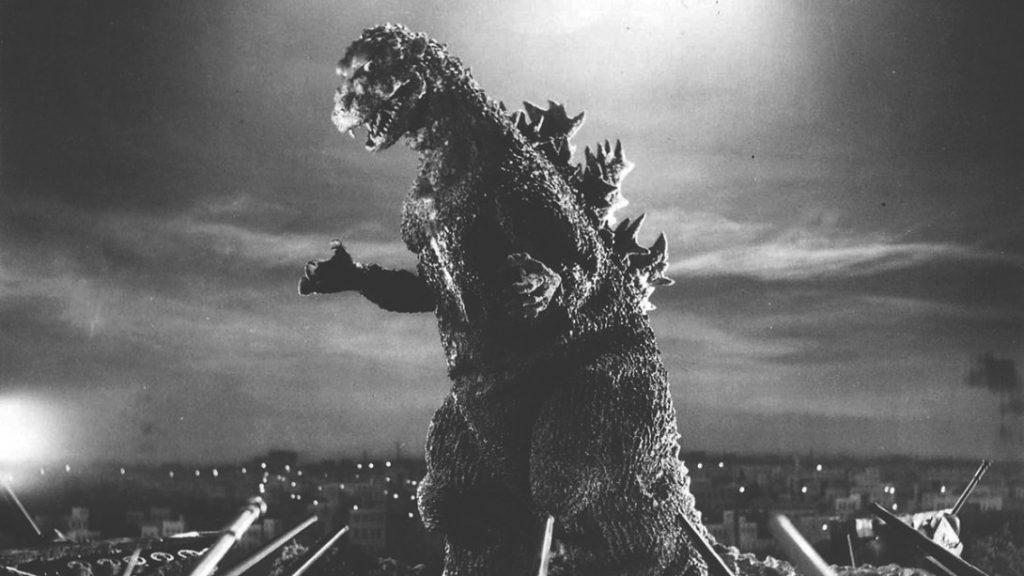
To get the vibe of this flick, you have to understand the room temperature of 1954 Japan. Just months before filming, a fishing boat called the Lucky Dragon No. 5 got dusted by death ash from a U.S. hydrogen bomb test at Bikini Atoll. The crew came home melting from the inside out. This wasn’t some distant, abstract fear; it was a fresh, stinging wound.
The frantic rhythm of the film’s opening, ships vanishing into blinding white flashes, wasn’t some high-concept sci-fi trope. For the audience in 1954, that was the nightly news. Honda and producer Tomoyuki Tanaka took that raw, direct trauma and asked the ultimate geek question: “What if the bomb got up and started walking?” Godzilla isn’t just a lizard; he’s a breathing hydrogen bomb with a grudge.
When we talk about intensity in cinema, we usually mean a cynical anti-hero or a gory kill. But the edge in Gojira is the crushing weight of reality. It’s the realization that Japan was being squeezed between the two superpowers of the Cold War, treated as a testing ground for the apocalypse. Honda didn’t want to distract people from that; he wanted to give that fear a physical form that could look them in the eye and roar.
Suit-Mation: The Architecture of Agony
Forget your fancy CGI or even the stop-motion wizardry of Ray Harryhausen for a second. Toho didn’t have the time or the yen for frame-by-frame puppets. Enter Eiji Tsuburaya, the absolute Godfather of Tokusatsu, who decided the best way to destroy a city was to put a very brave, very sweaty man in a giant suit.
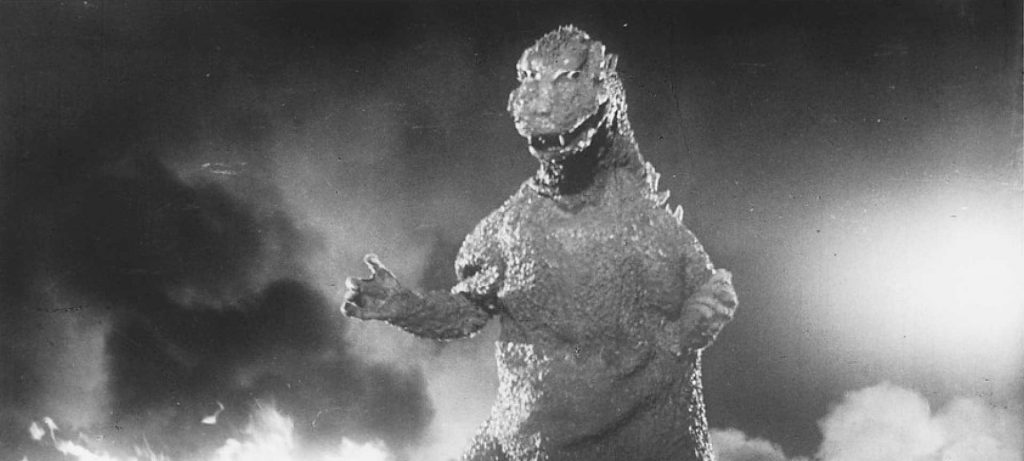
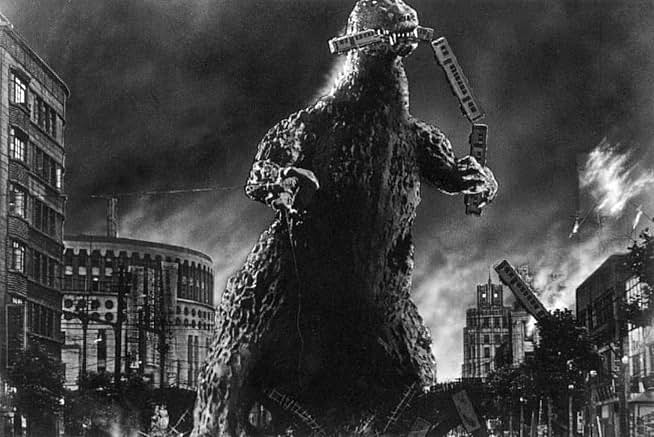
The Weight of a God: The first Godzilla suit was a nightmare. It was made of heavy latex, wire, and bamboo, weighing in at a bone-crushing 220 pounds (100kg). Poor Haruo Nakajima, the man inside the beast, could barely shuffle three steps before collapsing. Some shots required creative partial-suit filming due to heat and weight. Imagine being trapped in a rubber oven while people throw firecrackers at you, that’s the kind of blue-collar dedication that built this legend.
The Texture of Trauma: Look closely at his hide. Those aren’t cool dragon scales. That’s horror at its most symbolic. The skin was textured to evoke the burns suffered by Hiroshima survivors. Every time Godzilla looms over a building, he is a literal manifestation of a burn victim. He is the scarred flesh of the nation rising from the sea to demand an accounting.
Miniature Mayhem: A Masterclass in Urban Demolition
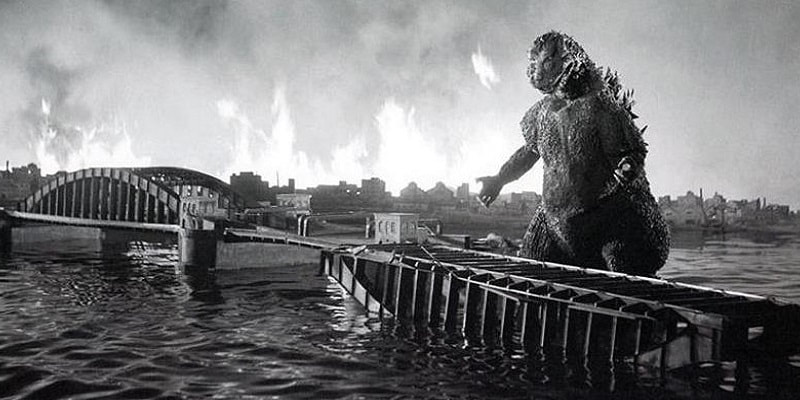
The real joy of Gojira is the obsessive, almost pathological detail of the destruction. Tsuburaya’s crew didn’t just slap together some cardboard boxes; they built the Ginza district at 1/25 scale with terrifying precision. We’re talking real glass that shatters, real wood that splinters, and tiny, hand-painted furniture inside the offices.
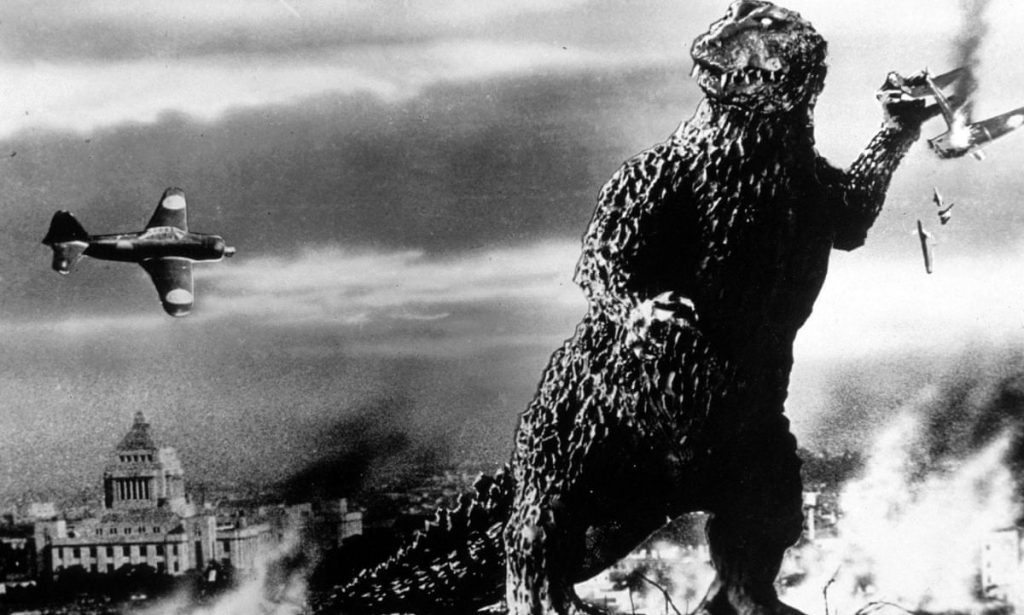
When Godzilla crushes the National Diet Building (the Japanese parliament), it’s not just a toy falling over. Because the suit is so heavy and the models are so dense, the physics feel weighted. You can almost smell the dust and the ozone. It’s a visceral, teeth-grinding spectacle that makes modern CGI destruction feel like a screensaver. There’s a soul in that debris. When a miniature building collapses in this movie, it feels like history being unmade.
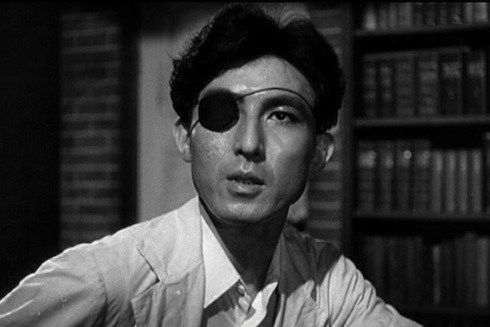
Dr. Serizawa: The One-Eyed Saint of the Apocalypse
If Godzilla is the monster we created, Dr. Daisuke Serizawa is the conscience we lost. With his laboratory eye-patch and his brooding basement vibes, he looks like a classic mad scientist trope, but he’s actually the most tragic figure in horror history. He isn’t seeking power; he’s seeking a way to protect the world from his own genius.
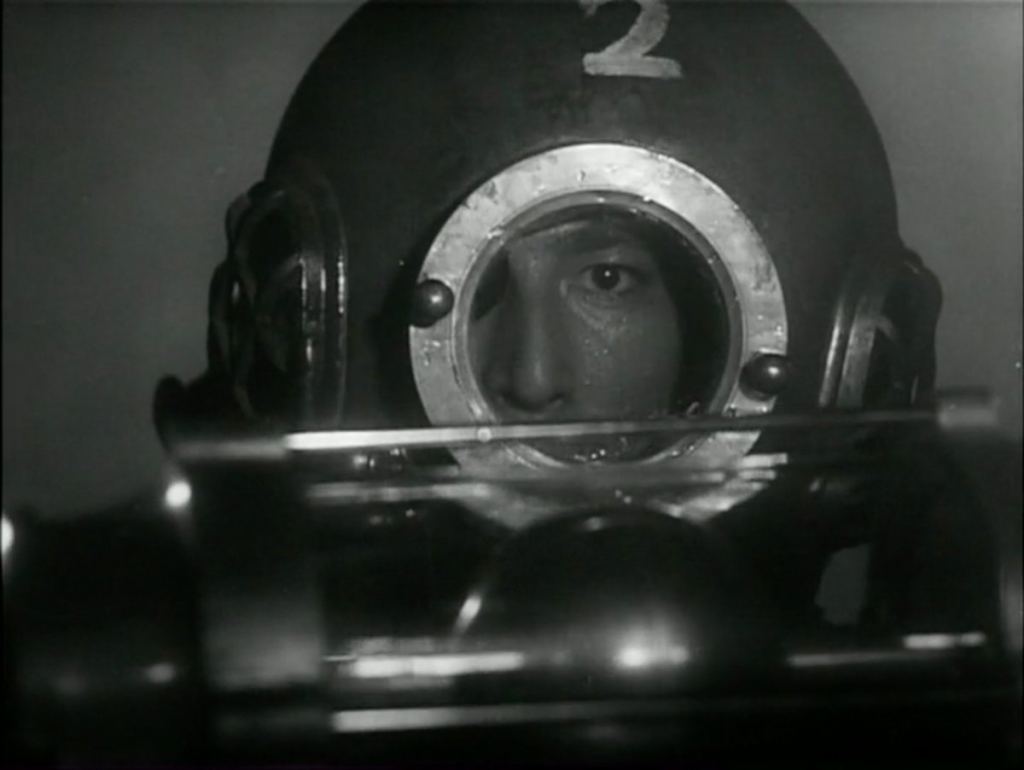
Serizawa invents the Oxygen Destroyer, a piece of wizardry that turns water into a flesh-melting acid bath. His struggle is the heart of the film: Science vs. Ethics. He’s terrified that if the world finds out he made it, the politicians will turn it into a weapon even worse than the H-bomb.
The climax isn’t just about killing a monster; it’s about a man choosing to die and take his secrets to the grave to save humanity from itself. When Serizawa cuts his air line at the bottom of Tokyo Bay, it’s a sacrificial moment that hits harder than any skyscraper collapse. He refuses to be the Father of the Next Bomb. It’s a sobering reminder that sometimes the only way to win is to refuse to play the game.
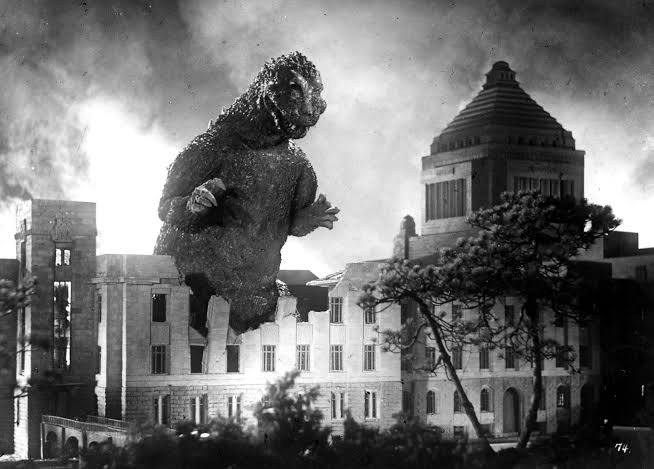
Noir in the Nuclear Age: The Black and White Shadow
Ishirō Honda used a gothic, high-contrast palette to make Tokyo look like a graveyard before the fires even started. This isn’t the neon-soaked, colorful fun of the 70s sequels where Godzilla fights giant lobsters in the sun. This is dark, moody, and oppressive.
The cinematography is a masterclass in scale. Honda films the Big G from low angles, often through the windows of fleeing trains or over the shoulders of screaming citizens. It’s a direct and engaging perspective that puts you right in the path of the atomic breath.
Then there are the scenes that no fun monster movie would dare include: the hospital overflows. We see children being scanned with Geiger counters, their mothers weeping as the machines click, the sound of invisible poison. We see a city in actual mourning. These are the harrowing moments that separate Gojira from everything that followed. It’s not just a movie about a monster; it’s a movie about the victims.
The Score: The Sound of Inevitable Doom
We need to bow down at the altar of Akira Ifukube. His score is the assault on the senses that defines the Monster Movie soundscape.
The March: That iconic brass theme isn’t just catchy; it’s a heavy, pulsing beat that mimics the crushing weight of those 220-pound latex feet hitting the pavement. It feels like destiny coming for you.
The Roar: How do you give a voice to a radioactive god? Ifukube took a resin-covered leather glove and dragged it across the loosened strings of a double bass. It’s a screeching wail that sounds like the earth itself is screaming in agony. It’s the greatest sound effect in the history of the genre, period. It’s not a biological sound; it’s a mechanical scream from the pits of hell.
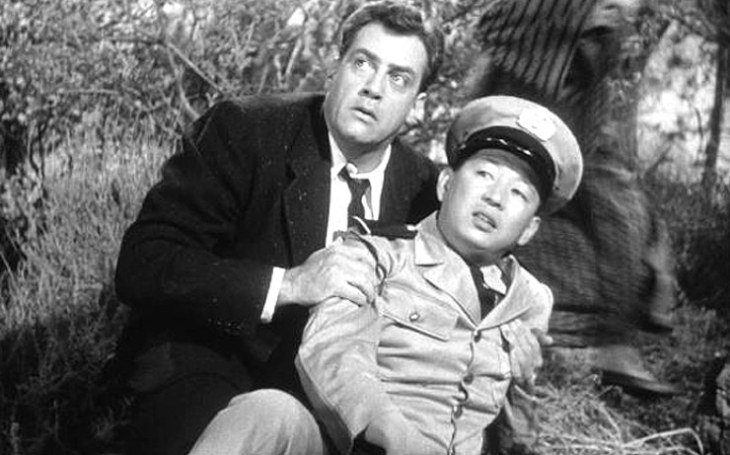
The Americanized Edit: Raymond Burr vs. The King
In 1956, the film was chopped up for Western audiences as Godzilla, King of the Monsters!, inserting Raymond Burr as reporter Steve Martin.While some purists call this version trash, it’s actually a fascinating piece of localization. Burr plays it straight and somber, giving the carnage a respectful gravitas. However, the edit stripped out a lot of the political edge, specifically the stuff that pointed a finger directly at U.S. nuclear testing. If you want the raw, uncut classic, you have to hunt down the original Japanese Gojira.
It’s the difference between a Saturday morning cartoon and a brutal war movie. The Japanese version doesn’t ask for your sympathy; it demands your witness.
Godzilla as Onryō: The Ghost of the Pacific
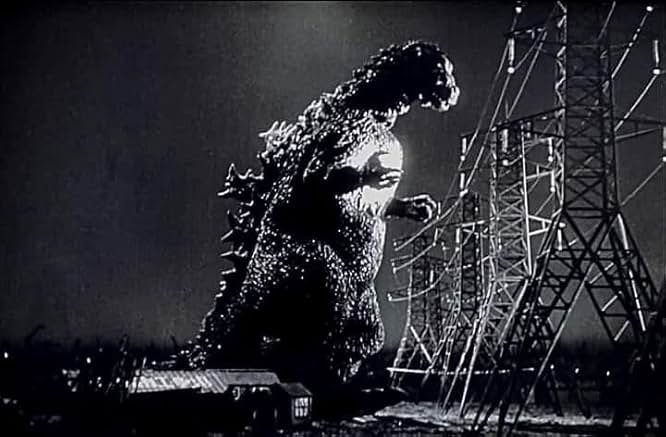
Godzilla isn’t just a dinosaur, he’s a walking curse, a vengeful force rising from the Pacific. He is a modern Onryō, the vengeful spirit of Japanese folklore. He represents the restless souls of the soldiers and sailors who died in the Pacific, returning to punish a society that wants to forget the cost of war.
He doesn’t attack at random. He goes for the symbols of the New Japan, the clock towers, the train stations, the government hubs. He’s a cleansing fire, a reminder that the past isn’t dead; it’s just waiting in the deep water for its turn to speak. This layer of mythological subtext is what makes the 1954 version the undisputed King. He isn’t an animal; he’s an indictment.
The Oxygen Destroyer
The finale is a jaw-dropping, hands-on spectacle of practical effects. To simulate the Oxygen Destroyer, Tsuburaya used fine powders and air jets in a massive tank. Watching Godzilla’s flesh literally boil away until only a skeletal frame remains is top-tier body horror.
The sequence hits harder because there’s no triumphant music, just silence and the aftermath of carnage. When the monster dies, the water goes still, and the characters just stand there. They didn’t win; they just traded one nightmare for another. The final line of the film, warning that if we keep testing bombs, another Godzilla will appear, is the ultimate buzzkill in the best way possible. It’s the twist that keeps the movie relevant even 70 years later.
The Logistics of a Legend: Behind the Screams
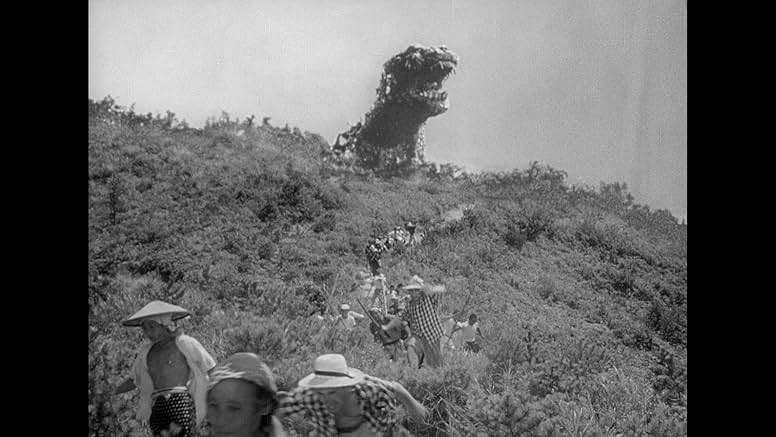
Let’s look at the production facts for a minute, because the making of this film was just as legendary as the movie itself.
The G Name: Before he was Godzilla, he was Project G (for Giant). The name Gojira is a portmanteau of the Japanese words for gorilla (gorira) and whale (kujira). The idea was to create something with the power of the land and the mystery of the sea.
The Fire Breathing: In the original, it’s not Atomic Breath, it’s a radioactive vapor. To achieve the effect, the crew used pressurized white mist. It looked ghostly and ethereal, unlike the blue laser beams of the later years. It looked like the very air was turning toxic.
The Clock Tower: One of the most famous shots is Godzilla biting the clock tower in Ginza. The clock was real (a Seiko), and the company was reportedly not happy about their product being destroyed by a giant lizard. But that’s the spirit of Toho, nothing was sacred.
The Legacy: From Terror to Totem
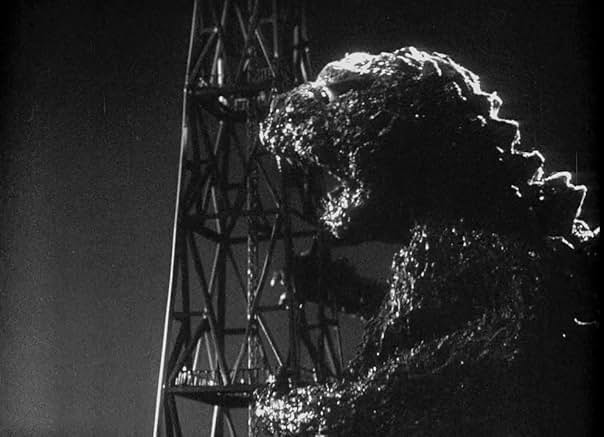
Without 1954, we don’t get the 38 sequels, the joy of King Kong vs. Godzilla and the Monsterverse, or the jagged energy of Shin Godzilla. This movie set the rules of the Kaiju genre that we still go crazy for today:
The monster is a metaphor, not just a lizard.
The military is a toy set against the power of nature.
The scientist has to be the moral compass, even if it kills him.
It’s a formula that’s been remixed for 70 years, but it has never been as pure or as biting as it was in those flickering black-and-white shadows. Every time a new Godzilla movie comes out, it has to reckon with the ghost of ’54. You can make him bigger, you can make him faster, you can give him glowing pink spikes, but you can’t make him more meaningful than he was when he first stepped out of the surf and into our nightmares.
Why I Love It
We live in a world of disposable blockbusters. Movies that are built to be watched once, digested like a bag of salty popcorn, and forgotten by the time you reach the parking lot.
Gojira is the opposite of that.
It’s a movie that lingers. It’s a movie that makes you look at the horizon and wonder what’s coming for us next. It’s a classic because it dared to be about something. It didn’t hide behind escapism. It used every ridiculous element imaginable, a guy in a rubber suit, toy buildings, to tell one of the 20th century’s heaviest stories. That’s raw cinematic power: turning the absurd into something essential.
It’s the blueprint for every monster movie that followed. It’s the one that reminds us how small we are, how radioactive the universe can be, and that the King is always lurking in the depths. So respect the rubber, fear the roar, and never forget: Godzilla owns the ocean, the city, and your nightmares.
Leave a Reply