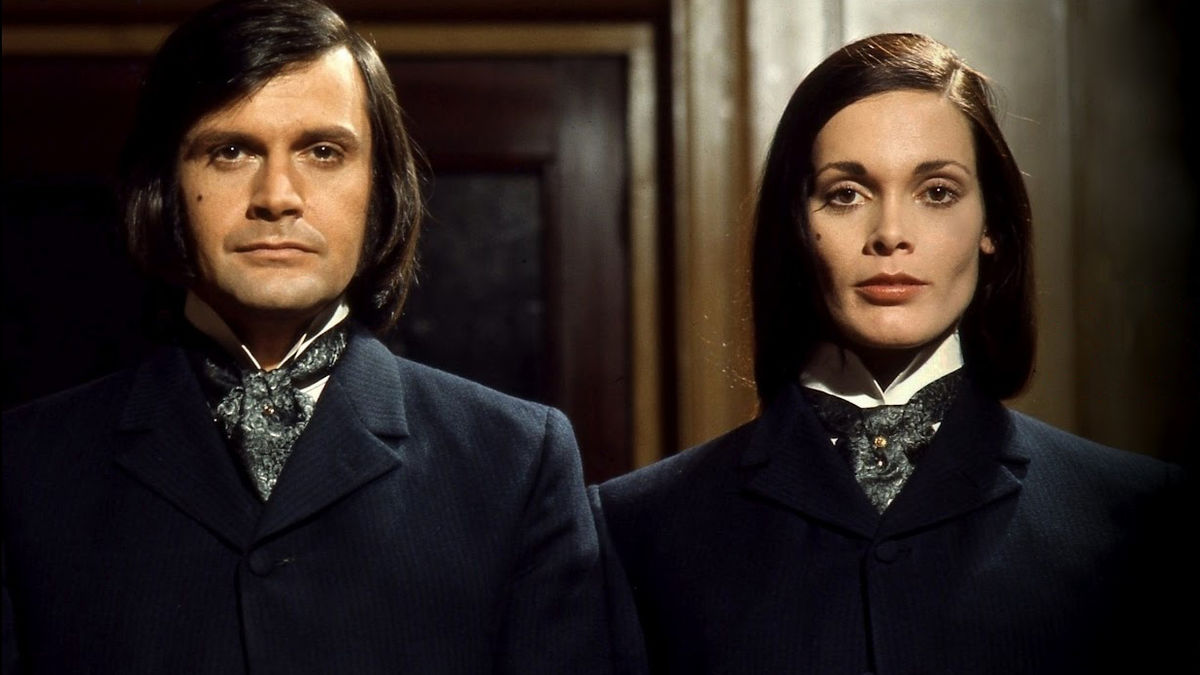
London, 1888. A city where the fog is thick enough to chew, the gin is basically paint thinner, and everyone seems to be one bad day away from either joining a cult or being dissected by a gentleman in a top hat. Welcome to the fucked up world of Dr. Jekyll and Sister Hyde, the 1971 Hammer Horror production that looked at the source material and said, “This is fine, but what if he became a hot woman and started a side hustle as Jack the Ripper?”
This isn’t just a movie; it’s a beautifully unhinged document of a studio trying to figure out how to stay relevant in a decade that was rapidly trading Victorian lace for bell-bottoms and psychotropic drugs. A glorious exercise in ‘sure, why not?’ filmmaking at its finest.
The Mid-Life Crisis of Henry Jekyll
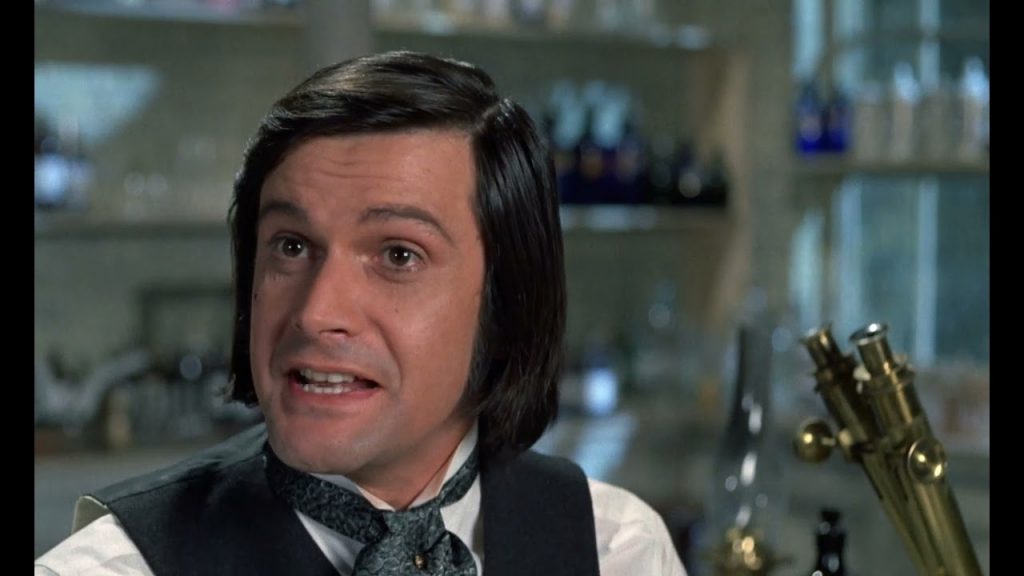
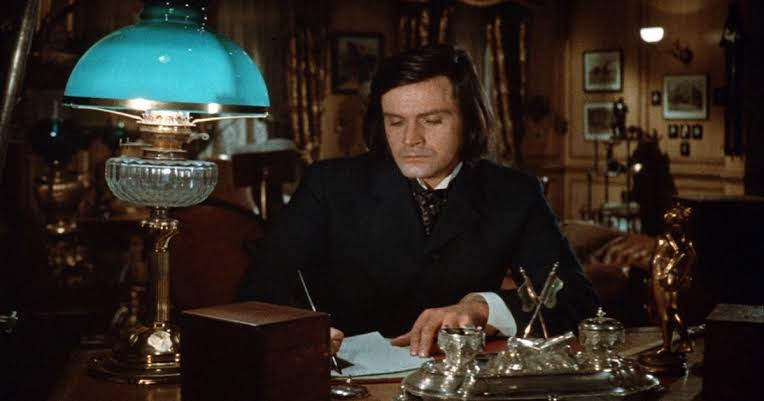
We start with Ralph Bates as Dr. Henry Jekyll. Now, Ralph Bates wasn’t your grandfather’s Jekyll. He wasn’t some stodgy old man with a beard full of Victorian secrets. He was young, brooding, and possessed the kind of intense, dark-eyed stare that suggests he spends his weekends reorganizing his spice rack by molecular weight.
Jekyll’s motivation in this film is refreshingly petty. He wants to live forever, but not to help humanity, mostly because he’s convinced that his life’s work is so important that death would be a massive inconvenience to his ego. He hits a wall, though when he realizes that men die significantly younger than women. Instead of doing the sensible thing and perhaps eating more fibre or not living in a city that is 40% coal dust, he decides the secret to longevity is female hormones.
His lab looks like a Victorian chemistry set exploded in a dark basement. He starts brewing a serum made from the glands of female corpses. It’s the kind of science that makes you realize why the neighbors in these movies are always so aghast. “Oh, there goes Henry again, dragging another laundry bag full of kidneys into the cellar. Classic Henry!”
The Mirror Has Two Faces (And One of Them is Martine Beswick)
Jekyll finally downs the glowing green cocktail, and we get the transformation. In most movies, this involves a lot of hair growing out of the ears and someone becoming a very angry wolf-man. Here, Jekyll just collapses, and when he stands back up, he’s Martine Beswick.
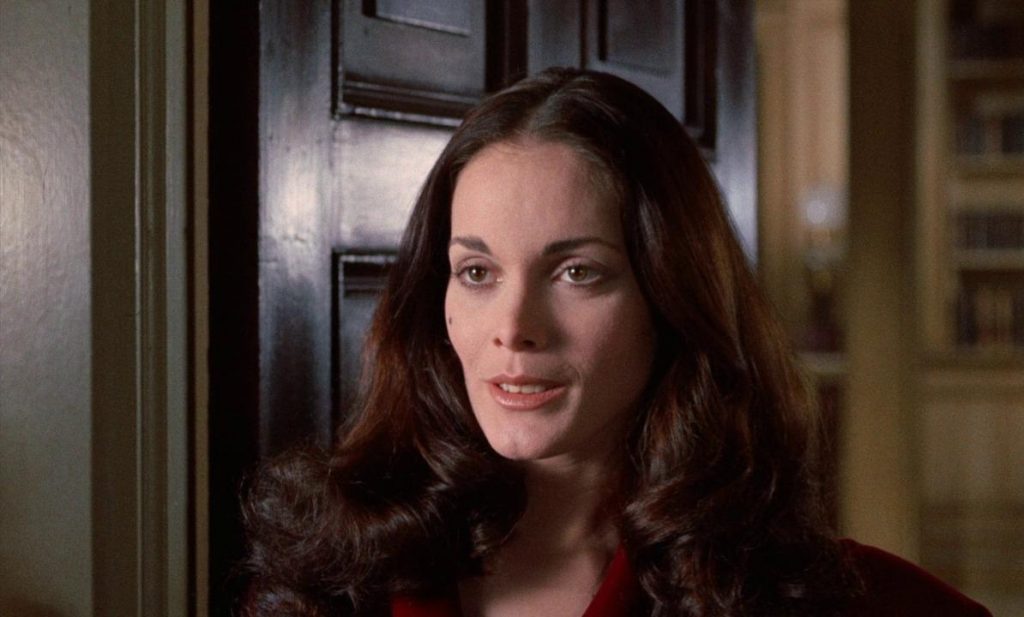
The casting here is a stroke of genius. Usually, these transformations are played for horror, but the look on Jekyll/Hyde’s face is one of pure, narcissistic triumph. Mrs. Hyde (as she becomes known to the confused neighbors) is tall, striking, and has the kind of predatory grace that makes you realize the local prostitutes are in a world of trouble.
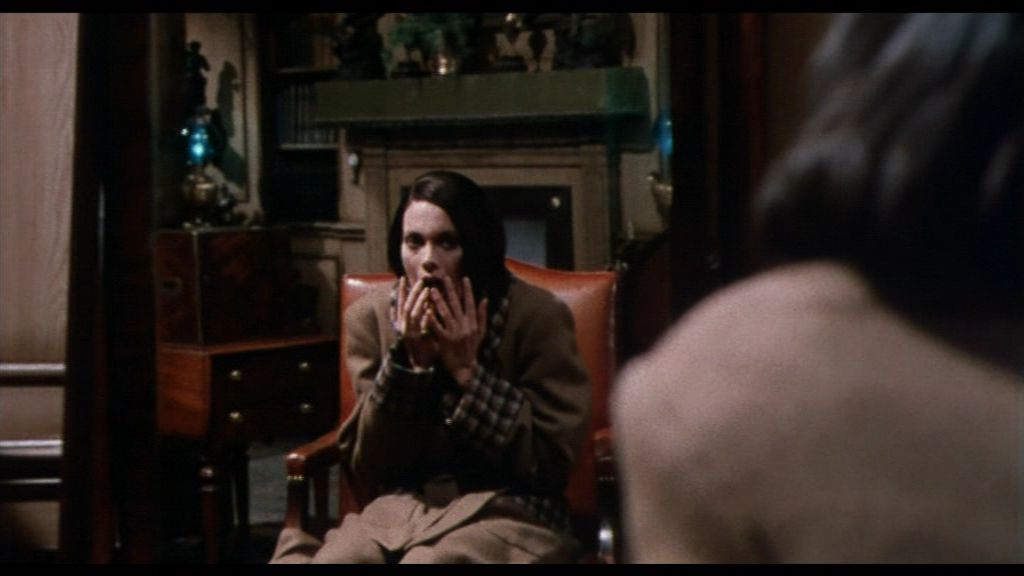
Martine Beswick doesn’t play Hyde as a monster; she plays her as the most dangerous person in the room who also happens to have a fantastic wardrobe. The scene where she first admires herself in the mirror isn’t a “What have I done?” moment. It’s a “I’d definitely date me” moment. It’s transformation becomes the ultimate expression of self-love taken to a murderous extreme.
The Jack the Ripper Side-Hustle
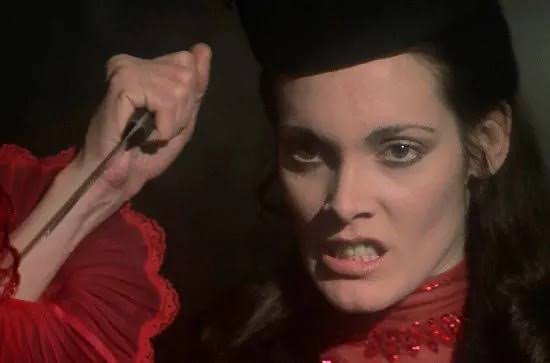
Hammer Horror never met a trope they couldn’t combine. Not content with just a Jekyll and Hyde story, they decided to throw in the most famous serial killer in history. Because if you’re already making a serum out of glands, you might as well get them from the source.
Jekyll experiments with murderous impulses in Whitechapel. At first, the attacks are clumsy, but once Sister Hyde takes over, the efficiency skyrockets. The film delights in rhis and the darkly comic irony that the terror in the streets is now delivered by a stylishly dressed woman rather than the shadowy man of legend.
The film creates this bizarre, overlapping Venn diagram of Victorian terror. You’ve got the Ripper murders, the Jekyll/Hyde transformation, and a mounting body count that the police seem absolutely baffled by. The inspector in this movie is essentially a cardboard cutout with a mustache, representing the pinnacle of Victorian incompetence. “A woman committed these murders? Preposterous! Women can barely handle a heavy parasol, let alone a surgical knife!”
Burke and Hare
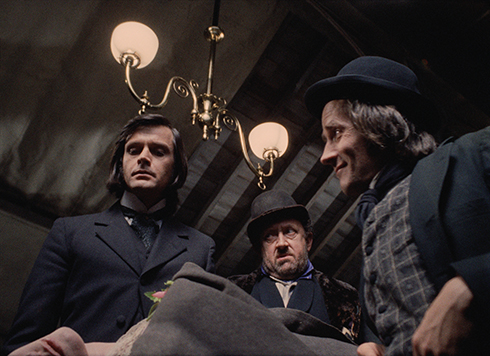
Just when you think the movie couldn’t possibly fit another horror icon into the runtime, in walk Burke and Hare. Yes, the infamous Scottish body snatchers are here, despite being about fifty years out of their own timeline.
Jekyll, being a man of science, doesn’t want to get his hands dirty with grave robbing, so he hires these two professional creeps to do the heavy lifting. They are essentially the Uber Eats of the Victorian medical world, bringing fresh organs to Jekyll’s door with a shrug and a demand for more silver.
The interaction between the refined, brooding Jekyll and the mud-covered, gleeful Burke and Hare is fantastic. It highlights the class divide: Jekyll is committing atrocities for “the future of mankind,” while Burke and Hare are doing it because they’d like a nice meat pie, as much ale as they can guzzle, and a warm bed. It’s a reminder that in Victorian London, everyone had a price, and usually, that price was a bottle of gin.
The World’s Most Awkward Love Square
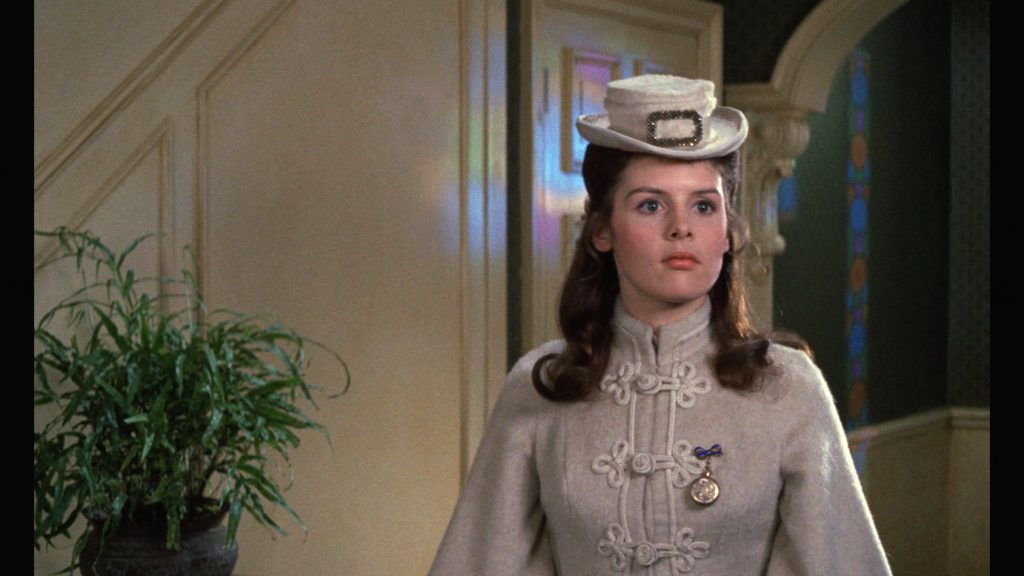
While Jekyll is busy murdering people and changing genders, he still finds time to be part of the most complicated romantic subplot in Hammer history. He lives next door to a brother and sister.
The brother, Howard, is instantly smitten with Mrs. Hyde, whom Jekyll claims is his widowed sister. Meanwhile, Howard’s sister, Susan, is pining for the brooding Dr. Jekyll. With me so far? Good.
This leads to scenes that feel like a restoration comedy directed by someone who has just seen a car crash. Jekyll has to constantly dodge invitations to tea, while Sister Hyde spends her time flirting with Howard just to see how much she can get away with. There’s a moment where you realize that if Jekyll just came clean, the resulting dinner party would be the most awkward social event in the history of the British Empire. “Pass the scones, Howard. By the way, I killed three people last night and I used to be your friend Henry. More tea?”
The Wardrobe of Doom
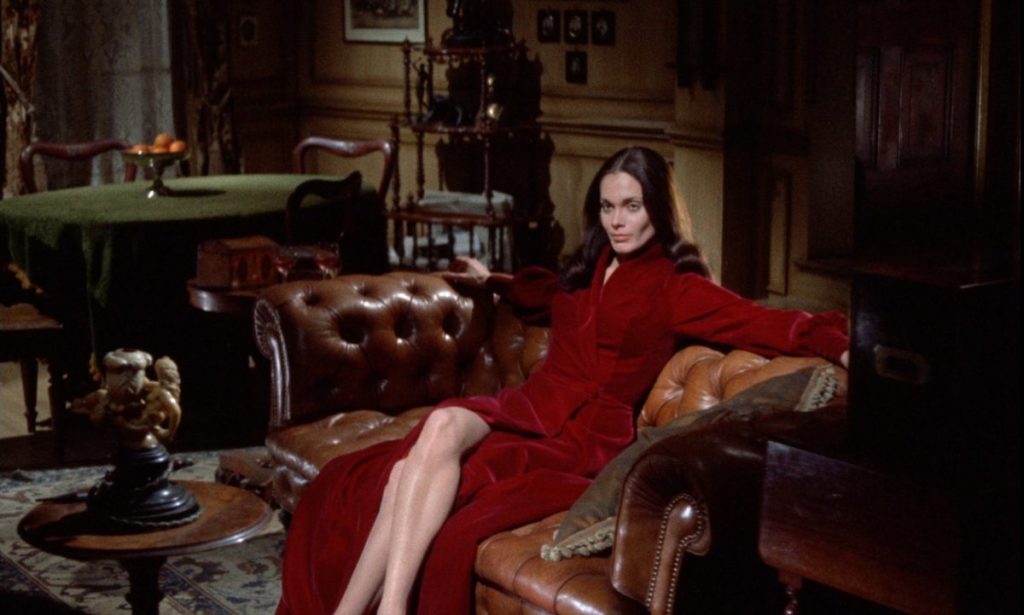
Hammer Horror always had a budget for two things: cleavage and velvet. Dr. Jekyll and Sister Hyde leans heavily into the latter.
Sister Hyde’s outfits are spectacular. She’s roaming the fog-filled streets in gowns that probably cost more than the average East End resident’s house. The visual contrast between her elegance and the absolute filth of the Ripper scenes is a deliberate, stylish choice. It’s the look of the movie: a high-fashion nightmare where the blood appears as if it was supplied by a paint factory and the fog looks like someone is constantly smoking cigars just off-camera.
The Internal Power Struggle
As the movie progresses, the serum starts to act like a bad habit Jekyll can’t kick. He finds himself transforming into Sister Hyde without wanting to. He’ll be sitting at his desk, contemplating a kidney, and suddenly his sleeves feel a bit too short and his hair is six inches longer.
Sister Hyde starts to develop her own agenda. She doesn’t just want to exist; she wants to replace Jekyll entirely. She starts hiding his clothes, mocking his morality, and taking over the murders. It’s a domestic dispute where the two participants share the same skin.
Martine Beswick’s performance here is brilliant because she conveys a sense of utter boredom with Jekyll’s conscience. She sees him as a weak, dithering man who is standing in the way of her having a really good time. It’s a psychological tug-of-war where the rope is made of surgical silk.
The Climax
The finale of the film is a classic Hammer chase. The police (finally) close in on Jekyll’s house, forcing him, mid-transformation, to scramble desperately across a tangle of chimneys and rooftops.
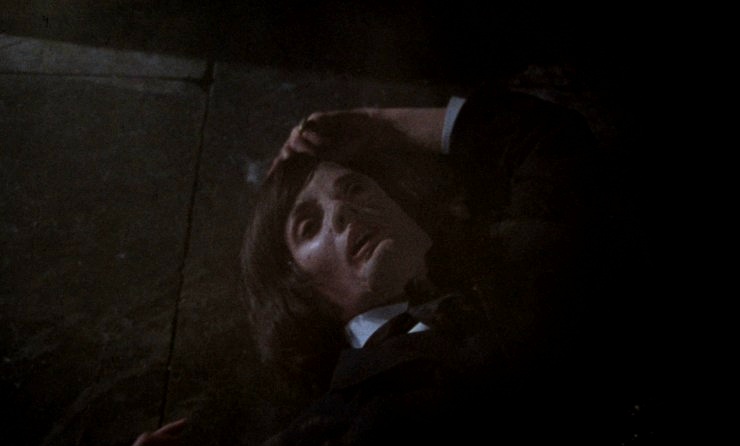
This is where the film hits its peak of absurdity and tension. Watching a man-turning-into-a-woman-turning-into-a-man scramble over Victorian chimneys while wearing a nightgown is the kind of cinema you just don’t get anymore. It’s ragged, it’s soaked in effort, and it leads to a fall that is as tragic as it is inevitable.
When the body hits the pavement, the final transformation occurs. It’s a grotesque, half-and-half mess that provides the ultimate “what on earth was that?” moment for the gathered crowd. It’s a fitting end for a character who tried to conquer death and ended up losing his mind, his body, and his dignity.
Why I Love It
Dr. Jekyll and Sister Hyde is often dismissed as a gimmick, but it’s actually one of the most daring films Hammer ever made. It tackles identity, gender, and the hypocrisy of the Victorian era with a sledgehammer.
It suggests that Jekyll’s evil side isn’t a monster; it’s just the parts of himself he’s not allowed to express, the vanity, the lethality, and the femininity. By making Hyde a woman, the film forces the audience to confront their own biases. Why is Sister Hyde scarier than a wolf-man? Because she’s smart, she’s beautiful, and she’s standing right behind you with a knife.
There is something incredibly refreshing about Dr. Jekyll and Sister Hyde. It’s a movie that knows exactly what it is: a stylish, bloody, slightly campy romp through the darker corners of the human psyche, and all It needs to achieve this is Ralph Bates looking stressed, Martine Beswick looking sexy and dangerous, and enough fog to hide the fact that the set is only three walls and a painted backdrop.
This is what happens when a studio throws caution, and history,to the wind. It’s hilarious, grotesque, stunning, and absolutely unforgettable; fifty years on, it still slaps harder than a Victorian cane to the face, and it’s a perfect testament to why Hammer Horror will never die.
Leave a Reply