![Demo[N] (2024): Click Here to Die](https://horrorarchives666.com/wp-content/uploads/2026/03/MV5BNmY3NzMzZmEtNDRlMi00ODhlLTgyNmMtMDYxNzA1NTRkMjU2XkEyXkFqcGc@._V1_.jpg)
If you’ve spent any significant portion of your life lurking in the windowless basements of the internet; the kind of places where the links are blue, the UI is 1998-era grey, and the ‘Terms of Service’ are written in what looks like blood, then Demo[N] is going to feel like a personal attack. It’s a movie that understands a fundamental truth of the 2020s: our souls aren’t kept in our chests anymore; they’re stored in our cache files. And Gary Francis Roche has come to clear that cache with a digital blowtorch.
But not in a polite little system clean way, this is the kind that melts the hard drive, fries the motherboard, and leaves your desktop screaming in tongues. It’s horror that doesn’t lurk in the shadows because it’s already inside your system, rifling through your folders and judging your search history.
The Setup: Connectivity as a Curse
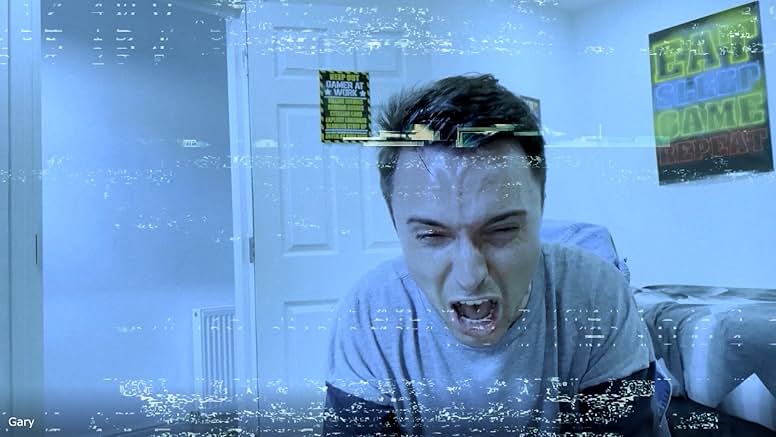
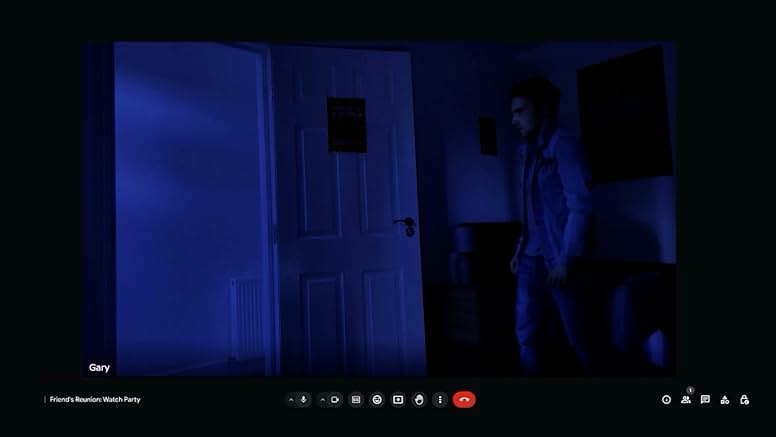
The film kicks off with a vibe that is instantly recognizable to anyone who has tried to maintain a long-distance friendship via fiber optics. We have our quartet: Gary (played by Roche, who clearly hasn’t slept since the edit began), Nathan, Sarah, and Angharad. They are a group of friends fractured by time, geography, and that specific brand of adult “we should totally catch up” lying that we all do.
There’s an immediate authenticity to the way they interact, all of it lubricated by the faint desperation of people trying to reconnect through a screen that keeps freezing at the worst possible moments. It’s funny… until it really, really isn’t.
The backdrop isn’t really anything dramatic, just distance, bad timing, and the slow drift of life keeping everyone apart. It’s the perfect excuse for the screenlife setup. Physical meetups are off the table, and the only window to the world is the glowing rectangle in front of them. This isn’t just a plot device; it’s a thematic anchor. In Demo[N], the computer isn’t just a tool, it’s a life support system. And as any horror geek knows, once you’re on life support, someone (or something) is going to try to pull the plug.
Don’t Open the .EXE
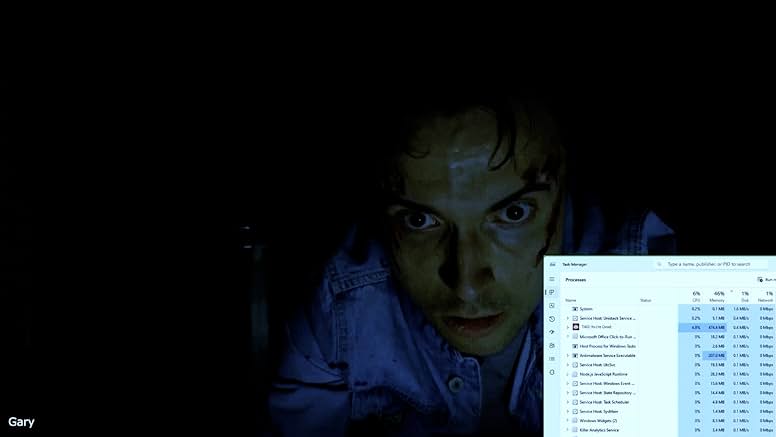
The horror starts not with a jump-scare, but with a notification. Gary, the resident tech-optimist/guinea pig, receives an email. It’s a demo for a new video game. And like every cursed object worth its salt, it practically begs to be opened. There’s that split-second hesitation, the digital equivalent of “should we read the Latin out loud?”, and then, click. Doom, now loading at 60 frames per second.
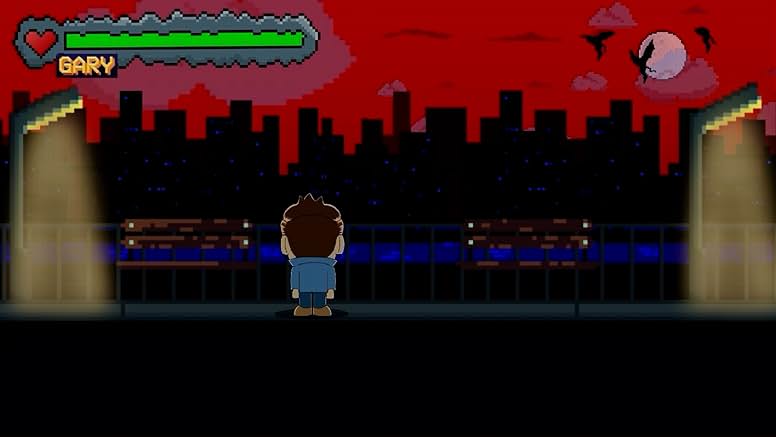
What follows is a masterclass in building tension through interface. As Gary begins to play the game, we see it through his screen-share. It’s a 16-bit surrealist nightmare that looks like a lost PS1 title found in an abandoned mental asylum.
But here’s where Roche earns his bones: the game begins to feel like it knows more than it should. It starts to blur the line between what’s on the screen and who’s watching it, behaving less like code and more like something with intent. It’s not just uncanny, it’s invasive. The kind of thing that makes you want to unplug everything and go live in the woods with a flip phone.
Breaking the Screenlife Tropes
We’ve all seen the bad screenlife movies. You know the ones: where the hacker just types ‘ACCESS GRANTED’ into a green command prompt, or where characters narrate every single thing they are doing (“I’m clicking the mouse now!”). Demo[N] treats the audience with more respect.
It trusts you to keep up, which makes the horror hit harder when things spiral. There’s no hand-holding here, just a slow, dreadful realization that the rules of the interface are being rewritten in real time.
When the supernatural force begins to manifest, it doesn’t just pop up behind someone’s chair. It infects the stream. It corrupts the video codecs. It turns the very act of seeing into a hazard. Roche uses the limitations of the medium to create a sense of claustrophobia. Even though these characters are in their own homes, they are trapped together in a digital box that is rapidly shrinking.
Every screen glitch becomes a jump scare waiting to happen. Every frozen frame feels like the calm before something reaches through the screen and rearranges your organs like desktop icons.
The Practicality of the Pixels
Let’s talk about the meat of the movie. For a film centered on digital themes, Demo[N] is surprisingly tactile. When the physical world starts to buckle under the weight of the digital haunting, Roche leans into that beautiful, grimy, indie aesthetic we love.
When the digital corruption escalates, it’s not just a game messing with their webcams. The game literally infects the people whose souls it’s claiming, twisting them into demonic versions of themselves. Bodies and minds start to unravel in ways that blur the line between the digital and the physical, turning the players into grotesque avatars of the horror they unwittingly downloaded. It’s the perfect fusion of screenlife paranoia and old-school body horror.
It’s the kind of effect that makes you wince first and then grin like a maniac because you know someone had way too much fun figuring out how to break a human body like a corrupted AVI file. The film understands that horror is about the invasion of the self. In a slasher, your skin is invaded by a knife. In Demo[N], your reality is invaded by a malformed line of code that wants to reshape you into something the BIOS can recognize.
Why It Works
As fans of the genre, we often forgive bad acting for great effects, or a weak plot for a killer atmosphere. Demo[N] doesn’t ask for those compromises. It’s an incredibly intelligent of filmmaking that feels like it was born from a late-night session of reading creepypastas and watching Videodrome.
Its energy is greasy and unhinged, the kind of movie that sneaks up on you when you’re half-asleep and refuses to let you look away.
It pokes fun at our collective stupidity, the way we click ‘Accept’ on cookies without reading the small print, the way we invite strangers into our digital living rooms, and the way we trust that a ‘Close’ button actually does what it says. There’s a streak of dark humor running through the film that keeps it from becoming a dour technology is bad lecture.
Once the first glitch happens, the movie shifts into a state that mirrors the escalating panic of a PC experiencing a Blue Screen of Death in the middle of a high-stakes task. It’s a 75-minute digital heart attack. No cooldown, no mercy, just escalating chaos until the system finally crashes in the most spectacular way possible.
Why I Love It
Demo[N] is living proof that all you need to make a classic is a computer, a few friends, and absolutely no regard for your own sanity. It’s a movie for the people who grew up on The Ring but now spend their time worrying about identity theft and data leaks.
It’s horror for the always-online generation, the ones who know that the scariest thing isn’t what’s under your bed, but what’s sitting quietly in your inbox.
It’s an excellent film because it takes a subgenre that was starting to feel stagnant (the screenlife movie) and injects it with a massive dose of adrenaline and possession horror and it’s absolutely essential viewing for anyone who considers themselves a connoisseur of the macabre.
It doesn’t play by the rules, instead it straps rockets to them, sets them on fire, and rolls them straight through your Wi-Fi signal.
So, the next time an old friend sends you a link to a demo at 3:00 AM? Do yourself a favor. Delete it. Or, if you’re like me, open it anyway and hope you look good in 4K when the demon shows up
Leave a Reply