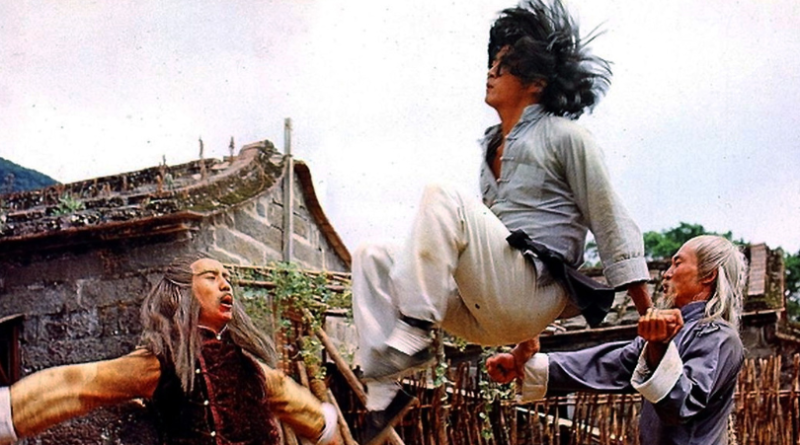
If you’re a regular visitor to the Horror Archives, you’ll know by now that I’m addicted to movies that feel like they were filmed on a dare. The kind of films that exist only because someone bet a somebody else that they couldn’t make a kung fu movie about strategy, philosophy, and who gets punched in the balls first. I’m talking about those glorious, grain‑heavy relics of the 1970s and 80s that prioritize looking cool over logic and narrative cohesion. And today, we’re talking about the absolute crown jewel of the “What the hell am I watching and why can’t I stop?” genre: The Mystery of Chess Boxing.
Forget your polished, high‑budget Hollywood fluff. This is a Joseph Kuo masterpiece, a movie where the villain has a name so iconic it inspired the Wu‑Tang Clan, the training sequences include stealing rice from a master’s bowl, and the central combat philosophy literally borrows concepts from Chinese chess (xiangqi). It’s insane, it’s absurd, and it has more heart in its low‑budget heart than a thousand Steven Segal flicks.
Now, there’s a terrifying concept.
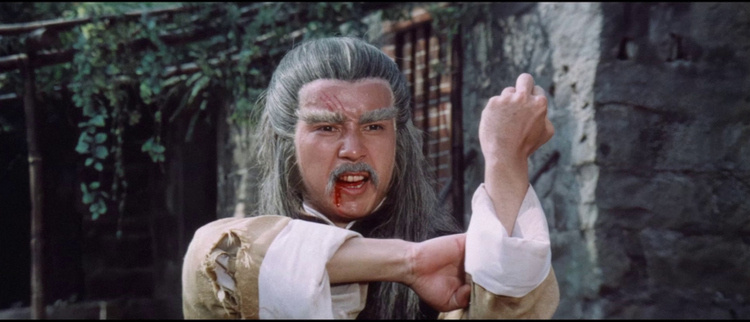
The Ghost‑Faced Killer: The Man, The Myth, The Red Face
First, let’s shine a spotlight on the real star of chaos: the antagonist. Because let’s be honest: in a movie titled The Mystery of Chess Boxing, the real mystery is how anyone thought a character this badass could exist in 1979, much less be front and center in a budget kung fu flick.
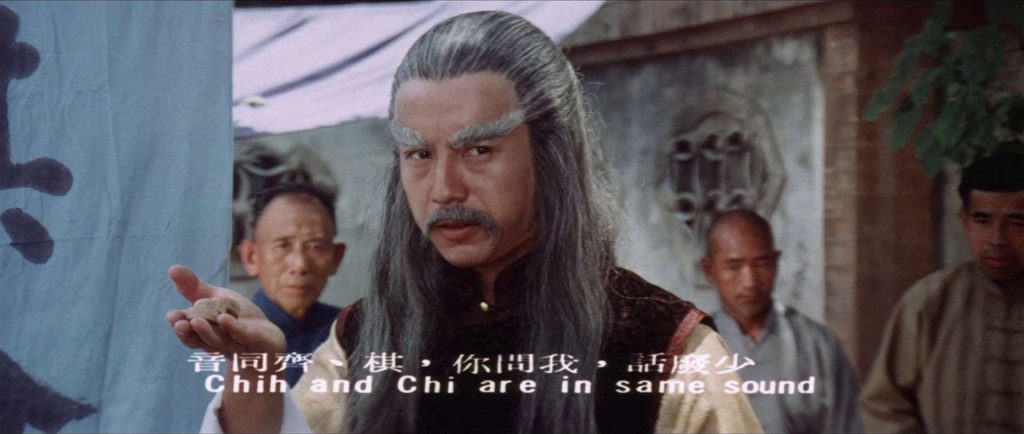
Enter the Ghost‑Faced Killer, portrayed with utterly unhinged intensity by Mark Long. This is not some mild‑mannered bad guy who twirls a mustache and then falls onto something sharp and pointy. Oh no. The Ghost‑Faced Killer is an unapologetic cinematic nightmare with one of the most unforgettable visuals in martial arts history: his Five Elemental style. He doesn’t just walk into a scene, he prowls, like if a Shakespeare villain decided to join a kung fu sect and start kicking people so hard in the chest that their internal organs exploded.
His calling card? He tosses down a decorated plate with a ghostly face, grinning at his prey before unleashing hell. Now, the Ghost‑Faced Killer doesn’t just punch you. He unleashes a brutal interpretation of the Five Elements style of kung fu, a system that, in theory, combines the strengths of Fire, Earth, Gold, Water, and Wood. In practice? He hits like Fire, crushes like Earth, distracts like Water, and leaves you weighed down as if you have just been forced to ingest liquid Gold. He’s on a single‑minded revenge tour, hunting down the leaders of rival clans who betrayed him long before our kid hero even got his first training manual.
And in classic kung fu movie fashion, the Ghost‑Faced Killer is incredibly expressive, not with dialogue so much as threats delivered through bone‑crunching technique, dramatic pauses, and the occasional ourburst of maniacal laughter that echoes like a motorcycle backfiring in an empty warehouse.
He is cinematic lunacy embodied. He is the original trash‑talker, turning every fight into a demonstration of brutality, style, and just enough philosophy to make you wonder if he’s reading your aura or your death certificate.
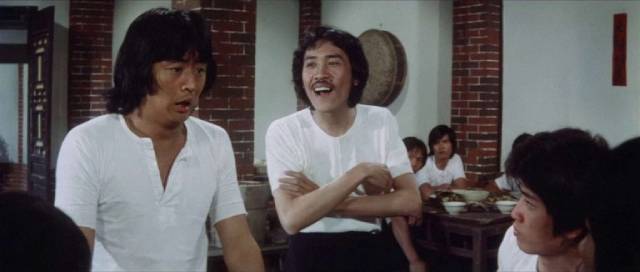
Ah Pao’s Heroic (And Hilarious) Journey
Then we have our protagonist: Ah Pao, played by Lee Yi‑Min, a lead with the earnestness of a kid who wants revenge but the physical coordination of someone whose last hobby was tripping over shoelaces.
Ah Pao is your classic ‘earnest kid with a dead father’ trope. He wants to learn kung fu to avenge his father’s death at the hands of the Ghost‑Faced Killer. Fair motivation. Noble, even. Just one snag: he’s kind of terrible at it.
He joins a local kung fu school where he is immediately bullied, not just by the seniors, but probably even the school’s stray cats (if cats cared about kung fu hierarchy). His early training scenes almost feel like a montage of rejection: a missed block here, an accidental faceplant there, and a whole lot of getting shoved out of the way like he’s the last pita bread at a buffet full of hungry masters.
This is where the movie’s specific brand of humor kicks into overdrive. Ah Pao’s early days aren’t about discovering inner peace, no, they’re about not getting his ass kicked every five seconds. He’s the underdog we love to root for because his struggle is painfully relatable. Who hasn’t wanted to learn a deadly martial art just to spite that group of coworkers who gang‑up on you every Monday morning? Right? No? Just me?
The Master and the Rice: A Lesson in Patience, or Just Really Weird Hunger Pangs
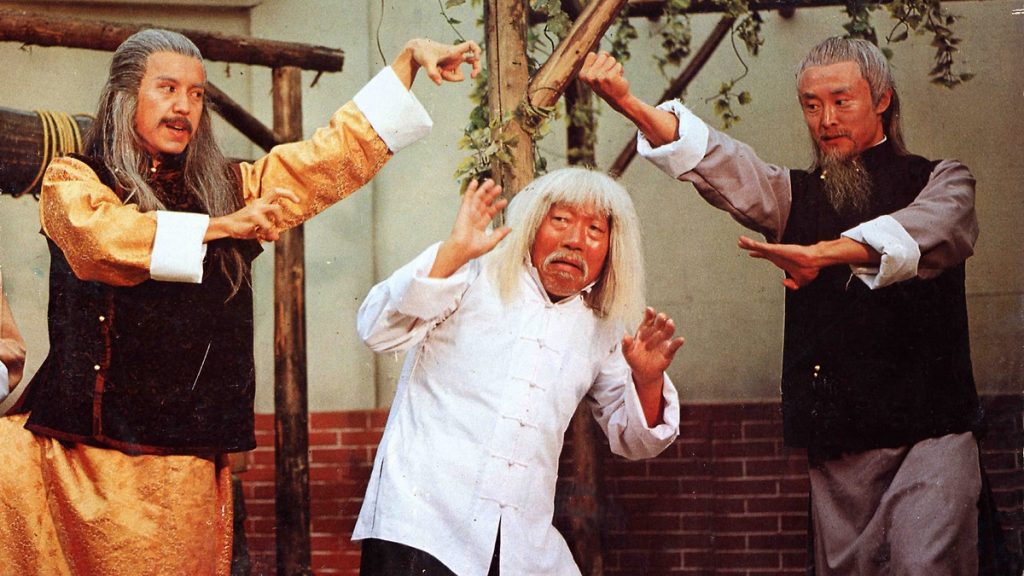
Ah Pao’s salvation comes in the form of the school’s cook, portrayed by Simon Yuen, father of legendary action choreographer Yuen Woo‑Ping and a man whose presence in any film instantly elevates it to wise old master status.
Yuen doesn’t just cook. He teaches. And his first lesson is delivered not with punches, but with a bowl of rice. In what has become one of the most iconic training sequences of classic kung fu cinema, the cook challenges Ah Pao to steal a single grain of rice from his bowl. If martial arts movies had SATs, this would be the absurd logic section.
Ah Pao tries all the obvious and ridiculous approaches. He creeps. He sneaks. He nearly elbows himself in the face trying to outsmart gravity. Each failed attempt plunges him deeper into the realm of relatable human humiliation. Finally, in a moment of pure B‑movie brilliance, he waits until the master finishes eating and casually picks up the last grain already left in the bowl.
Boom. Mastery unlocked.
Now, is that training? Philosophically? Probably not. But in the context of this film? It’s legendary. It’s brilliant. It’s idiotic. It’s the exact kind of moment that makes you both laugh and wonder whether the masterminds behind the karate tradition were just completely insane geniuses.
This scene alone is worth the price of admission, the weird satisfaction of watching Ah Pao learn rules by bending them with pure necessity, and it perfectly captures the delightful absurdity at the root of the movie.
The Strategy: When Chess Becomes Lethal
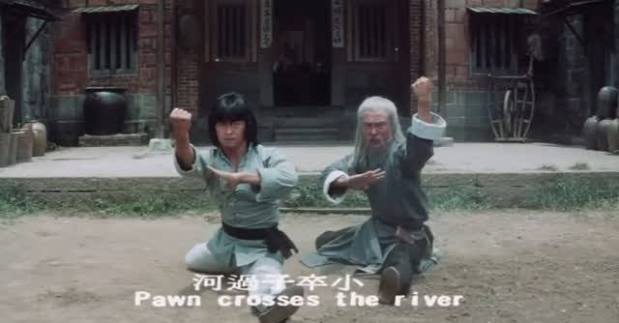
Eventually, Ah Pao gets kicked out of the school, because apparently carrying around the Ghost‑Faced Killer’s medallion is terrible PR for the local dojo, and he winds up under the wing of Chi Sue‑Tin, a master played by Jack Long.
This is where The Mystery of Chess Boxing title finally starts making sense.
Kinda.
Chi Sue‑Tin isn’t just a kung fu master, he’s a master strategist who sees the board not as a game but as a battlefield. To him, every piece in xiangqi (Chinese chess) represents a tactical opportunity, and every opponent’s move is a weakness waiting to be exploited.
Now, in a normal movie, teaching chess strategy would be a boring montage of people sitting around quietly and squinting at wooden pieces. But this is a Joseph Kuo film. So instead, Ah Pao learns to utilise the chessboard’s logic while he fights, reading his opponent’s intentions as though they’re chess moves, predicting their next attack like a knight forking a king and rook. The training is choreographed so you almost believe he’s doing mental math while he’s breaking his bones.
This chess‑inspired combat philosophy becomes a narrative throughline, not because it makes perfect logical sense (it doesn’t, and that’s the point), but because it feels like what would happen if a dojo full of obsessives treated martial arts like a precise, rule-driven game.
Chess Boxing: It’s a Whole Vibe, Even if It’s Technically Ridiculous
Let’s get this straight: there is no real fusion sport in this movie involving alternating rounds of chess and physical fighting.
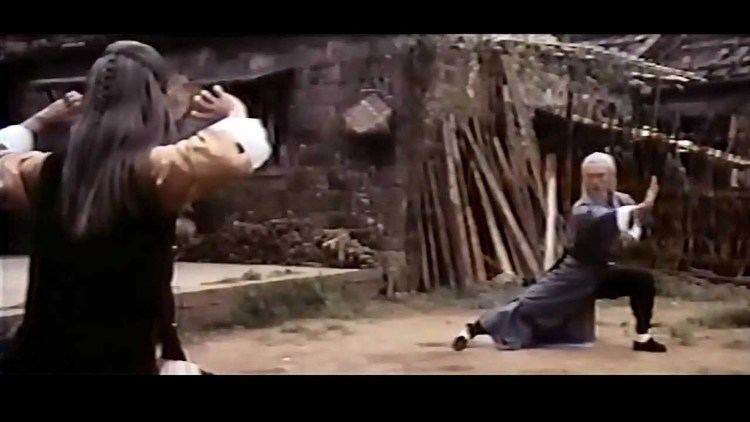
That version of chessboxing didn’t exist until the early 2000s (and even then it was staged more like a novelty sport). In the context of this movie, Chess Boxing is metaphorical, a rhetorical device that means ‘fight with your brain as much as your body’. But the way the film stages this metaphor is pitch‑perfect 70s kung fu absurdity.
And when Ah Pao applies this strategic perspective in actual fights, anticipating moves, countering strikes like he’s guarding a king, and maneuvering his body like a queen on an attack, it looks genuinely cool. Even if, seen through the cold lens of logic, it’s about as sensible as learning to fly by memorizing a dictionary.
But in the moment? It’s one of the most kickass things you’ve ever seen. You really start to believe that Ah Pao can checkmate someone with his elbows.
The Climax: A Chessboard of Flesh and Fury
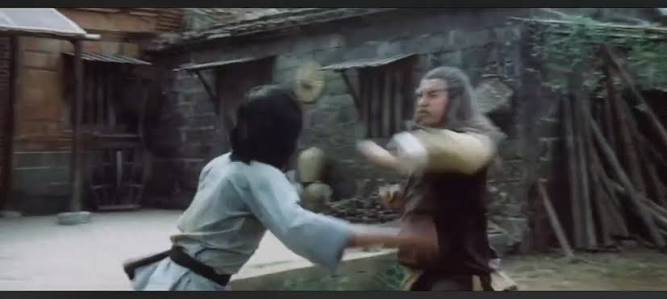
Everything leads to the inevitable confrontation with the Ghost‑Faced Killer. And let me tell you, this final fight is an all‑timer.This isn’t just a punch‑fest; it’s a beautifully choreographed ballet of chaos. Ah Pao and Chi Sue‑Tin don’t just spar, they dance through their opponent’s attacks with the same fluid rhythm you’d expect from a rapid succession of pieces sweeping the board.
There’s no wire‑work here (outside of Ah Pao obvioulsy being held up for the final move), this is pure physical skill, built on dozens of takes, hieavily practised sequences, and actors who really know how to throw a kick without actually committing you to the hospital.
Watching them move feels like seeing Tetris pieces come alive and start punching the Ghost‑Faced Killer in formation:
Ah Pao ducks under a punch like a rook sliding into position.
His master feints like a knight ready to fork.
They coordinate like a queen and bishop cutting off every escape route.
And when the Ghost‑Faced Killer finally goes down, it’s not because of a magic move or an out‑of‑left‑field special effect. It’s because he was outplayed. Every step in the final sequence feels like a strategic victory, a physical expression of every lesson, every chess analogy, every stolen grain of rice.
It’s satisfying not just as a fight scene, but as the culmination of a training philosophy that began with humiliation, discipline, and maybe one too many close‑ups of chess pieces.
Why I Love It
The Mystery of Chess Boxing works because it never blinks. It takes the ludicrous premise of ‘teaching kung fu with strategy borrowed from Chinese chess’ and treats it with the absolute seriousness the genre deserves.
It’s a movie that knows exactly what its audience wants:
inventive fights,
a charismatic villain,
underdog training moments,
goofy comedy sprinkled like confetti,
and a final confrontation that leaves you cheerfully unsure whether you just watched brain meets brawn or brawn pretending to be a brain.
For those of us raised on midnight movies, kung fu classics, and grainy 16mm chaos, this film feels like a cheerful slap in the face from a friend who’s figured out martial arts and can’t wait to show you every ridiculous trick.
If you haven’t seen The Mystery of Chess Boxing, you are falling short of cult cinema duties. It’s a reminder that movies can be ridiculous, low‑budget, spectacularly entertaining, and genuinely heartfelt at the same time.
It’s got the edge. It’s got the humor. It’s got the strategy.
It’s got the Ghost‑Faced Killer.
What more could you possibly ask for?
So go find it on whichever streaming service is currently hosting the ghosts of the 70s, grab some popcorn (and maybe a grain of rice to steal), and prepare to be enlightened by one of the weirdest, wildest, and most delightfully mental martial arts films ever made.
Leave a Reply