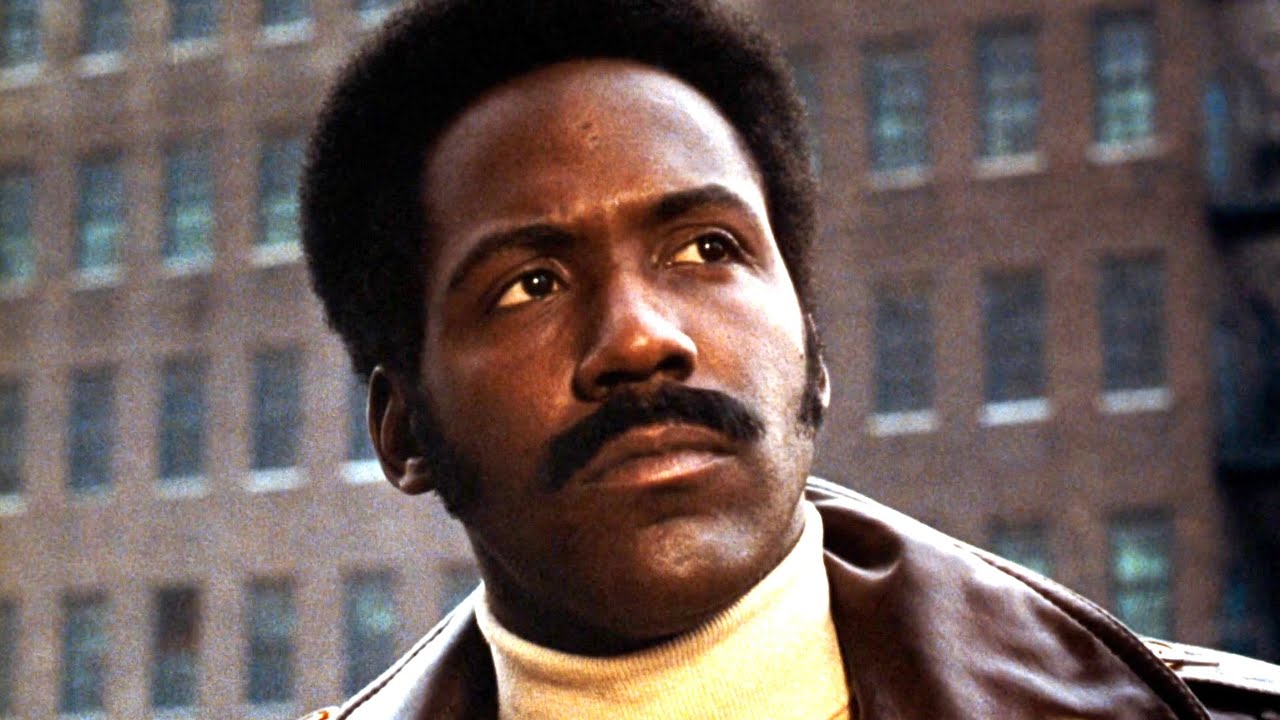
Listen up, you beautiful creeps and vinyl-spinning ghouls. Today we are digging into a 1971 hit that didn’t just change cinema; it kicked the door off the hinges, lit a cigar, and told the old guard to get the hell out of the way. We’re talking about Shaft.
Directed by the legendary Gordon Parks, a man who was already a world-class photographer and polymath before he stepped behind the camera, Shaft is the cornerstone of what would become the Blaxploitation era, one of my favourite eras of cinema in celluloid history.
But calling it just a Blaxploitation flick is so far off the mark that you couldn’t hit a cows arse if you were holding a banjo. This is a neo-noir, an urban western, and a cultural revolution wrapped in a leather trench coat. It is the definitive document of 1970s New York City, and it features the coolest protagonist to ever walk the face of the Earth.
The Context: A New Hero for a New Generation
To understand why Shaft hit so famn hard in 1971, you have to look at what Hollywood was offering at the time. Black actors were mostly relegated to sidekick roles or saintly, safe characters. You know, the racist shit.
Then came John Shaft.
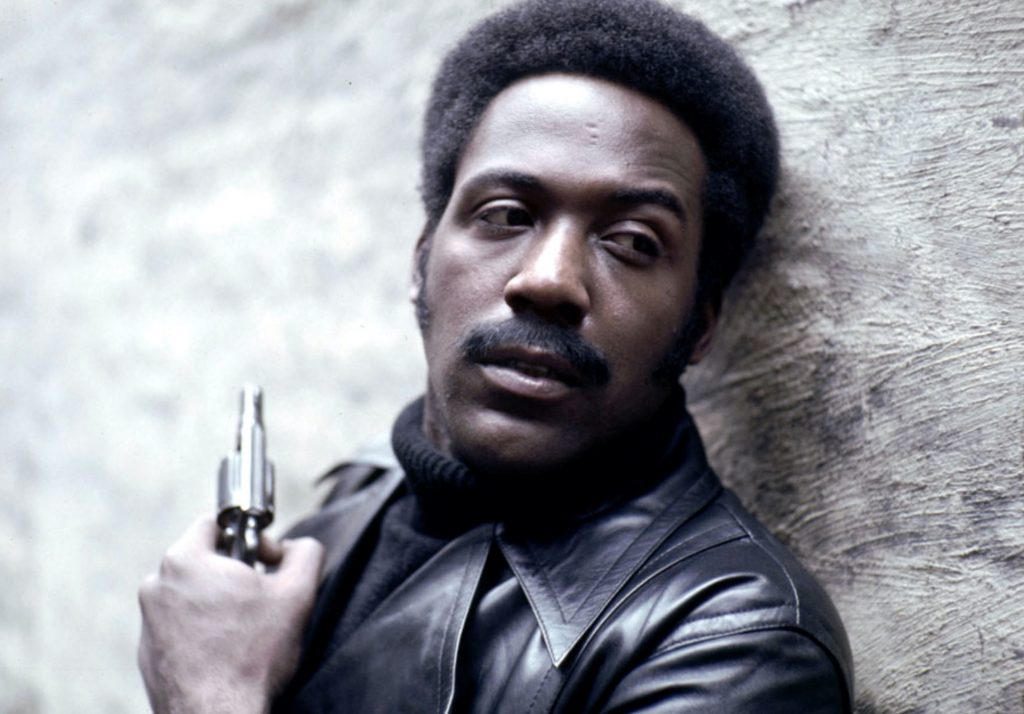
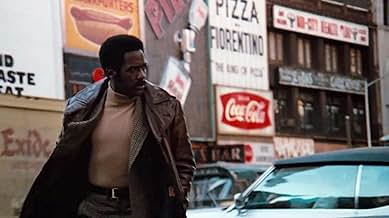
He wasn’t a saint. He wasn’t looking for approval. He was a private eye who operated in the grey areas between the law, the mob, and the militants. He was a man of total agency. When John Shaft walks across Times Square in the opening credits, ignoring the traffic, dodging the cabs, and giving the middle finger to a world that wanted him to be invisible, it was a declaration of war. It told the audience: ‘This is a new kind of hero. He is Black, he is proud, and he doesn’t take shit from nobody’.
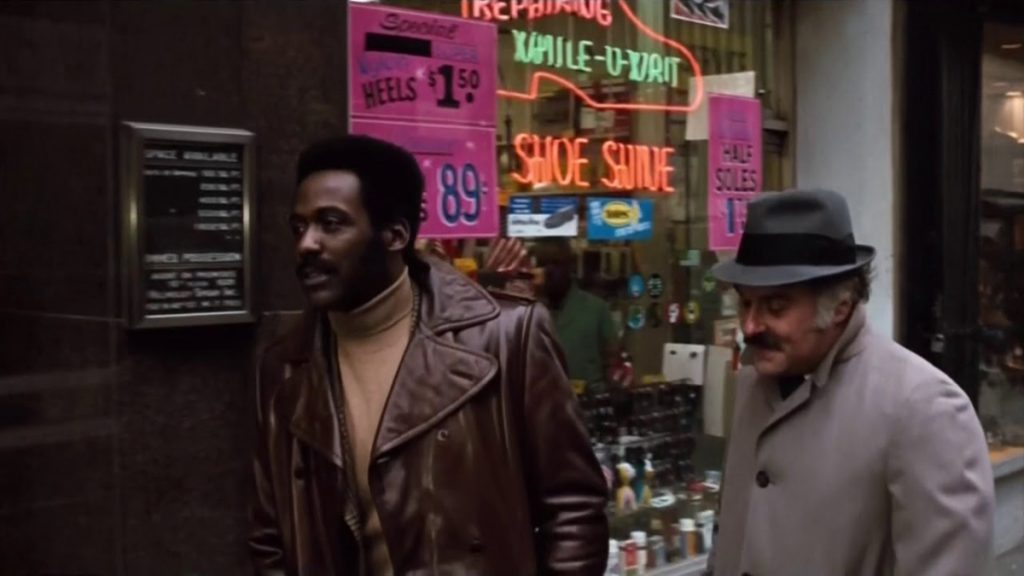
The movie was based on a novel by Ernest Tidyman (a white writer who, interestingly, also wrote The French Connection), but it was Gordon Parks who breathed the life into it. Parks brought a photographer’s eye to the grimy, snow-slushed streets of Harlem and Greenwich Village. He made New York look like a living, breathing character, one that was beautiful, dangerous, and utterly real.
Richard Roundtree: The Definition of Presence
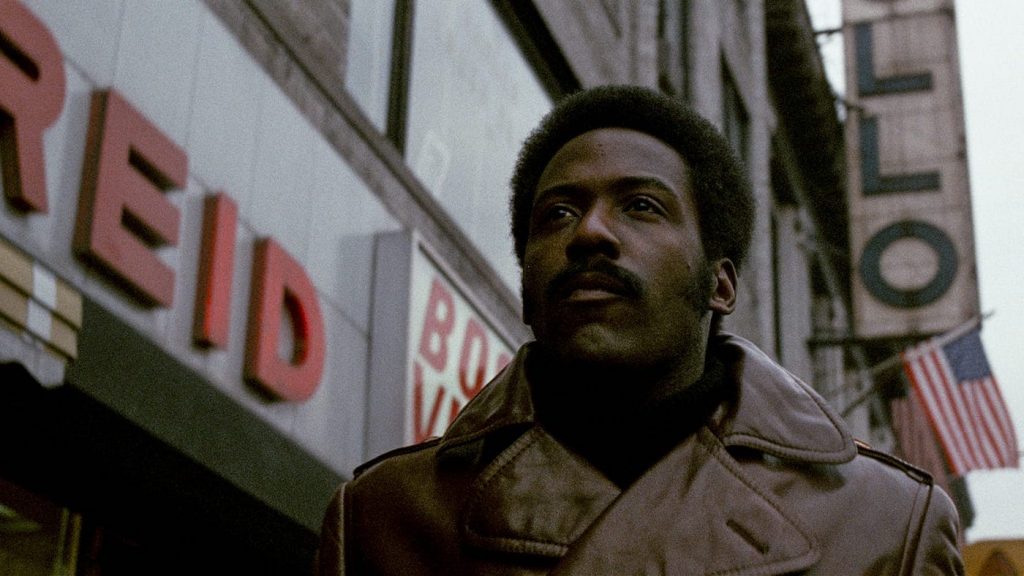
At the time, Richard Roundtree a former model and stage actor with relatively little film experience. But the second he appears on screen, he owns it.
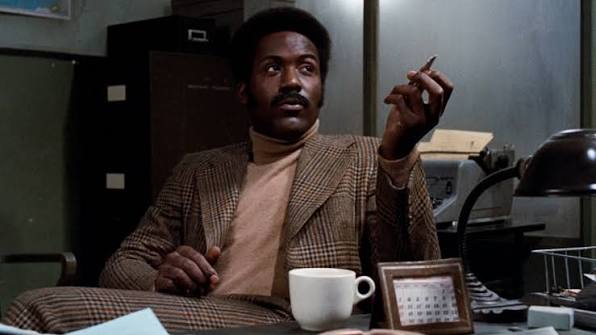
Roundtree’s John Shaft is the ultimate in cool. It’s in the way he wears that leather coat (which became an instant fashion icon), the way he smokes his cigar, and the way he delivers lines with a dry, cynical wit. He isn’t a superhero; he’s a professional. He knows the street, he knows the cops, and he knows how to play them against each other to get the job done.
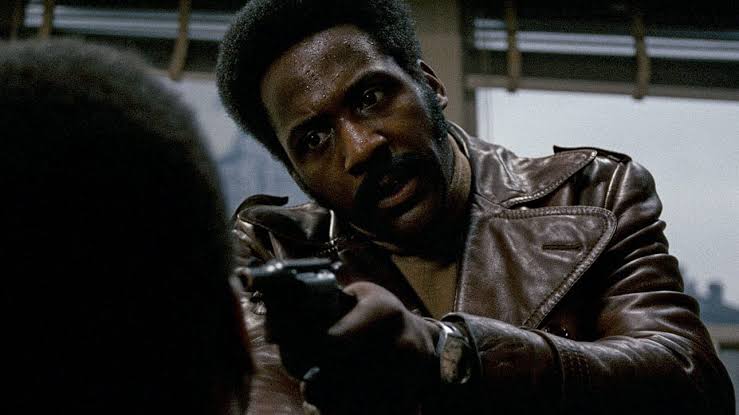
There’s a specific scene where he’s being interrogated by Lt. Vic Androzzi (Charles Cioffi), and Shaft just leans back and says:
“I got two problems. I got a dead body in my office and I got a live one in my face.”
That’s the Shaft ethos. He’s smarter than you, he’s tougher than you, and he’s definitely better looking than you.
The Score: Isaac Hayes and the Sound of the Streets
I have mentioned elsewhere that some movies are defined by their music, but Shaft is its music. The Theme from Shaft by Isaac Hayes is arguably the most famous piece of film music in history.That ‘wakka-wakka’ wah-wah guitar, the driving hi-hat, and the deep, soulful baritone of Hayes telling us about a man who would “risk his neck for his brother man”, it’s sonic perfection. It gave the film a rhythm and a swagger that separated it from every other detective movie of the era.
Isaac Hayes didn’t just write a catchy tune; he wrote a symphony for the urban jungle. The score won an Oscar (the first for a Black composer in a major category), and it paved the way for the funk-infused soundtracks that would define the 70s. When you hear those horns kick in, you don’t just see John Shaft; you feel him.
The Plot
The plot is classic noir: Bumpy Jonas (Moses Gunn), the kingpin of the Harlem underworld, has a problem. His daughter has been kidnapped by the Italian Mafia who are trying to move in on his territory. He doesn’t go to the cops; he goes to Shaft.
What follows is a complex web of alliances and betrayals. Shaft has to navigate the tension between the Black militants (led by Christopher St. John as Ben Buford) and the white-dominated police force. Shaft is the bridge. He is the only one who can navigate both worlds, but he belongs to neither.
The film explores the racial tensions of the era without ever becoming a message movie. It shows the reality of the streets, the poverty, the power struggles, and the systemic corruption, but it stays focused on the mission. Shaft isn’t trying to solve racism; he’s trying to find a girl and get paid. But in doing so, he becomes a symbol of resistance.
The Action: Gritty, Not Glossy
The action in Shaft isn’t the choreographed ballet of modern John Wick films. It’s messy, it’s violent, and it feels like a street fight.
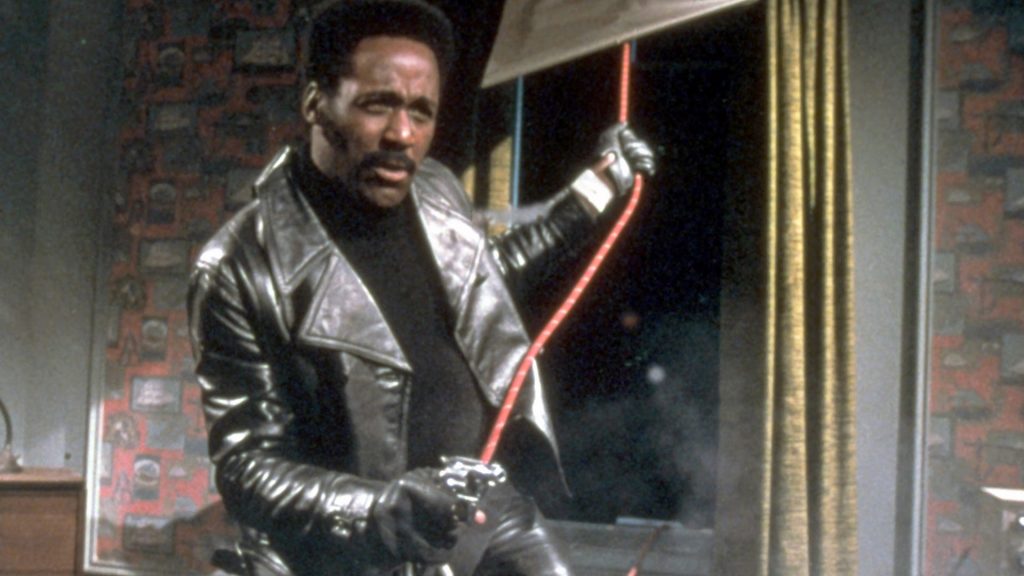
The finale, a daring rescue mission involving a hotel, some fire hoses, and a lot of shattered glass, is a high-point in tension. It shows Shaft as a tactician. He uses the tools at his disposal to outsmart a superior force. It’s grounded, it’s visceral, and it lacks the invincibility of later action tropes. Shaft gets hurt. Shaft gets tired. But Shaft keeps moving.
The Legacy: The House that John Built
Without Shaft, there is no Superfly. There is no Foxy Brown. There is no Black Dynamite. It created the template for an entire genre.
But more than that, it changed how Hollywood viewed Black audiences. Shaft was a massive box office hit, proving that there was a huge, underserved market for films featuring Black heroes. It played a crucial role in helping stabilize MGM during a rough period
John Shaft became a folk hero. He represented a refusal to stay in one’s place. He was the urban knight-errant, a man who lived by his own code in a world that was constantly trying to break him. Even when the franchise eventually leaned into more mainstream action in the sequels and the later reboots, the 1971 original remains the pure, uncut diamond of the series.
Why I Love It
Because it remains one of the most stylish, atmospheric, and culturally significant films ever made. It is a perfect time capsule of a New York that no longer exists, a city of grit, danger, and soul. It’s a movie that rewards multiple viewings, not just for the plot, but for the vibe.
When you watch Shaft, you aren’t just watching a detective movie. You’re watching the birth of a legend. You’re watching a film that dared to be different, dared to be Black, and dared to be the coolest thing in the theater.
It is the watermark for urban noir. It features the greatest theme song of all time, the coolest protagonist of all time, and a director who knew exactly how to capture the heart of the city.
If you haven’t seen it in a while, do yourself a favor: turn off the lights, turn up the Isaac Hayes, and let John Shaft take you for a walk through the streets of New York.
He’s the cat that won’t cop out when there’s danger all about. He’s Shaft. And he’s the baddest mother—(shut your mouth!).
Leave a Reply