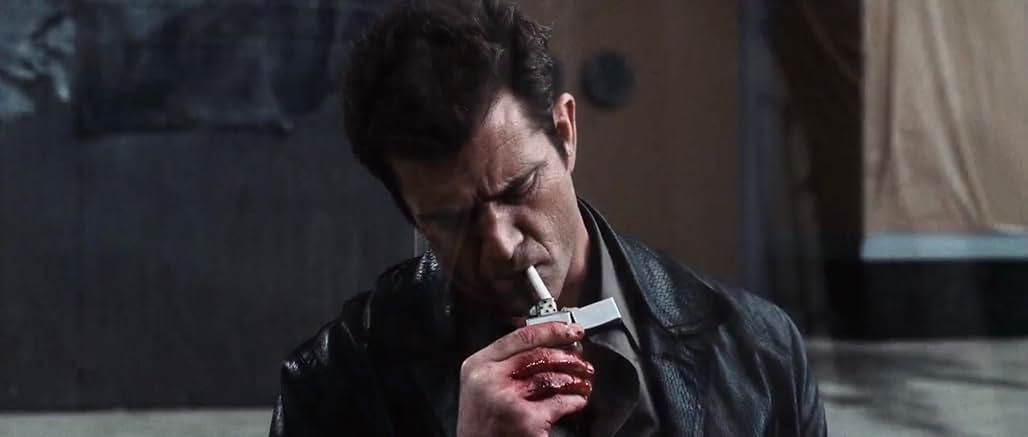
There are a lot of ways to tell people what kind of movies matter to you. You can fill shelves with Blu-rays, spend years writing about cinema, or bore your friends senseless by explaining why a particular fight scene from 1978 is better than everything Hollywood produced last summer. I took a slightly more permanent approach: I named my youngest daughter Porter.
Not after a historical figure, a family member, or a literary character. After Porter, the relentless, bullet-riddled human force of nature played by Mel Gibson in Brian Helgeland’s Payback. That probably tells you everything you need to know about how highly I regard this film. Out of every action movie, crime thriller, noir, revenge picture, and hard-boiled gangster story I’ve ever seen, Payback sits alone at the top of the pile.
What makes that devotion even stranger is that Payback isn’t about saving the world. Nobody is stopping a nuclear launch, defusing a bomb, or rescuing the President. The entire film revolves around a single, stubbornly specific figure: seventy thousand dollars. Not a penny more. Not a penny less. Porter isn’t chasing destiny or redemption. He’s collecting a debt. That fixed number becomes the engine for one of the funniest, meanest, and most perfect crime films ever made.
To truly understand Payback, you have to understand where it comes from. The source material is Donald E. Westlake’s 1962 novel The Hunter, written under the pseudonym Richard Stark. It introduced Parker, renamed Porter here due to adaptation rights and production decisions, a character defined not by emotion, but by function. John Boorman’s 1967 adaptation Point Blank took that same skeleton and turned it into something abstract and dreamlike: Lee Marvin drifting through a fractured modernist nightmare, half man, half myth.
Brian Helgeland does something different. He drags the concept back down to street level. No metaphysical haze. No existential drift. Just Chicago, concrete, debt, and momentum. Payback is what happens when that archetype stops being symbolic and starts acting like a professional who wants his money back.
And that is the key word: professional.
Porter is not a hero. He’s not even really an antihero in the modern sense. He’s an operator. A man with rules so rigid they function like physics. If you owe him money, then you are already dead and you just haven’t realised it yet.
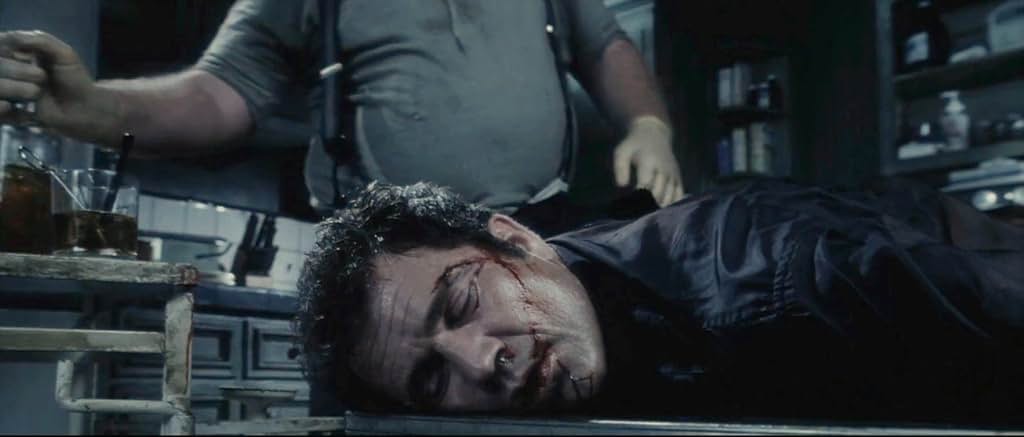
The brilliance of the setup is its simplicity. Porter is betrayed by his wife Lynn and his partner Val Resnick after a heist netting $140,000. He is shot, left for dead, and buried under the assumption that the problem has been solved. Instead, he returns, not with vengeance as ideology, but with vengeance as bookkeeping.
Helgeland’s genius is that he never lets Porter become emotionally legible in a conventional way. There is no big cathartic transformation. He heals. He walks. He goes back to work. The film’s first movement is essentially resurrection stripped of spirituality. It’s administrative.
And then he begins rebuilding.
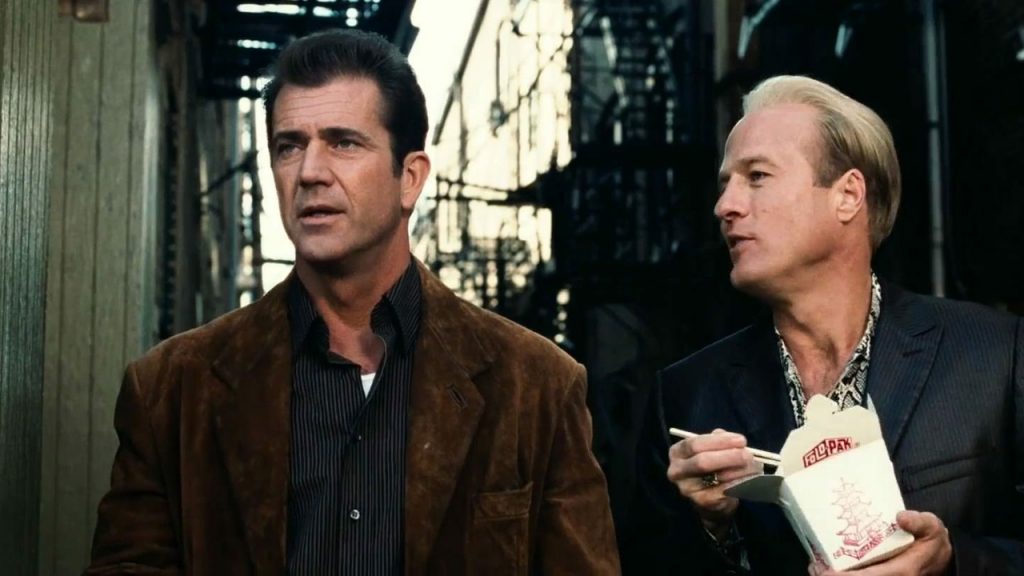
This is where Payback becomes something rare: a crime film about competence. Porter’s re-entry into the world is not marked by emotional discovery but by procedural excellence. He steals, scams, manipulates, and recalibrates himself like a machine being reassembled in real time. Every interaction is transactional. Every gesture is measured.
Mel Gibson’s performance is crucial here. This is him at his most controlled and least sentimental. Porter doesn’t explode; he applies pressure. He moves through the world like a man permanently unimpressed with its operating standards. Even violence feels like routine maintenance. There’s no rage in it, just efficiency.
And then there’s Val Resnick.
Gregg Henry’s Val is one of the great small-time monsters of crime cinema: cowardly, vain, cruel, and absolutely convinced of his own importance. He is what happens when ambition survives without competence. Where Porter is discipline, Val is noise. Where Porter is precision, Val is panic dressed up as confidence.
Their dynamic gives the film its moral clarity. This is not a story about shades of grey. It is a story about two kinds of professional failure: the man who betrays the code, and the man who enforces it.
The Syndicate, the film’s sprawling criminal infrastructure, adds a second layer of comedy and horror. As Porter moves upward through its ranks, killing everyone he comes across (excpet James Coburn because he’s James fucking Coburn), what becomes increasingly clear is that nobody understands what he is doing and ehy he is doing it. He is offered millions to walk away. He refuses. Not because of pride, ideology, or revenge, but because the number is wrong.
Seventy thousand dollars is not symbolic. It is sacred.
That’s the running joke that gives Payback its strange pulse. In any rational criminal ecosystem, Porter’s demands are absurd. But the Syndicate is no longer rational. It is bureaucratic, corporate, and insulated from the consequences of individual obsession. Porter is what happens when that system encounters someone who refuses to bend to its will.
He is an accounting error that refuses to correct itself.
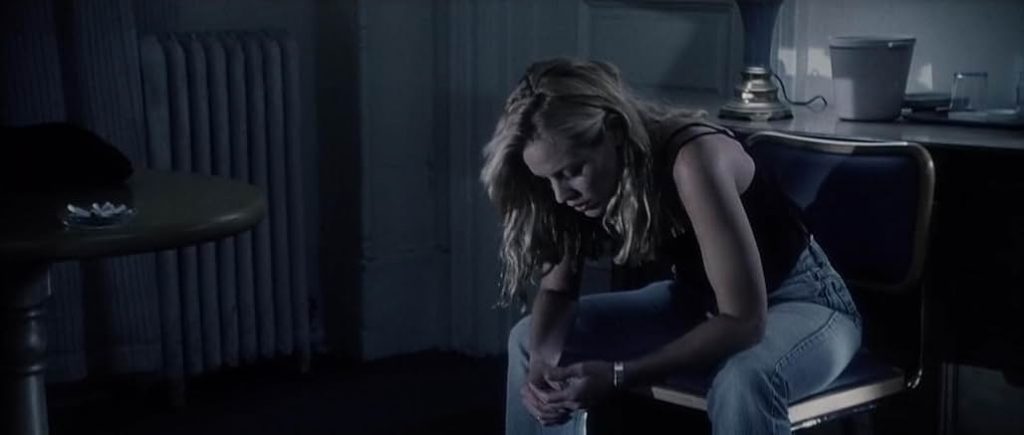
Rosie, played by Maria Bello, provides the closest thing the film has to emotional grounding, though even that is shaped by the logic of survival rather than romance. She understands the world in the same way Porter does: as risk, leverage, and timing. Their connection works precisely because it avoids sentimentality.
Around them, the city is controlled by institutions that behave like criminal corporations. Detectives operate like freelancers. Mob bosses behave like executives. Violence becomes a kind of middle management tool. Bill Duke and Jack Conley’s cops are particularly sharp in this regard, not protectors of order, but opportunists working their own angle. Everything in Payback is transactional. Everything has a price.
Except Porter.
And that is what makes him dangerous.
As Porter climbs toward the top of the Syndicate, the film becomes less about action set pieces and more about systemic collapse. Every conversation reveals how far removed the upper levels of crime are from the physical reality of enforcement. William Devane’s Carter is particularly effective here, calm, polished, completely unable to process the idea that someone is willing to burn an entire network of power over what amounts to pocket change in his world.
That disconnect is the thesis of the film. Power systems fail not when they are challenged by stronger systems, but when they encounter someone who refuses to translate value into their language.
By the time Porter reaches the Syndicate’s core, the film has fully transformed into a study of imbalance. Violence escalates, but never in a way that feels operatic. It remains grounded, physical, almost banal. Even the infamous torture sequence, the toe-crushing scene, is less about spectacle than it is about miscalculation.
Porter does not break because the Syndicate misreads what kind of object he is.
He is not a man who can be negotiated with.
And then there is the question of endings, because Payback has two of them, and they feel like two different philosophies of cinema.
The theatrical cut is stylised, blue-tinted, sharpened into near-comic-book abstraction. It leans into voiceover, irony, and a kind of heightened noir rhythm. Porter becomes almost mythic, a figure defined by wit as much as violence.
The director’s cut (Payback: Straight Up) removes that layer of narration and reshapes him entirely. Without voiceover, Porter becomes harder to read, colder, more elemental. The world loses its ironic distance and suddenly you are walking with a man who may suddenly shoot you in the back of the head and be drinking a coffee before your body has hit the floor.
Even the Syndicate changes shape. It becomes less theatrical, more institutional. The power structure feels less like a gang and more like a system without a visible centre.
And the endings diverge accordingly. One version gives you controlled spectacle. The other gives you exhaustion, ambiguity, and a sense that survival is the only real victory available.
Both versions work. That’s the strange miracle of it. Two different philosophical readings of the same raw material, both valid, both brutally effective in their own language.
That is why Payback endures. Not because it reinvents crime cinema, but because it distils it. It strips everything down to a single idea: someone took something from you, and you want it back, exactly as it was agreed.
No inflation. No reinterpretation. No compromise.
Just the number.
Seventy thousand dollars.
And a man who refuses, under any circumstances, to accept less.
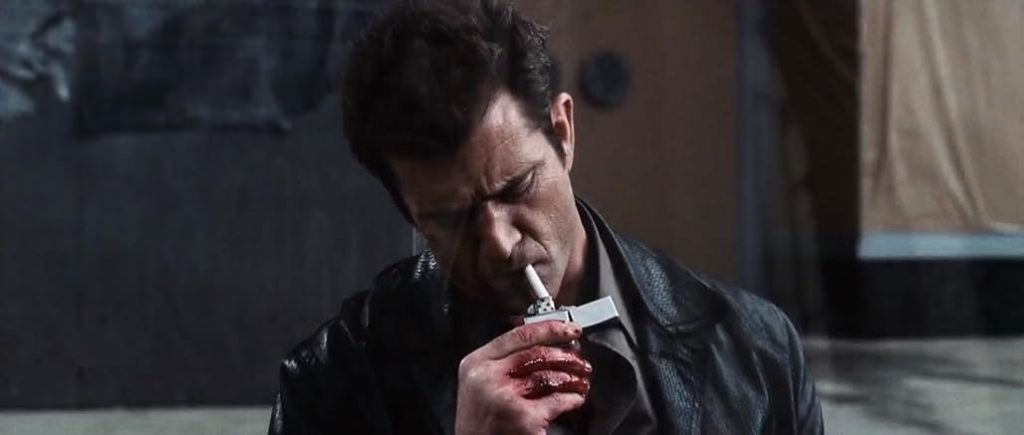
In the end, that’s the real reason the film stays lodged in your head long after it’s finished. It is not about revenge. It is not about justice. It is about refusal. A stubborn, immovable refusal to let the world quietly rewrite the terms of your existence.
Some people build their identity around films. Some collect them. Some analyse them.
I named my daughter after one.
And that probably says everything the movie itself would bother to say about the matter: nothing sentimental, nothing softened, nothing negotiated. Just a simple, unchanging line in the sand, and the quiet, relentless certainty of a man who will cross any distance to make sure it is honoured.
Leave a Reply