Look, we’ve all had bad days. You catch your husband at a bar with a woman whose hair has more volume than your entire personality, you get gaslit by the local sheriff, and then, to top it all off, giant bald alien in a velvet tracksuit tries to steal your diamond necklace. It’s a lot. But for Nancy Archer, the long-suffering protagonist of the 1958 classic Attack of the 50 Foot Woman, this isn’t just a Tuesday; it’s the catalyst for the greatest growth spurt in cinematic history.
Welcome, freaks and geeks, to the movie that proved size actually does matter, especially when you have a score to settle with a cheating husband named Harry. This isn’t just a B-movie; it is a towering achievement in camp, a beautiful budget-stretching special effects festival, and a surprisingly dark look at what happens when a woman finally reaches her limit and then surpasses it by several stories.
The Social Dynamics of a Desert Town
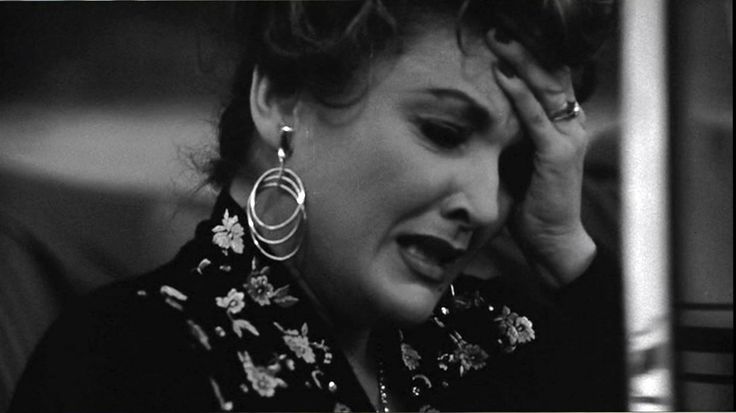
We begin in a desert town that seems to consist entirely of one bar, one jail, and a whole lot of sand. Nancy Archer (Allison Hayes) is the town’s resident wealthy mess. She has all the money, a fragile grip on her nerves, and a husband, Harry, who is essentially a human cigarette, thin, toxic, and likely to leave a stain on everything he touches.
Harry spends his time at the local watering hole with Honey Parker, a woman who is clearly only with him because he has access to Nancy’s bank account. The social dynamics here are fascinating. Everyone knows Nancy is being cheated on. Everyone knows Harry is a bottom-feeder. But because Nancy has a history of seeing things (and probably a history of enjoying a stiff drink), she is the one the town treats like a joke. It’s a classic setup for a revenge fantasy, but first, we need some science fiction to make the revenge physically imposing.
The Velvet Giant and the Space Onion
Nancy is driving through the desert, as one does when they are rich and miserable,when she encounters a giant glowing sphere. In the 50s, aliens didn’t arrive in sleek, aerodynamic chrome ships; they arrived in things that looked like oversized Christmas ornaments or glowing onions.
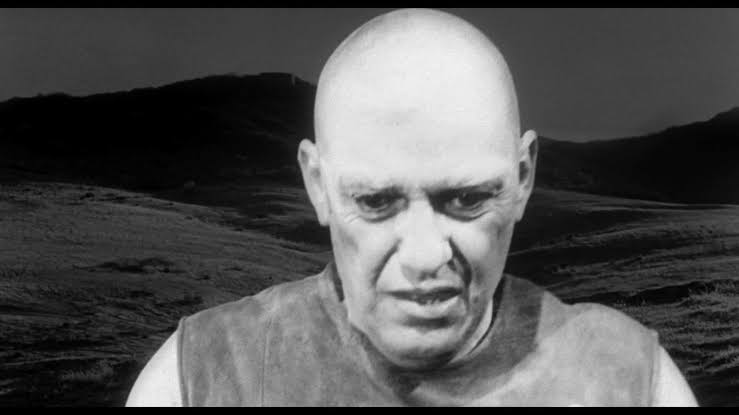
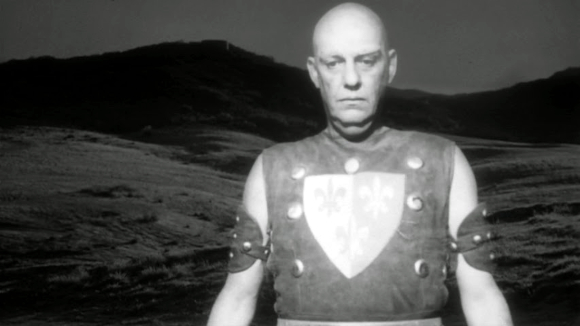
Out of this space-onion steps a giant. Now, when I say giant, I mean a man who looks like he’s wearing a very comfortable medieval tunic and has the hairline of a man who has given up on vanity. He’s massive, he’s bald, and he reaches for Nancy’s ‘Star of India’ diamond.
Naturally, Nancy does the sensible thing: she screams her head off and runs back to town. But because Harry and the Sheriff are committed to the bit of making Nancy look insane, they dismiss her story. “Oh, Nancy’s seen a giant alien again. Must be the vodka.” It’s the ultimate gaslighting moment. Nancy isn’t just fighting an alien; she’s fighting a patriarchy that refuse to believe a woman even when there’s a giant sphere sitting in the middle of the highway.
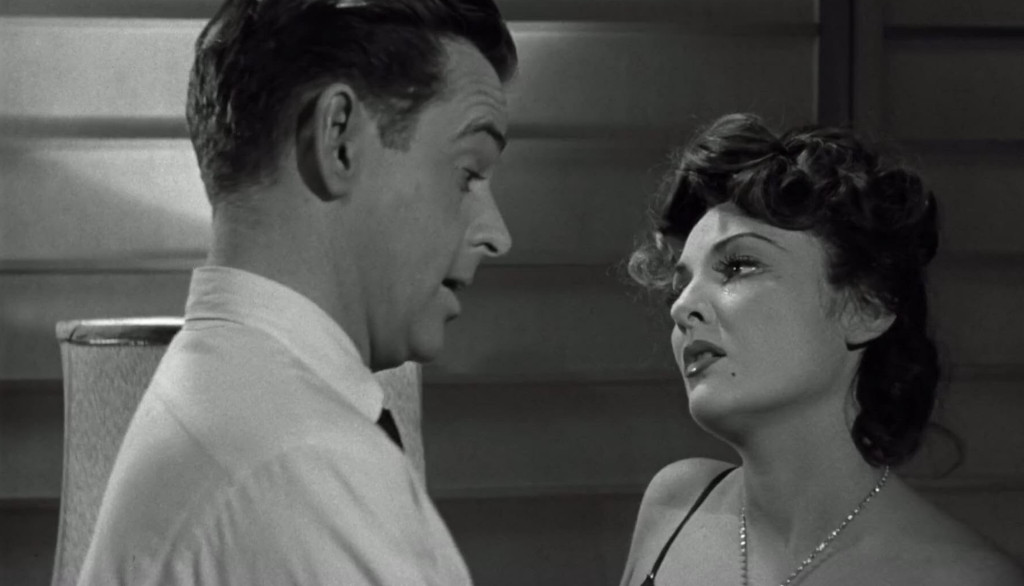
The Glandular Mystery
Harry, ever the opportunist, decides that the best way to get Nancy’s money is to prove she’s crazy and have her committed. He takes her back out to the desert, hoping she’ll have another episode. Instead, they actually find the giant.
The alien isn’t interested in world peace or cosmic knowledge; he just wants that diamond. He zaps Nancy with some radiation, and Harry, being the world-class coward that he is, bolts, leaving his wife to be poked by a celestial giant.When Nancy is found, she’s in a state of shock, but more importantly, she’s starting to feel a bit… cramped. The doctor’s diagnosis is the peak of 1950s science: her growth is due to a glandular reaction to the alien radiation. Forget biology, forget physics, forget how a human skeleton could possibly support several tons of weight. It’s a glandular thing. Just take two aspirin and call me when you can use a water tower as a footstool.
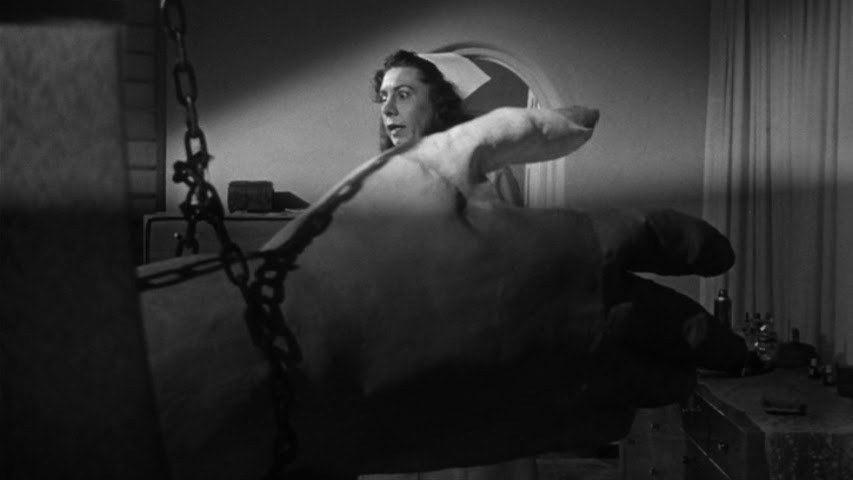
The Logistics of Being 50 Feet Tall
This is where the movie moves from a domestic drama into a logistical nightmare. Nancy is confined to her bedroom, but she keeps growing. We see her hand (a giant, stiff, rubbery hand), resting on the bed like a discarded parade float. Think about the sheer inconvenience of this. Her clothes don’t fit. Her bed is essentially a postage stamp. The film handles this with a mix of “we don’t have the budget to show her” and “let’s just use a giant prosthetic hand and hope for the best.”
There is a weirdly domestic horror to these scenes. Nancy is waking up to the realization that she is literally outgrowing her life. She is becoming too big for her house, too big for her town, and certainly too big for her pathetic husband. It’s a metaphor for feminine rage that is about to burst through the roof. Literally.
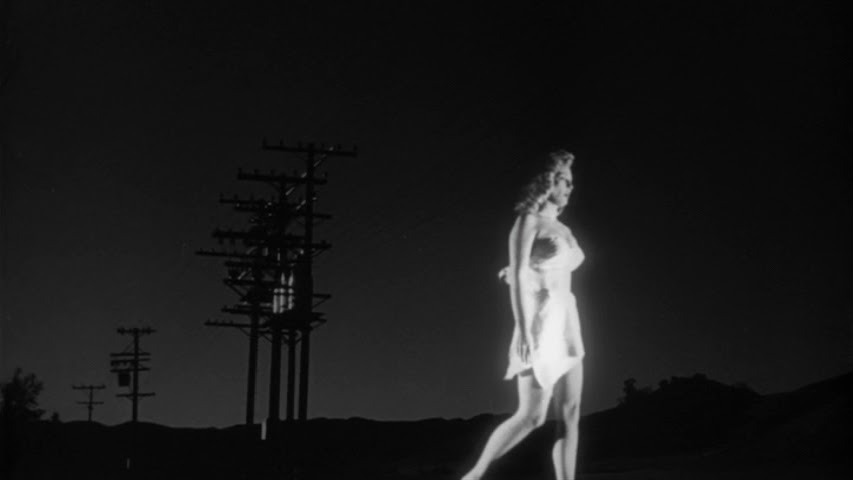
The Costume Choice of a Lifetime
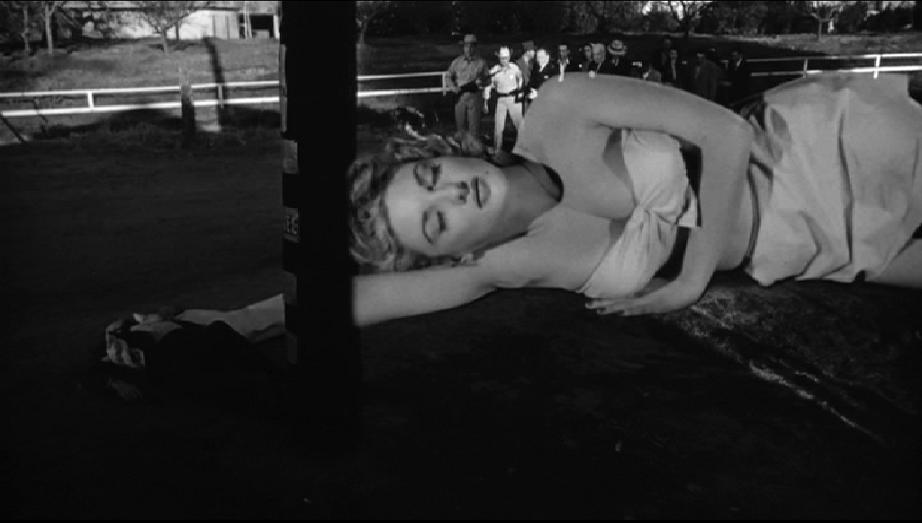
When Nancy finally makes her grand appearance as a 50-foot woman, she isn’t wearing a superhero suit or a military uniform. She has fashioned herself a bikini out of what appears to be several king-sized bedsheets.
It is the ultimate fashion statement. If you are going to destroy a town and reclaim your cheating husband, you might as well do it in a two-piece that shows off your newly enlarged physique. The costume has become iconic for a reason: it’s absurd, it’s impractical, and it suggests that Nancy had the presence of mind to do some giant-sized tailoring before she went on her rampage. “I may be a radioactive freak of nature, but I will not be seen in a mumu.”
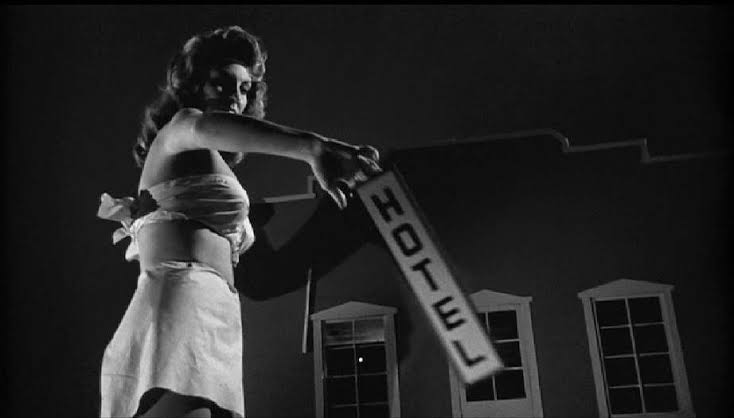
The Rampage: A Study in Slow Motion
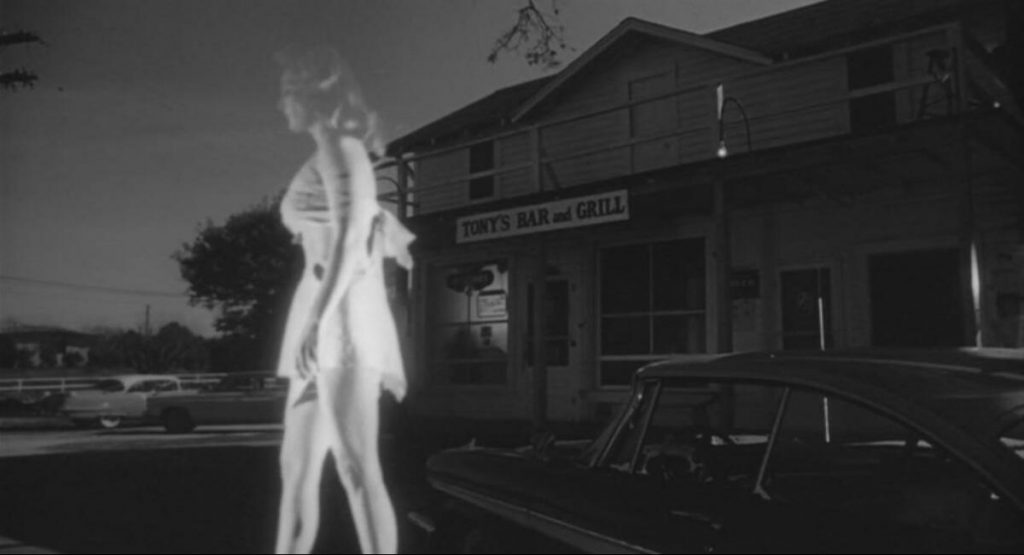
Nancy finally has enough. She stands up, her head goes through the ceiling, and she begins her stroll into town. Now, because the film used double exposure to make Nancy look giant, she is often semi-transparent., in case you were wondering.
At one point, you can see a bush through her stomach. You could argue it’s a commentary on the fleeting nature of the human soul, but really, it’s just because the budget was about forty dollars and a ham sandwich.
Despite her ghostly appearance, Nancy is a force of nature. She walks through the desert toward the bar, her footsteps sounding like a bass drum played by a titan. She isn’t looking for the alien; she isn’t looking for the diamond. She is looking for Harry. And God help anyone standing between her and that bar.
The Bar Scene: “Harry!”
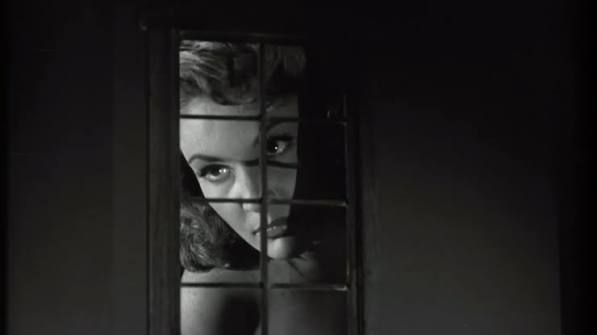
Harry and Honey are at the bar, celebrating their impending wealth, when the roof literally comes off. Nancy’s face appears in the gap, and let me tell you, Allison Hayes sells this moment with everything she has. Her eyes are wide, her expression is one of pure, unadulterated “I am going to end you.”
She reaches into the joint. The patrons scatter like ants. Honey Parker, realizing that being a side-piece doesn’t pay enough for this kind of work, tries to hide. But Nancy isn’t interested in Honey. She wants Harry.
The sight of Nancy’s giant hand reaching down to pluck Harry from the wreckage is the climax of every person who has ever been cheated on. It’s the ultimate ‘gotcha’ moment. Harry is screaming, dangling from her fingers like a wet noodle, while Nancy looms over the town like a vengeful goddess.
The Power Lines
In a move that is both a cinematic trope and a crushing disappointment, the Sheriff decides that the best way to handle a 50-foot woman is to shoot at her with a riot gun. Because, as we know, lead pellets are very effective against people who can crush a Buick with their heel.
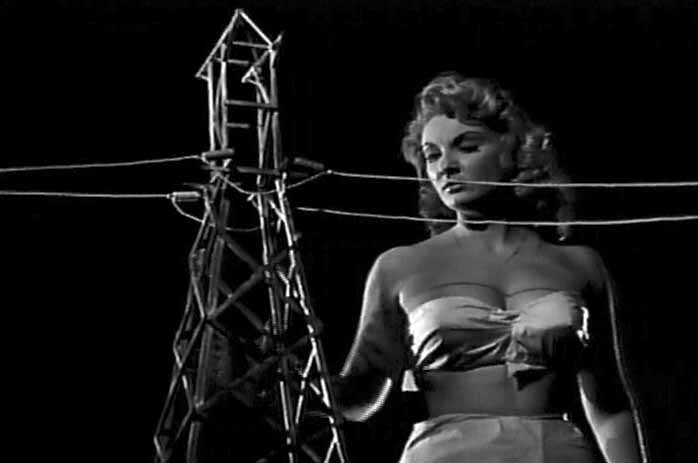
The gunfire causes Nancy to stumble into some high-tension power lines. It’s a classic 50s ending: technology and electricity defeating the unnatural monster. There is a massive spark, a lot of screaming, and Nancy falls, clutching Harry to her chest until the very end.
The Sheriff’s final line is a classic of the genre: “She finally got Harry.” It’s delivered with the kind of dry indifference that suggests he’s mostly worried about the paperwork and the fact that the town’s only bar now has no roof.
The Tragedy of Nancy
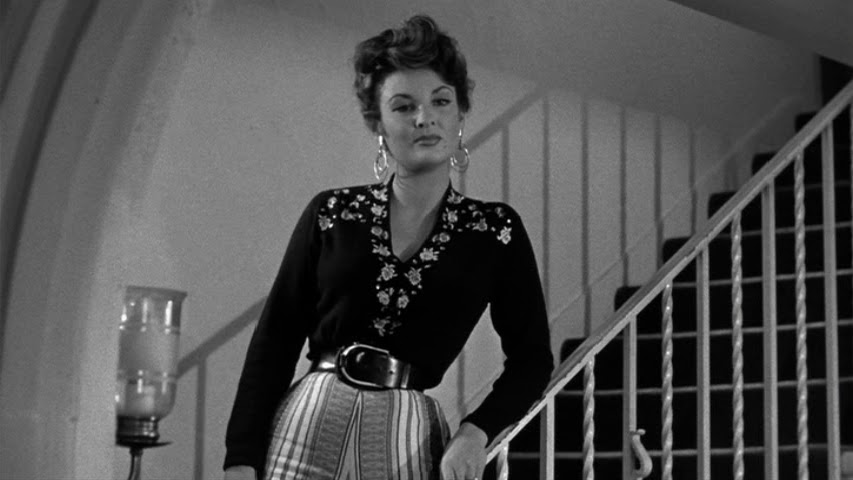
If we want to get a bit film school about it, Attack of the 50 Foot Woman is actually a pretty heavy movie. Nancy is a woman with issues; she’s wealthy, she’s had a breakdown, and she’s trapped in a marriage with a parasite.
Her growth isn’t just a sci-fi accident; it’s the physical manifestation of her suppressed anger. She spent years being small, being belittled, and being ignored. The radiation just gave her the size to match the scale of her resentment. When she’s 50 feet tall, Harry can’t ignore her. The Sheriff can’t patronize her. The town has to look up at her. It’s a tragic story about a woman who had to become a monster just to be taken seriously.
Allison Hayes: The Queen of the B-Movies
Allison Hayes is the reason this movie works. She doesn’t play it for laughs. She plays Nancy Archer with a deadly seriousness that makes the campy elements feel grounded. She gives Nancy a sense of wounded dignity.
Even when she’s wearing a bedsheet bikini and swatting at a helicopter, you feel for her. Hayes had the ‘it’ factor. A presence that commanded the screen, regardless of the budget. She understood that for a movie like this to be memorable, the monster has to have a soul. Nancy isn’t evil; she’s just very, very tired of everyone’s bullshit.
The Alien: A Forgotten Plot Point
Let’s talk about the alien for a second. He’s arguably the most irrelevant part of his own movie. He shows up, zaps Nancy, steals a diamond, and then basically disappears from the narrative.
He’s a MacGuffin in a velvet tunic. The movie isn’t really about a space invasion; it’s a divorce court proceeding that got hit with cosmic rays. The alien is just the catalyst. He’s the guy who accidentally gave the oppressed wife an atomic upgrade. You almost imagine him getting back to his planet and telling his buddies, “Yeah, I found a diamond, but I think I might have accidentally created a vengeful giant in California. My bad.”
The Poster
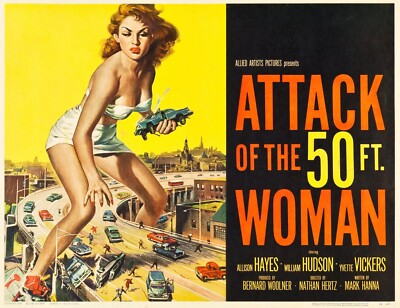
It is impossible to discuss this movie without mentioning the poster. It is one of the most famous images in cinema history: a giant Nancy Archer straddling a highway, picking up cars like they’re toys.
Interestingly, that scene never actually happens in the movie. There is no highway straddling. There are very few cars being tossed around. The poster promised a level of destruction that the budget couldn’t possibly deliver, but it didn’t matter. The idea of the 50-foot woman was enough. It captured the public’s imagination and turned a low-budget sci-fi flick into a cultural touchstone that has been referenced, parodied, and remade for decades.
Why I Love It
Why do I love Attack of the 50 Foot Woman? Let me count the ways. First, it’s unapologetically ridiculous. You have a woman who grows to impossible proportions because some alien radiation thinks she deserves a promotion in size, and yet the townspeople treat her world-shaking size with a mix of panic and deadpan obliviousness. It’s a film that knows it’s acknowledges its ludicrous nature leans into it, like a horror movie with its middle finger raised and a cocktail in hand.
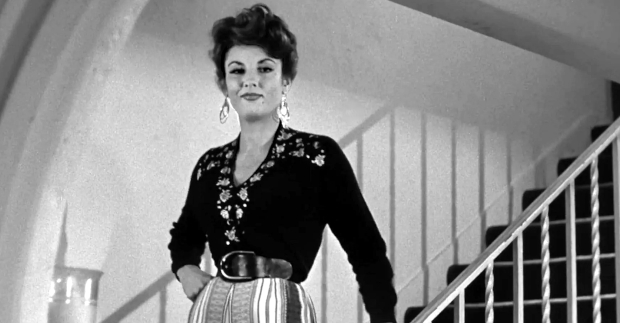
Second, Allison Hayes is a revelation. She doesn’t play Nancy as a caricature of giant-woman rage; she sells every moment with a fantastic seriousness. Her glare could strip paint, her posture commands the landscape, and her sheer presence makes the cheap effects feel consequential. When she steps into town, the camera isn’t just recording a scaled-up prop, it’s recording authority, frustration, and sheer, unignorable personality. Nancy Archer isn’t just a monster; she’s the embodiment of “don’t mess with me” in the most literal, vertically ambitious sense possible.
And finally, it’s a celebration of cinematic resourcefulness. Yes, the alien looks like a guy in a tunic holding a lightbulb on a string, and yes, the double exposures are sometimes hilariously transparent, but the movie makes you care anyway. It proves that story, character, and imagination can blow past budgetary limits. It’s a film where personal betrayal becomes planetary-scale chaos, and the moral is clear: never cheat on someone who can grow to 50 feet tall and has a very specific set of grievances. Attack of the 50 Foot Woman is glorious, it’s iconic, it’s incredibly over-the-top and that’s exactly why I keep coming back to it.
Leave a Reply