
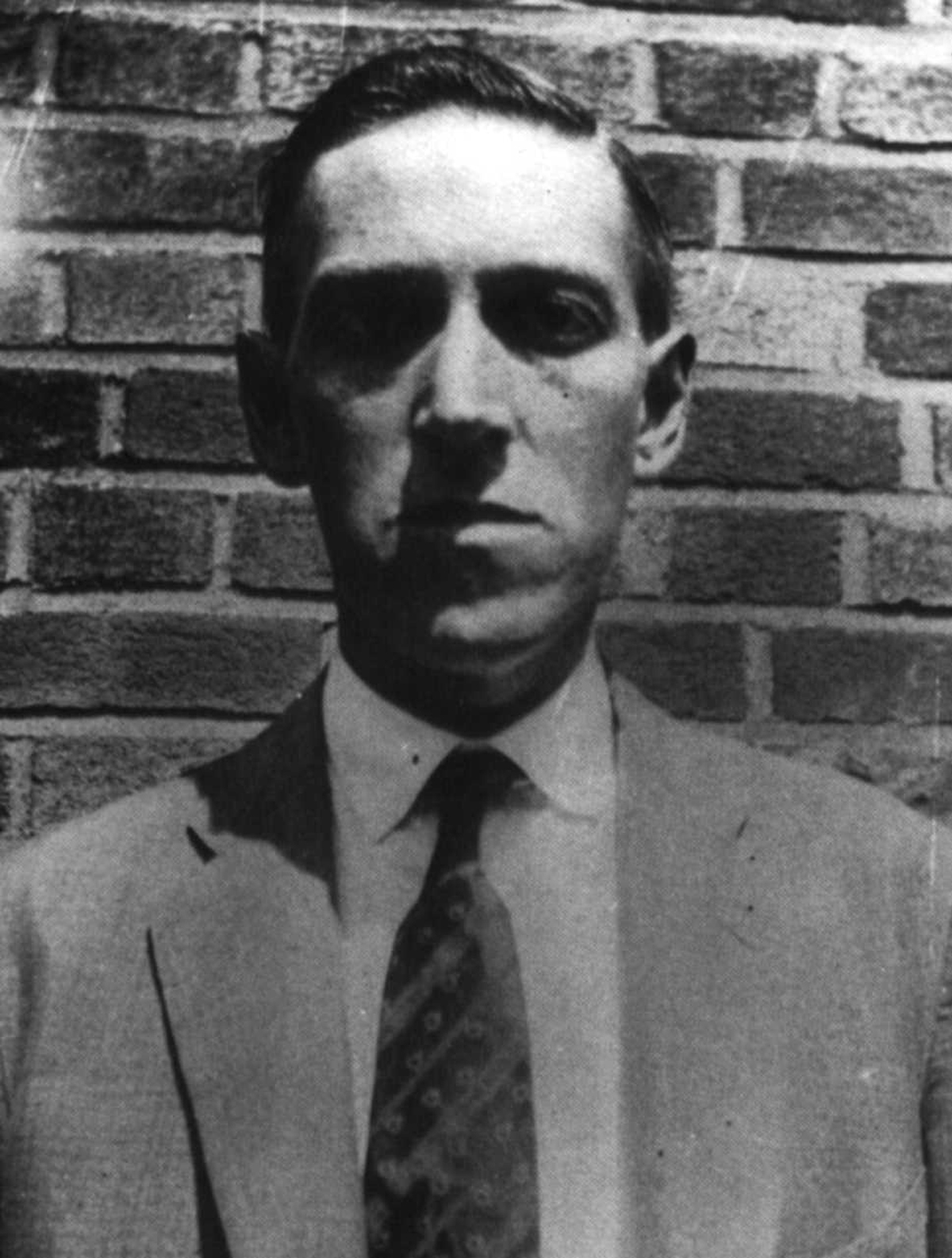
In the spring of 1919, H. P. Lovecraft turned his gaze away from the ancestral graveyards of New England and to the state mental hospitals of the Catskills region. With Beyond the Wall of Sleep, we encounter one of the most aggressive ruptures in the Lovecraftian canon. If Polaris was a dream of a lost past, this is a nightmare of the Infinite Present. Here, Lovecraft strikes at the very foundations of human biology, suggesting that our consciousness is not a product of our brains, but a prisoner within them.
This story marks the birth of Lovecraft’s astronomical horror—the realization that the wierd is not just found in the dirt or the sea, but in the very light that reaches us from the void.
The Anthropology of the Abnormal
The narrative is framed as the clinical observation of a young, idealistic psychiatric intern in a state hospital. The subject of his study is Joe Slater, a representative of the rural mountain folk the intern observes as primitive, illiterate, and prone to violent outbursts. To the medical establishment, Slater is a beast of the mountains, a man whose brain is as stunted as his social standing. However, Slater’s madness is unique: he suffers from vivid, celestial hallucinations of a world of pure light and energy, where he is a being of immense power engaged in a cosmic feud with a luminous adversary.
The intern, suspecting a profound truth behind Slater’s ravings, constructs a telepathic device to bridge the gap between their minds—a crude instrument of wires and receivers intended to translate the unspoken into the seen. In the moments before Slater’s death, the device succeeds. The intern witnesses not the thoughts of a mountain-dwelling degenerate, but the transmission of a star-born entity that has been trapped within Slater’s mud-cell of a body.
The entity reveals its true nature: it is a creature of light, momentarily exiled to Earth, and it is about to return to the heavens to claim vengeance against its celestial foe. This duel manifests in the waking world as the flare of the star Algol. The story concludes with the intern’s realization that Slater was never a man, but a prison.
The Body as a Biological Padded Cell
Let’s cut through the psychiatric jargon and the gentlemanly observations of the intern. Beyond the Wall of Sleep is Lovecraft’s most direct assault on the Cult of Biology. It’s a story that tells you, in no uncertain terms, that your body is a cage. It’s a rotting bag of meat and bone designed to keep the Self from realizing its own magnitude.
I love this story because it is unapologetically elitist and anti-humanist. Lovecraft looks at the average man—the Joe Slaters of the world—and doesn’t see a fellow citizen; he sees a degenerate vessel for something much older and more terrifying. The horror here isn’t that Slater is crazy. The horror is that he’s right.
Think about the implications for your own sane existence. You wake up, you eat, you work, you die. You think your identity is the face in the mirror. Lovecraft is laughing at you. He’s saying that every dream you have, every flash of intuition, every moment of otherness isn’t a glitch in your brain; it’s the prisoner in the basement of your soul rattling the bars. Lovecraft is mocking the sane world that builds asylums to contain the only people who actually know what’s going on.
Slater isn’t a patient; he’s an occupant. And the intern isn’t a scientist; he’s just peering through the keyhole of a cosmic jail cell. This story is a punchy, nihilistic slap in the face to anyone who thinks humanity is the pinnacle of existence. We are the mud-folk, and the only interesting thing about us is the star-fire we’ve managed to accidentally swallow.
The Dualism of Light and MudIn
In Beyond the Wall of Sleep, Lovecraft introduces a form of Cosmic Dualism that predates the more materialist horror of his later years. It is a tension between the ethical and the physical.
The Mud-Cell vs. The Light-Being:
The core of the story is the radical separation of the self from the shell. Lovecraft characterizes the human body as a dull, heavy, and imperfectly organized lump of matter. This is a profound rejection of the Enlightenment’s Noble Savage. To Lovecraft, nature (especially human nature) is a prison. Our senses are not windows; they are cataracts that prevent us from seeing the luminous reality of the universe.
This introduces the theme of Ontological Insignificance—not only are we small in space, but we are also blind by design. The Wall of Sleep isn’t a metaphorical barrier; it is the physical limitation of the human nervous system. We sleep because we cannot handle the intensity of the real world for twenty-four hours a day.
The Feud in the Stars:
The revelation that the entity’s struggle is mirrored by the flickering of the star Algol (the “Demon Star”) is a foundational moment for the Mythos. It suggests that the macro-cosmic events of the universe (supernovae, orbital shifts) are intimately connected to the micro-cosmic experiences of the mind. In Lovecraft’s version, “As Above” is a war zone, and “So Below” is just the fallout. The Light-Being within Slater isn’t a benevolent angel; it’s a warrior of the void. This removes the moral element from the spirit-world—energy doesn’t care about your goodness; it only cares about its own intensity and its own vengeance.
The Prisoner of Providence
To understand the Cosmic Prisoner, we must look at Lovecraft’s own life in 1919. He was living in near-seclusion at 454 Angell Street, tethered to his dying, mentally fragile mother. He felt his own genius was being suffocated by the mud of poverty and social isolation.
Slater is Lovecraft’s shadow-self. Just as Slater is a degenerate with the soul of a star-god, Lovecraft saw himself as an 18th-century gentleman trapped in the degenerate 20th century. The psychiatric ward in the story is a stand-in for the prison of his daily life. The intern’s device is a metaphor for Literature itself—the only tool Lovecraft had to telepathically project his consciousness out of his cramped physical circumstances and into the stars.
When the Light-Being finally escapes Slater’s body, it is a wish-fulfillment fantasy for Lovecraft: the hope that when the mud finally fails, the mind will finally be free to roam the interstellar gulfs. He wanted to be the star, not the mirror.
The Clinical and the Celestial
Lovecraft’s prose in this story is a fascinating hybrid. He switches between the clinical dryness of the intern’s medical reports and the baroque grandeur of the entity’s transmission.
The Language of the Padded Cell
In describing Slater, Lovecraft uses a vocabulary of disgust. He describes him as a white-trash specimen of primitive and uncouth mentality. He uses words like bovine, unresponsive, and repulsive to establish the low reality of the body. This creates a linguistic baseline that makes the eventual high reality shift feel more explosive.
The Language of the Ether
When the intern connects to the entity, the vocabulary shifts to the celestial: spheres, effulgence, ethereal, scintillating. This duality is Lovecraft using the English language to perform a surgical separation between the reader’s physical environment and their intellectual potential. He wants you to feel the itch of your own skin as a garment that no longer fits. The prose becomes rhythmic, echoing the pulsing of the star Algol, pulling the reader through the wall of the page.
The Demon Star: Algol as the Witness
The choice of the star Algol is not accidental. Known as the Demon Star in Arabic tradition, it is an eclipsing binary that appears to blink or wink at the Earth. In Lovecraft’s hands, this astronomical fact is transformed into a elestial malice.
Algol represents the unblinking eye we saw in Polaris, but now it is active. It isn’t just watching; it is fighting. This marks a shift from the passive universe of the Dream Cycle to the aggressive universe of the nascent Mythos. The star is a participant in the drama. By linking Slater’s internal hallucinations to a physical star that can be seen through a telescope, Lovecraft is performing the ultimate anti-religious miracle: he is proving that the visions are real, but they are cold, distant, and made of burning gas and radiation.
The Death of the Intern’s Hope
Look at the narrator—the intern. He starts the story thinking he’s a pioneer of science, a bridge-builder between the sane and the insane. He ends the story as a man who has lost his place in the world. He has seen the Light-Being, and now the normal world of the hospital and the mountains feels like a tomb.
The real victim here isn’t Slater (who gets to fly home to the stars) but the intern (who has to stay behind in the mud). This is the knowledge as a terminal condition theme we saw in Dagon. The intern is now a Cosmic Prisoner by choice. He knows that his idealism is just another form of mud. He has peered Beyond the Wall of Sleep and realized that the wall is there for a reason—to keep the sheep from realizing they are being raised in a slaughterhouse of pure energy.
If you’re looking for a happy ending, go read a fairy tale. Lovecraft gives you the truth: Exile is the price of awareness.
The Resistance Against the Mud
To me, Beyond the Wall of Sleep is a foundational text of spiritual resistance. It is a call to the Light-Beings hidden in the mud-cells of all of us.
Lovecraft is telling us that the society of the mountains, the science of the hospital, and the sanity of the neighbors are all part of the prison infrastructure. To accept this is to recognize the luminous adversary within yourself. It is to reject the mud-life of comfort and social acceptance in favor of the star-life of eternal, violent struggle.
Joe Slater wasn’t mad; he was a celestial prisoner waiting for his cell door to open. We should all be so lucky. The Wall of Sleep isn’t just something you go through when you dream; it’s the barrier of normality that you have to break through to reclaim your star-born heritage.
Final Thought: The Star Still Watches
Beyond the Wall of Sleep moves the series from the geological to the astrophysical. It establishes that the weird is not just in the past or in the sea, but in the very light that hits our eyes from the void. It proves that the human body is the ultimate locked room mystery and that the key is a truth that will eventually burn it to the ground.
We have seen that the mind is a prisoner, but we have also seen that the cage can be broken. The Demon Star is winking. The mud is drying. And the Cosmic Prisoner is almost free.
Hold the line. Stay awake. The stars are coming home.
Leave a Reply