For the uninitiated among you, Dracula A.D. 1972 is a film that looks at the gothic horror blueprint, sets it on fire, and then dances around the flames in a crushed velvet blazer while a man named Johnny Alucard tries to convince you he’s cool.
This is not your foggy castle Dracula. This is Dracula stumbling into a London that smells like patchouli oil, cheap wine, and bad acid trips experienced on beanbags. This is what happens when Victorian dread collides headfirst with a party where someone is definitely about to suggest a séance just to ‘see what happens’.
The Opening: Horseback Murder, Because Of Course
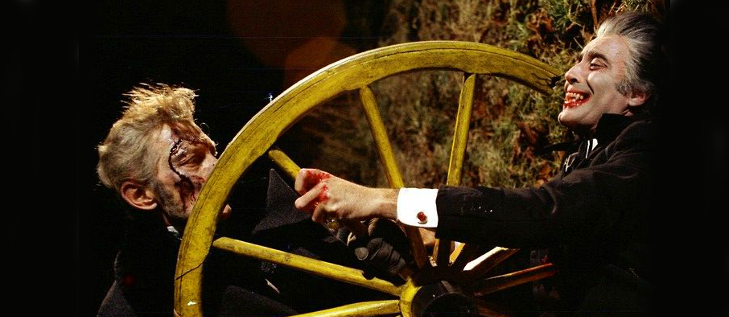
We kick things off not in 1972, but in the kind of sepia-toned past where everyone looks like they’re about to either duel or dramatically faint. Dracula, played, as always, by the magnificent human scowl generator Christopher Lee, is being pursued by Van Helsing, portrayed by Peter Cushing, who continues to look like he hasn’t slept since 1864 and is absolutely fine with that.
They’re in a horse-drawn chase that feels less like a pursuit and more like two Victorian dads having a very intense disagreement about property boundaries. This all ends with Dracula getting dramatically impaled on a broken cart wheel, because in Hammer films, even roadside debris has a side hustle in vampire extermination.
Dracula turns to dust. Van Helsing also dies. It’s very final. Very conclusive. Absolutely the kind of ending that screams, ‘We will not be revisiting this in any way whatsoever.’
Cut to: 1972.
Where Everyone Is Either Groovy or About to Die
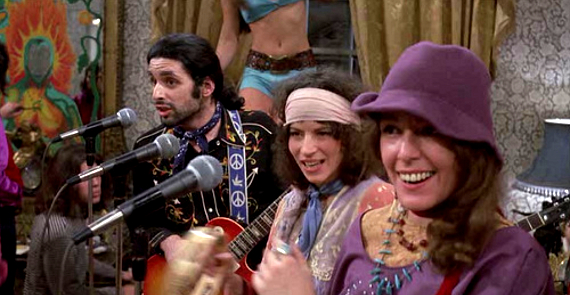
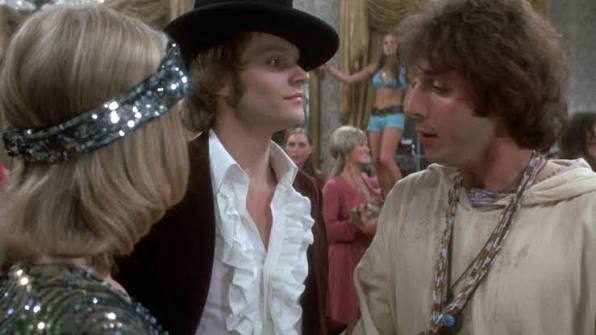
The film then boots you forward into early 70s London with all the subtlety of a paint bomb going off in a funeral home. Suddenly we’re surrounded by loud music, louder clothes, and a group of people who look like they were assembled by a casting director who said, “Give me the most aggressively modern youths you can find.”
And by modern, I mean people who talk like they’ve just learned slang from a pamphlet.
Enter the gang: a collection of rich, bored young adults who spend their time throwing parties, drinking, and searching for new ways to feel something, anything, in between long stretches of staring at each other and saying things like ‘far out’ with the conviction of someone trying to convince themselves they’re having fun.
Leading this parade of questionable life choices is Jessica Van Helsing. Yes, that Van Helsing. Descendant of the original vampire hunter, now trapped in a world where her biggest threat appears to be terrible friends with a hobby of dabbling in occult nonsense for kicks.
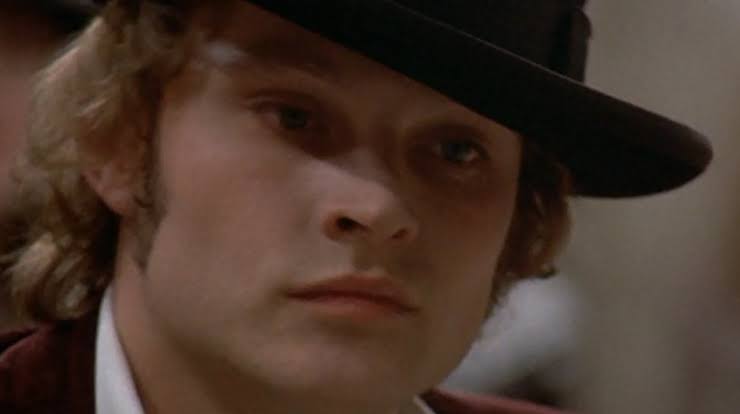
Johnny Alucard: The Man, The Myth, The Most Punchable Face in History
Here is where we meet Johnny Alucard.
Take a second. Read that name again. Slowly.
Alucard.
Yes. That is Dracula backwards. This film does not believe in subtlety. It kicks subtlety down a flight of stairs and then steals its wallet.
Johnny is played by Christopher Neame, who delivers a performance that feels like he’s permanently auditioning for the role of ‘guy who absolutely brought his own cape.’ He’s intense, sweaty, and carries the energy of someone who’s about to suggest a ritual at a party and is way too excited about it. Which, of course, is exactly what happens.
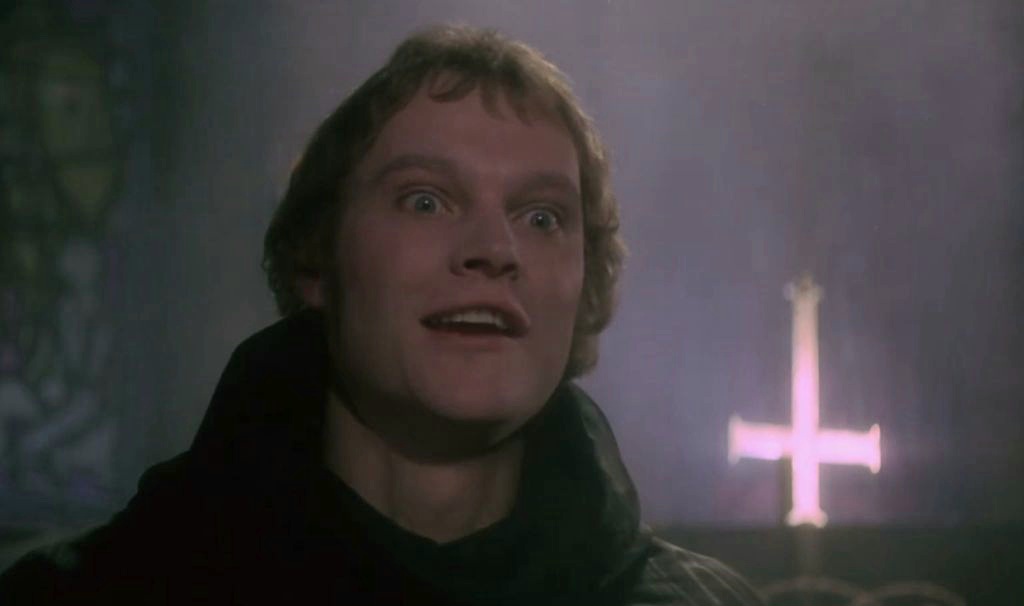
The Party
In what might be one of the most gloriously ill-advised party activities ever committed to film, Johnny convinces the group to hold a black mass. Not as a joke. Not as a ‘haha wouldn’t it be wild’. No, he’s dead serious. He’s got the robes. He’s got the candles. He’s got the vibe of a man who has been waiting his entire life for this moment and is not going to let something like common sense ruin it.
They all pile into a derelict church, because nothing says safe recreational activity like trespassing in a crumbling building that looks like it has opinions about your life choices, and begin the ritual.
Jessica is chosen as the sacrificial centerpiece, because apparently ‘don’t volunteer your friend for mysterious occult ceremonies’ was not covered in their upbringing.
It is now that Johnny reveals his master plan: he’s a devoted follower of Dracula and has spent years preparing to bring him back. Which raises several questions, the main one being: what else has this guy been doing with his time? He produces a vial of Dracula’s ashes (because of course he does, this man has pockets full of bad news) and performs the ritual. And then it happens.
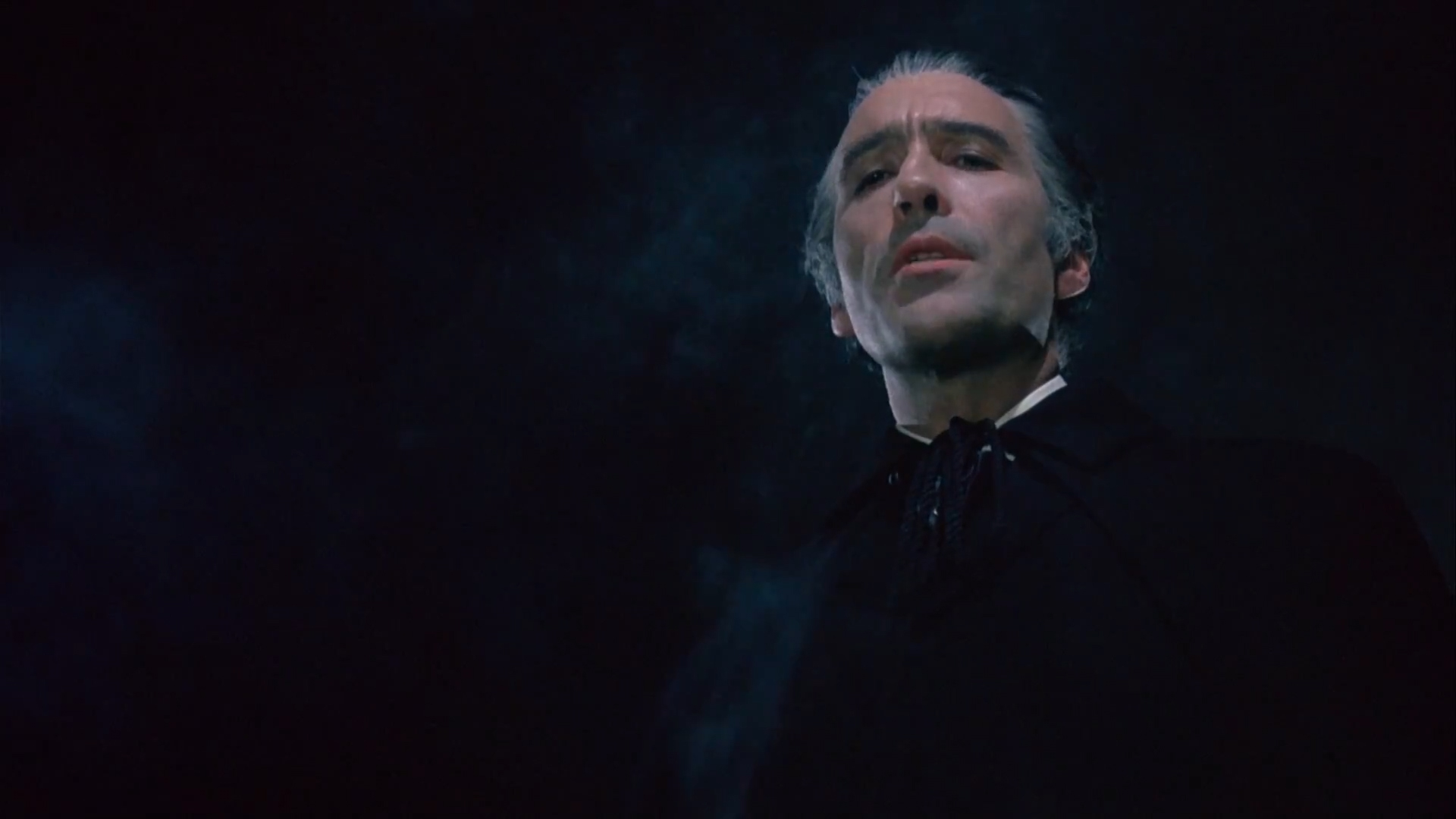
Dracula comes back. Not with a bang, but with a slow, ominous materialisation that feels like the universe itself sighing and saying, ‘Fine. Let’s do this again.’ Christopher Lee rises from the ashes like a man who is already exhausted by the decade he’s just woken up in.
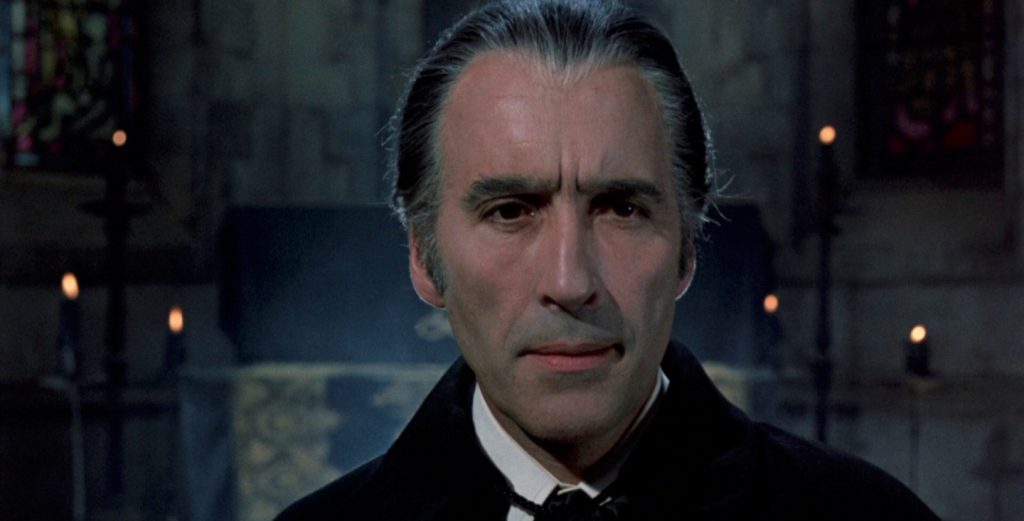
Dracula vs The 1970s: A Culture Clash For The Ages
Here’s where the film becomes something truly special. Dracula, a creature of ancient evil and aristocratic menace, is now wandering through 1970s London, a place filled with loud music, questionable fashion, and people who think inviting strangers to occult rituals is a normal Thursday night.
He looks around at this new world and you can practically hear him thinking, “I died for this?” There’s something deeply funny about watching Dracula, this embodiment of timeless horror, navigate a setting where the scariest thing might actually be the wallpaper.
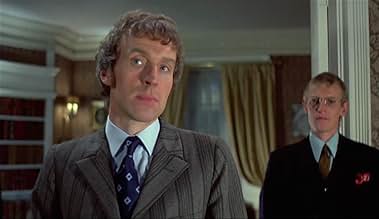
Inspector Murray: Scotland Yard Meets The Supernatural
Enter Inspector Murray, played by Michael Coles, who is tasked with investigating the increasingly bizarre murders popping up around the city.
Murray is your classic rational man in an irrational situation, which means he spends a good chunk of the film trying to explain away events that clearly involve a centuries-old vampire running around turning people into late-night snacks. Eventually, he turns to the one man who might actually understand what’s going on: Lorrimer Van Helsing, descendant of the original and played by Peter Cushing, who returns looking like he’s been quietly waiting for this exact nonsense to start up again.
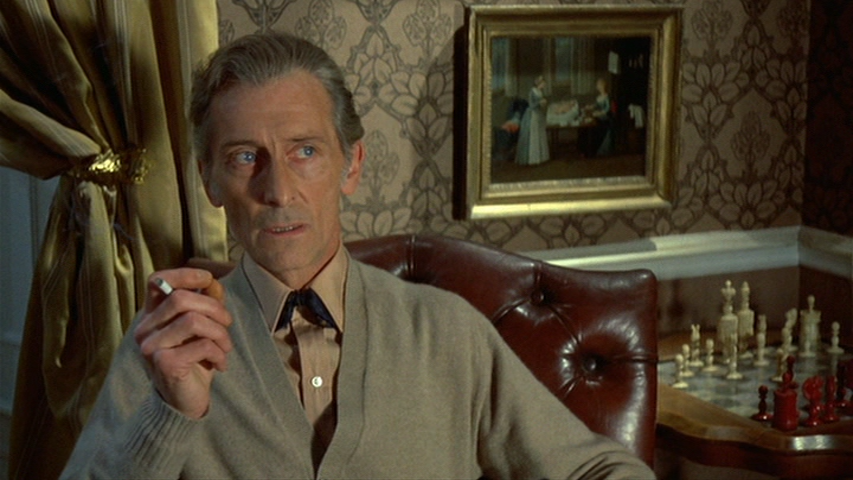
Peter Cushing: The MVP of Looking Done With This Shit
Cushing’s Van Helsing is an absolute treat. He carries himself with the energy of a man who has seen this exact situation before and is deeply unimpressed that he has to deal with it again. While everyone else is fumbling around in confusion, Van Helsing walks in like, “Right. Vampire. Let’s get to work.”
He doesn’t waste time questioning whether Dracula is real. He knows. He’s lived it. This is just Tuesday for him, except now Tuesday involves significantly more polyester.
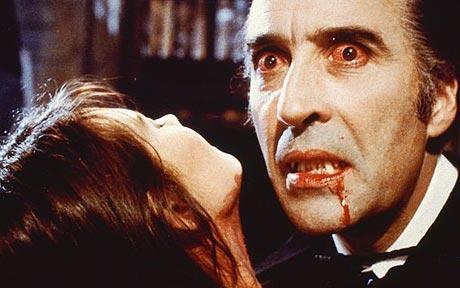
The Kills: Disco Bloodbath Inferno
Dracula starts picking off victims, and the film leans into a mix of traditional Hammer gothic violence and the new, flashier 70s aesthetic.
There’s something wonderfully chaotic about watching Dracula operate in this environment. He’s still doing his classic moves, the hypnotic stares, the sudden attacks, but now it’s happening in settings that feel like they were decorated by someone who just discovered colour for the first time. At one point, you half expect him to pause mid-attack and comment on the interior design.
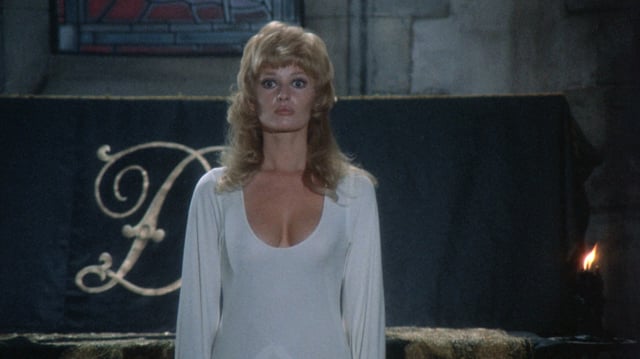
Jessica’s Fate
Jessica, unfortunately, gets pulled deeper into Dracula’s orbit, because being related to Van Helsing in this universe is basically a magnet for supernatural trouble.
She becomes one of Dracula’s targets, and the film builds toward the inevitable confrontation between the old guard (Van Helsing) and the ancient evil that refuses to stay dead no matter how many times it gets stabbed, burned, or dramatically disintegrated.
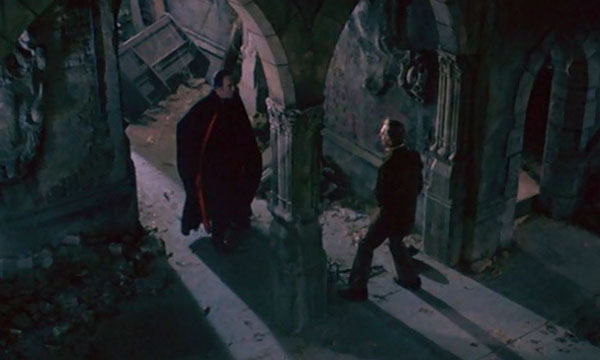
The Final Showdown: Science vs Superstition (With Bonus Car Chase)
The climax is where the film really decides to go all in on its identity as a bizarre hybrid of gothic horror and modern action. We get a chase. With cars. Dracula, a centuries-old vampire, is now part of a sequence that involves vehicles. If you ever wanted to see a character who looks like he belongs in a candlelit castle suddenly become part of something that feels one step removed from a police procedural, congratulations, this is your moment.
Van Helsing uses a combination of knowledge, determination, and what can only be described as improvised vampire science to take Dracula down once again.
It’s scrappy. It’s inventive. It feels like a man who has spent his entire life dealing with vampires and has reached the point where he’s willing to try anything as long as it ends with Dracula not being his problem anymore.
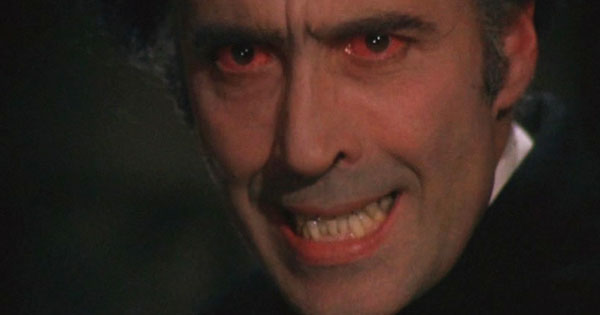
Christopher Lee: The Reluctant Legend
Christopher Lee reportedly wasn’t thrilled about this direction for Dracula, and honestly, you can kind of see it. Not in a bad way, more like he’s playing Dracula as someone who is just slightly above the chaos happening around him.
He doesn’t overdo it. He doesn’t try to match the film’s louder elements. Instead, he remains this calm, imposing presence in the middle of a world that feels like it’s vibrating at a completely different frequency.
It works. It really works.
Because while everything else is busy being loud and colourful, Dracula is still Dracula.
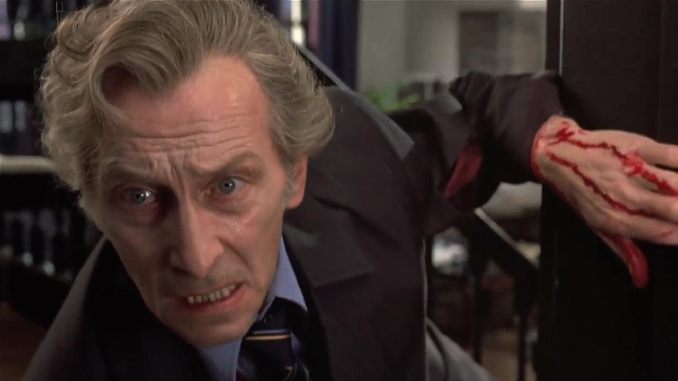
Peter Cushing vs Everyone Else
Cushing, on the other hand, looks like he’s having the time of his life. He leans into the role with absolute commitment, delivering lines with the kind of intensity that makes even the most outlandish plot developments feel grounded.
If Christopher Lee is the immovable object, Peter Cushing is the unstoppable force, and watching the two of them share the screen, even in this wildly different setting, is still electric.
The Tone
This film is not trying to be subtle. It’s not trying to be refined. It is a collision of two completely different styles that somehow manage to coexist without the whole thing collapsing into chaos.
You’ve got gothic horror elements rubbing shoulders with 70s culture, and instead of one overpowering the other, they kind of just… bump into each other repeatedly until something entertaining happens.
There’s a very specific kind of energy here, the kind that feels tailor-made for late-night viewing when your brain is just loose enough to fully appreciate what you’re watching.
It’s the kind of film where you can laugh at it, with it, and occasionally just stare at the screen thinking, “I can’t believe this exists,” all within the span of a single scene.
And that’s not a criticism. That’s the point.
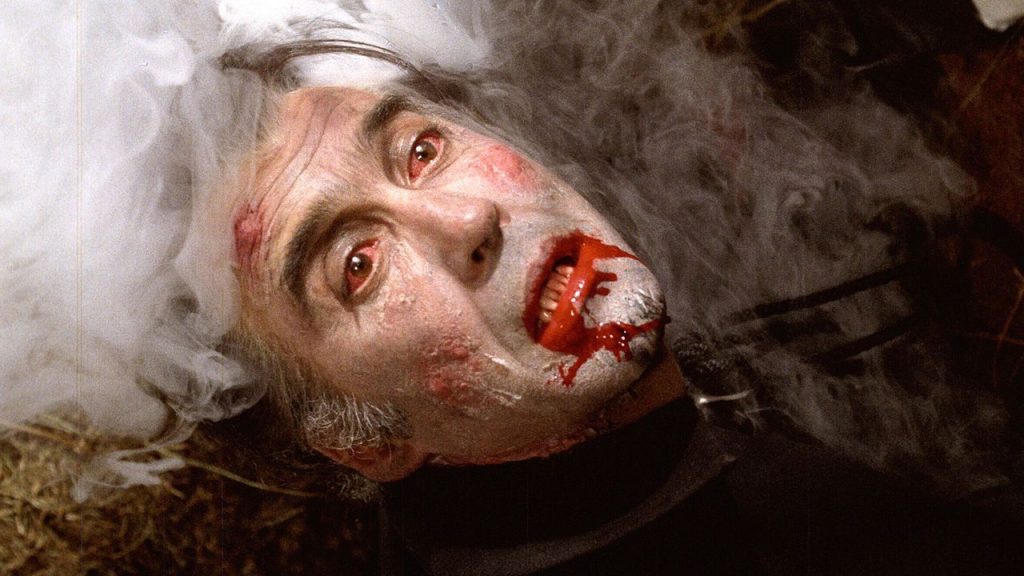
Why I Love It
This is a film where Dracula fights modernity and loses to a man with a plan, a bit of science, and the kind of determination that comes from being personally offended by vampires on a generational level.
It’s messy. It’s loud. It occasionally feels like it’s making things up as it goes along. But it’s never boring.
And in the grand, blood-soaked carnival of horror cinema, sometimes that’s exactly what you want. A film that looks at tradition, shrugs, and says, “What if we just… did this instead?”
Then proceeds to do it with absolute commitment.
And maybe a cape.
Leave a Reply