If the first Hellraiser was a dark, damp chamber piece about a guy hiding under floorboards and discovering that agony is apparently fun, then its 1988 sequel, Hellbound: Hellraiser II, is the heavy-metal sound of the damned. As if someone handed Satan a subscription to Architectural Digest and said, “Make it messy, make it painful, and make it impossible to get out alive.”
This is a ‘Hold My Scalpel’ moment in horror history. Director Tony Randel and dark wizard Clive Barker looked at a movie about a puzzle box and decided that what the world really needed was a giant, rotating obsidian diamond that screams geometry and a stepmother who apparently can’t keep her skin on for more than five minutes. This film is the pinnacle of 80s Sequel Logic, where the budget is bigger, the matte paintings are more ambitious, the lighting is more jaundiced than a vampire at a tanning salon, and the logic is as thin as a Cenobite’s dental floss stretched across a meat hook. It is chaotic. It is electric. It is a screaming guitar solo in cinematic form, and it does not apologize for it one fucking bit.
The Skin is Overrated Prologue
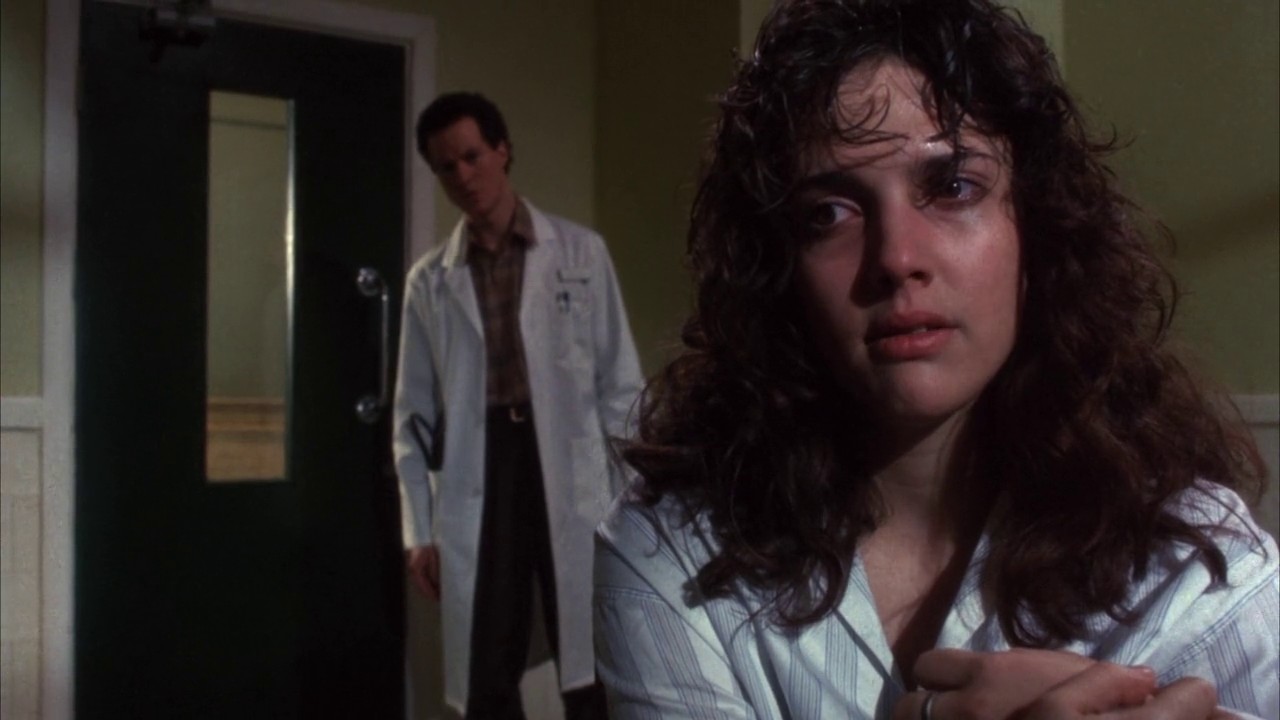
We start exactly where we left off, which is to say, we are staring at a bloody mattress with a look of collective horror, because that’s where your nightmares go to have a pillow fight. Kirsty Cotton (Ashley Laurence) is currently residing in the Channard Institute because, let’s be honest, if you saw your uncle’s face turn into a meat-fountain via interdimensional hooks, you’d probably need a juice box, a padded cell, and three bottles of Xanax too.
But this isn’t just any hospital. It’s run by Dr. Channard (Kenneth Cranham), a man whose bedside manner makes Hannibal Lecter look like a hug therapist handing out party favors. Channard is our villain. A cerebral, cold-blooded obsessive who has been hunting the Lament Configuration the way most nerds hunt for a mint-condition Action Comics #1 or the last pack of VHS tapes of Tales from the Crypt. Every glance from this guy says, “I’m going to dissect your soul and probably write a dissertation on your screams.”
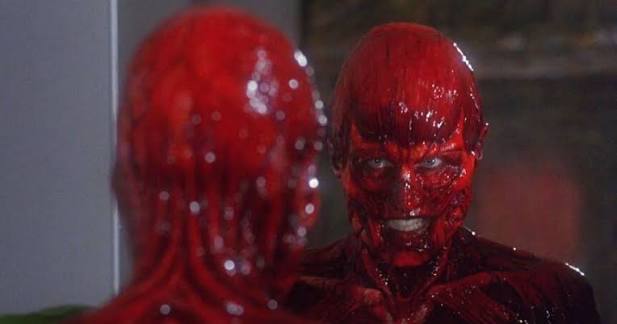
Channard brings the blood-soaked mattress to his lair, finds a patient who thinks a razor blade is a lifestyle accessory, and uses his “contribution” to resurrect Julia Cotton. Clare Higgins returns as the ultimate ‘Femme Fatale without a Dermis’, and her performance is magnetic and revolting in the best possible way. She spends the first act wrapped in bandages like a high-end Egyptian mummy, slowly regaining her complexion by consuming the local medical staff like they were appetizers at a corporate retreat buffet. It’s a literal glow-up fueled by pure, unadulterated murder and probably a touch of spite.
The Labyrinth: Where MC Escher Goes to Die
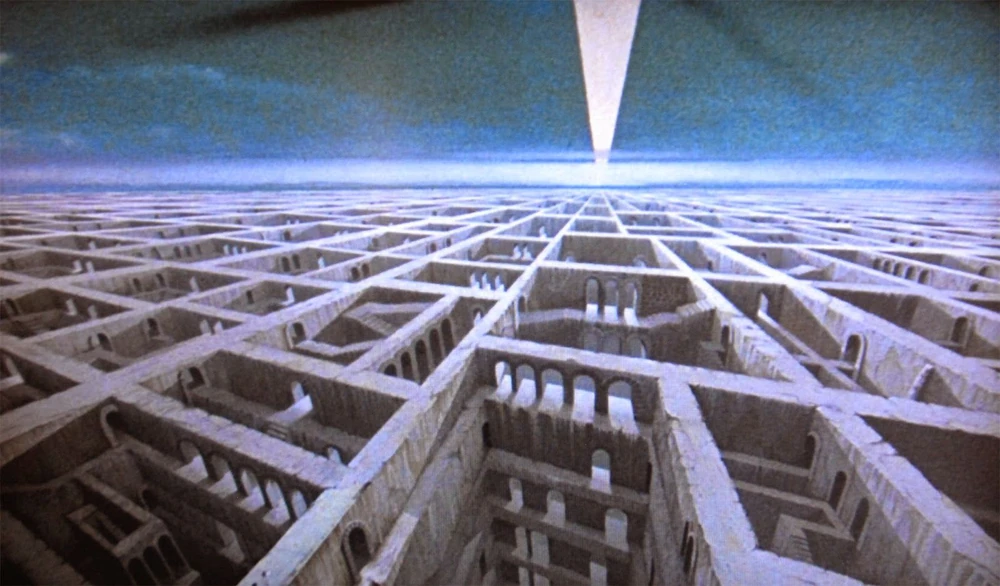
Once Channard and Julia open the box using a mute girl named Tiffany, essentially a human cheat code for puzzles, we enter The Labyrinth. This is where the movie earns its legendary horror status. Hell isn’t a pitchfork-and-brimstone cliché here. No, sir. It’s a cold, endless maze of stone corridors, floating platforms, impossible angles, and matte paintings that look like they were commissioned by a prog-rock band with a serious nihilism problem and a budget they blew on heroin.
The Labyrinth is ruled by Leviathan, a giant, rotating geometric shape in the sky that emits a black light and a low-frequency hum that sounds like a refrigerator dying in a cathedral. It’s both hypnotic and horrifying. Making the ultimate evil a giant, silent diamond is so much more ‘Barker’ than a dude in red tights yelling, “I AM EVIL.” It’s mathematical, indifferent to your eternal torture, and utterly terrifying; a silent monolith to pain, the kind of thing that would make Euclid cry in frustration. It’s the ‘Perfection of Pure Agony’ on a grand, cosmic scale, and it is beautiful in a way that should probably be illegal.
The Cenobite Origin Story
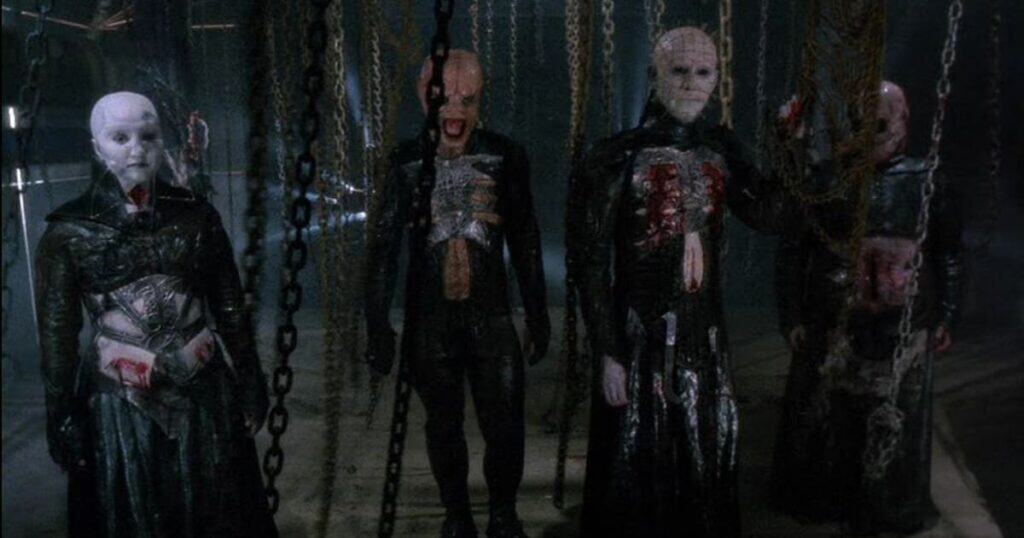
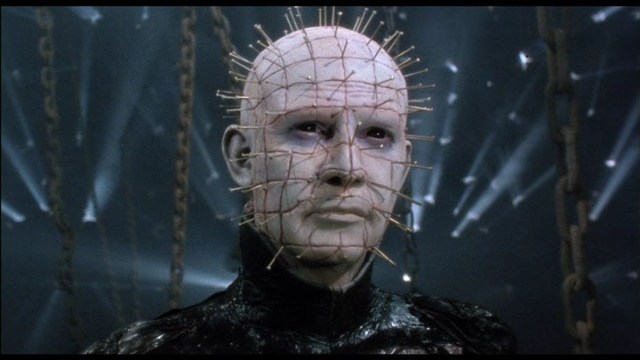
In the first film, Pinhead and his gang were mysterious explorers in the further regions of experience, ominous and unstoppable. In Hellbound, we get the backstory. They weren’t always blue-tinted torture enthusiasts; they were people with very bad hobbies and even worse taste in body modification.
Captain Elliot Spencer (Doug Bradley) appears as a shell-shocked soldier in WWI who opens the box because he’s seen so much horror on Earth that he figures Hell might at least have better snacks. It’s a vital piece of lore. It turns the Cenobites from ‘monsters’ into ‘tragic fetishists with an unfortunate affinity for chains and hooks’.
When Kirsty shows Pinhead a photograph of his human self, the movie pauses for a second of genuine emotional weight. Pinhead’s realization, the flicker of “Oh right, I used to have a nose and feelings”, is a masterclass in acting through six pounds of latex, dozens of nails, and the most uncomfortable prosthetics you can imagine. Of course, this moment of clarity is immediately followed by screaming and hooks because, let’s not forget, this is still a Hellraiser movie, and we have quotas of meat-rending to… er… meet.
Dr. Channard’s Transformation: The Neurosurgeon of Hell
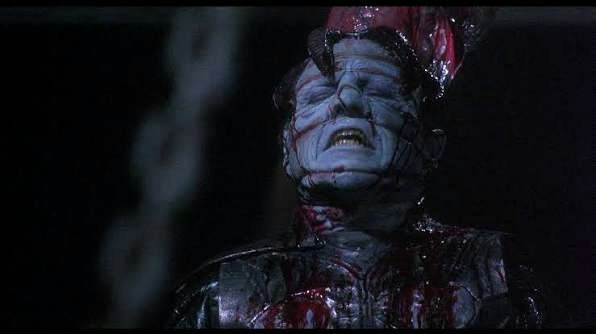
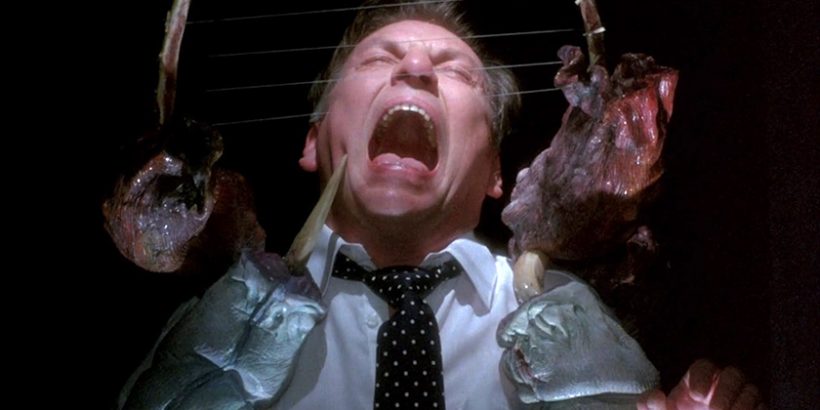
If Julia is the poison heart of the movie, Channard is the scalpel, and I do mean that literally. His transformation into a Cenobite is the most best thing to happen in 1988. He’s put into a biological iron maiden that looks like a giant hanging suppository, and he emerges with a tentacle-umbilical cord sprouting from his head and surgical tools literally growing out of his fingers like some sadistic florist arranging roses in human flesh.
Cenobite Channard is a hoot. He spends his time floating around the labyrinth making terrible puns. “The doctor is in!” It’s a tonal shift that shouldn’t work (going from the grim, sexual dread of the first film to a guy with a wire sticking out of his skull making dad jokes), but in the context of this specific nightmare, it’s perfection. He is the obsessed with the mechanics of the soul, the physics of pain, and the structural integrity of a scream.
The Practical Effects: A Smorgasbord of Gristle And Grease
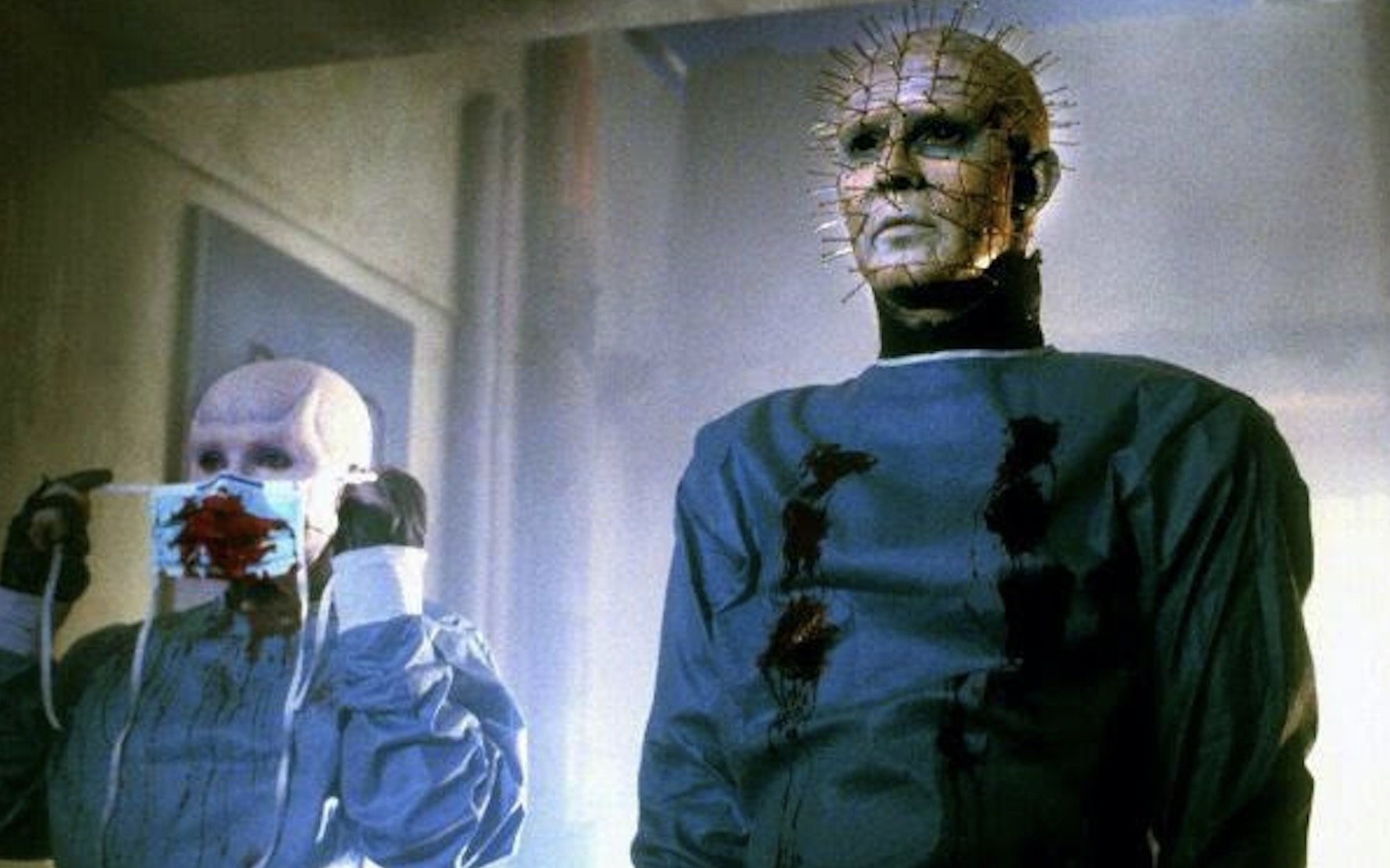
This was the era of Bob Keen and Image Animation firing on all cylinders. The Skinless Julia suit is a marvel of practical engineering. It looks wet. It looks painful. It looks like something that would smell like a butcher shop in the middle of July.
Then we have the Chatterer (the Cenobite with clicking teeth) and Butterball. These designs are iconic not because they look cool, but because they look dysfunctional. They look like the result of a very specific, very niche hobby gone horribly wrong, like if someone tried to cosplay at a hardware store and accidentally summoned demons.
The sequence where the Cenobites fight Channard is an orchestral disaster of Hell-tech. On one side, you have the classic hooks and chains of the OG crew; on the other, Channard’s organic, laser-tentacle nightmare. It’s like watching a 1950s typewriter throw down with a 1980s fax machine, if both were made of anger and hatred.
The Uncle Frank Factor
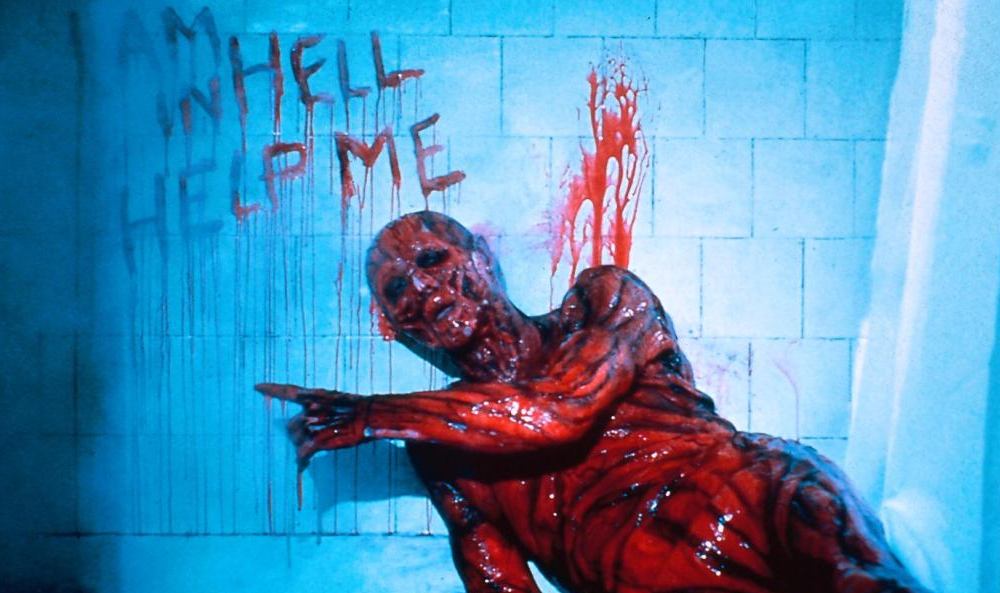
Just when you think this movie couldn’t get any more crowded, we find Uncle Frank in Hell. He’s stuck in his own personal nightmare chamber, which is, of course, a damp, disgusting attic that smells like a combination of wet carpet, old blood, and betrayal. Frank is the ultimate creepy character. He’s the greasy uncle who ruins Thanksgiving by trying to seduce the turkey, except here he’s trying to seduce Kirsty while his skin melts off like cheap candle wax left too close to a heater. And yes, it’s every bit as gross as you’re imagining.
The confrontation between Kirsty and Frank is a perfect expression of their family dynamic. It’s ‘horror comedy without intending to be funny’, because while the Cenobites are orderly and geometric, humans are messy, damp, and fundamentally disgusting. Frank’s personal hell is eternal Frank-ness, stuck in the same decaying body, forever trying to do things he shouldn’t, and failing spectacularly. Honestly, it’s the most horrifying part of the film. Pinhead might have hooks; Frank has bad hygiene and bad intentions, and the combination is unbearable.
The Witty Side of The Pit
Despite all the blood, chains, and existential horror, the dialogue in Hellbound is surprisingly sharp. It manages to be poetic, irreverent, and horrifying at the same time. Lines like:
“I have seen the future, and it is a map of pain.”
“To solve the puzzle is to desire the experience.”
…are equal parts philosophy lecture, gothic poetry, and whispered threat from a leather-clad sadist. It’s philosophy for people who live in bondage gear and smoke too many cigarettes. It treats the concepts of pleasure and pain with a seriousness that borders on the religious and then immediately undercuts it with the sight of a skinless woman lighting up a fag, like she’s waiting for the bus or just had a long day.
It’s that specific brand of British humor (dry, dark, and slightly perverted) that makes the film feel alive in a way most sequels don’t. While some horror films rely solely on gore or jump scares, Hellbound peppers in wit and philosophical musings that make you simultaneously think, squirm, and laugh. It’s intellectual sadism with a sense of humor, and it works very, very well.
Tiffany
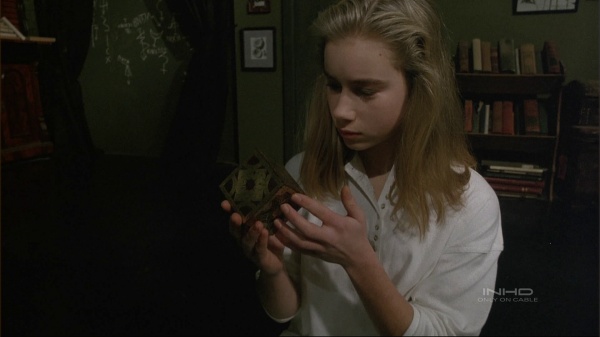
The introduction of Tiffany is a stroke of pure genius. She doesn’t speak, but she can solve any puzzle presented to her. She’s the human version of the Lament Configuration, quiet, intricate, and capable of opening doors that should absolutely remain shut. Watching her solve riddles and manipulate the box is mesmerizing, like watching someone play 3D chess while balancing a chainsaw on their shoulder.
Her relationship with Kirsty adds the only shred of innocence to the film. In a world dominated by Cenobites, flesh-obsessed surgeons, and skinless aunts, two girls trying to navigate a geometric nightmare maze is surprisingly compelling. It’s Alice in Wonderland if the Red Queen had a fondness for body suspension and the Cheshire Cat had a floating head with no eyelids, glowing with sadistic glee. Tiffany grounds the narrative just enough that we care who survives and who becomes just another soggy meat sculpture in the labyrinth.
Why I Love It
Hellbound: Hellraiser II is proof that sometimes more is actually better. It takes everything that worked in the first film, the leather, the hooks, the dread, and ramps it up to eleven with a conveyor belt through the coolest-looking labyrinth in cinematic history.
It’s funny, it’s gross, it’s visually stunning, and it features a giant diamond that hums in low frequencies like the universe itself is about to tear your soul from your flesh. It’s the perfection of pure, 1980s, leather-bound agony, a film that lokks at the original and thinks, wouldn’t that be better if it was just nastier?
If you’re going to go to Hell, Hellbound teaches you three vital rules: bring a map, a sharp scalpel, and a sense of humor. Oh, and maybe a friend like Tiffany, because navigating a geometric nightmare alone is a mistake you don’t recover from.
It’s a feast of gore, geometry, and grotesque ingenuity, the kind of movie that makes you question why you sleep in a bed that isn’t bolted to the floor, why you’re not carrying a puzzle box everywhere, and why your family gatherings don’t involve hooks, chains, and interdimensional horror. Hellbound: Hellraiser II doesn’t just push boundaries, it jettisons them into a spinning, blood-soaked diamond in the sky and laughs while doing so.
Leave a Reply