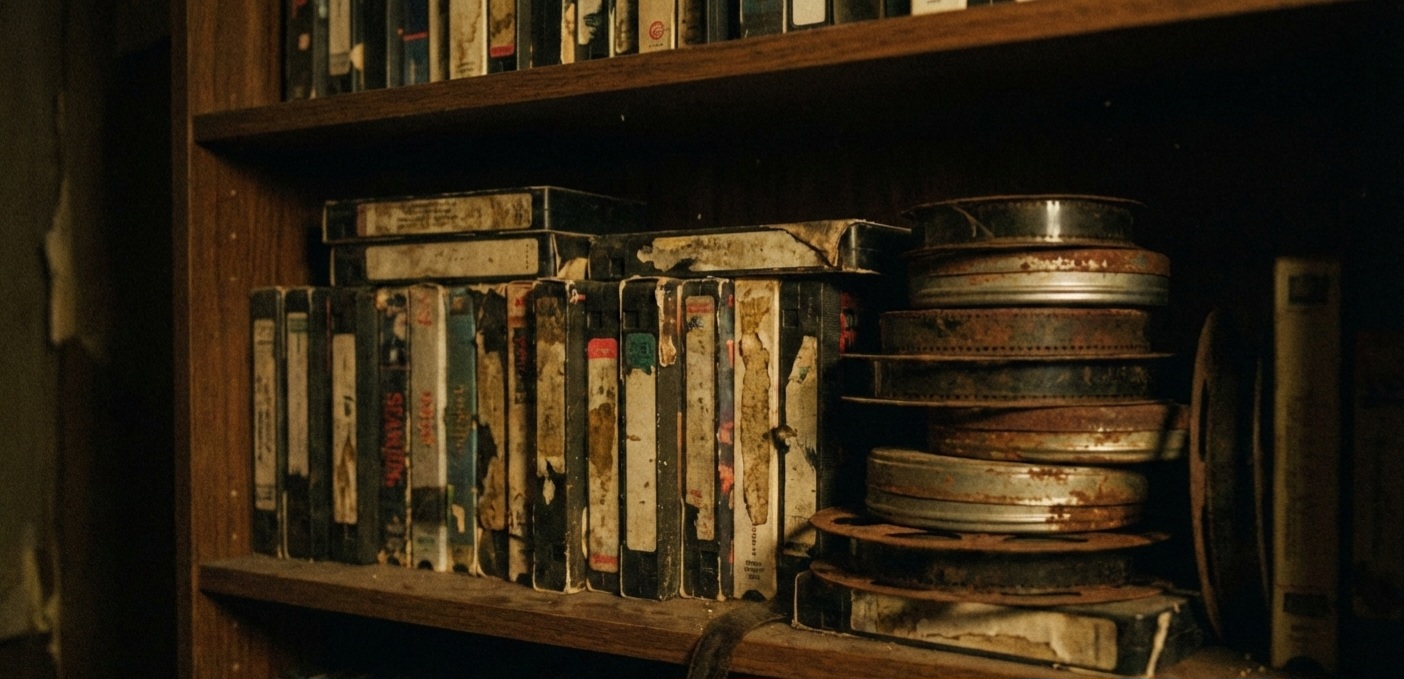
If you ever find yourself thinking that modern movies are too polished, too coherent, or too reliant on things like consistent lighting and actors who are in the same country, then you need to sit down with Godfrey Ho’s Ninja Terminator. This isn’t just a movie; it’s the cinematic equivalent of a garage sale where someone accidentally threw a grenade into the bargain bin.
Welcome, my freaks and geeks, the school of ‘cut-and-paste’ cinema. This is the film that redefined the word stitching by taking unrelated footage from obscure Asian films and violently shoving 1980s neon-clad ninjas into the gaps like they were trying to fill a pothole with glitter and throwing stars. It is the pinnacle of the IFD Films & Arts era, and it completely and utter refuses to make sense.
The Golden Ninja Warrior: A Three-Piece Puzzle for the Soul
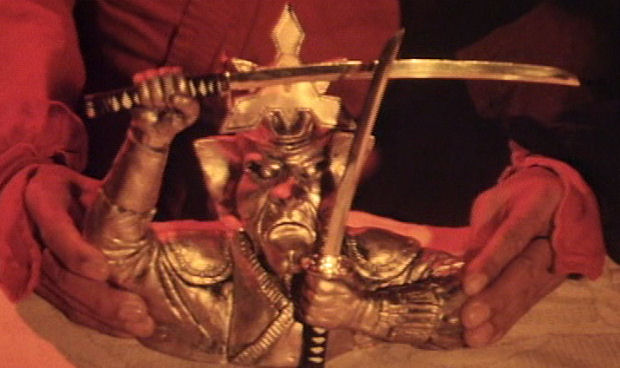
The plot, a word I use as loosely as a tooth hanging by a single nerve, revolves around the Golden Ninja Warrior statue. This isn’t just any gold-plated knick-knack; it’s a three-piece modular deity. Legend has it that if you possess all three pieces, you become an invincible ninja god. If you only have one piece, you’re just a guy with a paperweight and a target on your back.
The movie begins with three ‘Ninjas’ (I use the term because they’re dressed like ninjas in the most literal way possible, right down to headgear that practically labels them for the audience) stealing the statue. Naturally, they immediately betray each other because that’s what happens when your HR department consists of guys in masks.
This leads to the central conflict of Ninja Terminator, because the movie demanded something to hold all this madness together long enough for it to be released.
Harry vs. The World
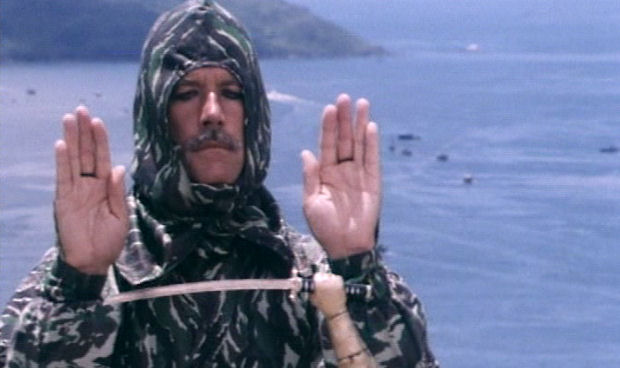
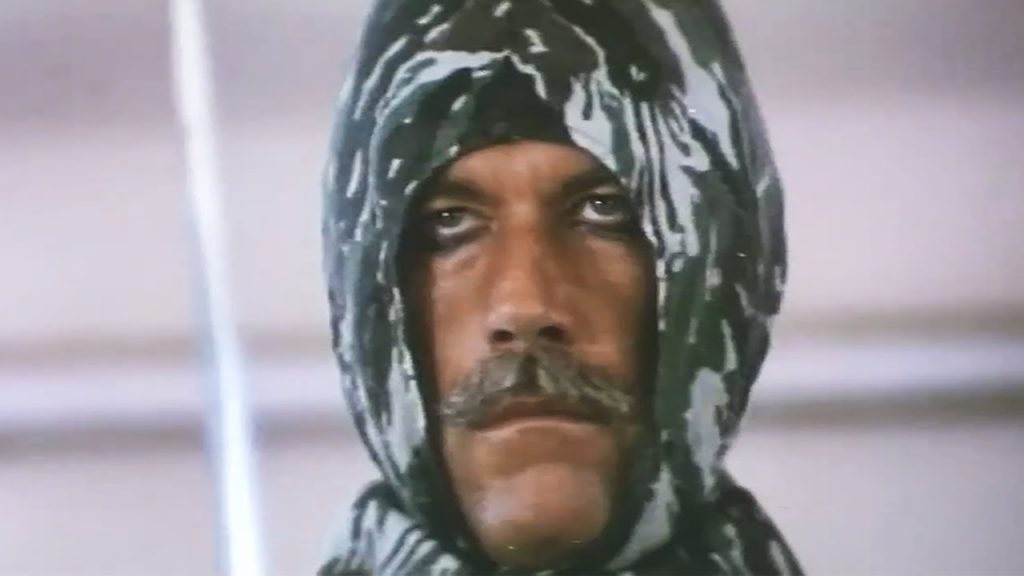
Harry (Richard Harrison) is our hero, and he is completely unlikable and spends 90% of the time talking on a telephone. In fact, if you removed the scenes of people talking on phones in this movie, it would be a six-minute short film about a guy who really likes camouflage.
Now, for those of you who don’t know, Richard Harrison was a man who went from legitimate Italian sword-and-sandal epics to being the face of a thousand Godfrey Ho ninja movies. Either the pay was good or he was down on his luck, I’ll let you decide. In Ninja Terminator, Harrison delivers a performance that can only be described as aggressively confused.
His character, Harry, lives in a world that is visually distinct from the rest of the movie. While the ‘original’ footage features gritty 70s sets and actors who look like they need a shower, Harry’s scenes are shot in bright, flat 80s lighting. He also, for some unbeknownst reason, wears a camouflage ninja suit that makes him stand out against literally any background that isn’t a dense jungle or a military surplus store.
The most iconic thing about Harry isn’t his swordplay, it’s his Garfield phone. Yes, our elite ninja warrior gives out and receives life-or-death tactical updates on a cartoon cat telephone. It is the kind of detail that reminds you that nobody involved in the production of this film had a single shred of shame.
The Cut-and-Paste Method
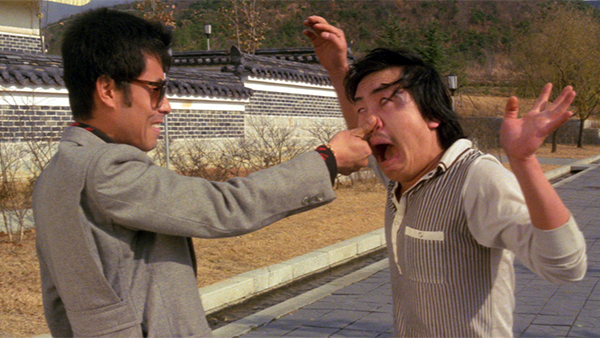
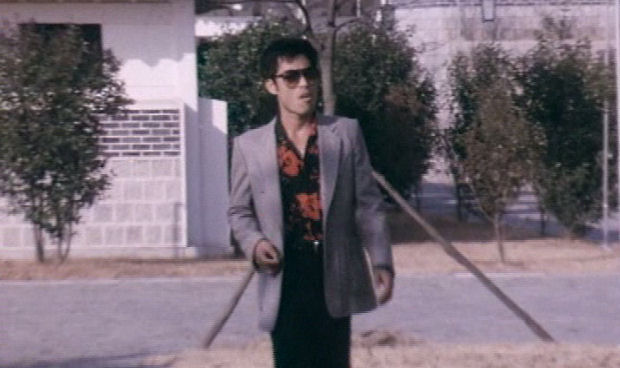
The genius (or bare-faced nerve) of Godfrey Ho was his ability to buy the rights to unreleased or obscure Asian films and, *cough*, improve them by filming new footage with Western actors and splicing it in. In Ninja Terminator, the original movie is a standard revenge flick about a guy named Jaguar Wong, played by the highly entertaining Jack Lam.
The problem? Jaguar never interacts with the ninjas. Not once.
To fix this, Ho uses the ‘Phone Call Protocol.’ A character in the old movie picks up a phone. The camera cuts to Richard Harrison in a totally different location (and likely a different decade) picking up his Garfield phone, and they ‘talk’ to each other.

See. I wasn’t lying about the Garfield phone.
One guy is sweating in a dimly lit office in 1977; the other is leaning against a white wall in 1985 wearing a “NINJA” headband. It is the most transparently fraudulent thing ever committed to film, and leaves me undecided if Ho should’ve been locked up for crimes against cinema or knighted for having such gigantic balls.
The Ninja Showdowns
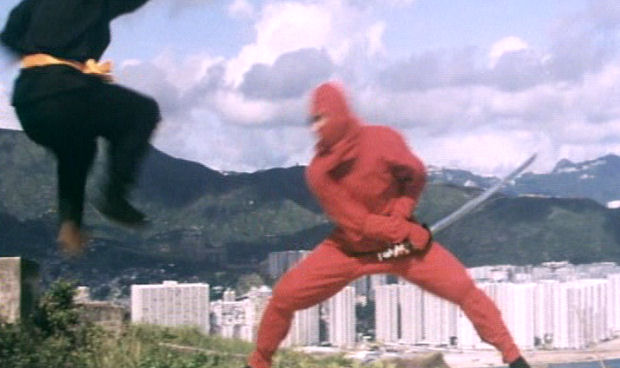
When the talking stops and the ninjas actually fight, the movie transforms into a high-stakes rhythmic gymnastics competition. The fighting style in Ninja Terminator isn’t based on stealth or martial arts; it’s based on flips. Ninjas don’t walk toward each other. They somersault. They don’t retreat. They backflip and, occasionally, just outright vanish from the frame you are watching. And I don’t mean in a cool ninja sort of way, I mean that they just cut the fuckers out in editing and boy, does it show.
The stuntmen (who are clearly different people than the actors) throw themselves around with an energy that suggests they were being paid by the rotation. The weapons are equally absurd. We have the classic throwing stars and swords, but we also have mini-bombs that explode in a puff of colored smoke, like a gender reveal party gone horribly wrong.
The Villainous Tiger
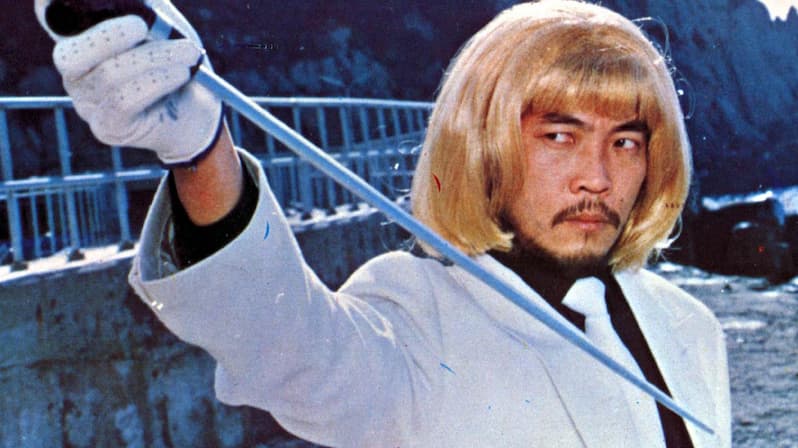
Every great ninja movie needs a villain who looks like he’s about to lead a very intense aerobics class. Enter Tiger. Tiger is the guy who wants the other pieces of the Golden Ninja Warrior. He wears a violently blonde wig because nothing says stealthy assassin like cosplaying as Lily Savage.
Tiger’s lair is a masterclass in low-budget set design. It usually involves a desk, a lamp, and some guys standing in the background wearing masks that look like they were stolen from a low-budget wrestling promotion. Tiger spends his time laughing maniacally and ordering his men to go out and fail at killing Jaguar.
This is our cannon fodder. They exist purely to be kicked in the chest by Jaguar or to be kung fu kicked so hard that their grandchildren will feel it.
The Robot Toy of Dooooooom
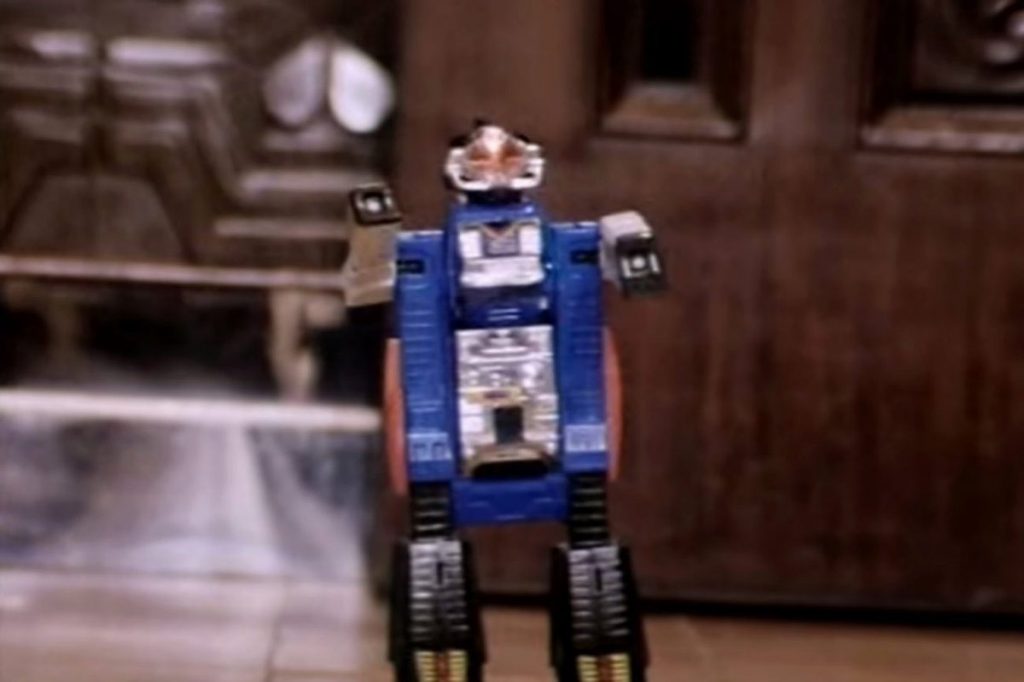
One of the most inexplicable sequences in Ninja Terminator, and that’s fucking saying something, involves a small, plastic robot toy, which is used by the real villain of the movie (who it turns out isn’t Tiger, but some random bloke? I’ll be honest here, this movie is so goddamn convoluted I haven’t a fucking clue) to deliver warnings to return the Golden Ninja Warrior statue in three days or else… they’ll be forced to do a sequel.
The camera lingers on this toy for an eternity as it slowly, painfully clacks across the floor. It is a moment that feels like it belongs in a completely different movie, possibly a low-budget Transformers knockoff. The fact that an elite ninja master is using a $5 toy as a tactical asset tells you everything you need to know about the budget and the vision of this film.
The Dubbing
Because the movie is a Frankenstein’s monster of different films, the dubbing is a work of art. Every character sounds like they are being voiced by the same two guys who are reading the script for the first time while trying to suppress a yawn.
The dialogue is a stream of consciousness that rarely aligns with the lip movements.
“I will kill you, Ninja!” “The Golden Ninja Warrior will be mine!”
The delivery is so flat that even the most dramatic death scenes feel like someone reading a grocery list. It adds a layer of surrealism that makes the experience feel like you’re watching a movie in a dream state after eating too much spicy food.

Why I Love It
Because Ninja Terminator represents a lost art form. It is the ‘Wild West’ of international film distribution. It’s a movie that lies to your face for nearly 90 minutes and expects you to thank it. It has a plot that is so confusing and baffling that I won’t even try and explain the ending to you, because I genuinely fucking can’t.
It takes the ninja mythos and strips it of all dignity, replacing it with neon headbands, Garfield phones, and more backflips than an Olympic floor routine. It is the kind of movie that might just fry your brain, and it is a mandatory watch for anyone who thinks they’ve seen it all.
It is a movie that defies criticism because it operates on a level of reality that is completely disconnected from our own. It proves you can assemble a cult legend the same way this film assembles its story: with whatever you’ve got lying around and zero concern for how it fits together. Coherence is optional. Logic is negotiable. Commitment to the bit is mandatory.
All you really need is a man in camouflage who looks permanently lost, a gold statue that comes apart like cheap furniture, and a phone line long enough to connect two entirely different movies, and somehow, against all reason, it still fucking works.
Leave a Reply