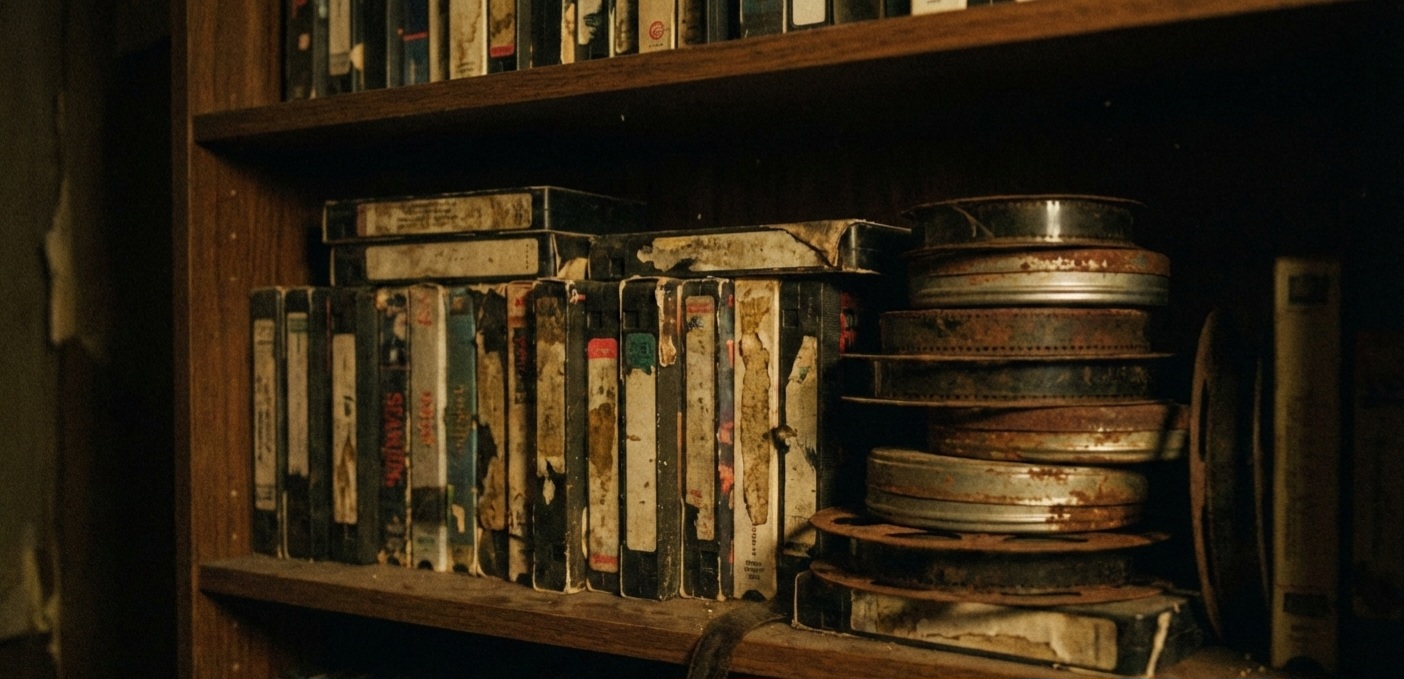
There is a precise moment in the development of a certain kind of mind where the trajectory of one’s aesthetic life is altered forever. For some, it is a high-brow literary awakening; for others, it is the discovery of a specific, crushing guitar riff in a windowless club. But for me—at the volatile, impressionable age of fifteen—the epiphany arrived in the form of a smart-mouthed, homicidal imp trapped inside a bowling trophy.
Sorority Babes in the Slimeball Bowl-O-Rama (1988)—known as The Imp in old Blighty—was not merely a movie. It was a baptism by fire and slime. It was the moment that trash cinema flickered to life in my chest, a signal that movies didn’t need the bloated approval of a studio system to be vital. It just needed a bucket of viscous fluid, a trio of legendary scream queens, and the absolute, unwashed audacity to call itself exactly what it was. This is the epitome of the late-80s rental market—a film that operates with a powerful duality, shifting between the neon-soaked aesthetics of a music video and the visceral, punchy violence of a creature feature.
Falling for the Queen
To speak of this film is to speak of my experience of falling in love with a screen presence. We all have those moments—those cinematic intersections where a performer transcends the medium and becomes a permanent fixture of our personal mythology.
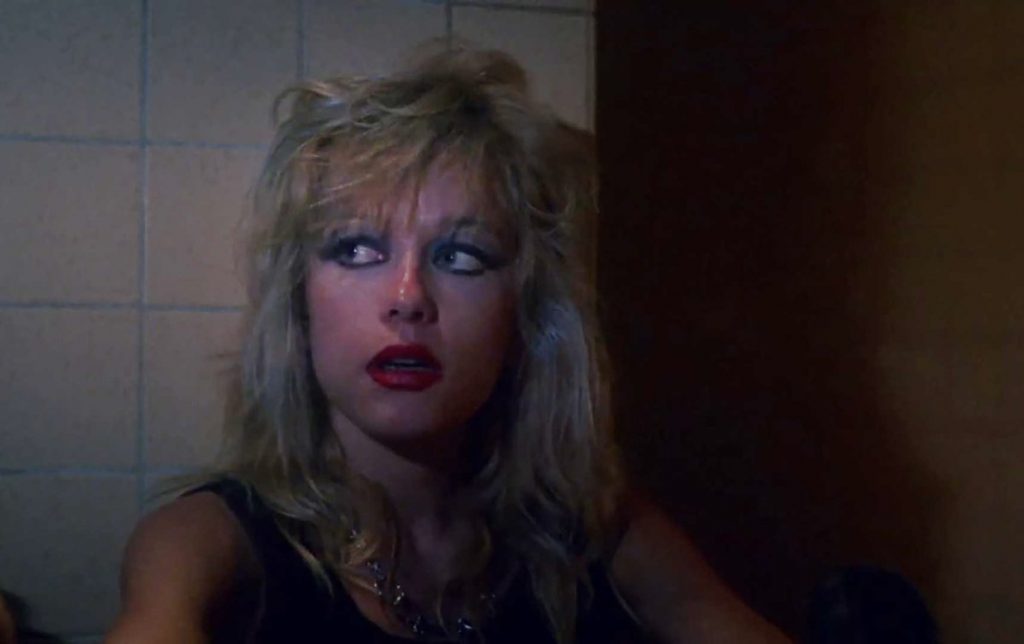
When I first watched Sorority Babes, I experienced a spiritual tectonic shift. I fell in love with Linnea Quigley with the same sudden, violent intensity that I felt when I first witnessed Pam Grier tearing through the frame in Coffy, or Valerie Leon exuding her ancient, serpentine grace in Blood From the Mummy’s Tomb.
There is a common thread between these women: they possess an authority that rejects surface-level analysis, and demands that you look deeper. When Linnea Quigley—playing Spider—walks onto the screen in her leather jacket and don’t fuck with me attitude, she isn’t just an actress in a B-movie. She is a rebellion in human form. She represents the uncompromising resistance of the cult icon. To a fifteen-year-old boy, she was the manifestation of a world far more interesting than the council estate hellhole I inhabited. She was the high-priestess of horror, and I was her most devoted convert.
Quigley has this effortless, rhythmic coolness. Whether she’s leading an initiation or fighting off a supernatural entity, she carries the weight of a genre on her shoulders. She is B-Movie cinema incarnate—unapologetic, fierce, and entirely singular. Falling for her in this film was a rite of passage, an initiation into a world where cheap special effects and the brilliant theatrics of trash movie mayhem meet in the flickering glow of an old television.
Seven Days of Creation
To understand the rhythm and drama of Sorority Babes, you have to understand how it was created. Directed by David DeCoteau—a man who could churn out a feature film faster than most people can finish a Sunday roast—this film is the definition of the straight-to-video era.
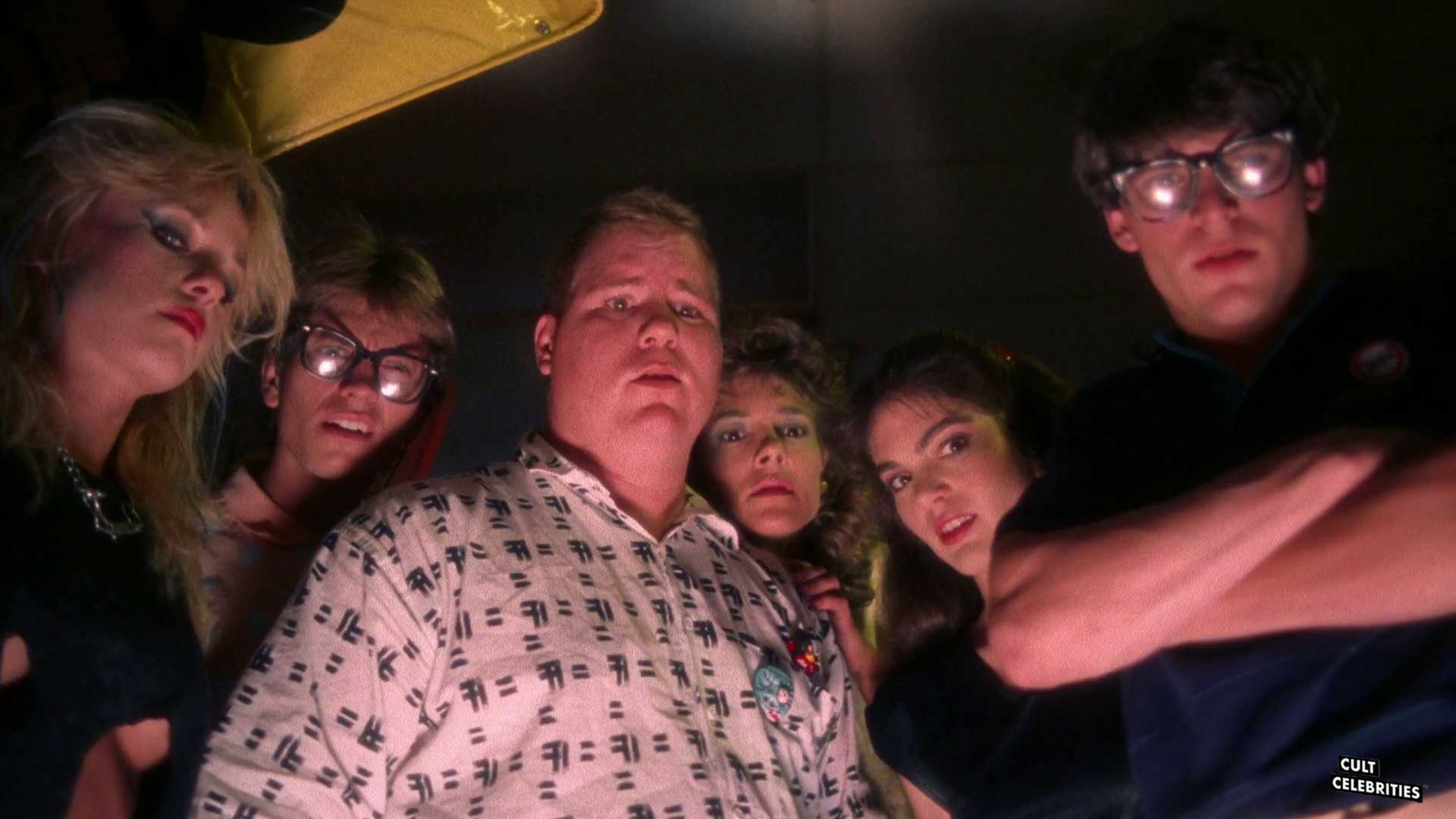
Legend has it the film was reportedly shot in about a week at an actual California bowling alley. Think about that for a second. That is the same amount of time the Biblical narrative allots for the creation of the entire universe. While the Almighty was busy with light and firmaments, DeCoteau was busy with spandex, hairspray, and a demonic puppet. The achievement is no less miraculous. This is insanity as filmmaking: it states that if you lock three nerds, three sorority pledges, and two bad girls in a bowling alley with a demonic imp, you don’t just have a movie—you have a cultural artifact.
It openly rejects the polish of the mainstream. You can’t look at this and talk about pacing in a traditional sense. You have to look at the core of the frame, which is usually vibrating with neon pink light and the smell of industrial-grade floor wax. It is an aesthetic of do-it-yourself-and-do-it-bloody-quickly, a rejection of the correct way to make a movie in favor of something visceral and immediate. DeCoteau knew he didn’t have a Spielberg budget, so he focused on the undercurrents: the lighting, the attitude, and the sheer, unbridled energy of his cast.
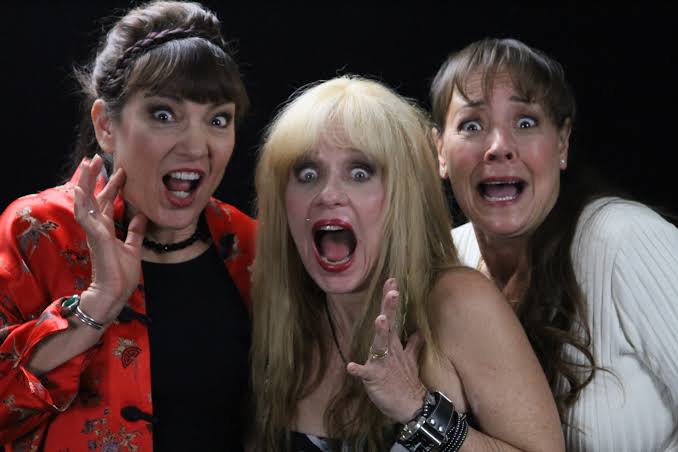
The Unholy Trinity: Quigley, Stevens, and Bauer
If Linnea Quigley is the heart of this film, then Brinke Stevens and Michelle Bauer are its lungs. Seeing these three on screen together is the horror equivalent of the Three Tenors, if the Tenors were wearing leather jackets and carrying paddles. If you don’t recognize the weight of those names, you aren’t resident here; you’re a tourist.
Brinke Stevens (Taffy): Bringing a touch of class to the screen, Brinke has always had a cerebral quality to her performances. Even in a movie about slime-monsters, she possesses a poise that suggests she knows more than she’s letting on.
Michelle Bauer (Lisa): Bauer brought a playful, direct energy that balanced the grittiness of the film.
Together with Quigley, they formed a front line of defense against the mediocre cinema of the era.These women were the backbone of independent horror. They were activists of the screen, working tirelessly in the trenches of the B-movie world to create something memorable. Their presence here elevates the film from a mere slasher into a piece of genre history. They aren’t just babes; they are the architects of the 80s horror genre aesthetic.
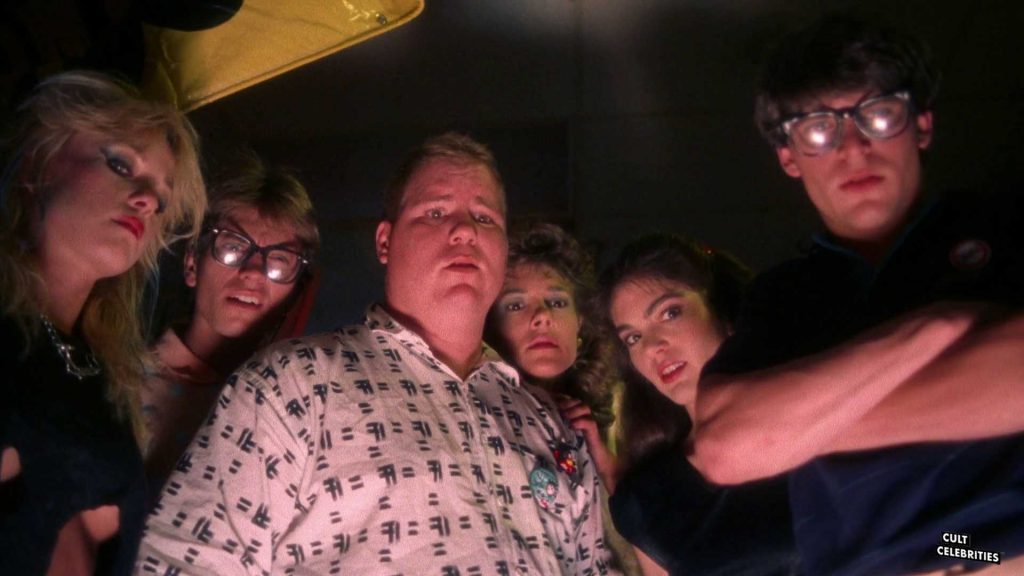
The Descent into the Bowl-O-Rama
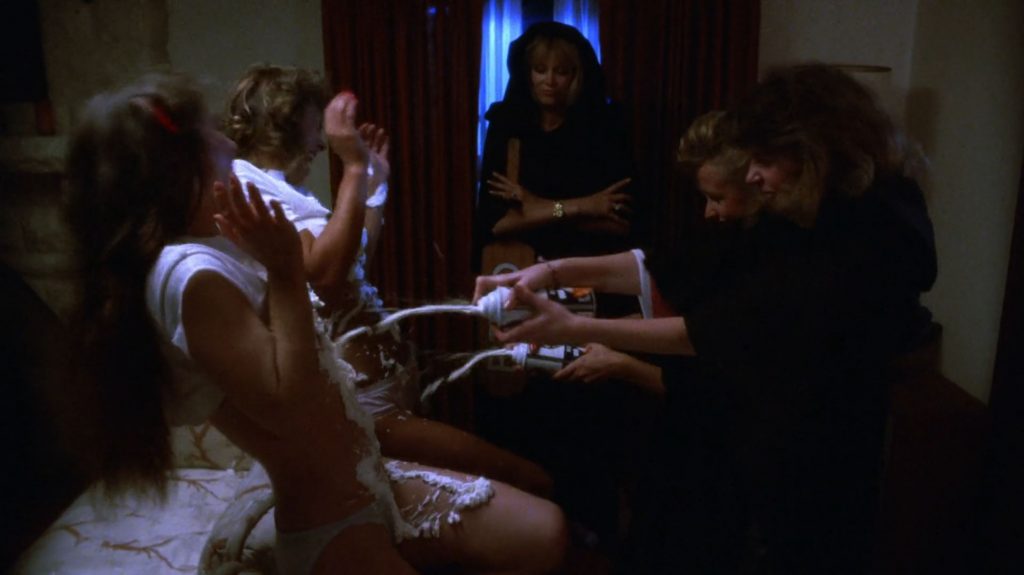
The narrative functions as a classic mythological descent. We start with our three nerds—Keith, Seger, and the inevitable science-type, Frank—spying on a sorority initiation through a window. This is the prologue of our journey into the underworld hell of the Bowl-A-Rama. It is a world of rituals and rules, of pledges and masters.
The nerds get caught, and the punishment is a quest: they must break into the local bowling alley and steal a specific trophy. This is Lord of the Rings level of questing shit. They aren’t just breaking into a Bowl-O-Rama; they are entering a labyrinth. On one hand, the bowling alley represents a secular purgatory—a place of repetitive motion and clattering noise. But on the other hand, it’s just a cool place to have a fight with a demon.
The transition from the sorority house to the bowling alley is the transition from the domestic to the supernatural. Once the doors lock behind them, the reality of their situation begins to set in. They are trapped in a neon-lit tomb, and the only way out is through the trophy.

The Imp and the Theology of Slime
I feel I have to point out the obvious: the moment they steal the trophy, the tone of the film shifts. The trophy breaks, releasing the Imp.
The Imp is a masterpiece of low-budget practical effects. He’s a puppet with the personality of a disgruntled New Jersey bookie and the magical power to grant wishes that inevitably turn into a nightmare. He is the ultimate bastard—he sees the characters’ desires and mocks them. He doesn’t just grant wishes; he manipulates their egos, exposing their innermost flaws.
Then there’s the slime. In the 1980s, slime was the universal currency of horror. It was evil made liquid, a physical manifestation of corruption. In Sorority Babes, the slime is vibrant, almost radioactive. Once the Imp starts infecting the girls, the film shifts from a goofy teen comedy into something much grittier. We’re talking about possession, physical mutation, and a level of practical gore that hits you like a 16-pound bowling ball to the chest.
Part of me sees the slime as a symbol of the breakdown of the flesh—a return to a primal, oozing state of being. While another part of me just thinks it looks cool under a blue gel light.
Both are right.
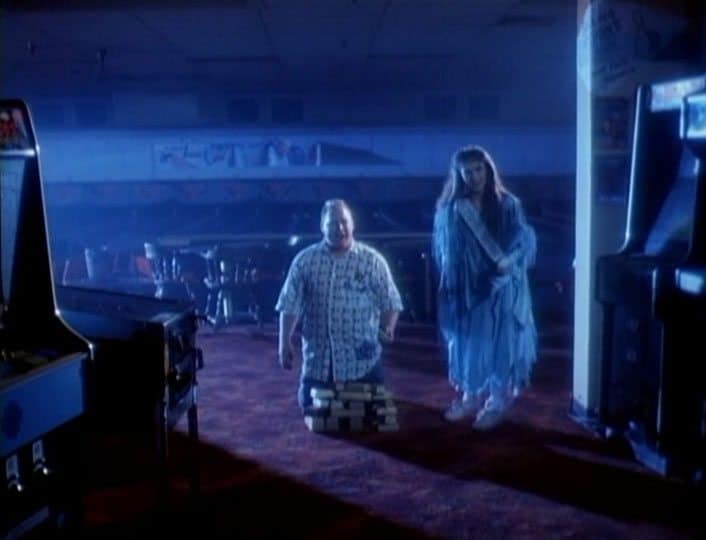
From Hairspray to Horror
What makes this movie work—and why it has remained a pillar of my cinematic identity—is how it balances its duality. One minute, you’re laughing at the punchy dialogue (“Oh my dress, oh my gold, oh boo-hoo”), and the next, you’re watching a character’s skin slough off in a neon-lit hallway.
The middle act is a masterclass in claustrophobia. They’re trapped in the bowling alley—the Slimeball Bowl-O-Rama of the title—and the Imp is picking them off one by one. The transition of the sorority girls into slime-babes is genuinely unsettling. It’s not just dodgy 80s lighting; it’s an atmosphere of uncompromising resistance.
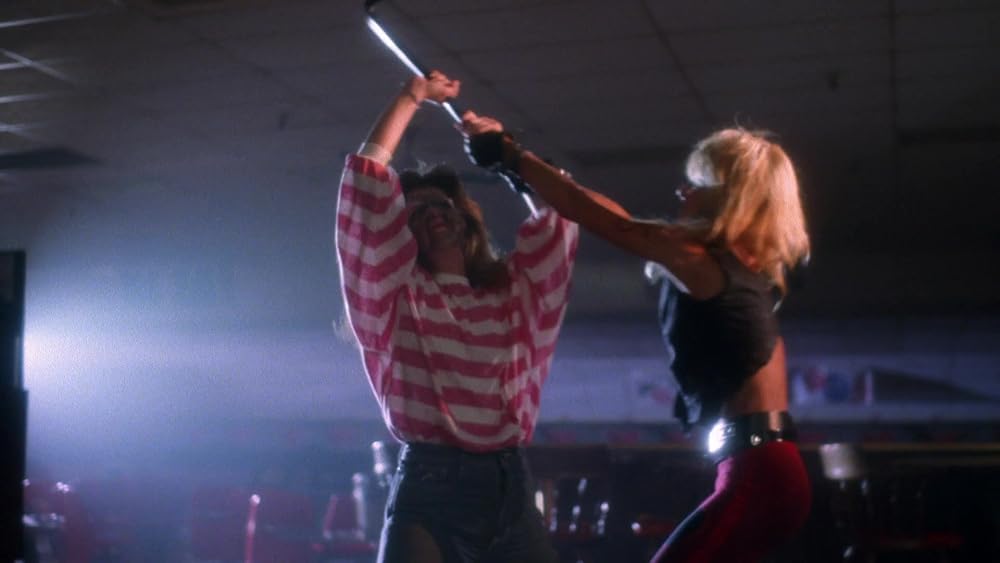
The munch out energy we saw in The Last Slumber Party is replaced here by a more focused, aggressive survival instinct. When Linnea Quigley’s character, Spider, takes charge, the movie finds its pulse. She is the no nonsense motherfucker of the group—direct, confrontational, and taking the job of survival seriously. She isn’t just a bad girl; she is the bad girl, leading the charge against the demonic forces with nothing but her wits and a leather jacket. She is the anchor in the storm of slime.
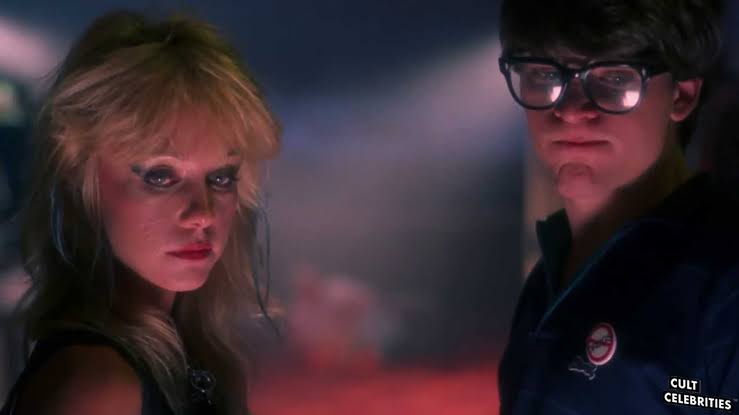
Lighting the Void
We must give credit to the cinematography. For a film shot in a week, the use of color is extraordinary. DeCoteau and his team either knew exactly what they were doing, or lucked out. They flooded the bowling alley with deep purples, hot pinks, and eerie greens. It creates a dreamlike, almost hallucinogenic atmosphere.
This isn’t just surface-level style. The lighting serves the thematic undercurrents of the film. It highlights the artificiality of the environment while emphasizing the reality of the horror. It is a clever and dramatic use of color that guides the viewer’s eye through the chaos. It proves that even with no money, a filmmaker with a vision can create an atmosphere that rivals the big-budget spectacles of the era.
Final Thoughts
When I first saw this at 15, I didn’t have the vocabulary to call it transcendental failure or beautifully ugly cinema, I just knew that I was seeing something that the normal world—the world of sanitized, Spielbergian blockbusters—didn’t want me to see. It felt like a secret. And it ignited a fire in me that still rages nearly 40 years later.
Sorority Babes is a flag planting moment for the aspiring cinephile. It tells you: “You don’t need a studio. You just need a location, some talented friends, and a puppet that can swear.” It is the ultimate rejection of the film industry. It is loud, it is messy, and it is honest.
The ending—with the survivors facing off against the possessed ghouls in a final showdown of bowling-alley weaponry—is the perfect conclusion to this crazy bastard of a film. It’s a violent explosion of everything that makes B-Movies great.
Sorority Babes in the Slimeball Bowl-O-Rama remains a cornerstone of the genre because it was made fast, is metal as fuck, and is driven by a heart that a lot of other films seem to miss. It wears its soul on its sleeve.
It’s got the scream queen trinity, a demonic imp, and more slime than a Nickelodeon awards show. But more than that, it has my gratitude for opening my eyes to a world I never knew existed before it wandered into my life.
It is a reminder of the time I fell in love with Linnea Quigley, and the time I realized that occasionally, the best seat in the house is on a threadbare floor in front of a flickering television.
Leave a Reply