
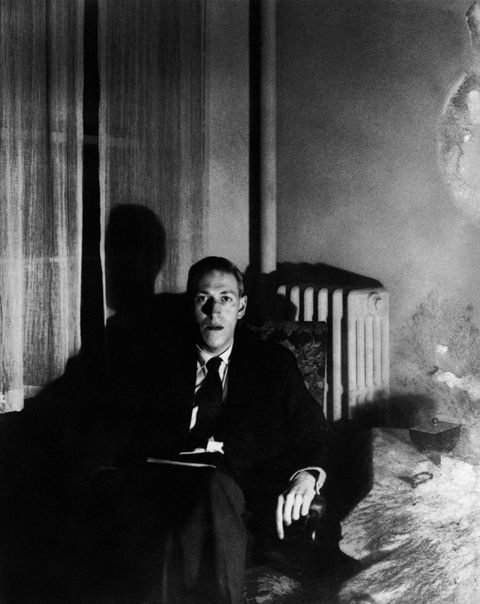
In mid-1919, H. P. Lovecraft moved his cosmos from the lighthouse of the soul to the foundations of civilization itself. With The Doom That Came to Sarnath, he produced a prose-poem of staggering cruelty and historical inevitability. This is not a story about ghosts or monsters in the traditional sense; it is a story about the debt of blood.
The Chronology of an Extermination
The story is set in the land of Mnar, a primordial landscape that existed when the world was young. It details the rise and fall of the city of Sarnath, a metropolis of unparalleled splendor. But Sarnath was not the first city in Mnar. Long before man arrived, there was the city of Ib—a place of gray stone inhabited by beings who were not of the form of men. These beings, the Ib-folk, were green, bulging-eyed, and silent. They worshipped Bokrug, the Great Water-Lizard.
The men of Sarnath, driven by a primal, xenophobic disgust, slaughtered the Ib-folk to the last soul. For a thousand years, Sarnath thrived. It became the center of the world, a place of thrice-piled silk and pavements of emerald. But every year, on the anniversary of the massacre, a strange green mist would rise from the lake. The story reaches its climax during the millennial festival of Sarnath’s greatness. As the king and his nobles feast in drunken arrogance, the lake heaves. The silent ones do not return as ghosts; they return as a cosmic necessity. Sarnath is not merely attacked; it is erased. When the neighboring tribes arrive the next morning, they find no marble, no emeralds, and no gold. They find only a desolate marsh, a great water-lizard, and the silent, bulging-eyed entities that have reclaimed their silence.
The Arrogance of the Concrete Jungle
Let’s get one thing straight: Sarnath deserved it.I don’t see this as a horror story; I look at it as a justice report. Sarnath is the ultimate First World fantasy. It’s the city that thinks it can pave over the past and pretend the blood didn’t soak into the soil. (Hey America, how you doin?)
The men of Sarnath were the original bros of the Dream-lands—arrogant, meat-headed, and obsessed with their own greatness. They looked at the Ib-folk, saw something different, and decided that different meant disposable.
But Lovecraft isn’t interested in your human rights. He’s interested in Cosmic Consequences. The horror here is plain for every civilization that thinks its skyscrapers make it immortal. You can build all the marble towers you want, you can drape yourself in gold, and you can throw the most expensive parties in history—but you are still sitting on a lake of vengeful mud.
The men of Sarnath forgot that they were guests in Mnar. They thought they were the owners. Lovecraft is mocking the end of history crowd. He’s saying that your progress is just a thin layer of paint over a very old, very angry reality. When the doom comes, it doesn’t care about your art, your laws, or your thrice-piled silk. It only cares about the fact that you’re in the way. Sarnath didn’t fall; it was deleted by the universe’s spam filter.
The Persistence of the PrimordialIn
With The Doom That Came to Sarnath, Lovecraft explores the concept of ancestral displacement and the biological memory of the land.
The Sin of Founding: Every great civilization has a founding sin—a moment of violence that clears the ground for the new order. In the American context, it’s the displacement of the indigenous; in the Roman context, it’s the murder of Remus. Lovecraft takes this historical reality and gives it a weird dimension. He suggests that the other (the Ib-folk) does not truly vanish. By murdering them, the men of Sarnath actually internalized the enemy. The Ib-folk became the subconscious of the city.
The silence of the Ib-folk is their greatest weapon. In Lovecraft’s universe, words are human inventions used to distract us from the truth. Silence is the language of the cosmos. By killing the silent ones, Sarnath tried to kill the truth. But the truth is like the lake—it stays where it is, waiting for the mist to rise.
The Cyclicality of Ruin: Sarnath represents the solar principle—light, height, marble, and visibility. Ib represents the lunar or chthonic principle—darkness, depth, stone, and shadow. Lovecraft posits that the solar is always temporary. The doom is the moment the cycle completes itself and the deep, cold, silent things reclaim the surface. This is cosmic justice without the God. It is simply the restoration of the original state. The marble is gone because the marble was an error in the geography of Mnar.
The Mourner of Lost Eras
In 1919, Lovecraft was watching the old world die. The First World War had ended, and the gilded age was being replaced by the frantic, mechanical noise of the 1920s. Lovecraft, who identified with the ancient and the traditional, felt like an Ib-folk in a world of Sarnathians.
Sarnath is the modern world—loud, arrogant, and disconnected from the gray stone of tradition. Lovecraft’s sympathy, surprisingly, lies with the monsters. He identifies with the silent ones who were there before the upstart humans arrived with their emerald pavements.
The story is a manifestation of Lovecraft’s Historical Pessimism. He knew that the things he loved (the 18th century, the classical world) were being slaughtered by the inutos of modernity. Sarnath is his revenge fantasy. He is writing the script for the destruction of the world that rejected him. He is the priest of Bokrug, watching the lake, waiting for the doom to wash away the thrice-piled silk of a society he despised.
The Litany of Excess
Lovecraft’s prose in Sarnath is an exercise in Linguistic Saturation. He uses a maximalist style to describe the city, which makes the minimalist ending more powerful.
The Architecture of Words: Lovecraft builds Sarnath with adjectives before he builds it with stone:. His repetitive use of “and” (polysyndeton) creates a piling effect. Lovecraft is literally building the city in the reader’s mind, brick by golden brick. He wants you to be impressed by Sarnath. He wants you to feel the weight of its wealth. He uses exotic materials—chrysoberyl, antimony, labradorite—to create a sensory overload. This is the prose of the feast.
The Language of the Void: When the doom arrives, the prose thins out. The high mythic vocabulary is replaced by the primal.
This contrast is its power. Lovecraft proves that all the fancy words in the world can be erased by one simple truth. He uses the emeralds and the gold as a set-up for the punchline of the mud. He is a master of the aesthetic rug-pull.
Bokrug: The Silent God of the Deep
Bokrug, the Great Water-Lizard, is one of Lovecraft’s most underrated deities. He is not a god who speaks or gives laws. He is a force of nature.
Bokrug represents the patience of the abyss. He doesn’t strike when the massacre happens; he waits a thousand years. This is the true weird horror: the realization that the universe’s memory is longer than ours. We think we got away with it because we haven’t been punished yet. Lovecraft says: Bokrug is still in the lake. Bokrug is the anti-Zeus. He doesn’t throw lightning; he just is. He is the cold, wet reality that sits at the bottom of every human endeavor. The fact that he is a lizzard is a deliberate nod to the Pre-Human era—a reminder that the mammalian era of Sarnath is just a footnote in the history of Mnar.
The Party’s Over
Look at the King of Sarnath at the end. He’s surrounded by his peers, drunk on his own legend, convinced that he is the center of the universe. And then the mist comes.
I love this moment because it is the ultimate reality check. Lovecraft is telling the elite of every age: The mist is coming for your party. You can hide in your many-pillared halls all you want, but the lake is rising.
This is the true horror for the 1%. You think your emerald pavements protect you? You think your brass gates can keep out the consequences of how you built your empire? Ask the King of Sarnath. Oh wait, you can’t—he is gone, and the bulging-eyed things remain. Lovecraft is the original Eat the Rich writer, but he does it with cosmic lizards instead of guillotines.
Final Thought
The Doom That Came to Sarnath moves the series from the individual to the civilizational. It establishes that progress is a form of collective amnesia. It proves that the other we destroy today is the doom that will erase our children tomorrow. We must remember the lesson of Mnar: the ground you walk on is never truly yours. It is borrowed from the silent ones. And they always collect their debts.
The mist is rising. The lizard is awake. And the silence is deafening.
Leave a Reply