Light a candle, dial a number, and ask for a ride. And whatever happens after that, don’t panic.
This is the ritual game that The Mid-Night Driver (dir. Alex Cherney) offers, a dread-filled, atmospheric film that follows Claire (Devan Delugo), after she and her friends dare to call the Driver. The premise sounds familiar, but the success of The Mid-Night Driver is its management of expectations. This is not a subversion—not quite. Rather, the film uses expectations to lull the viewer into a comfortable familiarity that it nibbles away at with a relentlessly ratcheting tension.
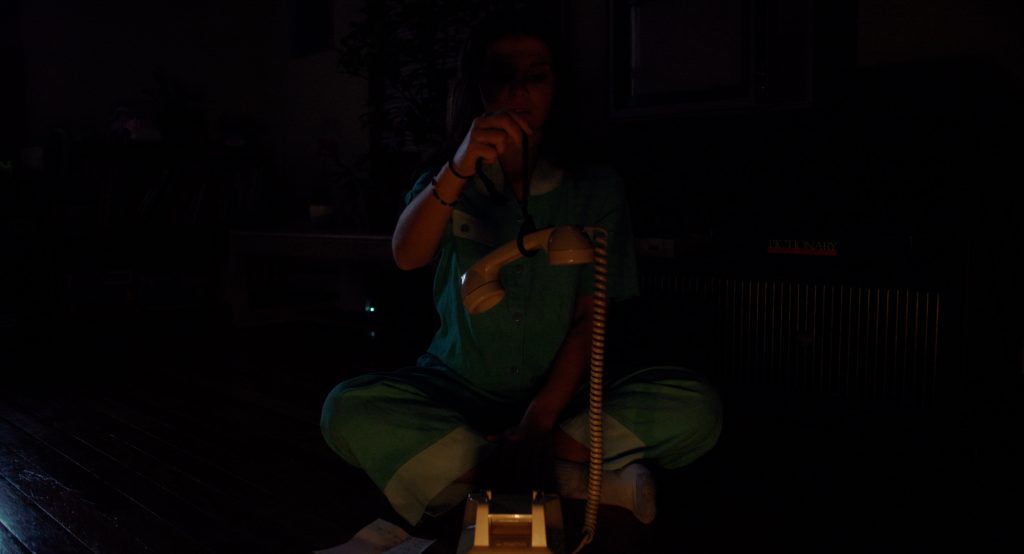
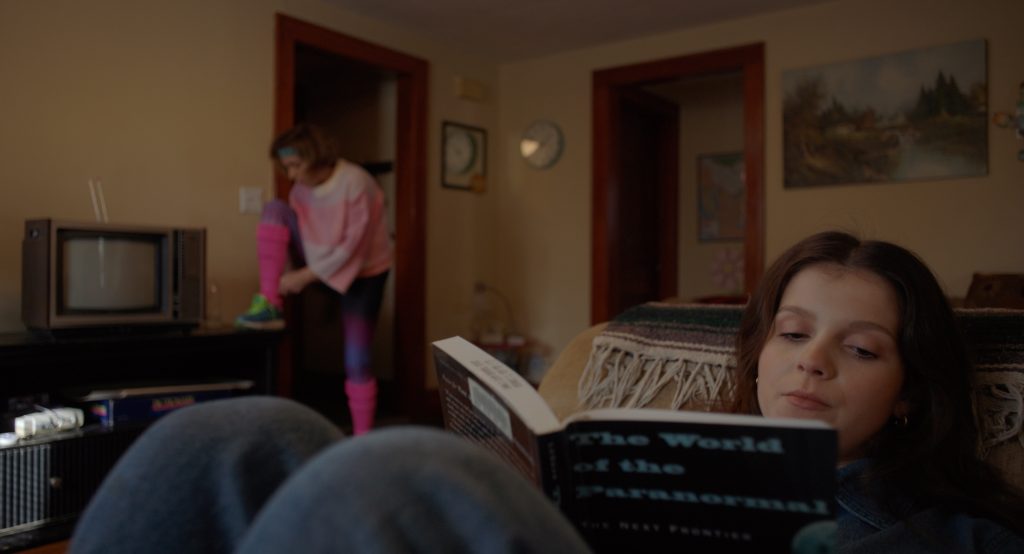
After briefly meeting Claire on a bike ride, we find ourselves at the sleepover where she and friends El (Izzy Marinucci) and June (Fran Mae) first try to summon the Driver (Al Reno). The signs of 1992 are everywhere. Nintendo is being played on a CRT television; calls are made on corded phones; a Saved by the Bell board game is the group’s last attempt to stave off boredom. On paper, these seem like easy reaches, but on the screen, there is a great synergy happening here that is not as simple as a few nostalgic winks. A score recalling John Carpenter’s moodiest moments completes the immersion. According to Cherney:
“When Antoine (Sous Chef) sent the first pass of the score, I was immediately struck by how much it elevated the film, especially the glassy, electronic texture inside the car and how it defined the Midnight world. John Carpenter was definitely a reference point. A synth-driven palette felt right for capturing an early 90s aesthetic, and the looping, mechanical quality of the music reflects The Driver’s nature. In contrast, Claire’s world is supported by a more delicate harp motif, giving her scenes an older, almost timeless tone. Sous Chef also performs the harp heard in the film.”
Along with the ongoing musical mimicry of the Driver’s number being dialed, the effect is a singular apprehension of impending doom, a creeping unease that settles in after the sleepover and stays with the viewer throughout the film. There is a seamlessness here that allows the viewer to sit in Claire’s place almost without noticing what has happened.
It helps that Claire is an exquisitely well-realized character. It is unsurprising that Cherney cites The Craft as one of the films he looked to for this specific time. Claire’s interactions with her friends and her mother (Laura Leigh Carroll) feel very much like The Craft (if the characters in that film had been slightly less credulous) and with the same brand of cynical self-awareness that has come to be associated with that particular period. The easy choice here would have been to present Claire as a sullen goth or a defiant riot grrrl, but she is instead a sort of every girl. Alone at home while her parents go about their lives without her, she quietly eats a sensible dinner at the kitchen table. She snacks on apples while she reads under trees. She always wears a seatbelt. She possesses an almost eerie equanimity that lends a weight to the events of the film that other characterizations might not have. It also makes her choices more believable. We see how safe her world is, and the price of this safety: everyday seems almost the same, and most of her daylight hours are blurs of nothing much happening. She is bored watching a wild slasher movie while home alone at night. Ennui pervades her entire existence, so that her decisions never seem silly, but understandable. It works in the primary narrative, but also as a deeper reflection of Claire as a person as she tests her own boundaries. Cherney and Delugo, says Cherney, “spent a lot of time discussing [Claire’s] her backstory and why solitude felt comfortable to her.” That work there shows here. And Claire’s convincing portrayal sets the tone at the core of the film—a profound isolation that is only amplified once Claire gets inside the Driver’s car.
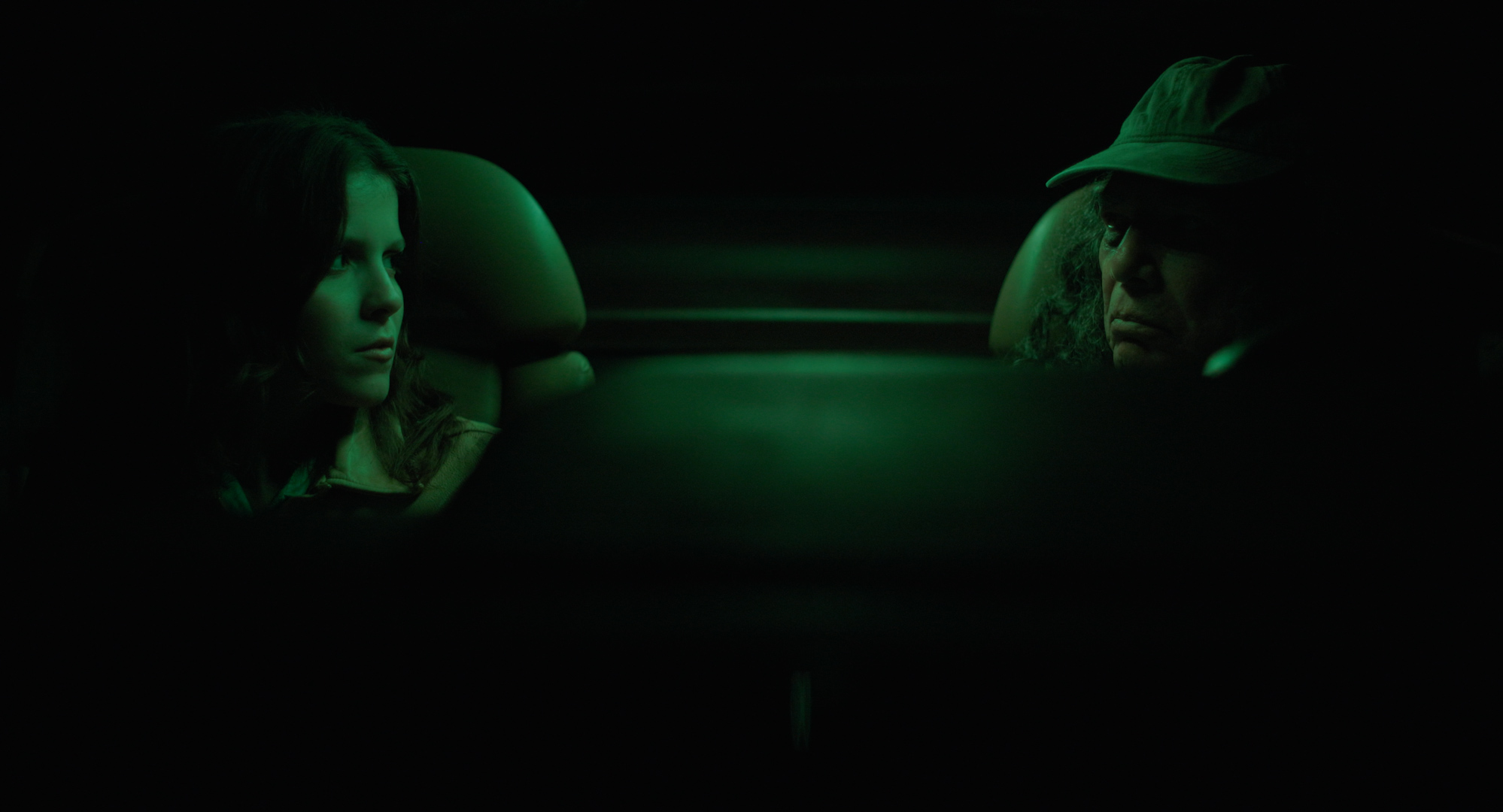
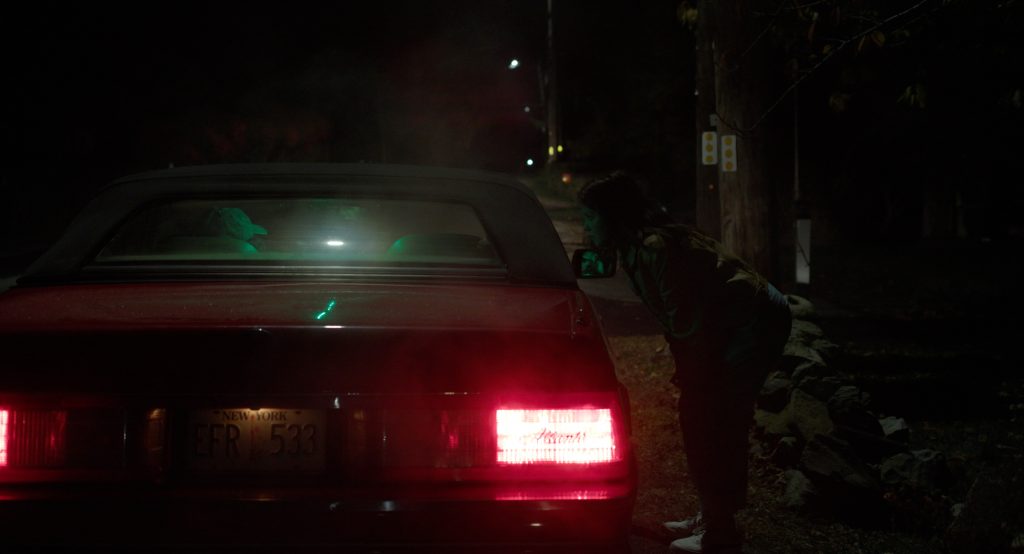
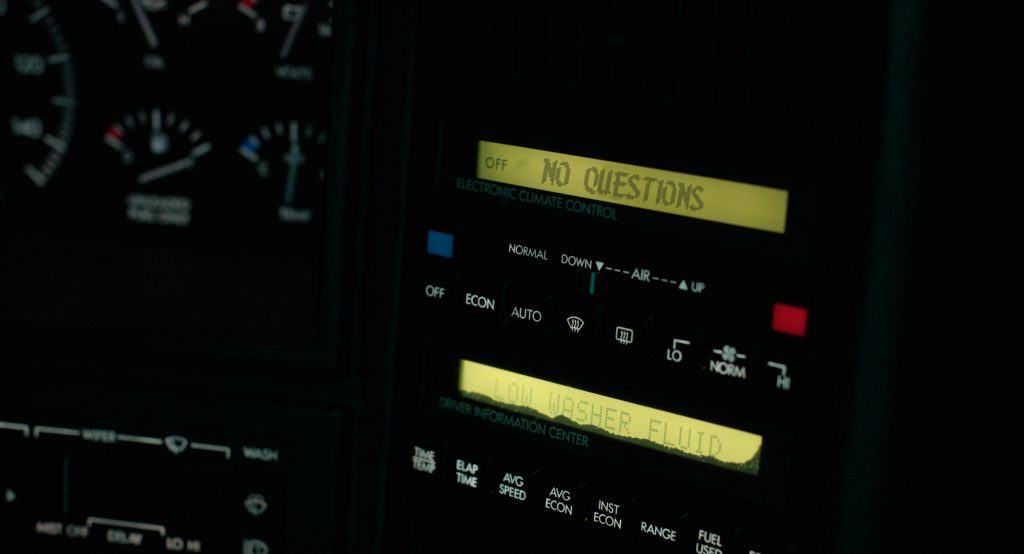
The Driver’s car, a 1988 Cadillac Allante, is the liminal heart of the film: with its LCD clock that alternates between displaying the time and increasingly foreboding messages, the interior feels impossibly spacious and claustrophobic all at once. The mechanics of the legend itself allows the audience to sit with Claire and all the terrible possibilities as time stretches and contracts inside the car, as anything else past the car’s windows except for the road stretching ahead into an endless night, disappears. The feeling of being contained is unnerving for most of the film and harrowing at the climax.
According to Cherney:
“Filming in the middle of the night helped tremendously, not just because of the darkness but because the world itself felt asleep. There was very little outside energy or activity. Since the film was made with such a small crew, that intimacy carried into the performances. Often it was just one actor, myself, and the camera inside the car, driving loops with minimal stimulus, which helped create a genuine sense of isolation for both the actors and the audience.”
But there is no real relief from the isolation when the camera leaves the inside of the car. The mid-night world is one of desolate roads and lonely structures, a secret reality more profound than the gradient from day to night and back again, and this is what haunts the viewer long after the final shot: Where, exactly, did Claire, and we, go?

Leave a Reply