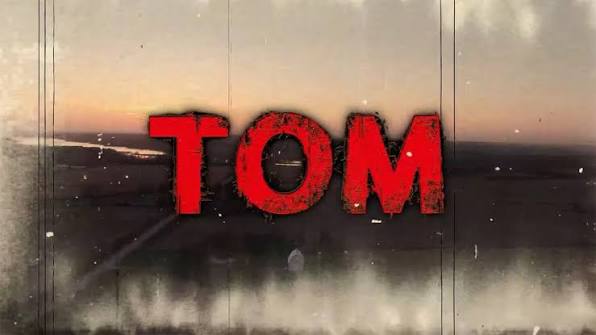
Ever found that mystery‑meat burrito buried in the back of a gas‑station freezer that somehow makes your taste buds question their entire existence? Tom is that burrito, only in movie form. A grimy, unapologetic, so‑wrong‑it’s‑right piece of cinematic junk food that somehow burns itself into the cortex of your brain. This isn’t a bad movie in the polite, gently aw‑shucks sense. This is a full‑blown fever dream splattered on celluloid, a creature feature by way of loosely tethered slasher mythology, conspiracy drip, and wardrobe choices that leave one question echoing in your mind: Why. No. Trousers?
And before you ask: yes, the underwear motif is real. At the start, a cluster of missing women reappear, none of them wearing trousers. The film never explains it. There is no symbolic payoff. It’s just… there. It is a stylistic choice that screams we have no rules, and it adds an extra layer of pure what the actual fuck to every damn scene where pantsless woman suddenly pop up.
The Plot, if Plot is the Right Word
To call Tom’s narrative a plot may be like calling a tornado breezy weather. The official hook is a small town being terrorized by a demonic entity, but the demon is more of a guest appearance than a looming menace. This movie feels like someone handed a camera to that neighbor on your block whose yard is just a pile of rusted car parts and “KEEP OUT” signs glued together with chewing gum and conspiracy pamphlets.
The chronology can be summarized as:
People disappear.
Some come back with no trousers.
Town collectively shrugs.
Demonic shit happens but… maybe?
Repeat steps 1–4 for 85 minutes.
Well… 75 as the first 10 are taken up by credits.
That’s the structure. That’s the heartbeat.
Characters You Love to Disown
The cast stumbles through their roles like trespassers at an abandoned carnival, not quite sure why they’re there, but committed enough to keep the lights on and the tape rolling.
The performances are delivered with the sort of do‑or‑die commitment usually reserved for stage actors trapped in a burning theatre. They sell every line like it’s the key to human understanding.
But let’s talk about Tom, the titular puzzle box wrapped in an enigma wearing nothing but a sack over his head and bright red eyes. Whether he’s meant to be a demon, a local suicide possessed by cosmic forces, or the physical embodiment of every conspiracy theory that’s ever shattered a Thanksgiving dinner, I have no fucking idea, but whatever he is, he seems quite pissed off.
Tom’s presence in every frame he shows up in feels like one long scream at the universe: “Watch this! Please watch this! I have no idea what I’m doing but GOD DAMN it, I’m doing it LOUDLY!”
Actors, Accents, and The Iowa Effect
And then there’s the accents.
Not because they’re good — oh no. They are staggeringly, beautifully spectacularly bad. It’s like the cast was told, “Imagine someone from the Midwest, but only based on the way Bob from Nebraska sounds after a three‑day truck stop karaoke binge.” The result is an accent soup so unmoored that it shifts between scenes like a drunk octopus trying to pilot a gondola.
And the soundtrack?
Imagine a blender. Now imagine blowing a fuse at 4 AM while it’s still running. That’s the energy here. Melodies flutter in and out with zero regard for mood or scene. A tense outdoor sequence might be underscored by a 2005 edgy Industrial score that suddenly turns into trip-hop because the composser got bored. A quiet moment between characters might be scored like a symphony of wasps because the keyboard got stuck on one sample and they were too cheap to get the bloody thing fixed. It doesn’t match, and yet, bizarrely, it fits the film’s jagged, half‑awake heartbeat.
Urban Decay as Aesthetic Choice
Visually, Tom is a masterclass in thinking you’re watching mistakes, then realizing it might actually be intended. Shot in gritty small‑town locations and cluttered interiors that scream “this place hasn’t been cleaned since disco died,” the film uses peeling wallpaper, stained carpets, and overhead fluorescents that flicker like nervous ticks as visual texture.
Instead of polishing away every flaw, Tom bathes in them. The bleak urban interiors and half destroyed rooms don’t just set mood, they are the mood. The environment doesn’t support the story, it is the story: a town on the edge, a camera left rolling, logic left in the parking lot.
Humor Born from Cosmic Discomfort
This film’s humor isn’t punchline comedy. It’s the uncomfortable, “should‑I‑even‑be‑laughing‑at‑this?” brand that only true cult cinema generates. Moments of bizarre dialogue clash with awkward silences. People try to discuss demonic infestations one second, then next we’re in the local nuthouse with the girls, who are still sitting around in their underwear the next, being possessed.
Jesus! Someone get these women trousers for God’s sake!
It’s not slapstick in the classic sense. It’s the comedy of absurdity, the humor of cognitive dissonance, the belly‑laugh that sneaks up on you when reality and nonsense collide with no warning.
You don’t laugh at the scenes, you laugh with the scenes, in exactly the way you laugh when your brain finally waves a white flag and says, “I give up. You win, universe.”
The Pants Factor: A Phenomenon Without Explanation
Yup, I can’t get my head around this so much that I need to write it down to see if that helps. Early in the movie, several missing women reappear. None of them are wearing trousers. Now, this is not a fleeting cameo, it’s a recurring visual thread that never gets explained, justified, or thematically unpacked. It’s just a reality the movie embraces with the solemnity of a town meeting about potholes.
There is no narrative reason given.
No symbolic payoff.
Nothing.
They just… show up.
Without trousers.
Is it intentional? Is it surreal? Is it cosmic commentary on vulnerability, the abyss, and the illusion of societal decency? Who knows. But it adds a level of what‑the‑holy‑hell that you can’t unsee. It’s baffling, it’s audacious, and it works on the same visceral level that bad special effects and disjointed sound design work: you can’t look away because your brain is trying desperately to make sense of the nonsense.
Tom as an Experience: Like a Cardboard Car Crash
Watching Tom isn’t like watching a movie. It’s like drinking from a firehose that’s been taped to a stick of TNT. It’s a car crash in slow motion, the car is made of cardboard, the driver is yelling about conspiracies, and you’re inexplicably invested.
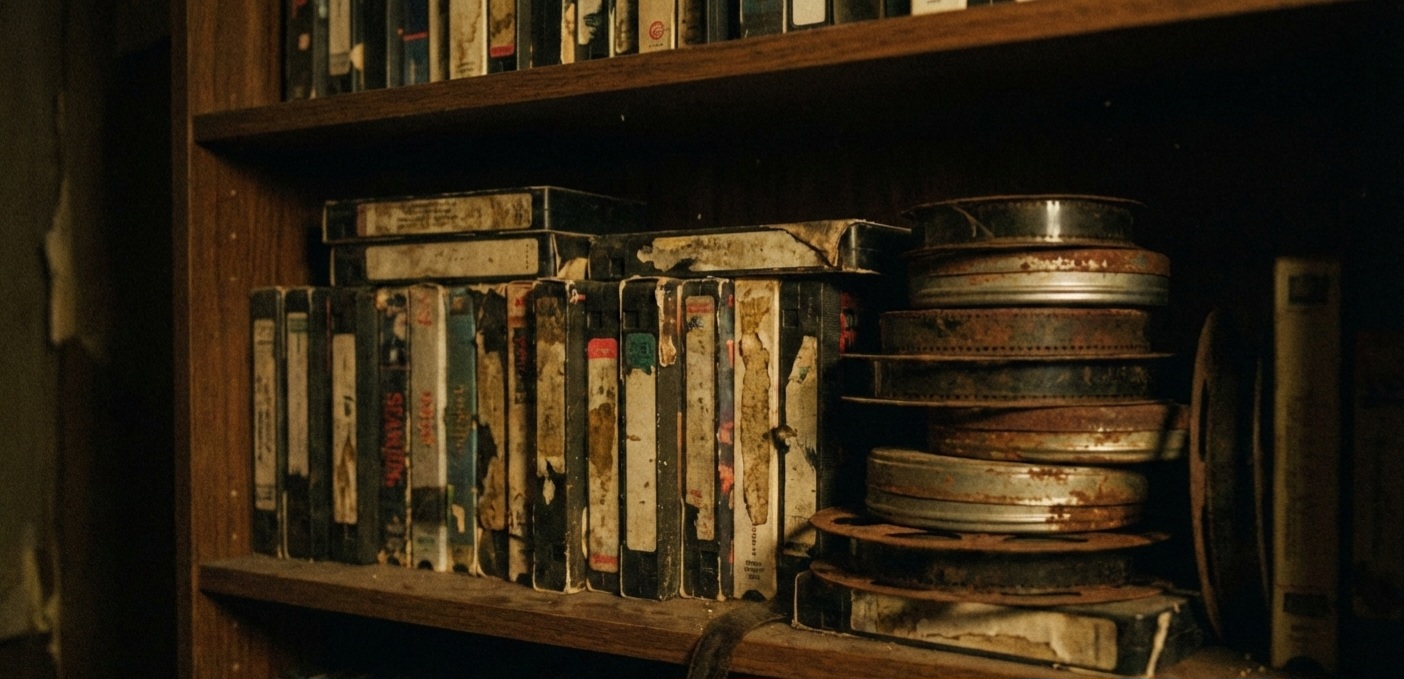
It rewards viewers who grew up on late‑night public access horror, unlabeled VHS tapes, and films that feel like they were shot on leftover Super 8 film stock that once belonged to someone’s garage sale.
It captures what I like to call the cultural Frankenstein loop, a patchwork of ideas, a stitch‑and‑pray narrative, and personality bursts that defy conventional filmmaking logic.
Final Verdict: A Grimy Masterpiece of Trash Cinema
Here’s the brutal truth: Tom (2022) is not polished. It doesn’t know exactly what it wants to be at every moment. It has more weird choices than a carnival sideshow rattling a bag of marbles.
But here’s the kicker… it works.
It works because it dares to be exactly what it is, chaotic, pants‑ambivalent, and unafraid of making you laugh, cringe, and question your life choices within the span of one scene.
It’s about as horrific as an episode of Bluey and more janky than live streaming on dial-up, but I don’t care.
It’s not a movie that follows rules. It’s a movie that eats rules for breakfast, then burps loudly and asks for more. And for that? It earns its spot in the vault of trash cinema legends: the films that shouldn’t exist, but thankfully do.
If you’ve got the stomach for demon conspiracies told with zero regard for trousers or narrative gravity, then Tom is a fever‑dream you owe yourself. Just don’t expect to be the same person when you come out the other side. Or to be wearing any lower garments.
Leave a Reply