Step away from the Technicolor vampires and the campy castle sets, because we are heading to the year 1645, a time when the English countryside wasn’t a place for a picnic; it was a place for mass executions. While the 1960s were supposedly about peace and love, a director barely in his mid-twenties named Michael Reeves decided to take a giant, mud-caked boot and stomp that dream into the dirt.
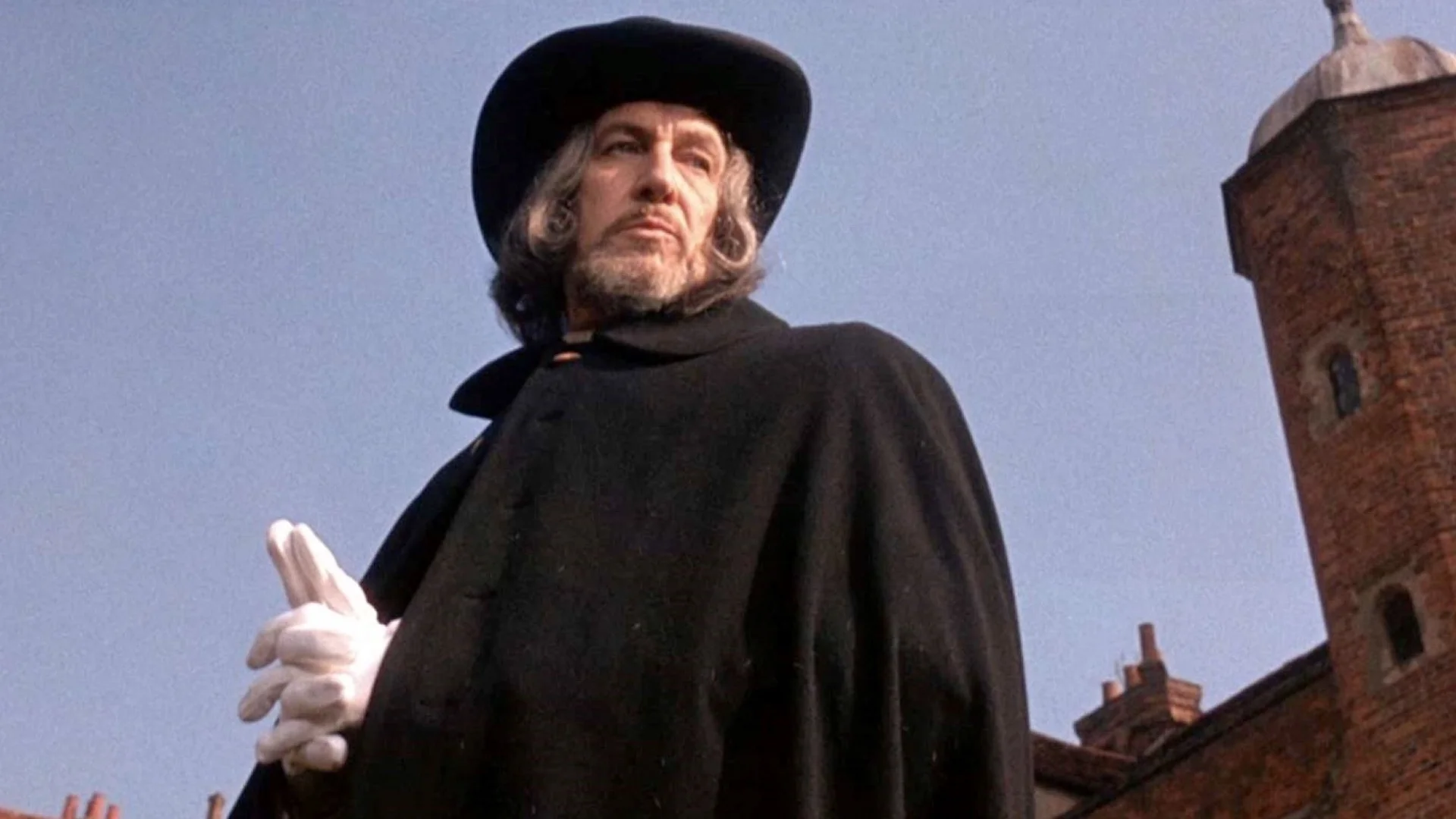
1968’s Witchfinder General (retitled The Conqueror Worm in the U.S. to tie it to AIP’s successful Poe cycle) is the black sheep of British horror. It doesn’t have the granduer of Hammer Films, instead, it’s the gritty and unapologetically mean ancestor of every backwoods horror movie you’ve ever loved. It’s the film that took the legendary Vincent Price, stripped him of his theatrical cape, and turned him into a cold-blooded bureaucratic monster.

The Year the World Turned Upside Down
To understand why Witchfinder General feels like a punch to the gut, you have to understand the era it was born into. 1968 was a year of global upheaval. Riots, assassinations, and the Vietnam War were on everyone’s television screens. Horror was evolving, too. In America, George Romero was filming Night of the Living Dead, showing that the monsters weren’t out there, they were our neighbors.
In England, Michael Reeves was feeling the same vibe. He was a wunderkind who had lived and breathed movies since he was a kid. He didn’t want the polite gothic horror of Hammer, where Christopher Lee looked impeccably groomed even after rising from the grave. Reeves wanted the physicality of the 17th century. He wanted to smell the rot, feel the dampness of the English rain, and show the absolute vacuum of morality that occurs during a civil war.
The English Civil War (1642–1651) was the perfect setting. It was a time when the law had collapsed, brother was fighting brother, and the superstitious fear of the Devil was used as a political weapon. Into this chaos stepped a real-life historical figure who makes every slasher villain look like a Boy Scout: Matthew Hopkins.
The Director vs. The Legend: The Battle for Vincent Price
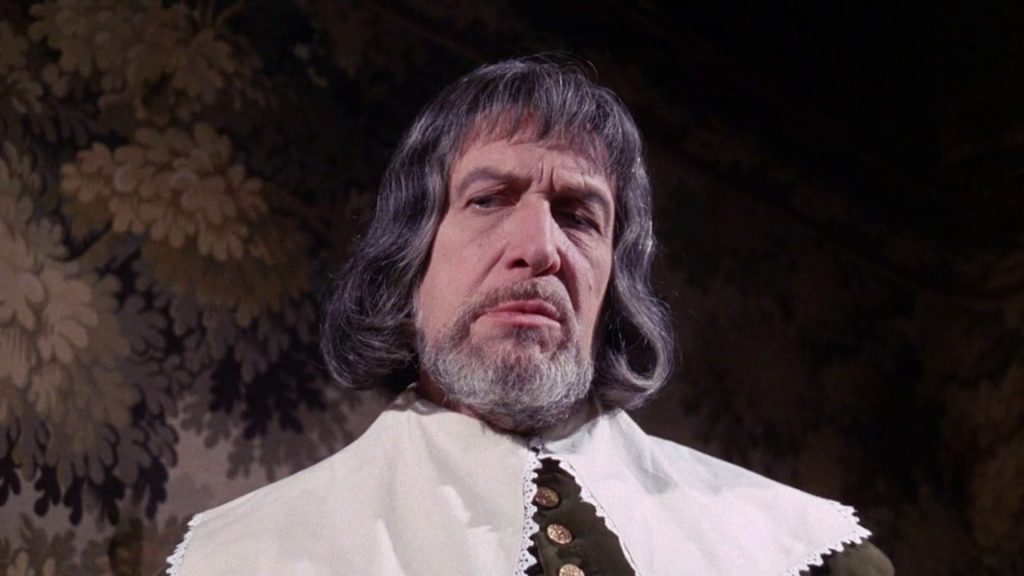
The most famous story in horror history is the war between Michael Reeves and Vincent Price.Vincent Price was a god in 1968. He was the face of the Roger Corman Poe cycle: elegant, theatrical, and prone to chewing the scenery with a delightful campiness. When he arrived on the set in Norfolk, he expected to do business as usual. He had his fancy hats, his booming voice, and his practiced gestures.
Reeves, however, hated the casting. He wanted Donald Pleasence, a man who looked like a burrowing owl and radiated a quiet, oily creepiness. When the American producers (AIP) forced Price on him, Reeves decided to break the actor down.
Every time Price gave a theatrical performance, Reeves would stop the cameras. He told Price to stop moving his face. He told him to lower his voice. He wanted Price to be nothing. He wanted him to be a cold, flat line on a heart monitor.
The tension was legendary. According to legend, Price reminded Reeves of his decades of experience, and Reeves reportedly shot back that he’d made “three good films.”
But here’s the irony: By hating each other, they created magic. Price’s performance as Matthew Hopkins is his absolute best work. By removing the wink to the audience, Reeves made Price genuinely terrifying. He isn’t a cool villain; he’s a man who uses the Bible to justify his own perversions and his bank account.
The Real-Life Butcher: Who was Matthew Hopkins?
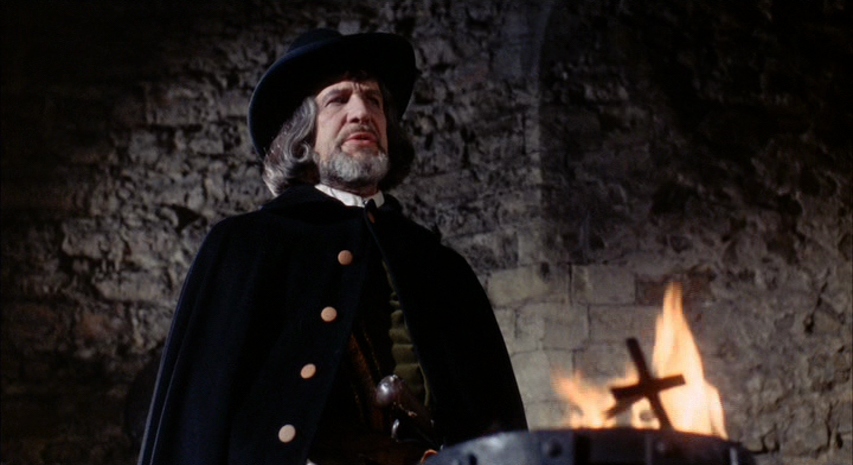
Matthew Hopkins was a flesh-and-blood nightmare. During the Civil War, He styled himself Witchfinder General and traveled through East Anglia between 1644 and 1646. He wasn’t a priest; he was a failed lawyer who realized that fear was a growth industry.
He traveled through this area, charging villages massive fees to identify witches. His methods were the stuff of B-movie legend:
The Pricking: They would use needles to find Devil’s marks, spots on the body that supposedly didn’t bleed or feel pain. (Hopkins allegedly used tricked needles to ensure he always found what he wanted).
The Watching: Suspects were kept awake for days on end, forced to walk until they hallucinated and confessed.
The Swimming: The classic “if you float, you’re a witch” logic that ensured the victim died either way.
Reeves captures this bureaucratic evil perfectly. In the film, Hopkins and his sadistic sidekick John Stearne (played with disgusting relish by Robert Russell) aren’t religious zealots. They are just predators. They arrive in a village, eat the best food, take the villagers’ money, and hang the most vulnerable people they can find. It’s a business model built on corpses.

The Plot: A Western in a Cromwellian Mask
Reeves famously described Witchfinder General as a Western. If you look closely, the DNA is all there: the lone hero on horseback, the lawless frontier, and the relentless quest for revenge.
The story follows Richard Marshall (Ian Ogilvy), a young trooper in Cromwell’s army. He’s a normal guy caught in a normal war. But while he’s off fighting for the soul of England, the monsters are at home. Hopkins and Stearne arrive in Marshall’s village and target the local priest, John Lowes, and his niece, Sara (Hilary Dwyer).
The scenes of John Lowes’ interrogation are harrowing. There is no supernatural magic here, just ropes, needles, and a cold pond. Sara tries to buy her uncle’s life by giving herself to Hopkins. In any other movie, this sacrifice might work. In Reeves’ world, Hopkins takes what he wants and hangs the priest anyway.
When Marshall returns to find his mentor dead and his fiancé traumatized, he doesn’t call for a lawyer. He swears a blood oath. The second half of the movie is a high-speed chase across the beautiful, indifferent English countryside. It’s a road movie where every stop is a crime scene.
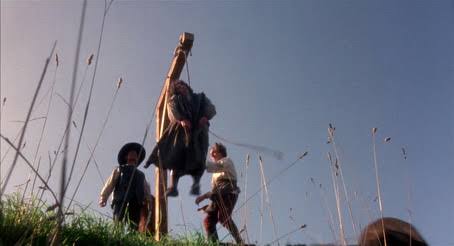
The Terror of the Gallows
There is a dark, absurd rhythm to the violence. Reeves uses the practical effects of the 60s—bright red blood and prosthetic limbs—to show the clumsiness of death.
The Burning Scene: Early in the film, we see a witch being burned. It’s not a poetic, gothic scene. It’s messy. The crowd is cheering, the woman is screaming, and the soldiers are just trying to get the job done so they can go to the pub. It’s the banality of the violence that makes it so unsettling.
The Dungeon Brawl: The finale isn’t a clean sword fight. It’s a desperate, animalistic struggle in a damp basement. Marshall doesn’t just defeat Hopkins; he loses his mind. He grabs an axe and begins hacking at Hopkins with a primal, rhythmic intensity that is animalistic.
The violence here isn’t for chills; it’s for shock. When Marshall’s own friends have to shoot Hopkins to stop the butchery, Marshall’s reaction is a howl of pure, nihilistic rage:
“You took him from me!”

The Visuals: Beauty and the Beast
Michael Reeves and cinematographer John Coquillon did something radical for horror: they shot the movie in the lush, golden light of the English summer. The rolling hills of Norfolk and the ancient churches look beautiful.
This creates a Folk Horror dissonance. You have these gorgeous landscapes, and then, right in the center of the frame, you have a man being hanged or a woman being swum in a pond. It’s the idea that the land itself is ancient and doesn’t care about human suffering. The sun keeps shining while Hopkins collects his blood money.
Its daylight brutality anticipates later folk horror like The Wicker Man and even modern entries such as Midsommar. It shows that there is nowhere to hide because the evil is right in front of you, wearing a badge and holding a Bible.
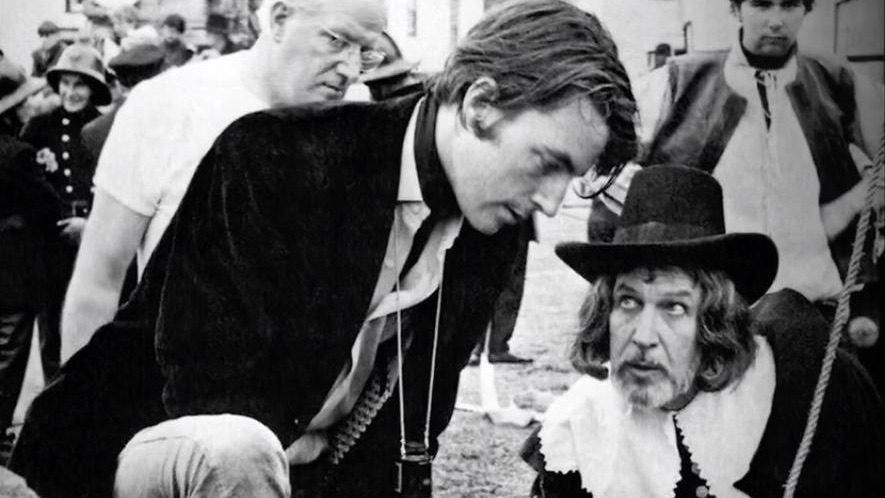
The Tragedy of Michael Reeves
We can’t talk about this movie without talking about the cursed nature of its creator. Michael Reeves was a genius who was struggling with intense depression and insomnia. He was 24 years old and felt the weight of the world on his shoulders.
During the production, he was reportedly taking heavy doses of barbiturates just to function. When the film was finished, the censors (the BBFC) absolutely loathed it. They saw the violence as gratuitous and vile. They cut the film to ribbons, removing the very heart that Reeves felt was necessary to show the reality of the 17th century.
Reeves never got to see his masterpiece fully appreciated. Less than a year after the film’s release, he died of an accidental overdose at age 25. He became the James Dean of Horror, a man who burned bright, changed the genre forever, and vanished before he could see his impact.

Why It’s a Classic
Witchfinder General survived its bad reviews and its censorship to become a legend. It became one of the foundational films of what we now call folk horror, because it taps into something deeper than just ghosts or monsters. It taps into the fear of the system.
The Absence of God: In Hammer films, a crucifix usually saves the day. In Witchfinder General, the crucifix is what the villains wear while they kill you.
The Collapse of Reason: It shows how easily rational people can be turned into a lynch mob if they are scared enough.
The Cycle of Violence: By the end of the movie, the hero is just as monstrous as the villain.
It’s a story that doesn’t offer any comfort. It doesn’t tell you that the evil is under the bed. It tells you that the evil is in the courthouse, and it’s got a warrant for your arrest.
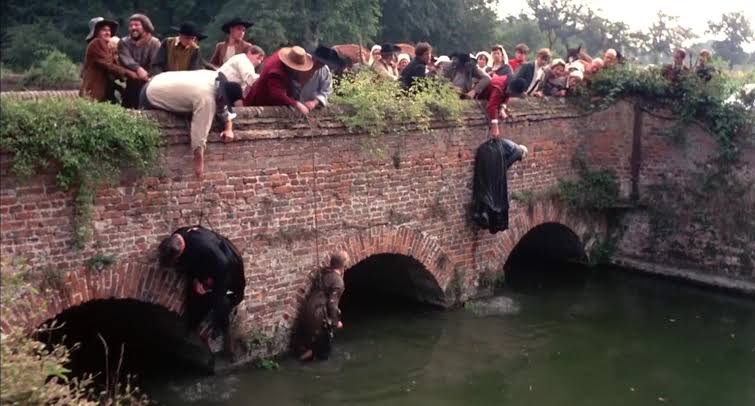
Final Thoughts: The Horror of Belief
Witchfinder General is the ultimate reminder that the most terrifying thing of all is human nature when the rules are removed.
Vincent Price’s cold, dead eyes in this movie will stay with you longer than any rubber mask. It’s a film that demands to be seen, not just as a horror movie, but as a warning. The Witchfinder General might be dead, but the business of fear is always open for customers.
Leave a Reply