If The Evil Dead (1981) was a raw, grueling exercise in “look what we can do with a camera and a bag of fake glass,” then Evil Dead 2: Dead by Dawn (1987) is the moment the circus tent caught fire and the ringmaster decided to start juggling chainsaws while riding a unicycle over a pit of hungry deadites. It is a rare beast in the world of horror: a sequel that retells its own origin story at gunpoint, a horror movie that is also a Looney Tunes cartoon, and a blood-soaked fever dream that remains the gold standard for splatter-stick. It doesn’t ask for your permission to be insane; it simply breaks into your house, hits you over the head with a shovel, and laughs while you try to remember your own name.
The “Recap” That Rewrote the Map
Before we even get to the cabin, we have to address the sheer audacity of the opening five minutes. Because of rights issues with the original film, Sam Raimi couldn’t use footage from the first movie. His solution? Just remake the first movie in five minutes with only two characters and a lot more hairspray.
The friend group is quietly erased from history. In this timeline, it’s just Ash, Linda, and a tape recorder that should have been left alone. Here we are introduced to the only two people in the world who think a weekend in a murder-shack is a romantic getaway. They go to the cabin, they play the tape, the Kandarian Demon arrives, and Linda is possessed, decapitated, and buried before the first act break. It is a witty, “don’t-blink-or-you’ll-miss-it” piece of storytelling that basically tells the audience: “Forget everything you thought you knew. We’re starting the engine now.” It’s efficient, it’s confusing for about thirty seconds, and then it’s irrelevant because the movie starts moving at 100 miles per hour and never looks back. It treats continuity like a polite suggestion rather than a rule, proving that if you move fast enough, the audience won’t care about the plot holes.
Bruce Campbell: The Buster Keaton of the Violence
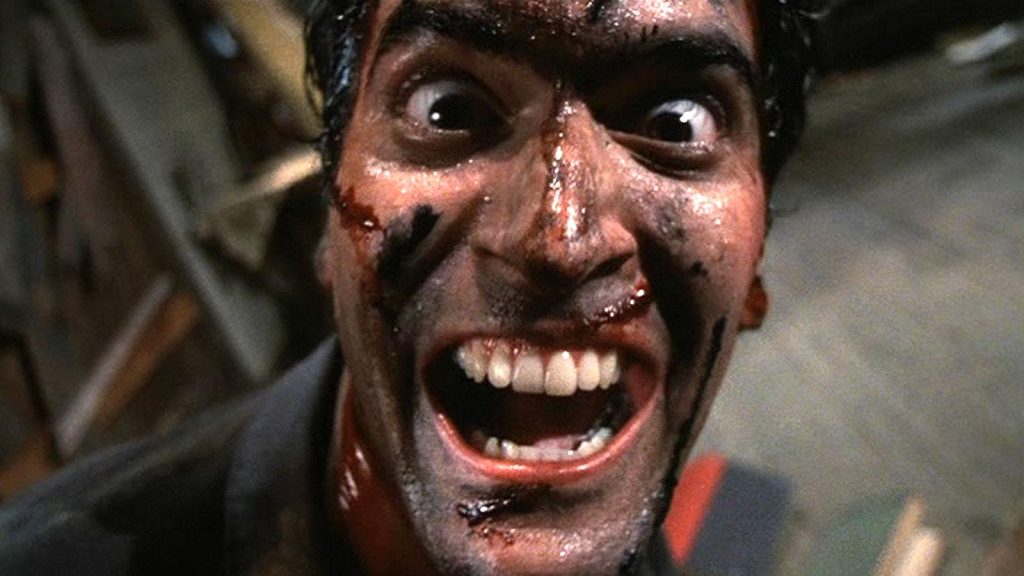
Bruce Campbell’s face is something else. In Evil Dead 2, his jawline should have received its own billing. This is the film where the character of Ash Williams transforms from a generic final guy into a mythic figure of slapstick suffering. Campbell’s performance is a masterclass in physical comedy under extreme duress. He isn’t just fighting demons; he’s fighting his own furniture, his own reflection, and—most famously—his own hand.
The sequence where Ash’s possessed right hand tries to kill him is quite possibly the greatest five minutes of physical acting in the history of the genre. He flips himself over, he smashes plates over his own head, and he eventually performs a hand-ectomy with a chainsaw.
“Who’s laughing now?”
It is absurd. It is hilarious. And yet, because it’s handled with such manic energy, it’s also pulse-pounding. Campbell sells the horror of a man losing his mind so well that you almost forget he’s wrestling with his own limb. It’s the kind of performance that needs praise because no one else on the planet could have pulled it off without looking like an absolute idiot. He is the Buster Keaton of horror, and every bruise on his body is a testament to his commitment to the bit.
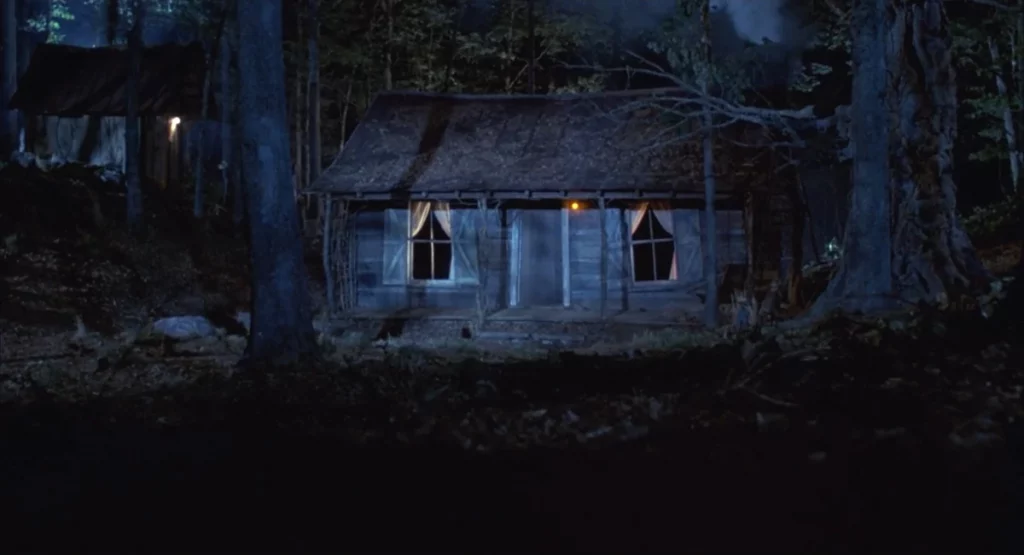
The Cabin as a Character
The setting of Evil Dead 2 isn’t just a location; it’s an antagonist. Raimi uses the camera like a weapon, flying it through windows, over floorboards, and directly into the actors’ nostrils. The cabin itself feels like it’s breathing, laughing, and actively trying to trip Ash up. It’s a fun-house of the damned, where the physics of the real world have been replaced by the physics of a nightmare.
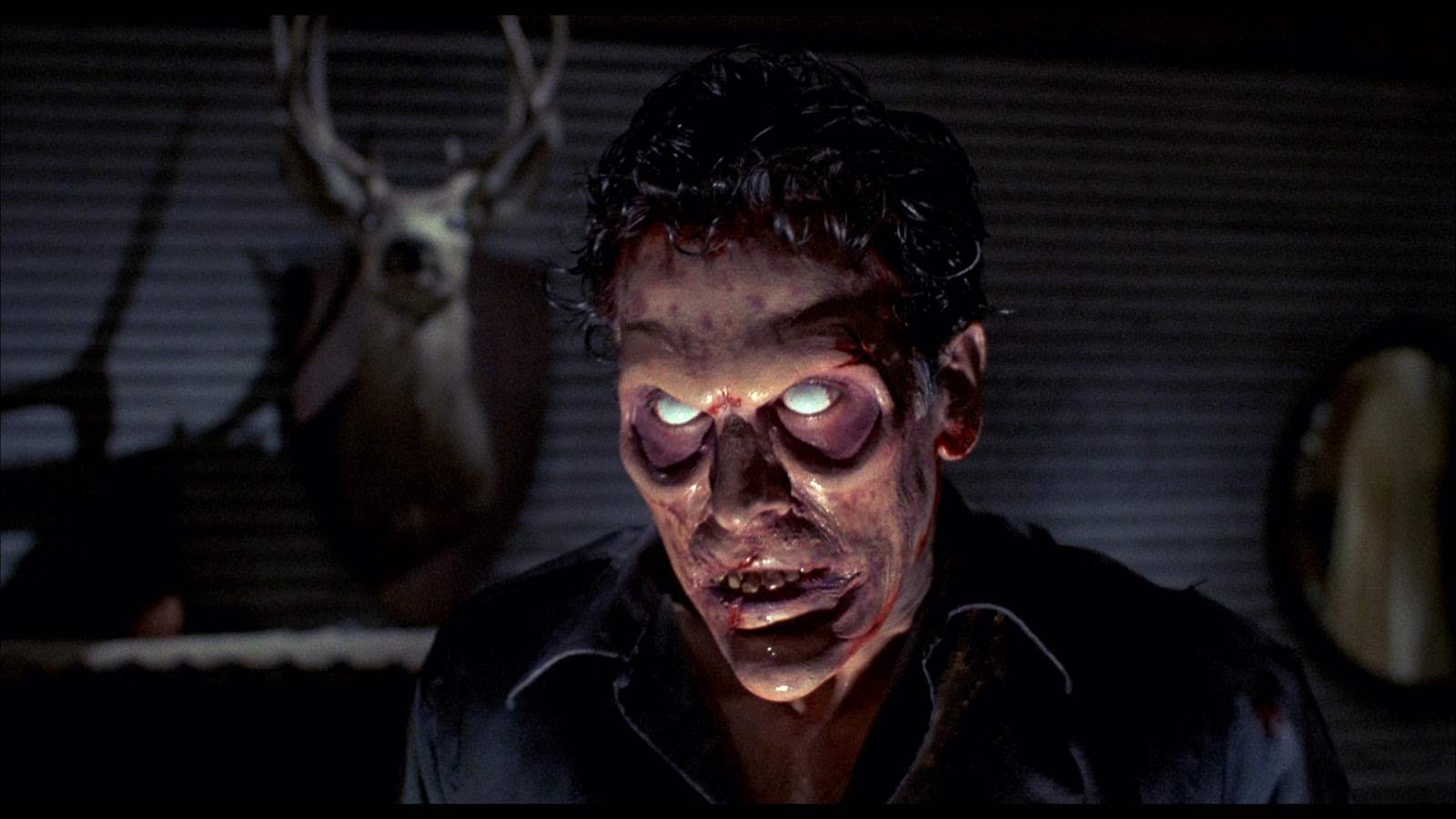
Then there is the Laughing Room scene. This is the moment the movie transcends horror and enters a state of pure, unadulterated madness. The deer head on the wall starts laughing. The desk lamps start laughing. The books start laughing. And Ash, covered in various colors of demon ichor, laughs right back at them. It pokes fun at the very concept of sanity. Most horror movies try to make you feel safe before the scare; Evil Dead 2 makes you feel like you’ve already had a stroke. It is clever in its visual execution, using stop-motion, puppets, and camera tricks that should have been too much, yet they fit the internal logic of the film perfectly. It’s Sam Raimi’s insanity at its peak: if a laughing deer head makes the scene weirder, put it in and worry about the explanation later.
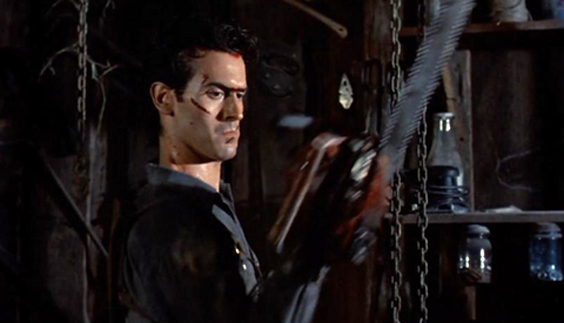
The Work Shed
When Ash finally retreats to the work shed to deal with his possessed hand and the memory of his dead girlfriend, the movie enters its most iconic phase. This is where we get one of the best sight gags in the history of film making. Ash traps the hand under a bucket, puts a copy of A Farewell to Arms on top of it, and proceeds to have a mental breakdown.
The craftsmanship in the shed scene is incredible. The lighting is harsh, the sound of the chainsaw is deafening, and the camera angles are so extreme they make your head spin. It’s here that we see a Grindhouse approach to filmmaking—nothing is treated gently. The tools, the blood, the wood shavings, and the sweat all combine to create a tactile experience. You can almost smell the gasoline and the sawdust. It’s a scene that praises the ingenuity of the guy in a shed trope while poking fun at just how much one person can endure before they finally snap.
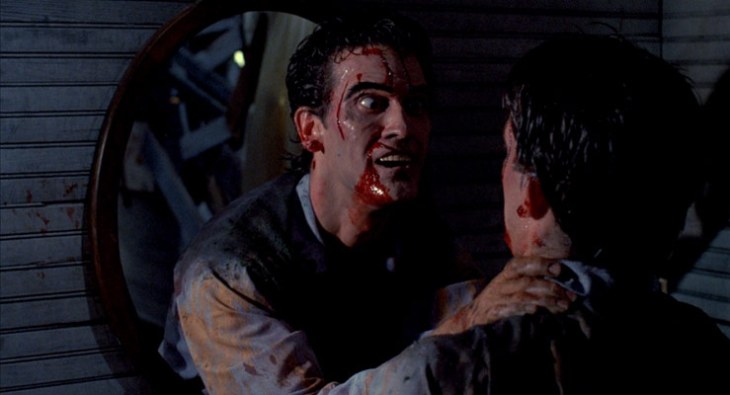
The Special Effects: A Technicolor Nightmare
We live in a world of grey, desaturated CGI. Evil Dead 2 is a technicolor explosion of practical effects. Because the film ran into trouble with the MPAA, Raimi responded by weaponizing color—green geysers, black ooze, and enough neon bile to make the MPAA reconsider their career choices.
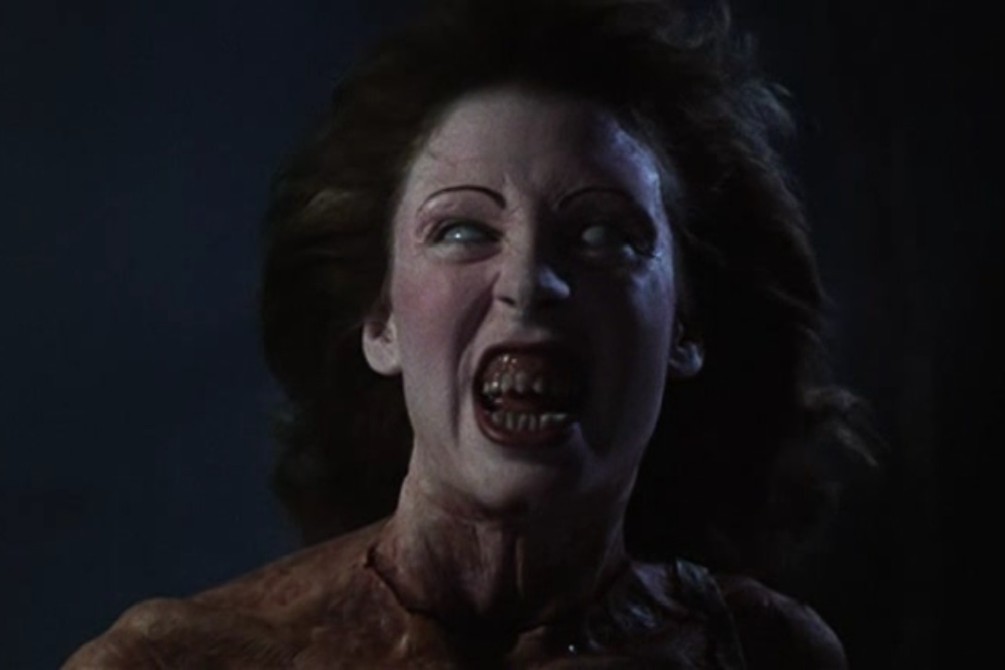
The result is a movie that looks like a comic book come to life. The practical effects—the Rotten Apple Henrietta, the flying eyeballs, the fruit cellar transformations—are a triumph of practical craftsmanship. Henrietta (played by Sam’s brother, Ted Raimi, in a massive, sweltering latex suit) is a masterpiece of grotesque design. When her neck stretches out like a piece of chewed-up taffy, it’s both revolting and undeniably funny. It is the kind of effect that demands praise because it has a physical weight that a computer-generated monster simply can’t achieve. You can feel the sweat, the latex, and the sticky Karo syrup in every frame. It’s an all-hands-on-deck approach to horror where the actors were clearly miserable for our entertainment, and we love them for it.
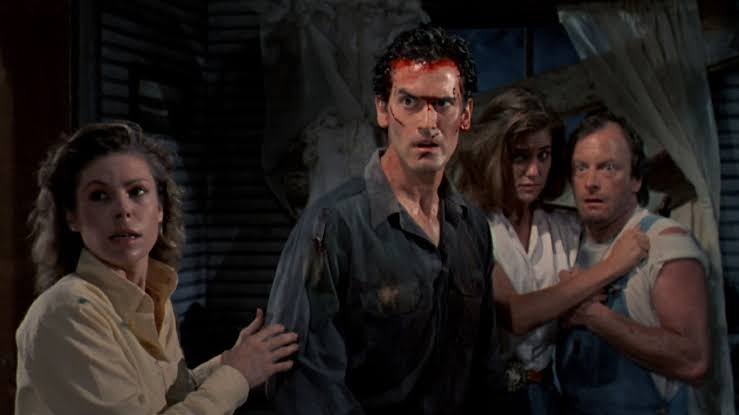
The Supporting Cast: The Doomed, the Dull, and the Dead
About halfway through the movie, four more characters show up. Their main purpose is to be cannon fodder and to provide Ash with more things to yell at. We have Annie, the daughter of the professor; Jake, the local guy who just wants to get paid; Bobby Joe, who is mostly there to scream; and Ed, who exists solely to be transformed into a demon as quickly as possible.
The movie doesn’t spend a single second on their backstories. Why? Because it doesn’t fucking matter. They are there to facilitate the gore. The moment Bobby Joe runs into the woods and gets attacked by the trees (a callback to the first film that is somehow even more ridiculous here), the movie establishes that it has zero interest in keeping its supporting cast comfortable. They are the Stupid Teenagers of this narrative, and their deaths are handled with a punchy, direct energy that keeps the pace from ever sagging. Ed’s transformation and subsequent disassembly by Ash is a highlight of the film. He isn’t a person; he’s just a puppet to be filled with green slime and hacked to pieces.
The Chainsaw and the Boomstick: Iconography 101
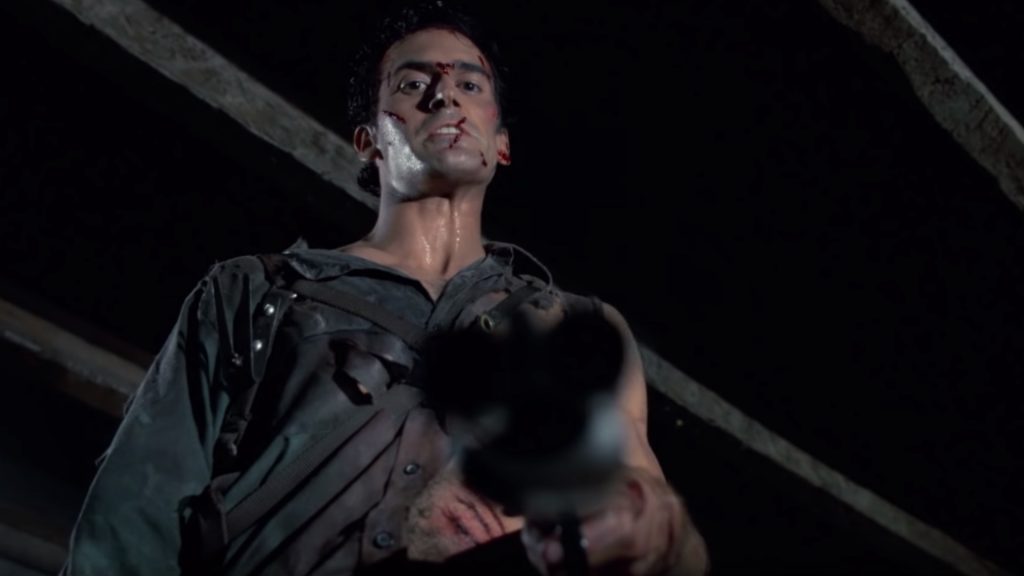
You cannot talk about Evil Dead 2 without the “Groovy” moment. The assembly montage where Ash attaches the chainsaw to his stump and saws down the barrel of his shotgun is the ultimate power-up in cinema history. It’s the point where the movie shifts from Ash being a victim of the cabin to Ash being the cabin’s worst nightmare.
It is a dramatic sequence that uses fast cuts and loud Foley effects to turn a man into a superhero. It is the kind of cinematic moment that smiles mockingly at the tough guy trope while simultaneously being the coolest thing you’ve ever seen. It’s a “fuck you” to the demons, and the audience cheers every single time. The image of Ash standing there with a chainsaw for a hand and a shotgun in the other is one of the ultimate moments of horror iconography—it’s indelible, aggressive, and perfectly over-the-top.
The Fruit Cellar
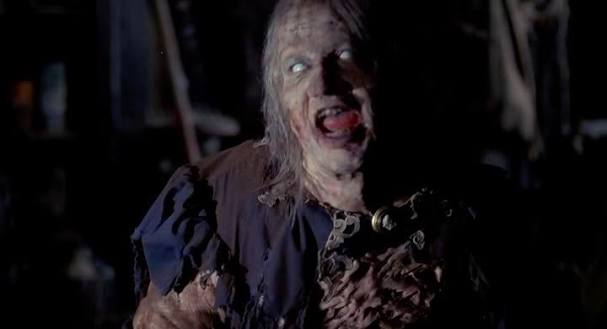
The fruit cellar is the dark heart of the cabin. It’s where the professor’s wife, Henrietta, is buried, and it’s where the movie reaches its peak of claustrophobic dread. Every time someone goes down those stairs, you know something terrible is going to happen.
The battle with Henrietta is on another level of puppetry and stunt work. The way she flies through the air, the way she mocks Annie, and the way Ash eventually finishes her off with the chainsaw is breathtaking. It’s a scene that praises the gross-out factor. In the Evil Dead universe, even being buried under six feet of dirt doesn’t mean you’re done for the night. You’re just waiting for the next person to open the trapdoor.
The Ending: Medieval Purgatory
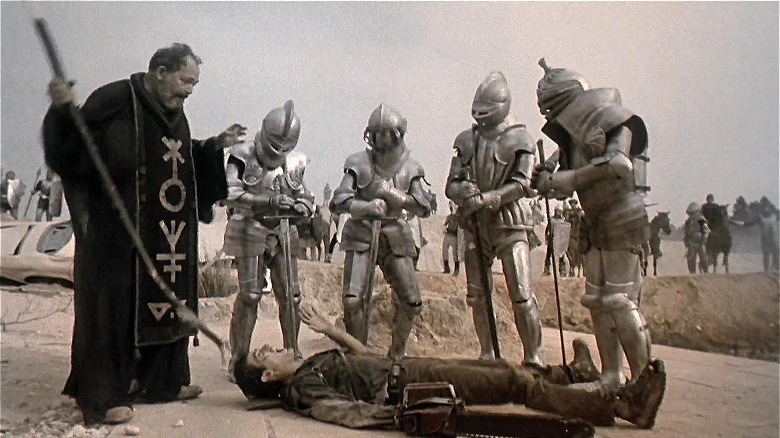
And then, just when you think you’ve caught your breath, the movie throws you into a wormhole. The portal opens, the cabin is sucked in, and Ash finds himself in the middle of the 14th century, surrounded by medieval knights who immediately decide he must be some kind of prophesied hero. Most movies would end with the hero escaping or dying in a pile of rubble. Evil Dead 2 ends with the hero being hailed as a savior in a time period where they don’t even have indoor plumbing or antibiotics, let alone chainsaws.
It is an abrupt, nonsensical, and brilliant cliffhanger that sets the stage for Army of Darkness. It’s a wicked twist on the finality of horror endings. Ash isn’t safe; he’s just in a different kind of trouble. The look on his face in the final shot—a mixture of horror, confusion, and “why me?”—is the perfect ending to a movie that is essentially a 90-minute practical joke played on its lead actor.
Final Thoughts
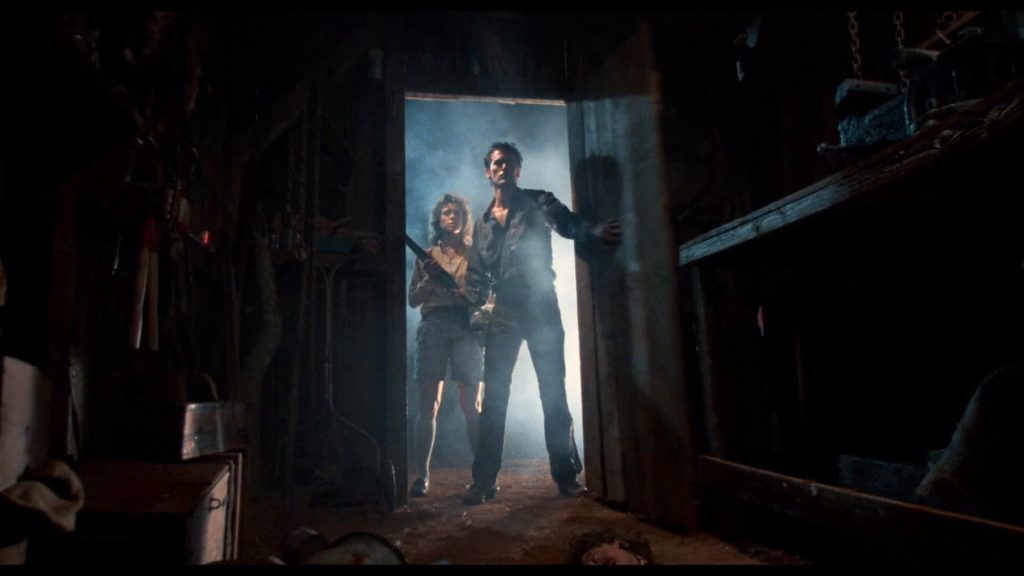
Evil Dead 2 is a movie that needs no reason to justify its existence. It’s a movie about a guy in a cabin who has the worst night of his life and decides to fight back with a motorized garden tool.
That’s it.
It praises the creativity of the low-budget filmmaker while chuckling at the self-seriousness of the genre. It is a masterpiece of do or die, practical effects, and Bruce Campbell’s facial muscles. It is the Godfather 2 of horror sequels—a movie that shouldn’t work on paper but explodes on the screen in a shower of multi-colored gore. It understands that sometimes the best way to deal with a nightmare is to laugh at it, hit it with a shovel, and then cut it into pieces with a chainsaw.
If you haven’t seen it, you’re overdue for a trip to the cabin. If you have, you know one viewing is never enough. It’s groovy. It’s unhinged. It’s horror with a grin full of broken teeth.
Leave a Reply