Forget the modern reboots for a second. Strip away the tangled timelines and the increasingly elaborate explanations for why Michael Myers just won’t stay dead .If you want to understand the moment early-80s horror changed gear, when the slow tension of the 70s gave way to the bloodier energy of the slasher boom, you have to talk about 1981’s Halloween II.
This isn’t just any sequel; it moves the terror into the stark, fluorescent-lit corridors of a hospital after midnight. It carries over the control of Carpenter’s original but dials the gore and chaos to full blast. Some critics back in the day called it a retread. They were wrong. In the cold light of 2026, Halloween II stands as a slasher tour de force. It’s a cult classic for horror obsessives, soaked in antiseptic, floor wax, and the faint scent of burnt pumpkin.
The Immediate Aftershock
Halloween II does something daring and brilliant: it starts exactly where the first one ended. No ‘One Year Later’ title card. No montage of ‘The Haddonfield Murders.’ Just the classic orange credits and the immediate aftermath of the boogeyman falling off a balcony.
We see Michael Myers getting shot six times by Dr. Loomis (the legendary Donald Pleasence), and then, because he’s a fucking supernatural tank, simply walking away. The opening fifteen minutes are a masterclass in neighborhood chaos. We see the residents’ panic up close, raw and personal. We see an old couple watching the news, a teenager hearing about the ‘Babysitter Murders,’ and the frantic police response.
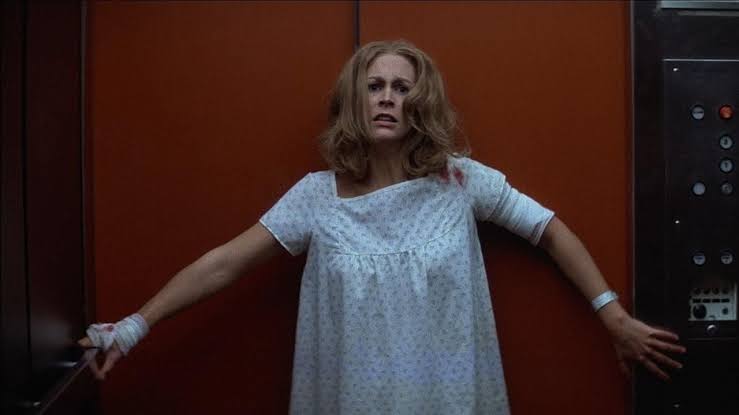
Director Rick Rosenthal, working under the watchful eye of John Carpenter, creates a sense of geographic continuity that is rare in sequels. You feel like you are still on that same street in Haddonfield. But then, the setting shifts. We follow Laurie Strode (Jamie Lee Curtis) to the Haddonfield Memorial Hospital. This shift defines the movie’s tension, moving from the open, exposed streets of Haddonfield to a shadowed maze of hospital corridors and shadows that might just hide a monster.
The Hospital: A Feast of Victims and Cold Steel
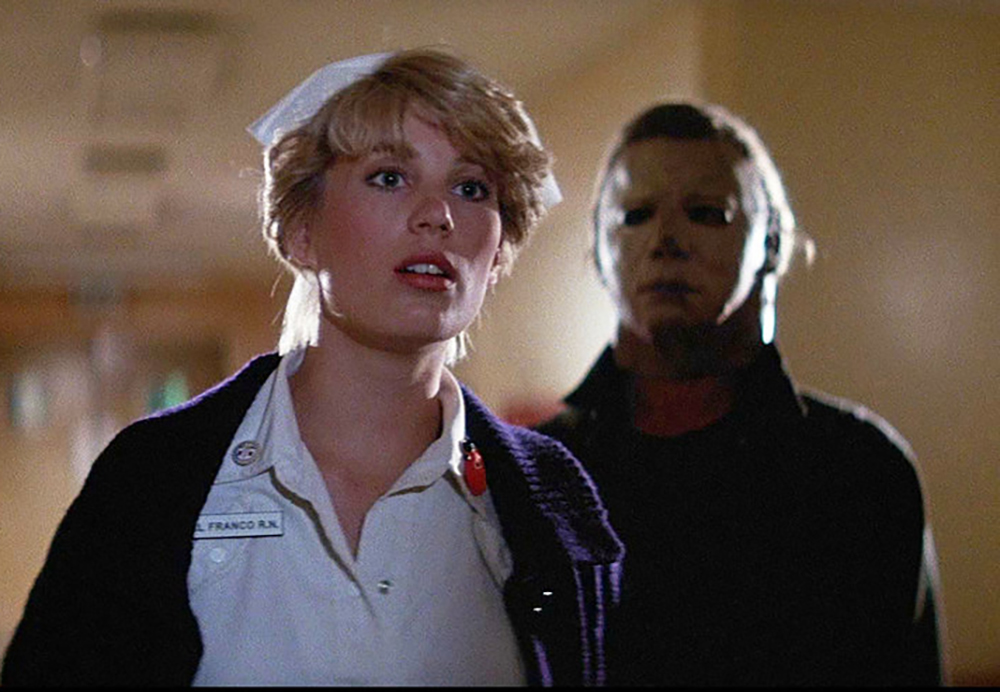
While Laurie is incapacitated in a drugged-out haze, giving Jamie Lee Curtis a chance to play vulnerable and intense while looking absolutely exhausted, the hospital becomes a playground for The Shape. The staff of Haddonfield Memorial is a who’s-who of classic slasher stereotypes. Unlike the first film, where the victims were Laurie’s friends, here they are working stiffs, who are about to get a lot stiffer:
Bud: The guy who likes to sing ‘Amazing Grace’ and flirt with nurses in a way that would get him fired in 2026 but makes him a perfect 80s target.
Karen: The nurse who just wants to go on a date but gets an appointment with a scalpel instead.
Jimmy: The earnest paramedic who shares a real bond with Laurie, only to meet a grisly, almost comically tragic end in a pool of blood.
The tempo here is a wild mix of unease and sudden jolts. Rosenthal uses the wide, empty corridors to make Michael feel omnipresent. He’s not just a killer; he’s a disease that has infected the building. Every time a nurse walks down a hallway, you aren’t just watching a movie; you’re caught in a macabre ritual of blood and dread. The hospital isn’t a place of healing; it’s a sterile, white-walled slaughterhouse.

The Carpenter/Hill Influence
John Carpenter and Debra Hill were famously reluctant to make this sequel. To keep pace with the raw energy of films like Friday the 13th, they leaned hard into vivid, in-your-face gore. If Halloween was a ghost story, Halloween II is a brutal bloodletting opera.
The kills demand attention as they’re pure 80s craftsmanship, executed with sharp, obsessive precision.
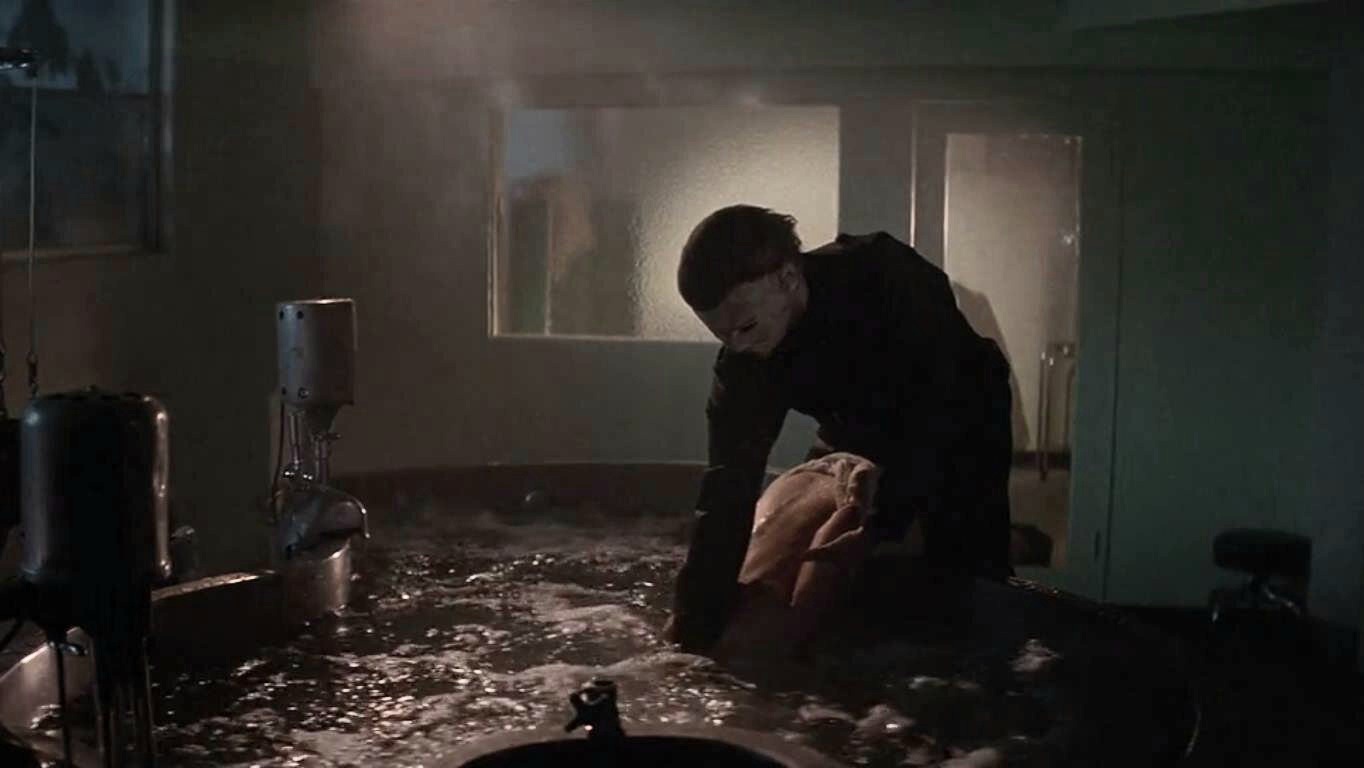
The Hydrotherapy Tub: This is the movie’s centerpiece of cruelty. Forcing a nurse’s head into a scalding hydrotherapy tub, dunking her again and again? It’s brutal, it’s relentless, and every second is impossible to look away from.
The Syringe to the Eye: A sharp syringe to the eye, it’s painful, precise, and grotesque. It’s the kind of horror that makes you flinch while grudgingly admiring the grim skill behind it.
The Blood Drain: This is Michael at his most clinical. He quietly kills Nurse Janet with a syringe, injecting air into her bloodstream. It’s absolutely terrifying because it’s so methodical.
The violence here isn’t random. It builds in rapid, relentless beats, each act more intense than the last. Michael is no longer just a shape in the distance; he is a butcher in the foreground.
The Sister Reveal
Here it is. The big one. The controversy that launched a thousand forum threads: Laurie Strode is Michael’s sister.
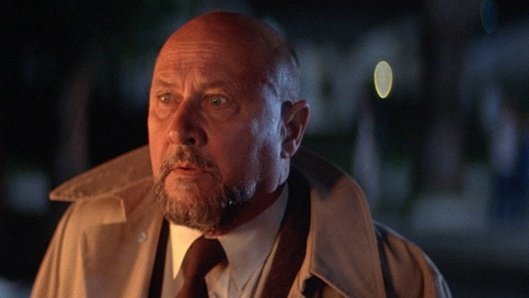
For decades, purists have argued that this ruined the mystery of Michael Myers. They say it gave him a motive, and a motive makes him human. But let’s look at it through a 2026 lens: it turns the movie into a family tragedy. It’s not just a random killing spree; it’s a homecoming. It links the events of 1963 to 1978 with an emotional hook. Donald Pleasence plays Dr. Loomis with such an intensity, screaming about ‘Samhain’ and the evil he sees in Michael, rhat you start to sense their might be more to this madman in a mask than meets the eye. Loomis isn’t just a doctor anymore; he’s a Van Helsing figure chasing a vampire through the halls. The humor comes from his complete refusal to keep his cool. He is a man who knows the Boogeyman is real, and he doesn’t care who he has to shoot to stop him.
The Cinematography of Dean Cundey
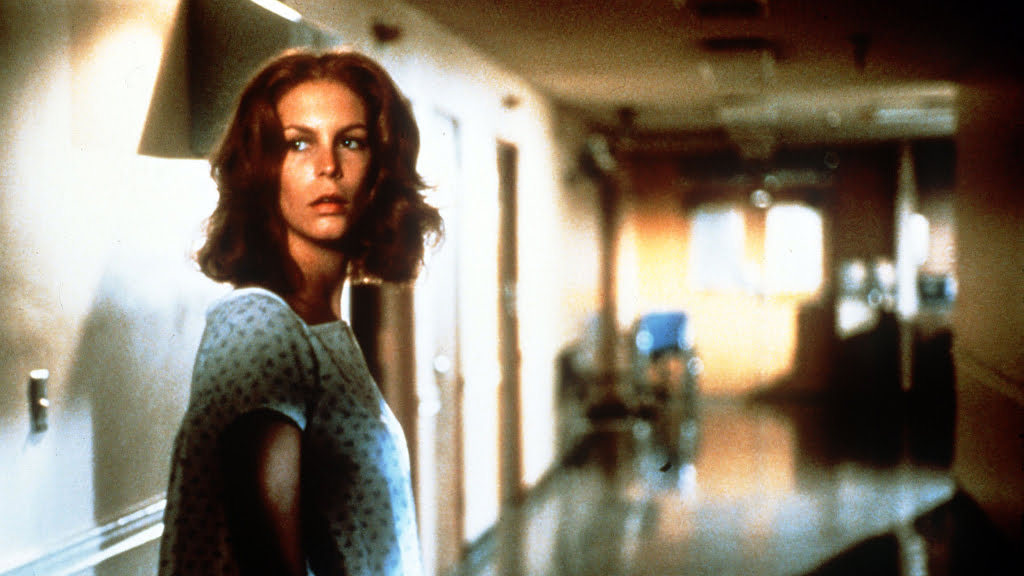
We cannot discuss Halloween II without praising Dean Cundey. Returning from the original, Cundey ensures that Halloween II looks polished and striking, even in its blood-soaked excess. He bathes the hospital in blue and orange hues, the colors of a cold October night and a flickering jack-o’-lantern.
The beauty of the cinematography is in the use of the Panaglide. The camera moves with a groove that mimics Michael’s own movement. It stalks the hallways. It lingers on corners. Michael is often visible in the background, a silent easter egg waiting for the characters to notice him. The lighting is harsh where it needs to be and pitch-black where it matters. It creates a sense of intense claustrophobia. You feel trapped in that hospital with Laurie, waiting for the darkness to move.

Ben Tramer and the Marshal
One of the standalone highlights of the film is the tragic fate of Ben Tramer. Poor Ben. He’s just a kid in a mask similar to Michael’s, walking home from a party. Loomis and the police see him, mistake him for Michael, strike him with a patrol car, and send him crashing into a van that goes BOOM!!! moments later.
The resulting explosion is the epitome of 80s excess. It has nothing to do with the main plot, but it adds to the bedlam of a town that has completely lost its mind. It’s a moment of twisted comedy in the darkest possible way, Haddonfield is so scared of one monster that they accidentally create a dozen smaller tragedies.
Then you have the U.S. Marshal, who is just there to be the authority figure who gets in Loomis’s way. His presence allows for more exposition about the Myers family, ensuring the audience is caught up on the lore before the final act kicks into gear.
The Legend of The Shape: Dick Warlock’s Performance
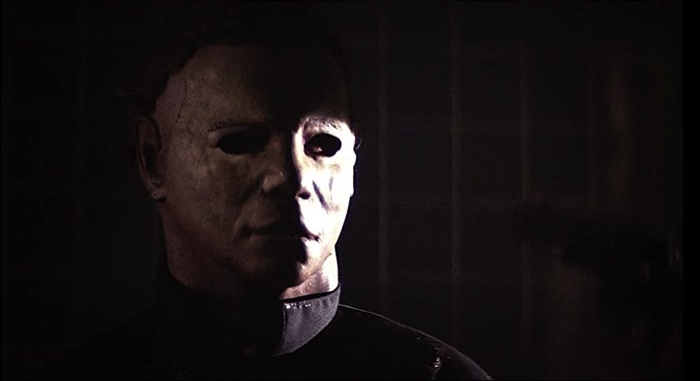
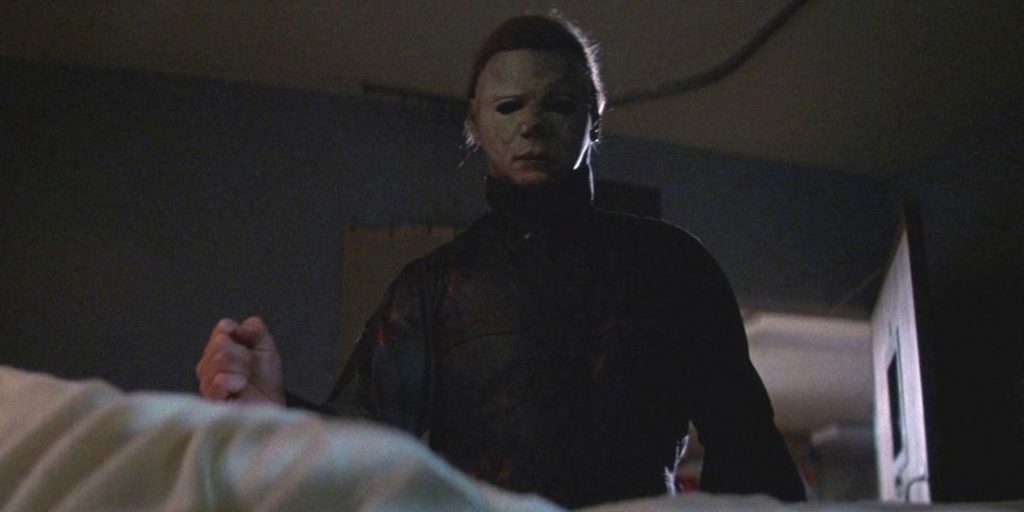
While Nick Castle gave us the tilt of the head in the original, Dick Warlock gives us the birth of an unstoppable machine in the sequel. Warlock’s Michael is stiffer, more robotic, and arguably more terrifying. He doesn’t feel like a man in a mask; he feels like an object that has been programmed to kill.
The way he walks through glass doors without flinching, or the way he pursues Laurie through the basement, is pure gold. He is the ultimate 80s slasher villain here, devoid of personality, focused entirely on the job at hand. The mask itself, the same one used in the first film but now aged and yellowed, looks even more terrifying and haunting. It is the face of evil, now showing the wear and tear of a long night.
The Fire and Brimstone Finale
The final confrontation in the operating room is a combination of top class practical effects and heart pumping action.
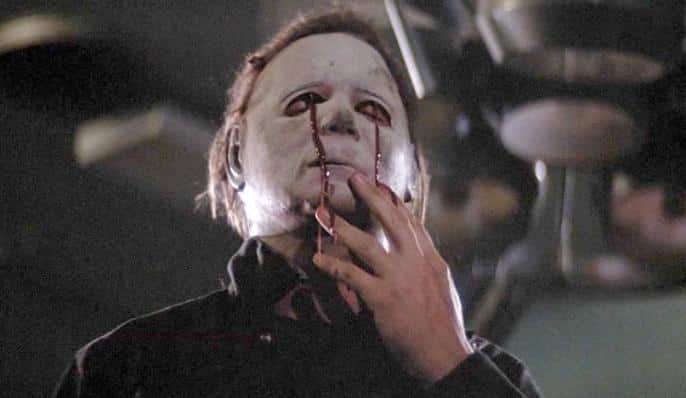
The Blind Michael: After Laurie shoots Michael in both eyes (a moment of pure badassery), Michael becomes an even more disturbing monster. He’s slashing at the air with a scalpel, guided only by the sound of Laurie’s breathing. It’s a maelstrom of desperation and blood.
The Explosion: Loomis’s final act of defiance, turning the operating room into a gas-filled inferno, is the perfect send-off for the character. He ignites the gas, and the room erupts in flames, consuming Michael in a spectacular finale.
Watching Michael walk through the flames, a literal burning devil, is one of the most iconic images in horror history. It’s the the final piece that cements his status as a supernatural icon. He isn’t just a man in a mask; he’s the spectre of death itself. The way he finally collapses, consumed by the fire while the theme plays, is the full-stop needed to end both the night and Michael permanently… or so we thought.
The Samhain Connection
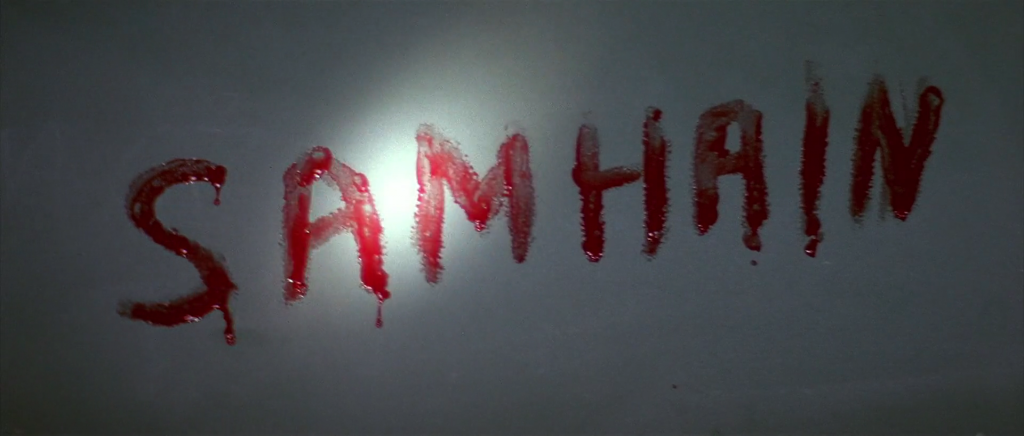
Halloween II is the first film in the series to name ‘Samhain’, linking Michael to ancient rituals. When Loomis finds the word scrawled in blood on a chalkboard, it hints at forces beyond a simple human killer. This moment deepens the horror without undercutting the slasher thrills, it’s a clever way the film ties Michael’s violence to something older and unknowable.
Whether or not this was always the plan, to tie Michael’s story into a way that they could keep churning out sequels, because the fucker never truly dies, is something that has been debated for decades. But considering how many Halloween movies there have been, it seems the answer might simply be: Yes.
Why I Love It
Halloween II drags you headfirst into a fluorescent-lit nightmare and never lets go. Forget psychology; this is pure, unfiltered slasher madness. It wears its chaos like a badge, mixing the classic with the gloriously deranged.
The hospital is a meticulously designed horror maze, a tomb where every corner hides panic and every corridor screams “don’t turn around.” The kills are vicious, inventive, and absurdly precise, they are so outrageous you can’t look away, even as your stomach revolts. And the synth score? Razor-sharp, carving the perfect 80s vibe into your brain.
This is the ultimate 80s slasher love letter: practical effects, empty corridors, and sheer, unadulterated terror. Michael Myers isn’t a one-hit wonder, he’s a nightmare icon, forever stalking the halls of our imaginations.
Leave a Reply