
In 1978, a young, cigarette-smoking film geek named John Carpenter sat down to make a babysitter murders movie. What he actually unleashed was a lean, stalking nightmare, less a movie and more a cold breath on the back of your neck. He took the tropes of the drive-in, blood, boobs, and boogeymen, and filtered them through the lens of Alfred Hitchcock and Howard Hawks.
Halloween isn’t just any horror film; it is the Slasher Rosetta Stone. It’s a razor-clean masterclass in terror, proof you can wreck an audience with shadows, a cheap synth, and a dollar-store James T. Kirk mask blasted corpse-white. This is full-tilt horror nerd nirvana.
The Plot: When Suburbia Screams
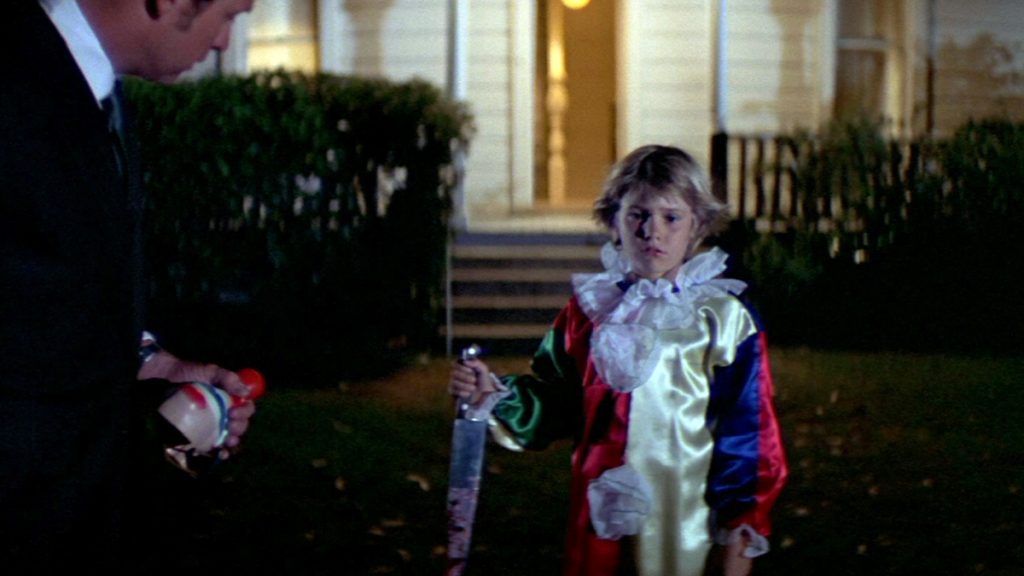
Halloween night, 1963. Michael Myers stabs his sister to death. And here’s the punch: when we finally see him outside the house, he’s a tiny little six-year-old boy, knife in hand, calm as a church mouse. Blank faced and non-blinking. The shock isn’t just the act, it’s who did it. Pure evil wrapped in miniature human skin.
Fifteen years later, Michael escapes the loony bin and returns to Haddonfield. He’s silent, unstoppable, and now fully grown, but the essence hasn’t changed: The Shape doesn’t reason. The Shape doesn’t stop. Laurie Strode is minding her own business and looking forward to the spooky season, blissfully unaware that the quiet suburban streets are now a stalking ground. Windows, corners, mirrors, the familiar becomes a trap.
But Loomis is in hot pursuit, warning everyone that evil doesn’t age; it waits. But nobody believes him, at least, not at first. That night, every ordinary object becomes a weapon, every shadow a threat, and every heartbeat a countdown. By the final act, Michael falls and vanishes, leaving the ultimate terror: he’s still out there, hiding in the edges of your home, patient, silent, utterly unknowable.
The Production: Chaos, Leaves, and Cheap Masks
Before we dive into the blood (or amazing lack of) and the creeping terror, we need to pay tribute to the real magic, the glorious, scrappy chaos of the production itself. John Carpenter and producer Debra Hill had a budget of about $300,000–$325,000. In Hollywood terms, that’s essentially “found change under the couch cushions.”
With a budget tighter than a coffin lid, the production’s resourcefulness went off the charts, becoming the stuff of legendary horror lore:
The Brown Leaves: They filmed in Southern California in the spring. To make it look like a Midwestern October, the crew had to find a bag of dried leaves, paint them brown, scatter them for a scene, and then, because they couldn’t afford more, sweep them up and reuse them in the next location.
The Wardrobe: Laurie’s wardrobe was assembled from inexpensive, off-the-rack department store clothing due to the tiny budget.
The Casting: They couldn’t afford stars, so they cast Jamie Lee Curtis, daughter of Janet Leigh, and a legendary British actor, Donald Pleasence, who only took the role because his daughter loved Assault on Precinct 13.
This lean, no-frills setup forced Carpenter to get inventive. With no cash for spectacle, he made every shot count, he relied on The Frame to scare the hell out of you.
The Panaglide: The Predator’s Eye
If you want to talk about that pulse-pounding, edge-of-your-seat rhythm, you have to start with the Panaglide. This was a precursor to the Steadicam, and Halloween was an early and highly effective showcase of the use of it in horror filmmaking.
The opening six-minute tracking shot, with a hidden cut during the mask moment, is the purist example of this. We see through the eyes of six-year-old Michael Myers. We watch him grab a knife from the kitchen, walk upstairs, and murder his sister, Judith, like he’s making a fucking sandwich. It’s a fluid and dreamlike sequence that puts the audience in the uncomfortable position of being the killer.
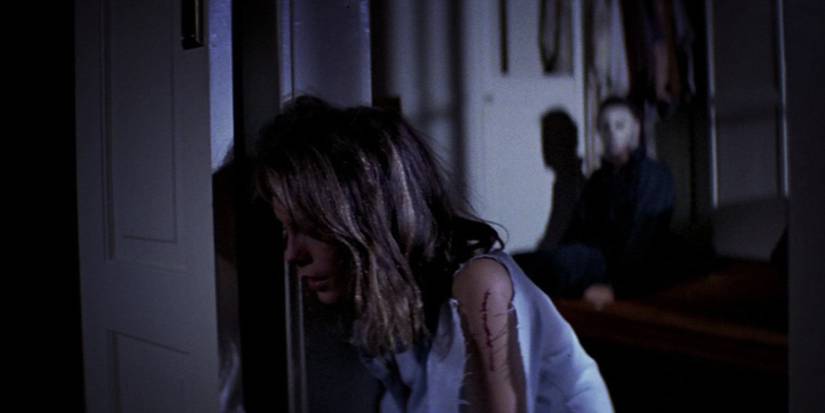
But the real brilliance is how Carpenter exploits the widescreen frame throughout Halloween, turning every corner, shadow, and reflection into a hiding place for The Shape. Michael is always there, in the corner of a backyard, behind a bush, in the glint of a mirror, but he’s often out of focus or partially obscured. It forces the audience to play a game of Where’s Waldo? with a serial killer. It turns the suburban landscape of Haddonfield into an inescapable trap.
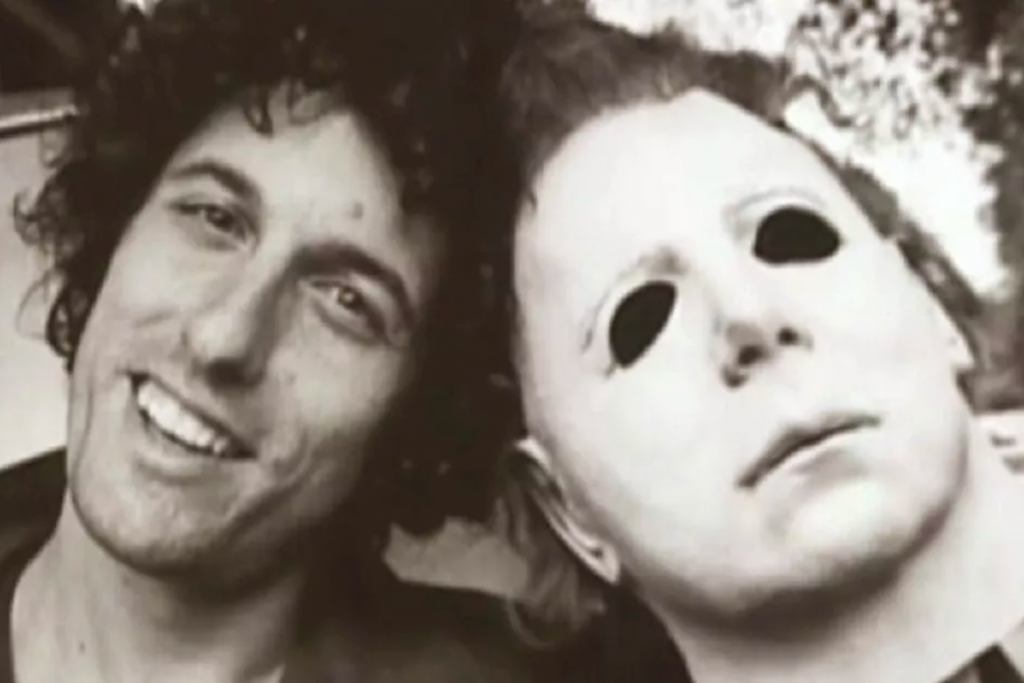
The Mask: The Most Iconic Accident in History
Let’s crack open the vault of horror lore for the most infamous piece of all: The Mask. Production designer Tommy Lee Wallace went to a costume shop on Hollywood Boulevard. He had two choices: a clown mask and a $1.98 Captain Kirk mask from Star Trek. He chose the Kirk mask, ripped off the sideburns, spray-painted it dead-fish white, and widened the eye holes.
The result is a monster face that’s disturbingly blank, unnervingly human, and utterly unforgettable. Because it is a distorted face, it is uncanny. It has no expression. It is a blank slate onto which we project our own terror. Michael Myers isn’t a character with a backstory (at least not in the original); he is The Shape. He’s the pure embodiment of subconscious terror, the dark thing lurking in the corner of your room at 3:00 AM, watching, silent, unstoppable.
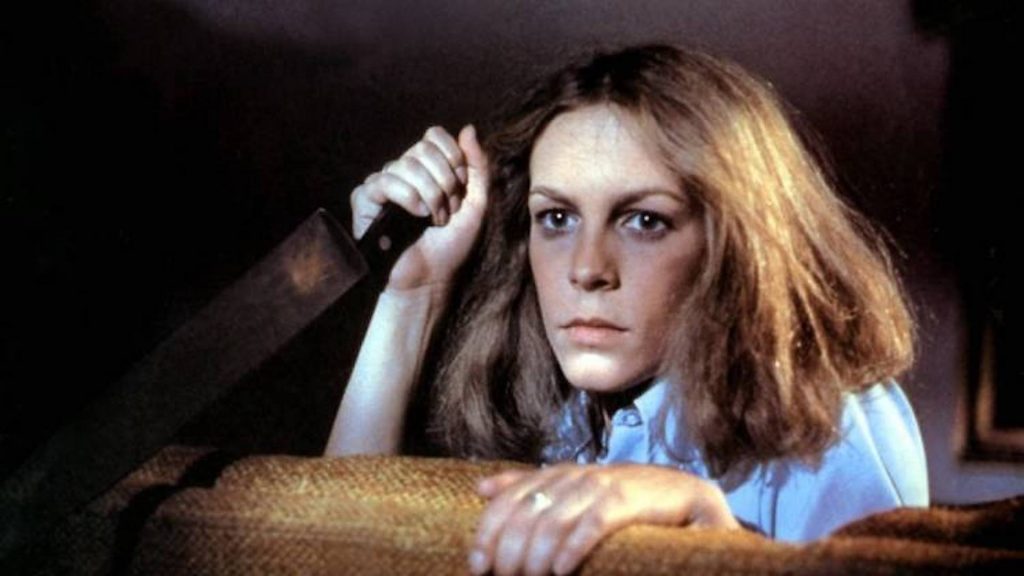
Jamie Lee Curtis: The Definitive Final Girl
We have to worship at the altar of Jamie Lee Curtis for a moment. As Laurie Strode, she isn’t just an archetype; she is a classic heroine. Laurie is the sharp-eyed, sensible one in her friend group, the girl who notices when something is very, very wrong. She’s observant, she’s responsible, and she’s the only one who senses that not everything is hunky dory.
She carries the film with quiet, tense, breathless fear, making every moment feel immediate and real. When she is trapped in that upstairs bedroom, the terror feels palpable. It isn’t the Scream Queen theatrics we’d see in the 80s; it’s the silent, breathless panic of someone who knows they are being hunted. Jamie Lee Curtis didn’t just play a victim; she became the definitive model for the modern Final Girl.
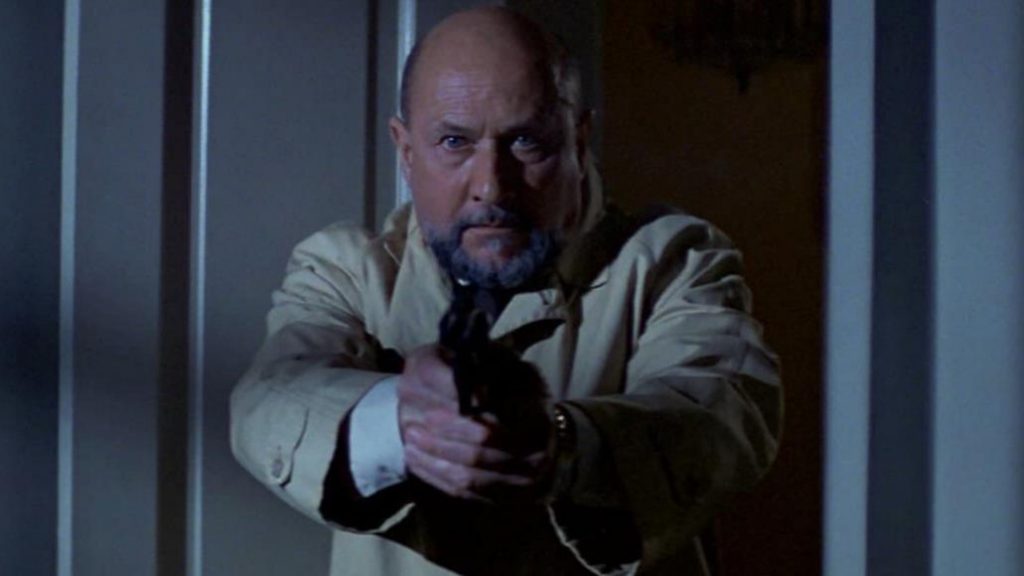
Donald Pleasence: The Prophet of Doom
Every great monster needs a foil, and for Michael Myers, that is Dr. Sam Loomis. Donald Pleasence brings an intensity to the role that elevates the movie from a simple slasher to a legendary event.
His monologues are dark, intense poetry, spinning dread and obsession into every word. When he tells the sheriff:
“I spent eight years trying to reach him, and then another seven trying to keep him locked up because I realized that what was living behind that boy’s eyes was purely and simply… evil”
he is setting the stakes.
Pleasence plays Loomis as a man who has looked into the abyss and is terrified that the abyss is now walking around a suburb with a fucking large carving knife. He drives the film’s narrative, he is the ticking clock that reminds us that while teenagers carve pumpkins and flirt with esch other, a silent, unstoppable storm is closing in.
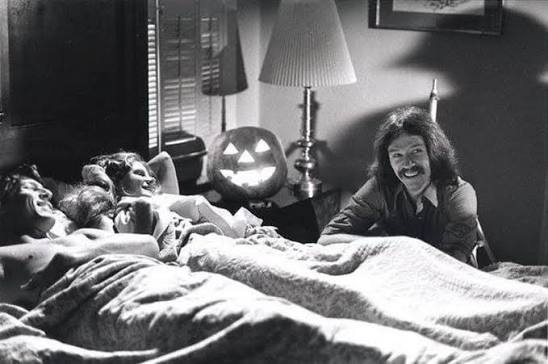
The Score: Five Notes of Death
John Carpenter is a master of his craft because he didn’t just direct, he composed the music too. He famously said the movie wasn’t scary until he added the score.
The Halloween theme, written in 5/4, is a relentless heartbeat that propels the film forward and lingers in your mind long after it ends. It is the nightmare thoughts of the movie. It doesn’t need an orchestra; it just needs a synthesizer and a simple, repetitive melody to signal the unstoppable force.
The highlight here is how the music interacts with the editing. It often starts before we see Michael, acting as a warning. It’s a way to build the tension without saying a word.
P.J. Soles and the Totally Teen Tropes
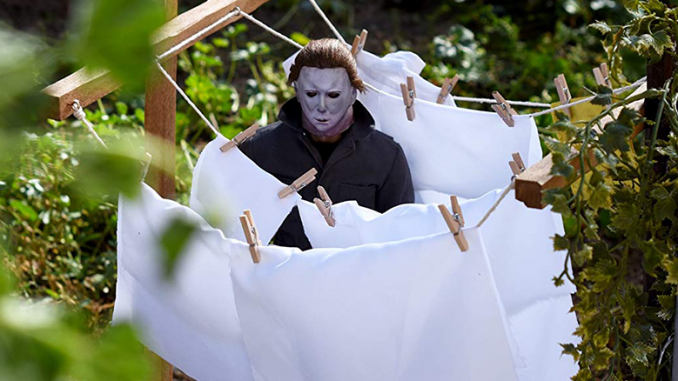
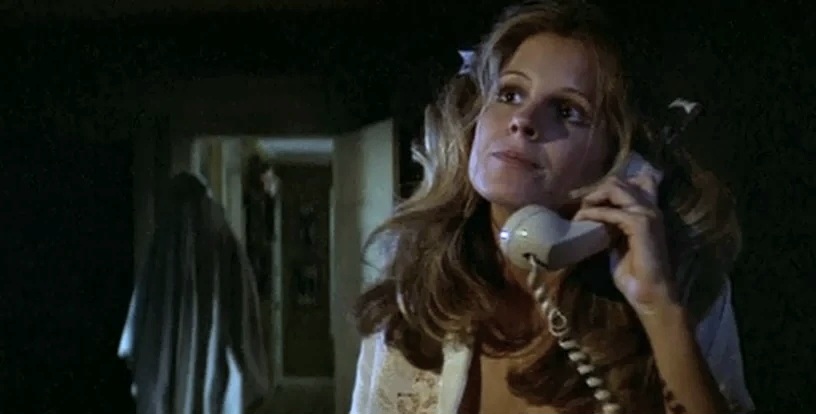
While the movie is a classic, it is also a love letter to drive-in culture. And nowhere is this more evident than in P.J Soles character, Lynda. Every time she says “Totally,” she is personifying the 1970s teenager. Her death, being strangled by a telephone cord while Michael wears a white sheet and Bob’s glasses, is a masterpiece of dark humor. It’s ridiculous, it’s creepy, and it’s brilliant in its simplicity. Michael isn’t just a killer; he’s a Prankster. He is playing with his food before he eats it.
The Less is More Philosophy
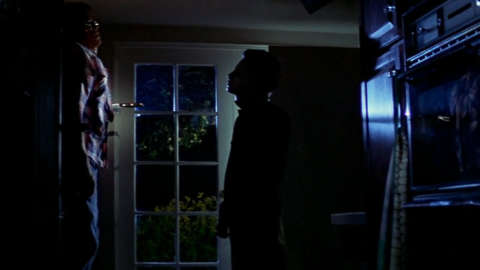
Before Halloween horror had started to lean heavily on gore, the likes of Blood Feast (1963) and Mark of the Devil (1970) decided that painting the screen red with bits of intestine was the future, but John Carpenter went in the opposite direction, keeping it tight, tense, and blood-light.
The real terror comes from the staging:
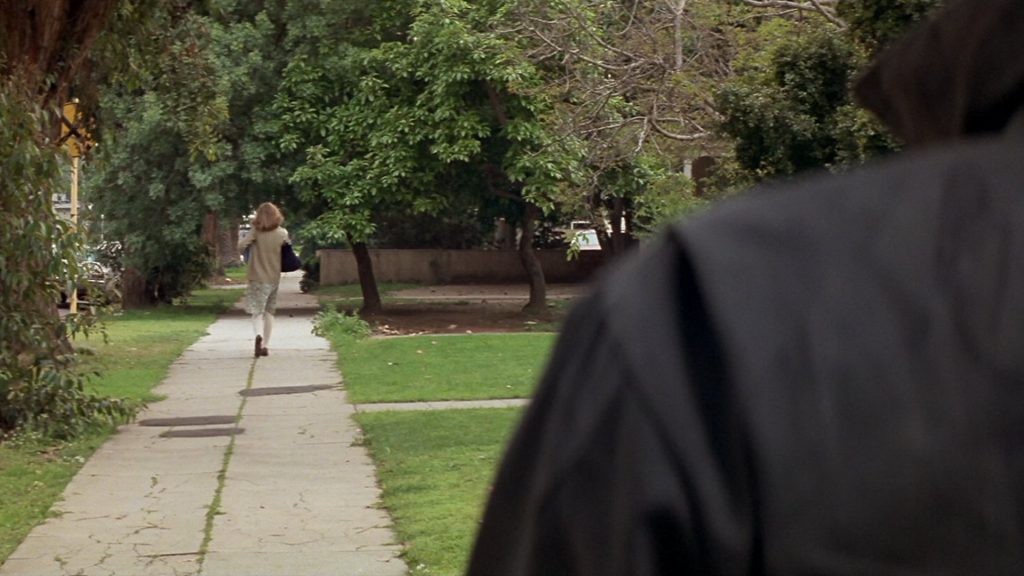
The Hedge Scene: Michael standing behind the hedge while Laurie walks by is the ultimate suspense shot.
The Closet Scene: Laurie using a wire coat hanger to stab Michael is the perfect reaction. It’s taking a mundane household object and turning it into a weapon of survival.
The Ghost Scene: As mentioned, the sheet-and-glasses look is a iconic one. It’s simple, effective, and haunting.
Carpenter knows that the audience’s imagination is more effective than any makeup effect. He lets you fill in the blanks, which makes the horror personal.
The Haddonfield Atmosphere: Gothic Suburbia
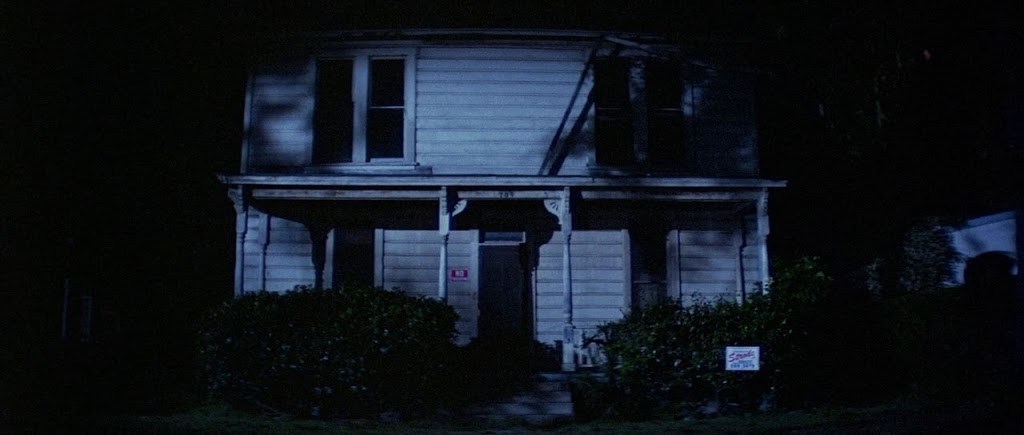
The production design creates a lived-In horror. Haddonfield (actually South Pasadena, CA) feels like every town in America. The wide, empty streets, the shadows of the porch swings, and the ever-present sense of the blowing leaves create a Gothic Noir vibe.
The true dread lies in the invasion of privacy. Michael isn’t hanging out in a forest; he’s in your backyard. He’s in your laundry room. He’s in the car you just parked. This is the kind of fear that lives within all of us, that of the quiet terror hiding in plain sight, turning ordinary homes into scenes of unimaginable horror.
The Ending: The Shape Lives
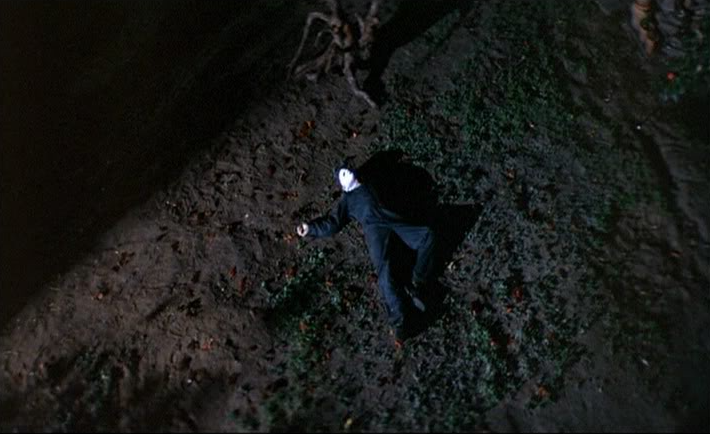
The final five minutes of Halloween are some of the most intense and unforgettable in horror history. Dr. Loomis shoots Michael six times. Michael falls off the balcony. The music swells. Loomis looks over the edge and the body is gone.
Then, we get the montage of empty rooms. We hear Michael’s heavy breathing over the score. We see the hallway, the living room, the stairs, and the street.
The message is clear: Michael Myers isn’t a man; he is the Night. He is everywhere. He is the shadow in your closet. He is the breathing under your bed. This ending is the moment that made Halloween immortal. It didn’t just end the movie; it started a conversation that has lasted for nearly 50 years.
Why I Love It
I love Halloween because it dares to shock on its own terms. It doesn’t need jump scares. It doesn’t need a massive body count. Instead it has:
The best score in history.
The most iconic mask in the world.
Jamie Lee Curtis’s Final Girl debut.
Donald Pleasence’s doom-prophet monologues.
And it is a movie that rewards repeat viewings.
Every time you watch it, you find Michael lurking in a frame you missed before. It is a work of art that doesn’t age. It is the movie that made everything that followed in its footsteps possible.
It is the reason we check the backseat of the car. It is the reason we keep the porch light on. It is the classic that not only defines the slasher genre, but it also defines our horror hungry souls.
Leave a Reply