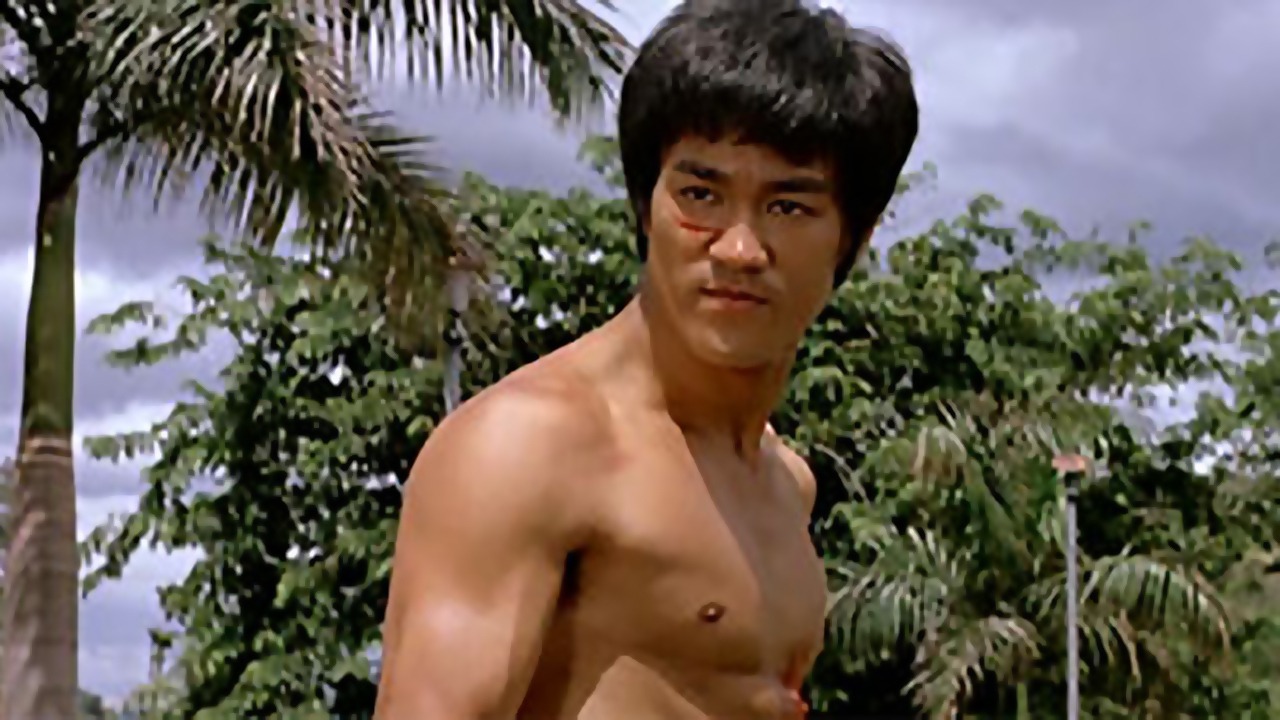
Bruce Lee was the first ever tattoo I got on my body, which should be enough to tell you just how much I worship the man. It’s there on my upper right arm, a permanent reminder that while I’m sitting here typing this with a posture that would make a chiropractor weep, Bruce Lee was out there kicking ass with enough energy to power a small European nation.
But before the yellow jumpsuits, before the Nunchaku, and before he became a global icon of fuck around and find out, Bruce had to make a splash. And in 1971, that splash was The Big Boss. This wasn’t just a movie; it was a hostile takeover of the martial arts genre.
A Genre in a Coma
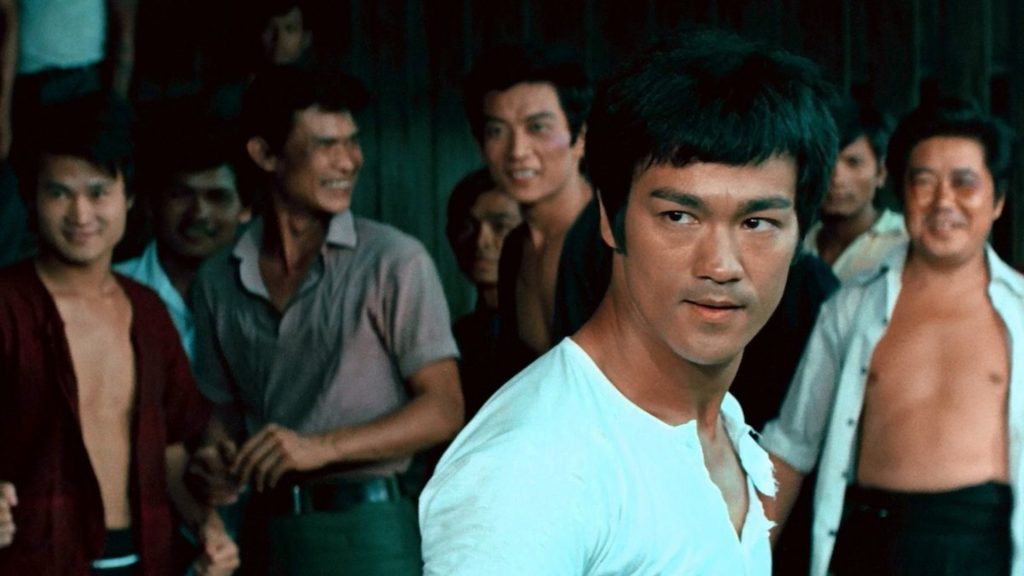
To understand why The Big Boss hit like a sledgehammer to a glass house, you have to understand what martial arts cinema looked like in the late 60s. It was the era of the Wuxia film, think The One-Armed Swordsman or Come Drink with Me. These were beautiful, operatic, and highly stylized movies produced primarily by the Shaw Brothers. They were stage plays with swords. The fighting was rhythmic, almost like a ballet, and while they were great, and I mean fucking great, they were also disconnected from reality.
Then along came Bruce.
Bruce Lee had spent years in the US, playing Kato in The Green Hornet and trying to convince Hollywood that a Chinese man could be a leading action star. Hollywood, in its infinite 1960s wisdom, basically patted him on the head and told him to go away. So, Bruce went back to Hong Kong. He signed with a fledgling studio called Golden Harvest, run by Raymond Chow (who had just split from the Shaw Brothers in a move that was basically the cinematic equivalent of a high-stakes divorce).
They didn’t have the massive backlots or the thousands of costumes that Shaw Brothers had. They had a small budget, a script that was mostly a suggestion, and a filming location in Pak Chong, Thailand, that was so hot the film stock probably started melting in the cameras.
The Country Bumpkin and the Vow
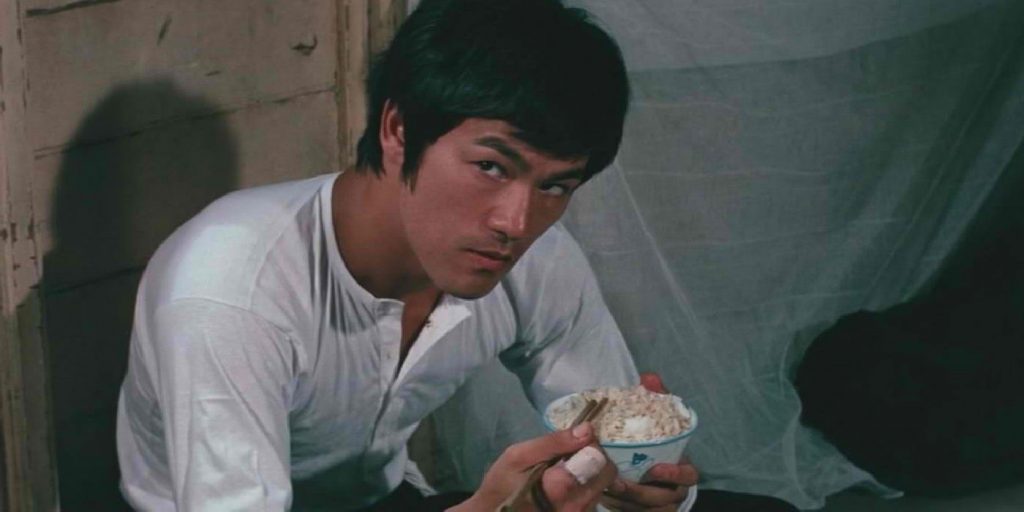
In The Big Boss, Bruce plays Cheng Chao-an, a country boy from Guangdong who moves to Thailand to stay with his cousins and work in, you guessed it, an ice factory. Now, if this were a documentary, we’d be talking about the fascinating industrial cooling techniques of 1970s Thailand. But this is the Horror Archives, so we know the ice factory is just a cold, damp playground for organized crime.
Cheng arrives with a literal ‘don’t get into trouble’ necklace. He has promised his mother he won’t fight anymore. He wears a little jade amulet around his neck to remind him of this vow.
For the first forty minutes or so of this movie, we have to watch Bruce Lee, the most lethal human being to ever walk the earth, actively avoiding conflict. It’s like watching a Ferrari being forced to drive in a school zone behind a tractor. He stands there, jaw clenched, lats vibrating, while his cousins get bullied by local thugs. You can see it in his eyes: he’s not thinking about the vow; he’s thinking about how many different ways he could collapse a man’s ribcage like a cheap accordion. This build-up is actually brilliant. It’s The Pressure Cooker school of screenwriting. The more the thugs push, the more the audience wants Bruce to explode. We’re sitting in our seats, screaming at the screen, “JUST KICK HIM ONCE! JUST ONCE!” But Bruce holds back. He takes the insults. He looks at his jade amulet. It’s agonizing.
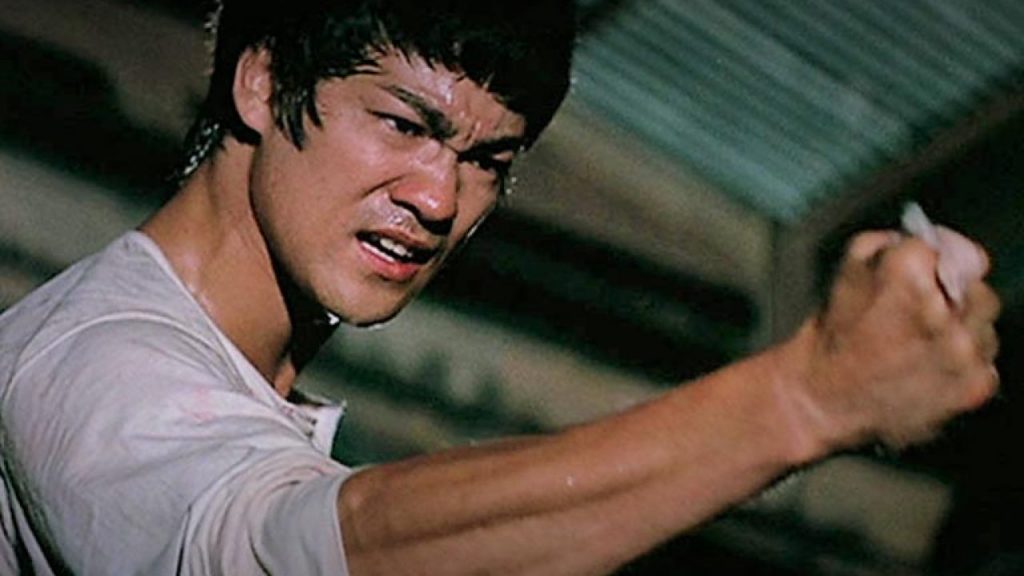
The Breaking Point
Eventually, things go sideways. Like, really fucking sideways. The ice factory isn’t just selling ice; they’re hiding bags of heroin inside the blocks. When Cheng’s cousins start disappearing (read: being murdered and frozen into blocks of ice), the tension hits a boiling point.
The moment that amulet breaks in a street brawl, the movie shifts gears so hard it leaves skid marks on your soul.
Bruce stops being a polite visitor and becomes a whirlwind of pure, unadulterated vengeance. This wasn’t the choreographed dance-fighting we were used to. This was raw. This was angry. When Bruce hits someone in The Big Boss, they don’t just fall over; they look like they’ve been struck by a sentient freight train. This was the birth of the Bruce Lee Style, the high-pitched kiai, the thumb-to-the-nose, and the absolute refusal to stop until the other guy is a puddle.
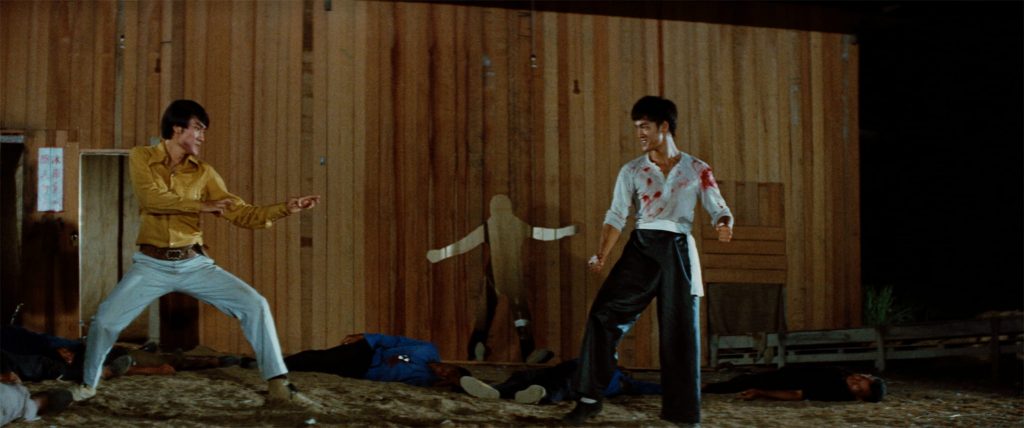
The Ice Factory Massacre
The Ice Factory Massacre is where the movie earns its spot in cinematic legend, and launched the career of a man, whose eyebrows alone could kill most mortal men, right into the fucking stratosphere. It’s vicious, it’s funny, and it is, at times, beyond weird.
Take another look at the picture above and tell me what you see? Tjat’ right, a Human Silhouette. During the fight, Bruce hits a guy so hard he literally creates a Looney Tunes-style outline through the wooden wall of the factory. In any other movie, this would be a joke. In The Big Boss, because Bruce’s intensity is dialed up like a toddler loaded on coffee on the middle of a temper tantrum, we just accept it. Of course he hit him that hard. He’s Bruce fucking Lee.
Then there’s the discovery of the cousins. Cheng finds the remains of his family frozen into the ice blocks. It’s a moment of pure horror-movie imagery. He finds a severed head. He finds a hand. The realization that his bosses are actually butchers transforms Cheng from a man looking for justice into an avenging angel of death.
He starts using the tools of the trade. Ice picks, saws, whatever is lying around. The sheer grit of the 1970s Hong Kong production shines through. You can practically smell the sawdust, the sweat, and the blood. It’s the kind of working class action movie that resonated so deeply with audiences across the globe because it was about a guy at the bottom of the food chain finally biting back.
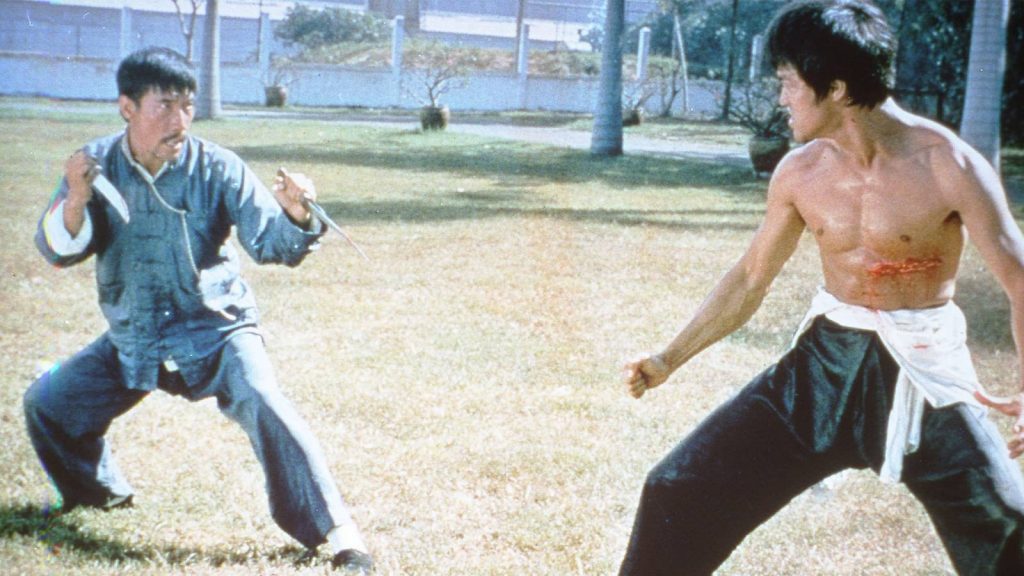
The Villain
The Big Boss himself, Hsiao Mi (played by the legendary choreographer Han Ying-chieh), is a piece of work. He spends most of the movie being pampered, petting a bird, and looking like he’s about to break into a disco routine. He’s the ultimate Old School villain, he thinks he’s untouchable because he has money and a small army of goons.
But when he finally steps out to face Bruce in the final garden duel, he’s surprisingly capable. This is where the film pays homage to its roots. Han Ying-chieh was a Peking Opera-trained performer, and you can see that elegance in his movements. He uses hidden knives, he uses dirty tactics, and for a moment, you think he might actually stand a chance.
However, capable isn’t enough when you’re facing a man who has decided that your internal organs are better off as external decorations.
The final fight is a masterclass in 70s brutality. There are no fancy wire-works here. It’s just two men in a garden, trying to kill each other. Bruce is emitting those high-pitched shrieks that would eventually become his trademark. It’s the sound of a man who has completely run out of patience for your drug-smuggling nonsense. When Bruce finally lands the killing blow, it’s a moment of pure grindhouse satisfaction.
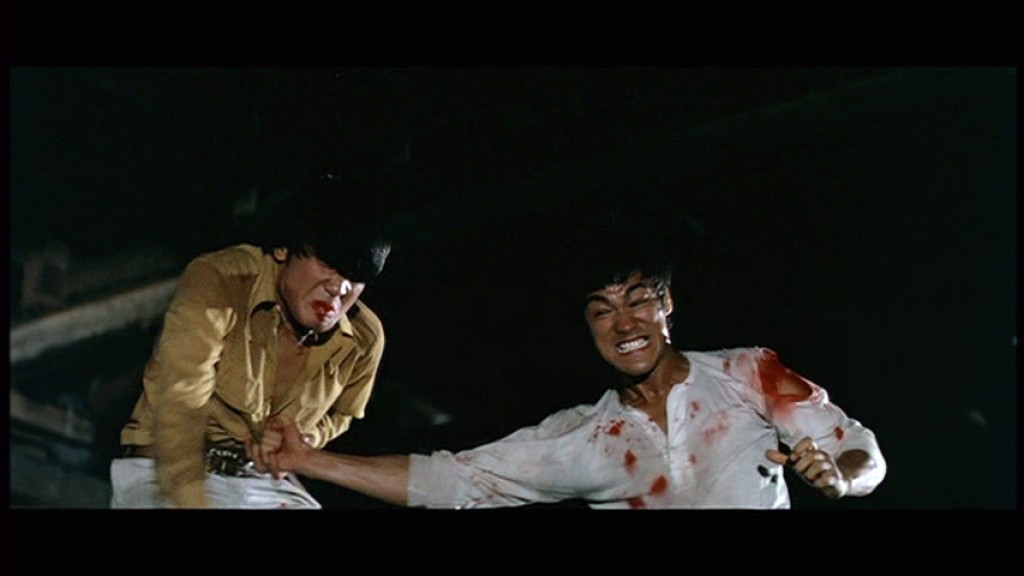
The Blood and the B-Movie Charm
We have to acknowledge the gore of The Big Boss. By today’s standards, it’s charmingly theatrical. The blood is a shade of bright crimson that doesn’t exist in nature, it looks like he’s leaking strawberry jam. And the sound effects? Every punch sounds like someone slamming a wet steak against a marble countertop.
But that’s the beauty of it.
The film also has some truly bizarre moments that you can’thelp but smile at. There’s a scene where Bruce, having just killed a dozen men, decides to go visit a local prostitute. It’s a strange, somber moment that reminds you that Cheng isn’t a superhero, he’s a man who knows he’s probably going to die or go to jail, and he just wants one moment of human connection before the end. It adds a layer of dark reality that most martial arts films of the era avoided like the plague.
The Bruce Lee Factor: The Birth of a Legend
Why are we still talking about this movie? Why do I have this man tattooed on my arm?
Because of the charisma.
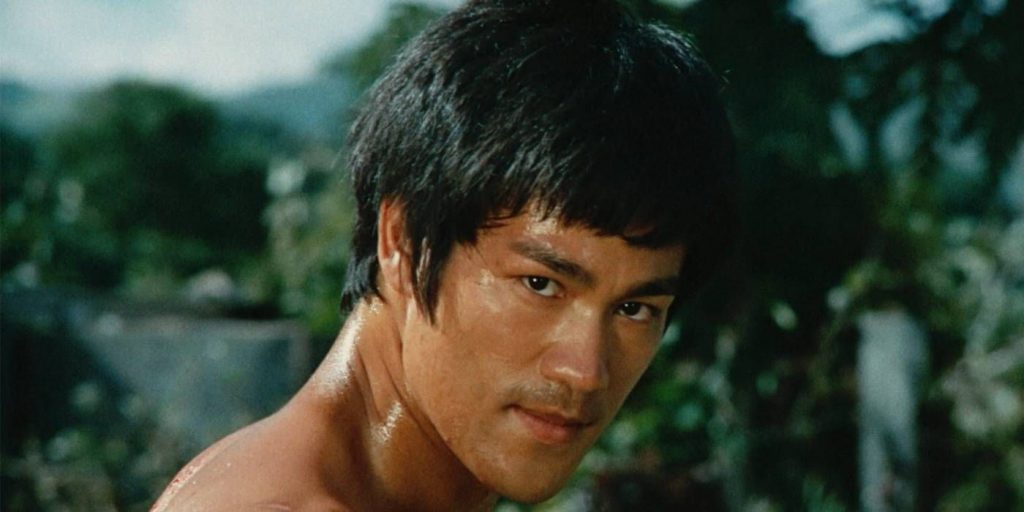
Bruce Lee didn’t just play a character; he dominated the screen in a way that had never been seen before. Even when he’s just sitting quietly, he looks like a panther waiting to strike. He had a way of moving, a feline, predatory grace, that made everyone else on screen look like they were underwater.
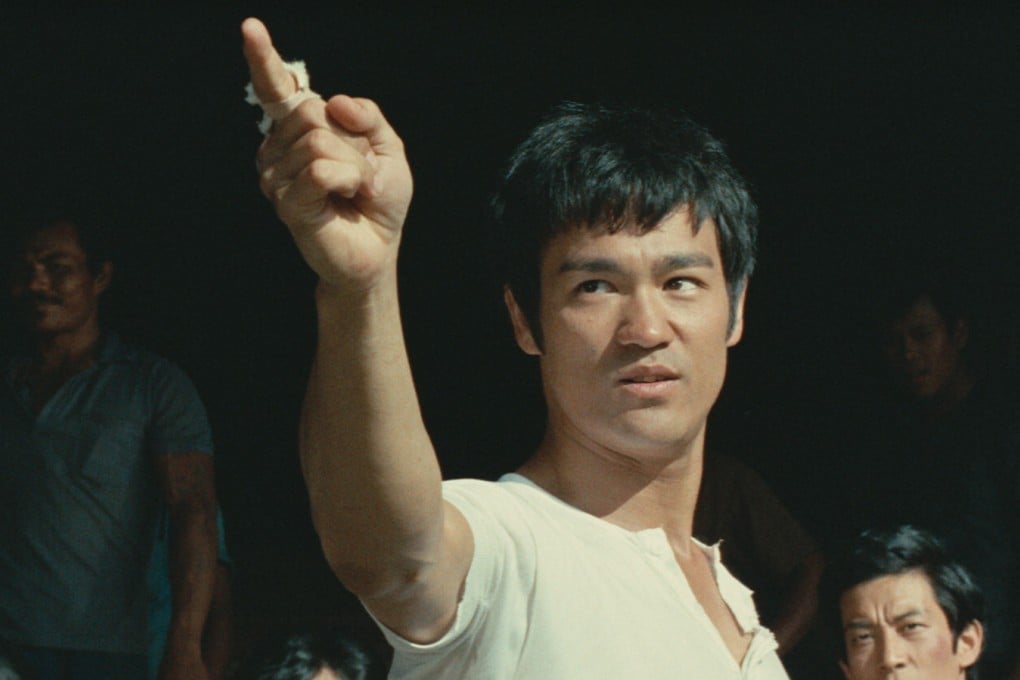
In The Big Boss, he’s still refining the Bruce Lee Persona. He hasn’t quite reached the philosophical heights of Enter the Dragon yet. He’s not talking about being water here; he’s talking about how much he hates the guys who killed his cousins. It’s a more realistic and pissed off Bruce. And in many ways, it’s his most honest performance. You’re seeing the raw materials: the seething rage, the terrifying speed, and the ability to make a simple white undershirt look like the height of warrior fashion.
The Aftermath And The Legacy
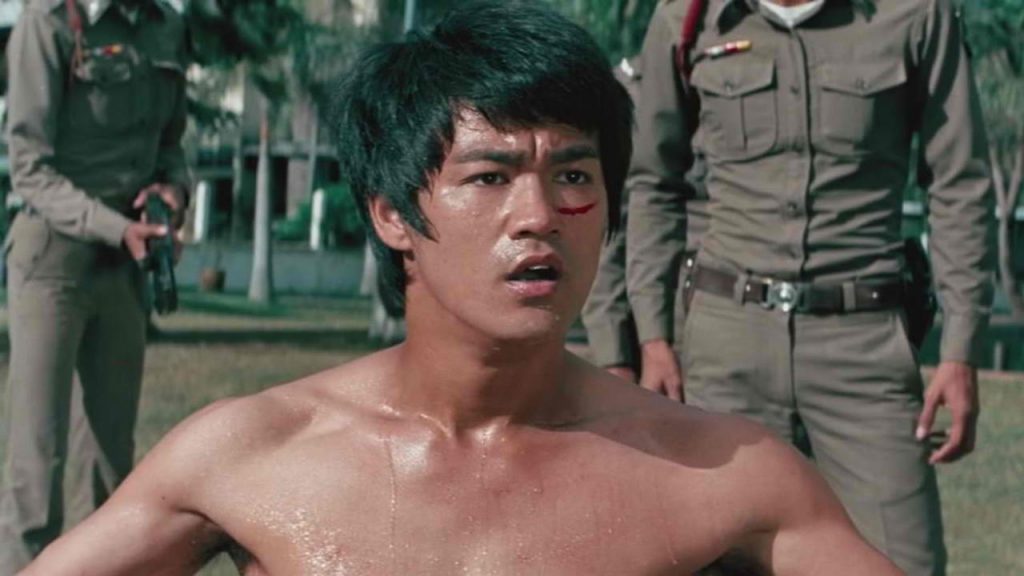
When The Big Boss premiered in Hong Kong, the legend goes that the audience stayed silent for a full minute after the credits rolled, and then they erupted into the loudest standing ovation in the history of the city. Bruce Lee went from being ‘that guy from the Green Hornet’ to the biggest star in Asia overnight.
It also changed the way movies were made. It gave an alternative to the balletic style of Wuxia and ushered in the era of Basher films, hand-to-hand combat movies that felt real. Every action movie you love today, from John Wick to The Raid, owes a massive debt to the moment Bruce Lee decided to break his jade amulet in a Thai ice factory.
It also birthed the Bruceploitation sub-genre. A crazed, sometimes good but usually awful, dark corner of the horror/action world where studios hired Bruce Lee lookalikes (Bruce Li, Bruce Le, Dragon Lee) to star in increasingly insane movies. But none of them could capture that lightning in a bottle. None of them had the eyes.
Why I Love It
Simple.
Three words.
Bruce fucking Lee.
The Big Boss is the foundation. It’s the moment the world realized that martial arts movies didn’t have to be stage plays with swords; they could be urban and breathtakingly quick.
It’s a story about a man pushed to his limit, who finally decides that the only way to deal with corruption is to kick it in the face repeatedly until it stops moving. It’s dirty, it’s bloody, and it’s beautiful. It’s the reason why, 53 years later, I have this man’s face permanently etched into my skin.
Watch it for the historical significance, but stay for the moment Bruce Lee stops being the nice cousin and starts being the most dangerous man on the planet. If you haven’t seen it, you’re watching everything that came after without knowing who started the fight.
Leave a Reply