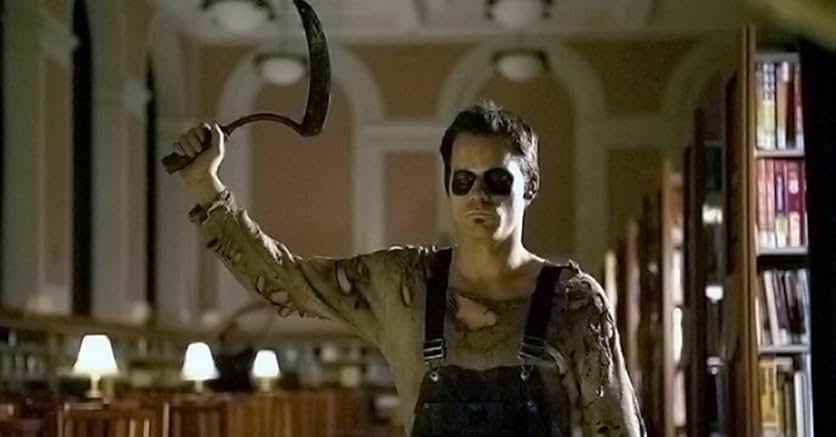
If there is one hill I am prepared to die on, likely at the business end of a customized farm tool, it is this: Behind the Mask: The Rise of Leslie Vernon is the most criminally underrated horror movie in the history of the genre. It’s a masterpiece that takes the slasher rulebook, puts it through a woodchipper, and then meticulously tapes the pieces back together to create something entirely new and terrifyingly clever.
The World-Building
The genius of Scott Glosserman’s film begins with its foundation. In most meta-horror, like Scream or The Cabin in the Woods, the characters are aware of horror movies. In Leslie’s world, they are aware of horror history. Michael Myers didn’t just star in a movie in 1978; he actually terrorized Haddonfield. Jason wasn’t a stuntman in a hockey mask; he’s a statistical anomaly in the Crystal Lake census.
This tiny shift in perspective changes everything. It turns the Slasher from a cinematic trope into a career path. It suggests that evil is a vocation, like being a plumber or an architect, provided your blueprints involve hidden crawlspaces and your plumbing is strictly for draining blood.
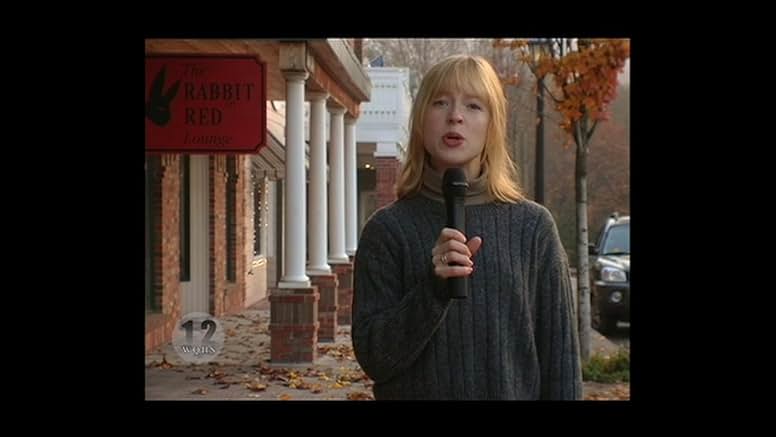
Enter Taylor Gentry. She’s our surrogate, a journalism student who thinks she’s getting a scoop on a serial killer. She’s got that mid-2000s earnestness that makes her the perfect foil for Leslie. She treats him like a subject for a thesis, while he treats her like the public relations department for his upcoming debutante ball of carnage.
Nathan Baesel: The Most Likable Psycho In History
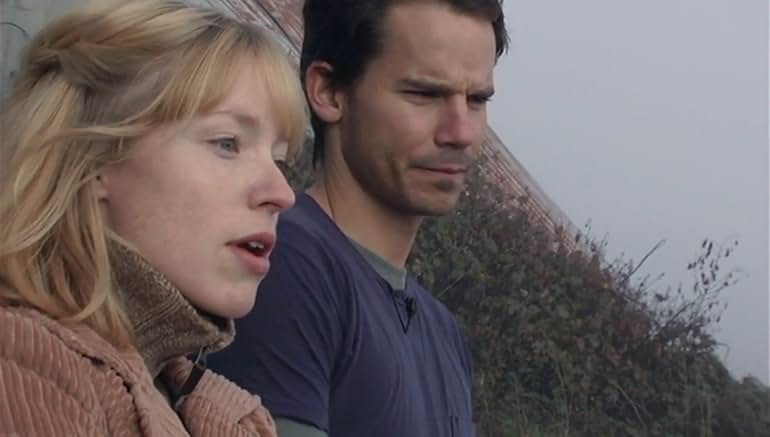
If there is any justice in this world, this man should have a statue in every horror convention lobby. His Leslie Vernon is a revelation. He’s high-energy, fast-talking, and genuinely, disturbingly, likable. He has the vibe of that one guy in college who was way too into theater but was also the first person to help you move apartments. Watching him explain the ways of being a monster is a comedic masterclass. He doesn’t just show up in a dark corner. He explains the geometry of the room. He shows the camera crew how he rigged the floorboards to creak in one specific spot to herd his victims toward the kitchen. He is a stage magician whose final trick involves a meat hook.
The brilliance of his performance is that he makes you want him to succeed. You see him struggling with his cardio, you see him meticulously carving his mask, and you start to root for him. You forget, for a moment, that his success involves the brutal murder of five teenagers. That is the true horror of the film: it makes us complicit. We become the fans in the front row of the Coliseum, cheering for the lion because he’s got such a great personality.
The Mentor: Eugene and the Guild of Killers
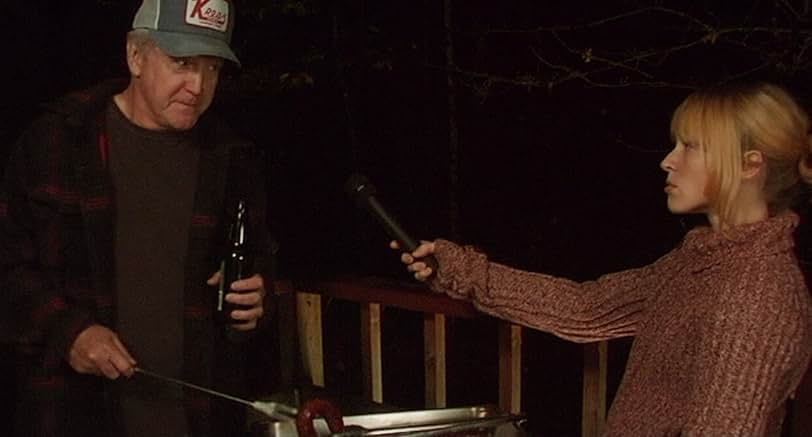
One of my favorite sequences in the entire film, of which there are many, is the introduction of Eugene, played by the late, great Scott Wilson. Eugene is a retired slasher. He’s the guy who paved the way in the 70s. He lives in a quiet house, drinks beer, and speaks about mass murder with the nostalgic warmth of a retired high school football coach.
The scenes between Leslie and Eugene provide a secret history of the genre. They talk about ‘The Greats’ with reverence. They discuss the shift from the urban legends of the 50s to the masked powerhouses of the 80s. Eugene is the one who warns Leslie about the Ahab, the one person from the killer’s past who will obsessively hunt them down.
This adds a layer of mythology to the film. It’s not just about one guy killing people; it’s about the continuation of a cycle. Leslie isn’t a supernatural entity (yet); he’s a guy who has to worry about his knees holding up and his taxes.
The Technical Pivot: From Digital to Cinematic
Most mockumentaries stay in their lane, think The Blair Witch Project. They remain shaky, they remain raw. Behind the Mask pulls off the most daring technical stunt in the genre.
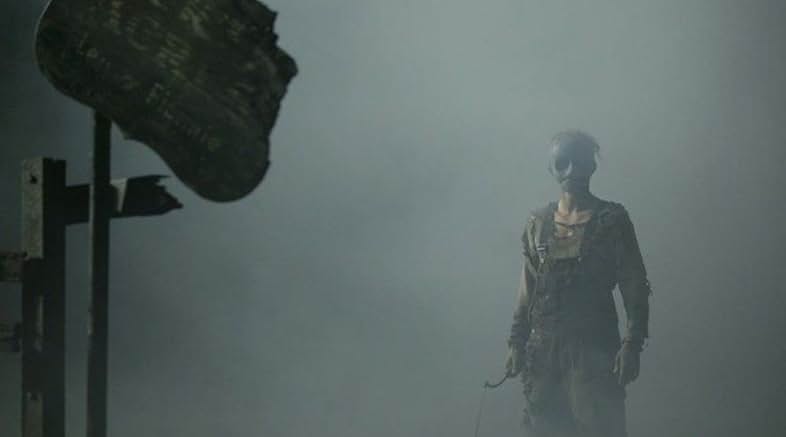
For the first hour, we are watching a digital, hand-held documentary. It’s grainy, the lighting is flat, and it feels real. But as soon as the event starts, as soon as Leslie puts on the mask and the clock strikes midnight, the film undergoes a visual metamorphosis.
The camera pulls back. The lighting becomes moody and atmospheric. The frame rate shifts. We are no longer watching a documentary; we are watching a Slasher Movie.
This transition is jarring in the best way possible. It signals that the fun is over. The Leslie who was joking about his treadmill routine ten minutes ago is gone. In his place is a silent, monolithic force of nature. It’s a trick that plays with our subconscious; we’ve been conditioned by decades of cinema to fear the cinematic killer, and by switching styles, the film forces us to take Leslie seriously the moment he stops talking.
The Great Deception: The Taylor Gentry Trap
Leslie’s obsession with his survivor girl setup is where things start to turn properly unsettling. On the surface, Kelly is the obvious Final Girl in his carefully constructed mythology, the one he’s shaping to survive, the one meant to carry the story forward once the bodies start dropping. He points her out to Taylor, explains her purity, and lets the camera crew follow her like she’s the star of the show.
But that’s only part of the trick.
As the situation unravels (first when Kelly is caught in a moment that breaks her final girl positioning, as well as a few bed springs, and later when everything collapses in the barn) the real structure of Leslie’s plan becomes clearer.
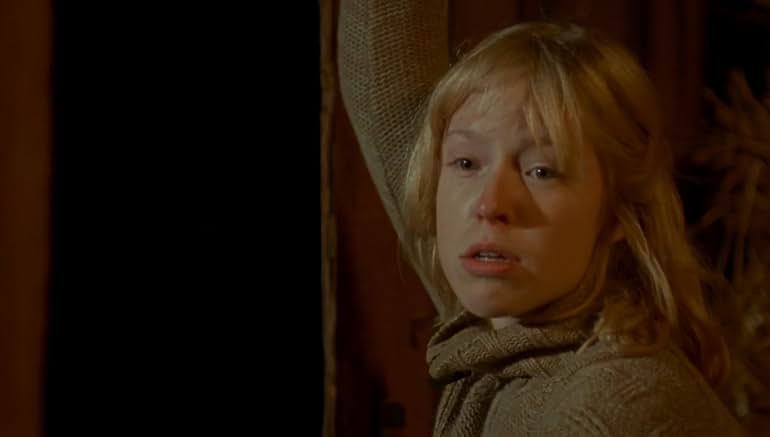
Taylor Gentry isn’t just observing the story. She’s inside it.
What looked like Kelly being groomed for survival turns out to be a misdirection layered into Leslie’s broader design. Leslie didn’t spend months with Taylor because he wanted his story told; he spent months with her because he was training his own protagonist.
Taylor slowly realises she’s not outside the narrative at all, she’s been neck deep from the start, shaped by Leslie’s expectations of how people behave when the rules of a slasher finally snap into place. He gave her the Ahab (Doc Halloran). He gave her the lore. He gave her the motivation.
And the horror isn’t just the violence waiting at the end. It’s the realisation that Leslie has been treating everyone, not just as victims or survivors, but as roles in a script he’s already finished writing. Taylor isn’t the journalist; she’s the lead actress in a snuff film she helped bring to life.
The Ahab
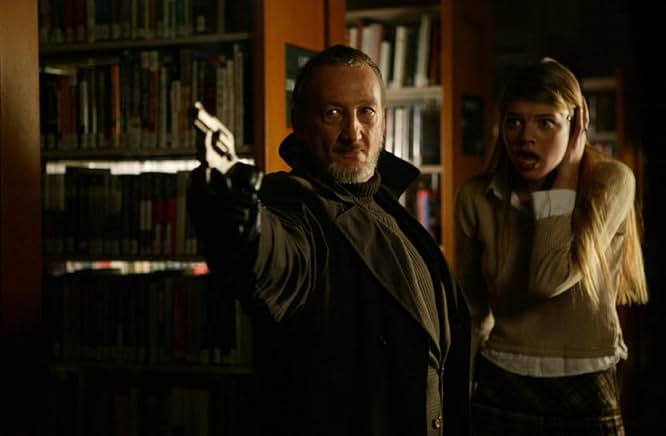
In a move of casting brilliance, the man who gave us Freddy Krueger, a character that doesn’t exist in movies here but as a legend that Leslie admires, plays Doc Halloran, the man trying to stop the new monster.
Halloran is the Ahab. He is the Dr. Loomis of this universe. Englund plays him with a weary, cigarette-stained intensity. He’s not a hero; he’s a man who has seen too much and knows that you can’t rehabilitate something like Leslie.
His presence gives the mockumentary side a sense of impending doom. While Leslie is joking around with the camera crew, Halloran is in the background, lurking, waiting for the moment the intern makes a mistake. The final confrontation between them is a beautiful reversal of the tropes Englund helped create in the Nightmare on Elm Street series.
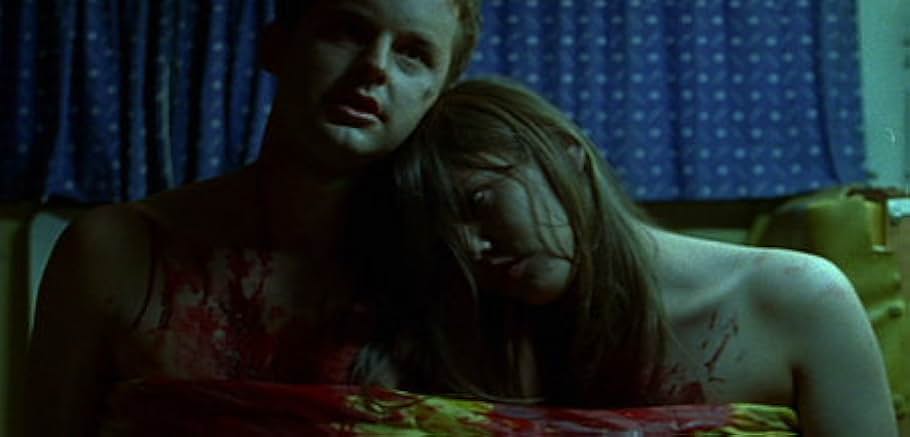
The Glen Echo Finale
The final act of the movie takes place at an abandoned farm, Leslie’s alleged childhood home. This is where every single joke and technical explanation from the first hour comes back to haunt the characters.
Everything goes to plan. The pre-weakened floor sections and rigged spaces give way exactly as demonstrated earlier, the doors and escape routes behave exactly as he said they would, locking, jamming, or failing at the worst possible moment. It is the ultimate Chekhov’s Armory.
The film turns into a high-stakes chess match. Taylor and her crew know Leslie’s tricks because he showed them, but Leslie knows they know, so he’s added a second layer of traps. It’s a battle of wits that happens at a breakneck pace. It’s fucking clever and it’s incredibly satisfying to see a horror movie where the characters actually use their brains (even if it doesn’t always save them).
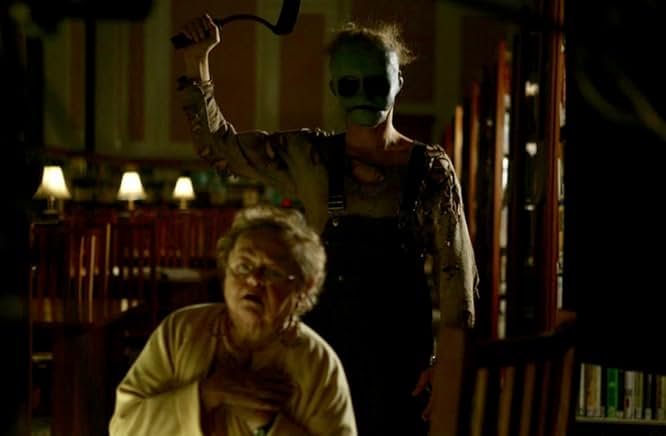
The Philosophy of the Mask
Why do we wear masks? In Leslie’s world, the mask isn’t just to hide his face; it’s to hide his humanity. He explains that once the mask is on, he is no longer Leslie Vernon; he is an idea. The film explores the transcendence of the slasher. By the end of the movie, Leslie has successfully transitioned from a man to a myth.
It’s also a very subtle commentary on the nature of fame in the modern world. We live in an era where people will do anything to be remembered, and Leslie is just the extreme version of that desire. He’s the ultimate content creator, it’s just that his content happens to be high-definition homicide.
Why I Love It
Because it is the rarest of movies, flawless and perfect. And the fact it isn’t held in the same regards as Halloween, Friday the 13th, or A Nightmare on Elm Street is a fucking crime against cinema.
Hell, you could name me any movie that you consider a horror classic, and I can promise you that Behind the Mask is better.
Behind the Mask remains a beacon of what the genre can be when it’s handled with love and intelligence. It’s a movie for the fans. It’s a movie for the people who spend their Friday nights arguing about whether Jason could beat Michael in a fight. It respects our knowledge. It doesn’t talk down to us.
And yet, it remains tucked away in the shadows of the mainstream.
It features one of the greatest lead performances ever, and not just in horror history but of all time, a script that is tighter than a drum, and a final sting that will make you want to watch the whole thing over again the moment the credits roll. Which you shouldn’t skip either as it sets up a sequel 20 years in the making.
If you haven’t seen this movie yet, perhaps you have just come out of a coma (which is the only reason I will ever accept for a horror fan not to have), you need to rectify that now. Not later. Not when you get around to it. Not when you have time.
Right. Fucking. Now.
Leslie Vernon is waiting for you in Glen Echo.
Don’t worry, he’s already planned your arrival.
Leave a Reply