If there’s one thing we’ve learned from the damp, flickering basement of the 80s, it’s that you can’t keep a good corporate mascot down. In the world of horror, death isn’t a finale; it’s a temporary inconvenience, a smoke break before the next shift starts.
By 1988, the slasher genre was having a full-blown identity crisis. Freddy Krueger was busy becoming a late-night talk show host with claws, Jason Voorhees was busy being a zombie who could apparently teleport through Manhattan, and Michael Myers? Well, Michael was supposed to be dead. Not slasher dead, but incinerated-in-a-hospital-explosion dead. After 1982’s Season of the Witch tried to pivot the franchise into a Twilight Zone style anthology, replacing the Shape with killer microchips and the most infectious jingle in the history of earworms, the fans revolted. They didn’t want cursed masks; they wanted the mask.
They wanted the heavy breathing. They wanted the man who refuses to stay dead despite being turned into a human flambé in 1981. They wanted the Boogeyman, and in 1988, producer Moustapha Akkad gave him back to us.
The Resurrection: A Lesson in Medical Negligence
I’m a sucker for ‘The Ambulance Transfer’. It’s one of my top 10 favorite horror tropes, the cinematic equivalent of putting a hungry shark in a goldfish bowl and acting surprised when the water turns red.
It’s October 30, 1988. Michael Myers has been in a vegetative state for ten years at the Ridgemont Federal Sanitarium. He looks like a piece of overcooked jerky, and he’s being moved to Smith’s Grove. Why? Because apparently, the Illinois Department of Corrections has the budget of a lemonade stand and the foresight of a gnat.
The scene is drenched in that wonderful, gloomy 80s atmosphere, rain-slicked roads, flickering lights, and two paramedics who are clearly just there to provide Michael with his first snacks of the decade. One of them makes the fatal mistake of mentioning that Michael has a living relative: a niece named Jamie Lloyd.
Boom. Michael’s brain, which has presumably been ‘off’ for a decade, suddenly sparks like a faulty microwave. He kills everyone in the ambulance with the kind of casual efficiency that suggests he’s been practicing in his sleep. This isn’t the stealthy shadow from 1978. This is a Michael who has been lifting weights in his subconscious.
The Legend of Loomis
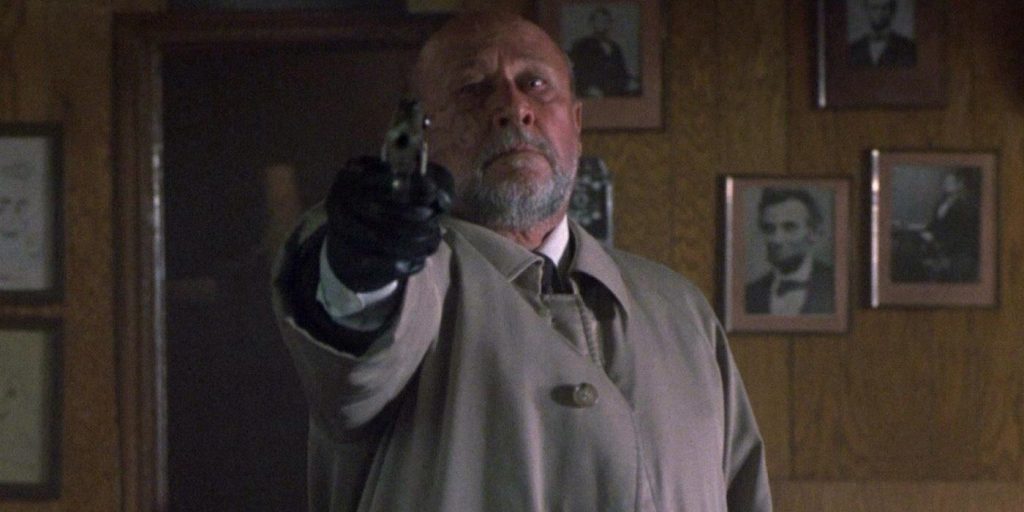
By this point in the franchise, Dr. Sam Loomis has transcended being a psychiatrist. He is now a high priest of paranoia.
When we first see Loomis in this flick, he’s sporting burn scars that, depending on the lighting, either look like a tragic accident or a poorly applied piece of honey-glazed ham. But the scars aren’t the point. The point is the eyes. Pleasence plays Loomis like a man who has looked into the sun for too long and now can’t see anything else.
His performance is the only thing that keeps this movie from drifting into generic slasher territory. While the rest of the town is worrying about trick-or-treaters and school dances, Loomis is screaming at police stations about ‘The Hell-Spawn’ and ‘The Essence of Evil’. He doesn’t just want to stop Michael; he wants to exorcise him from the face of the earth. He’s intense, he’s sweaty, and he’s the only person in the entire state of Illinois who seems to realize that a six-foot-two man in a white mask shouldn’t be that hard to find in a town with three streets.
Faking Fall in the Desert
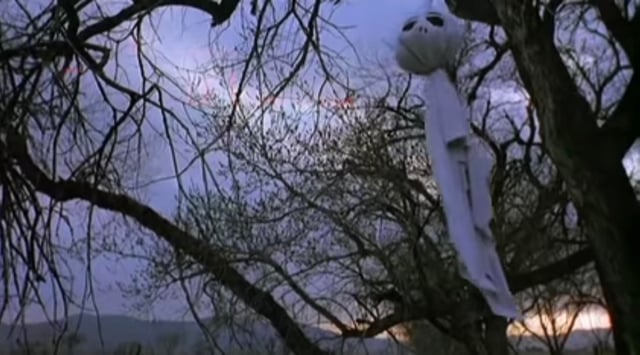
Here is a fun fact for you: Halloween IV was filmed in Salt Lake City, Utah. In the spring.
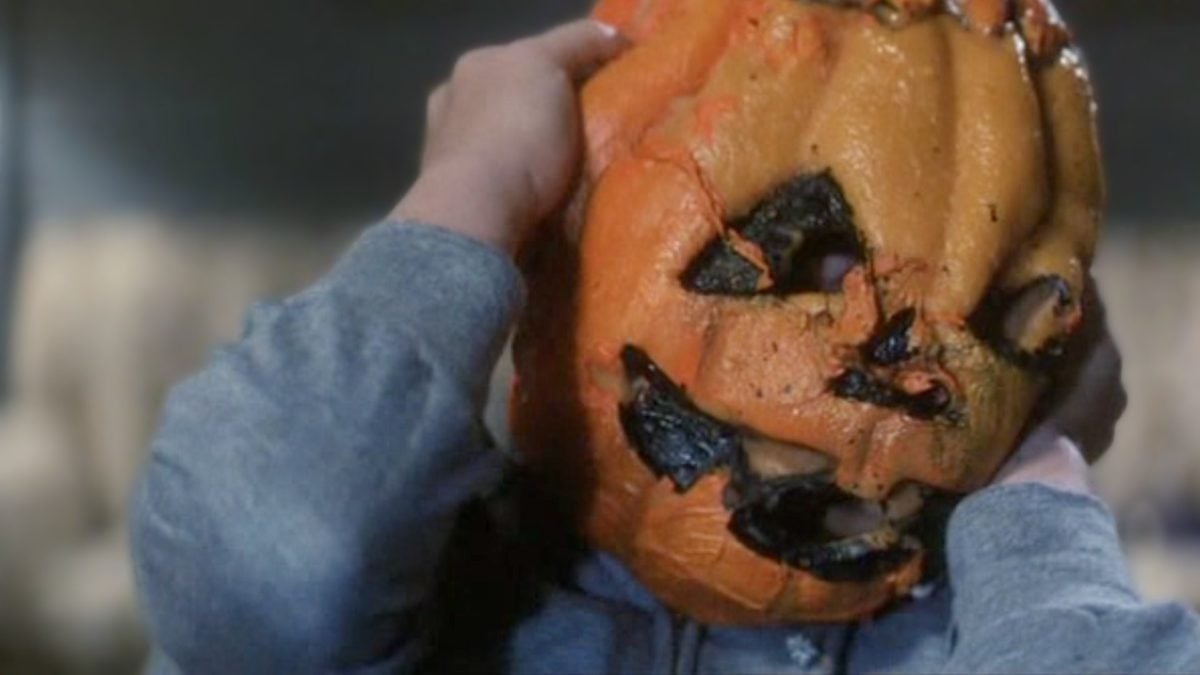
If you look closely at the background of some shots, you can see mountains that definitely don’t exist in the Midwest. To make Utah look like Haddonfield, the crew had to import thousands of bags of brown leaves and manually scatter them across every lawn. They painted local squash to look like pumpkins.
And you know what? It worked.
The film captures that specific, eerie October-decay better than almost any other sequel in the series. There’s a crispness to the cinematography (courtesy of Peter Lyons Collister) that makes you feel like you need a sweater just to watch it. The lighting is cold, the shadows are long, and the local Haddonfield hangouts feel lived-in and lonely. It’s faked fall, but it feels more authentic than the original’s California palm trees peeking out behind a garage.
The New Blood: Jamie Lloyd and Rachel Carruthers
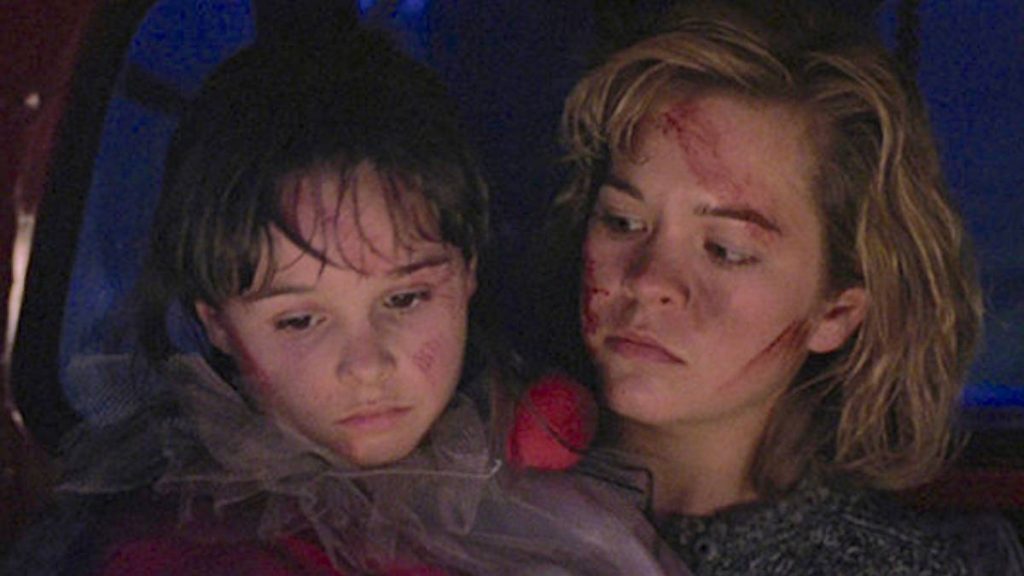
One of the biggest risks the movie took was moving away from Laurie Strode. Jamie Lee Curtis was gone, and the writers had to find a way to make us care about a new set of victims.Enter Danielle Harris as Jamie Lloyd.
Look, child actors in horror movies are usually a coin toss. Half the time you’re rooting for the monster to catch them just so the screaming stops. But Danielle Harris? She’s a revelation. She manages to convey a level of genuine, bone-chilling terror that makes the stakes feel real. When she’s crying, you aren’t annoyed, you’re worried. She’s haunted by dreams of The Uncle, and her isolation in the town of Haddonfield is palpable.
And then there’s Rachel, played by Ellie Cornell. Rachel is, quite frankly, one of the most underrated Final Girls in the business. She’s not a victim; she’s a guardian. She spends the entire movie trying to balance her own teenage life, dating a guy named Brady who has the personality of a wet napkin, with the responsibility of protecting Jamie. When the chips are down, Rachel doesn’t just run. She fights. She roof-slides. She drives a truck like a stunt driver. She is the backbone of the film, and her chemistry with Jamie is what gives the movie its heart.
The Shape
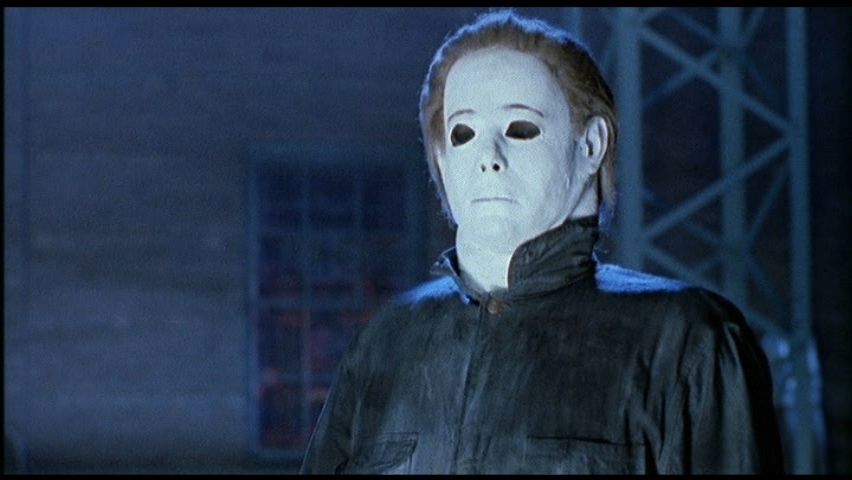
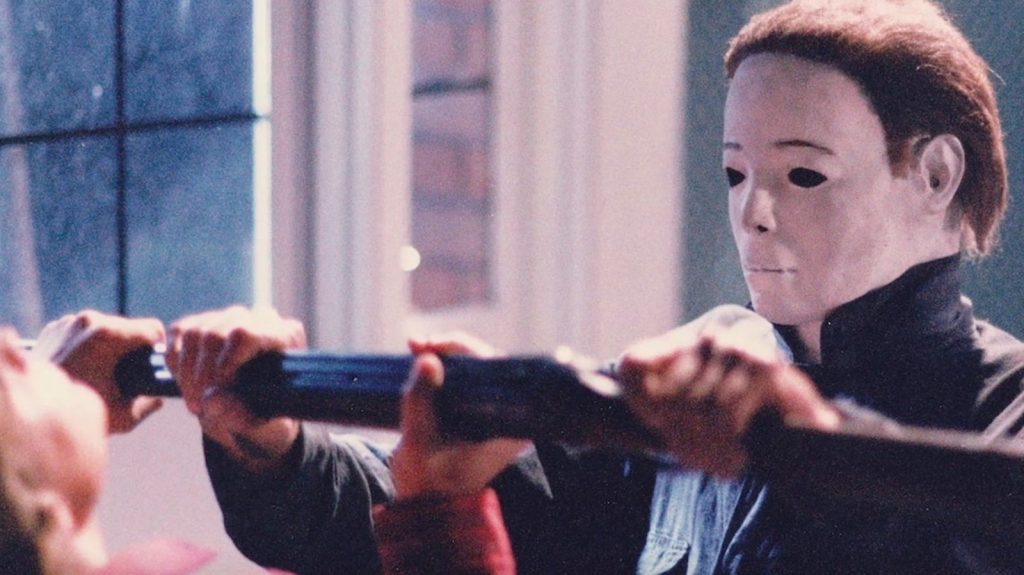
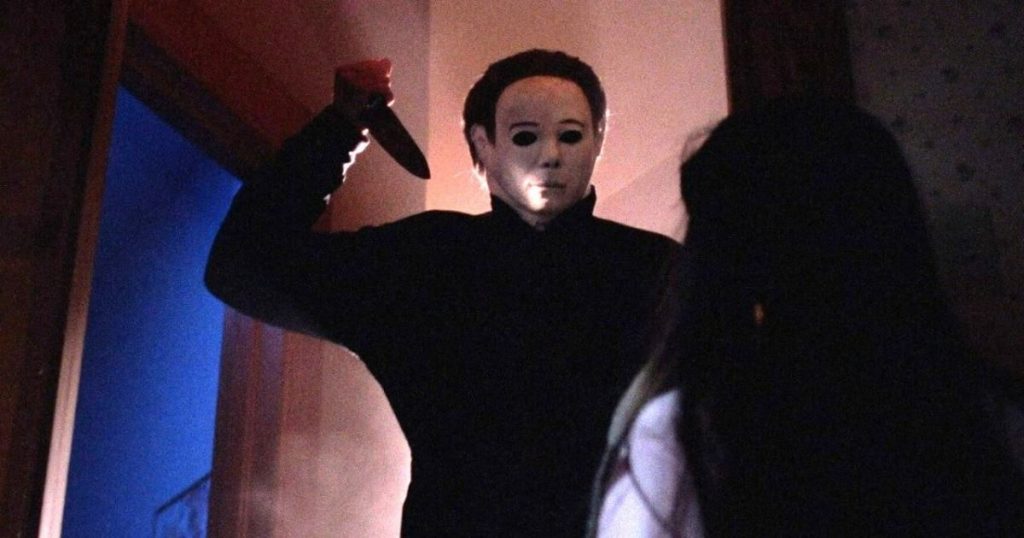
Stuntman George P. Wilbur took over the role here, and he decided that Michael needed to be a tank. He wore hockey pads under his coveralls to give the character a more imposing, brick shithouse silhouette. It changes the dynamic of the scares. In the original, Michael was a Shape, a ghost that disappeared into the laundry. In Part IV, Michael is an unstoppable force of nature. If he’s in the room, he’s going to walk through the wall to get to you.
But let’s address the elephant in the room: The Mask.
Oh boy, the mask. It’s widely considered one of the weakest in the franchise. It’s too white, the hair is too slicked back, and it looks like it was purchased at a gas station five minutes before filming started.
And then there’s the ‘Incident’. For one brief, glorious scene in the school hallway, Michael is suddenly wearing a mask with bright blonde hair. Why? Because the production accidentally used a mask that was meant to be a test for a different look. It’s one of those ‘once you see it, you can’t unsee it’ moments that reminds you that even the best horror movies are held together by duct tape and glue.
The Meat on the Bones
Halloween IV is a high-protein slasher. It doesn’t waste time with philosophical waxing (unless Loomis is talking). It gets to the business of killing.
We’ve got:
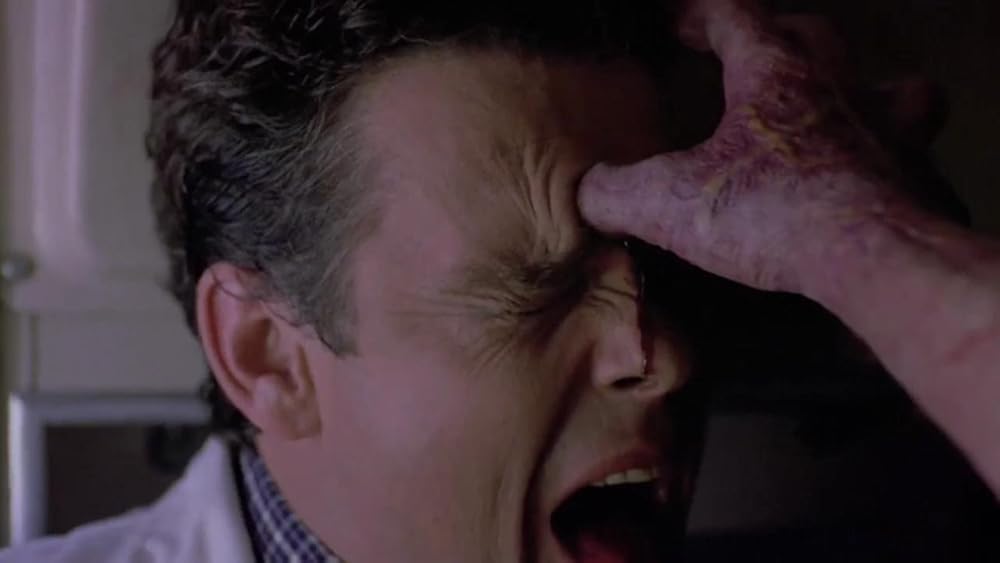
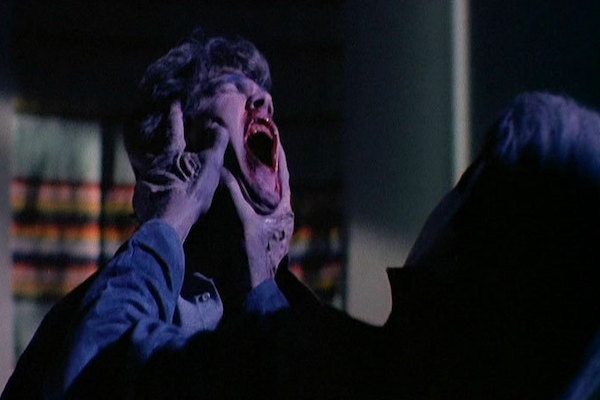
The Thumb to the Forehead: A kill so brutal and simple it makes your own head ache.
The Shotgun Impalement: Because Michael doesn’t actually need to fire the gun to use it.
The Power Grid Meltdown: Michael taking out the town’s electricity by throwing a person into a transformer is peak 80s logic.
The third act is a masterclass in escalating tension. From the house-siege to the rooftop chase, the movie never lets up. By the time we get to the final showdown on the highway, with the local lynch mob (who are all wearing flannel and carrying shotguns, because Midwest), you’re fully invested in Jamie’s survival.
That Ending: The Sting in the Tail
And then we get to the final five minutes.
After Michael is blasted into a mineshaft by a hail of gunfire that would make a Rambo movie blush, we think it’s over. We think the evil is gone.Loomis stands at the top of the stairs. A scream rings out.
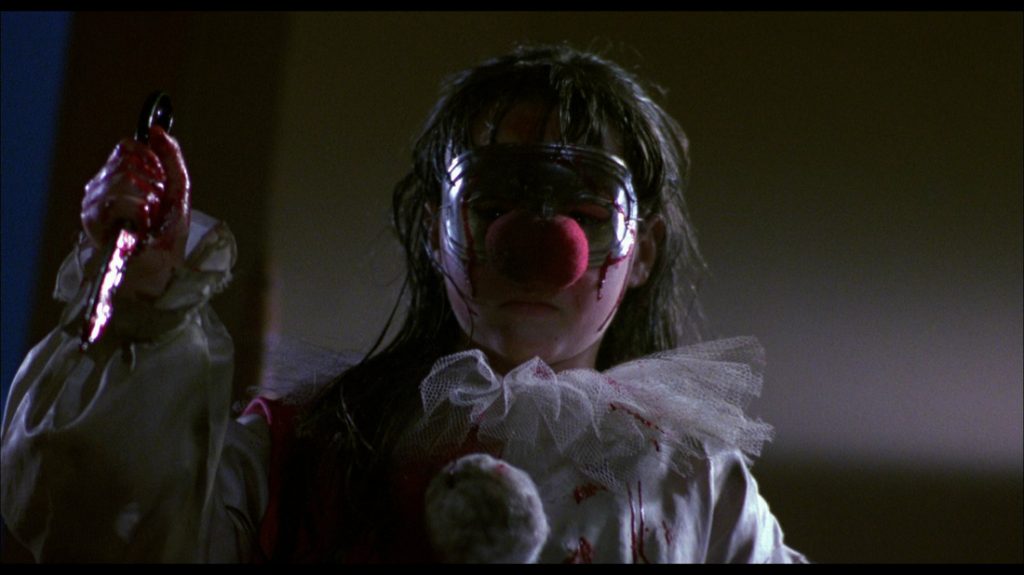
We see Jamie Lloyd, standing there in her clown costume, a direct mirror of Michael in 1963, holding a pair of bloody scissors. She’s attacked her foster mother. The look on Loomis’s face isn’t just horror; it’s the look of a man who realizes that he’s been fighting a forest fire with a water pistol, and now the wind has changed.
It is one of the boldest, most nihilistic endings in slasher history. It suggests that evil isn’t a person; it’s a virus. It’s a baton that gets passed down. It’s a shame the sequels (looking at you, Part V) didn’t have the guts to actually turn Jamie into the new slasher, but for those few minutes in 1988, Halloween IV felt like it had changed the rules of the game forever.
Why I Love It
Honestly, I’m not sure I do. I do admire it, though. Halloween IV: The Return of Michael Myers was written in a mere eleven days to beat the 1988 writers’ strike. Usually, that’s a recipe for disaster. But here, that frantic energy translates into a movie that feels lean and purposeful.
It’s not a masterpiece of psychological suspense like Carpenter’s 1978 original. It doesn’t have the artistic flair of Part II. But it is a bloody good Friday Night Movie. It’s built for a dark room, a bowl of popcorn, and the volume turned up high enough to hear the synth-heavy score rattling the windows.
It breathed life back into the franchise, it gave us Danielle Harris, and it reminded us that no matter how many times you burn him, shoot him, or drop him down a hole, the Boogeyman is always ready for his close-up.
Leave a Reply