If you want to talk about the absolute apex of Taiwanese independent chop-socky cinema, the conversation starts and ends with Lee Tso-nam’s Shaolin vs. Lama. By the early 1980s, the traditional kung fu movie was supposed to be dead and buried. Golden Harvest was leaning hard into urban stunt-spectacles with Jackie Chan, and the big studios like Shaw Brothers were all but packing up their period costumes and dismantling their backlots. The industry was shifting toward modern clothes, cars, and explosions. But Taiwan didn’t get the memo. Instead of giving up on the old ways, the independent filmmakers in Taipei took the classic kung fu formula (low budgets, backyard scenery, recycled musical cues, and zero institutional restraint) and cranked the physical choreography up to a level that makes modern Hollywood action look like a slow-motion rehearsal inside a retirement home. Shaolin vs. Lama is the perfect rxamplenof this. It is ninety minutes of pure, athletic hysteria disguised as a spiritual quest, and it remains one of the most blistering, satisfying martial arts pieces ever burned onto celluloid.
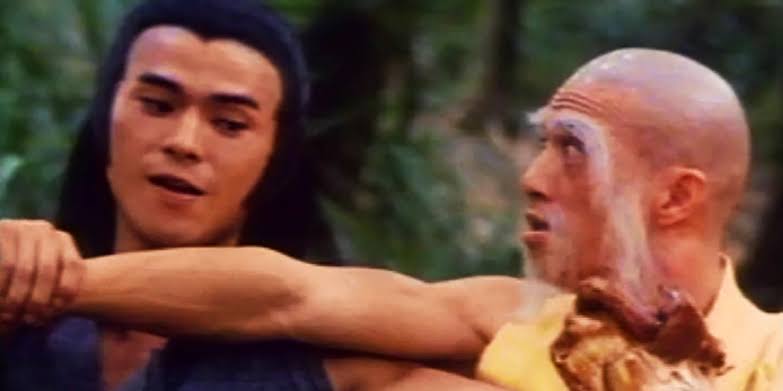
The setup is beautiful in its lean, uncomplicated simplicity, stripping away any unnecessary dramatic baggage to get to the heart of the matter. You have Sung Li-ting, played by the criminally underrated Alexander Lo Rei, a wandering martial artist whose entire personality is defined by an insatiable hunger for a master who can actually beat him. He isn’t looking for enlightenment, inner peace, or Buddhist wisdom; he is looking for a physical wall he can’t break down with his fists. He mows through local challengers like a combine harvester, displaying an arrogant, cocky swagger that immediately tells you he needs to be humbled. He accidentally crosses paths with Hsu Chi, a young Shaolin monk who is smuggling meat and wine into the temple grounds for his feral, insubordinate grandmaster. This grandmaster doesn’t live in a pristine temple hall meditating under incense smoke; he basically lives in a tree, drinks like a fish, swears like a sailor, and possesses a version of Shaolin kung fu that moves with the velocity ofa plane crash.
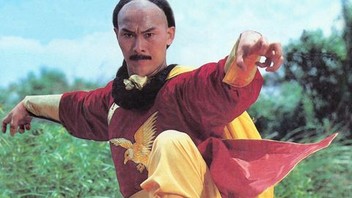
But, as is always the case, a kung fu movie is only as good as its villain, and this is where Shaolin vs. Lama moves from a standard independent training picture into a hall-of-fame brawler. Enter Chang Shan as the villainous monk Yao Feng-lin. Chang Shan doesn’t just play a bad guy; he embodies a level of scenery-chewing, aristocratic malice that dominates every single frame he steps into. Years earlier, he was a Shaolin disciple (though undercover for the Bodhi sect) who broke the ultimate taboo by stealing the temple’s sacred manual that, when learned, will allow the person who now holds the knowledge the ability to kick Buddha himself in the nuts.
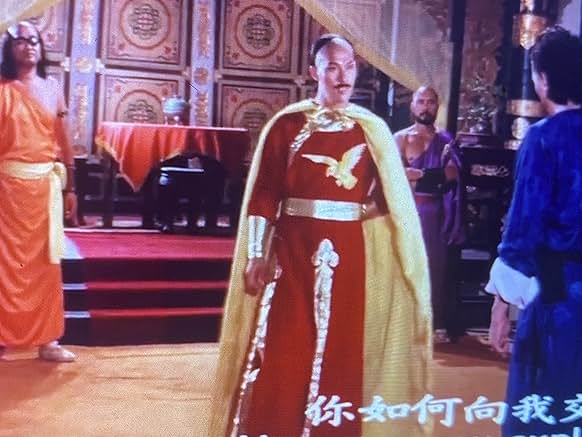
Well, he done learned and returns with a brilliant red robe, a brigjt yellow cape, the sort of trimming that looks like a prototype for a comic-book superhero costume, and a squad of fanatical followers intent on wiping Shaolin off the face of the earth. He is the ultimate integration of style and menace, using his incredible kung fu treachery and piercing eyes to project absolute superiority.
Shaolin vs. Lama understands that the audience isn’t here to listen to long monologues about the nature of the soul; they are here to see human bodies get booted around the screen like footballs. Alexander Lo Rei is a physical marvel in this film. His agility is freakish, his kicks are blindingly fast, and his transitions between different animal styles look less like rehearsed choreography and more like a biological reflex. He doesn’t just use wires to float through the air; he seemingly uses his own core strength to launch into combinations that require three separate viewings just to count the number of strikes landing on the opponent’s ribs.
The training sequences in the middle of the film are where the movie really finds its rhythm, transforming the standard genre tropes into something electric. The contrast between the uncouth, wine-guzzling grandmaster and the rigid, ceremonial abbots of the temple creates a great comedic and physical dynamic. The grandmaster’s arms look younger than his prosthetic white eyebrows, but his movement is completely terrifying. He flips, ducks, and strikes with a ferocity that forces Lo Rei to abandon his arrogant, secular style and completely rebuild his physical mechanics from the ground up. He has to shave his head, take the vows, endure brutal conditioning exercises, and turn his body into a weapon designed specifically to counter the invading forces. It is the classic underdog arc, executed with an absolute lack of pretense and a total commitment to physical theater.
The final battle between Alexander Lo Rei and Chang Shan is of such a quality of sustained, high-voltage choreography that it stands as one of the greatest finales in the history of the genre. There are no computer graphics here to fix a missed punch. There are no stunt doubles taking the hard hits while the stars hide in their trailers. It is just two phenomenally conditioned athletes in an open field, trading complex, multi-step combinations at full speed. The contrast between the fluid, aggressive Shaolin style and the rigid, bone-breaking power of the Lama style creates a beautiful visual friction. Every time Chang Shan unleashes a strike, it sounds like a whip cracking through the speakers; every time Lo Rei ducks and counters, the camera tracks the movement with a precision that honors the sheer physical effort happening in front of the lens. They cycle through movements, empty-hand techniques, and counters until both men look completely spent, yet they keep pushing the envelope of what is humanly possible.
Technically, the movie is a total grindhouse artifact, and that is precisely why it rules. The sets look like they were built out of plywood and hope, the outdoor locations are clearly just public parks and rocky hillsides in Taiwan, and the night shots are so dark you can barely distinguish the monks’ robes from the background scenery. The sound design is a chaotic mix of stolen Hollywood film scores and exaggerated whoosh sounds for every single arm movement. And of course, the English dubbing features some of the most hilarious, hyper-dramatic voice acting ever captured on a magnetic tape, filled with lines about “Shaolin scum” and “Tibetan dogs” delivered with absolute, deadpan seriousness. But none of that matters the second the arse-whupping starts, which is handled with a sincerity that completely obliterates the film’s lack of budget. It proves a fundamental truth about the genre: you don’t need millions of dollars, a massive studio infrastructure, or pristine lighting if you have performers who are willing to destroy their joints for the sake of a perfect take.
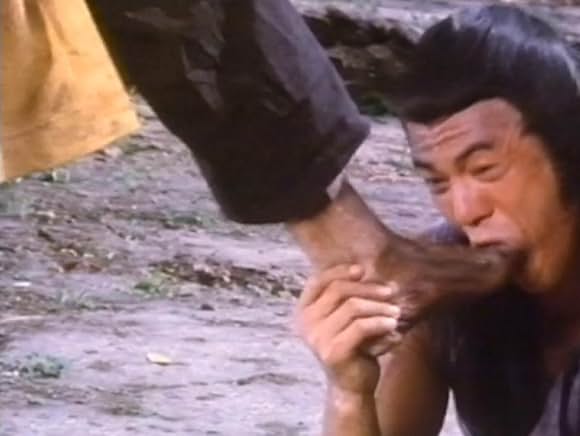
Shaolin vs. Lama is a masterwork because it represents the absolute peak of the traditional, old-school independent kung fu film right before the curtain came down on that era forever. It took a formula that had been used a thousand times before, the rogue student, the stolen manual, the eccentric master, the ultimate training montage, and executed it with such raw energy and choreographic brilliance that it feels entirely vital. It’s a film that doesn’t apologize for its narrative simplicity; it just attacks the screen from the opening credits to the final frame. It understands that martial arts cinema is, at its core, a showcase of human capability and rhythmic violence. If you want to understand why people still hunt down dusty bootlegs, scratched VHS tapes, and rare digital rips of these movies decades after the Taiwanese independent scene collapsed, this is the definitive text you need to study. It is a glorious, bruising reminder of a time when action cinema was dangerous, visceral, and beautifully executed.
Leave a Reply