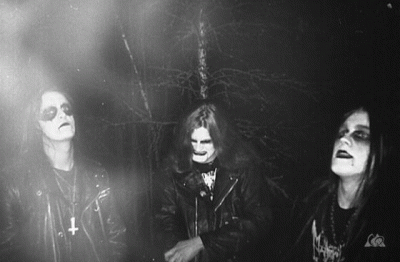
If you want to understand second-wave black metal, you don’t start with the tabloid nonsense, the church burnings, or the murder trials. You start with four blokes in Norway recording an album in 1991 that would help create the most glorious middle-finger U-turn in heavy metal history.
To understand why A Blaze in the Northern Sky hits like a brick through a stained-glass window, you have to remember where extreme metal was headed at the turn of the nineties. The death-metal scene Darkthrone had come from was becoming increasingly polished, technically demanding and professionally produced. Bands were getting faster, tighter and more precise.
Darkthrone looked at that trajectory, spat on the floor and said:
No thanks.
A year earlier, they’d put out Soulside Journey. It was a cracking, highly technical death-metal record, recorded at Stockholm’s Sunlight Studios with Tomas Skogsberg and firmly rooted in the death-metal world of the period. They had a record deal with Peaceville and appeared to have a very clear path in front of them.
They could have made Soulside Journey Part II. They could have carried on down the death-metal road, sharpened everything up and seen where it took them.
Instead, Darkthrone changed direction completely.
What they came back with was A Blaze in the Northern Sky, and Peaceville didn’t know what the fuck to make of it.
The story has become part of black-metal mythology, but the basic facts are pretty straightforward. Peaceville weren’t happy with the raw presentation of the album and asked Darkthrone to consider re-recording or remixing it. Darkthrone refused. They were prepared to take the album elsewhere, with Euronymous’s Deathlike Silence Productions being the obvious alternative.
Peaceville eventually backed down.
The album was released as Darkthrone intended it, and one of the defining templates of the Norwegian second wave was born.
What makes A Blaze in the Northern Sky so fucking effective isn’t simply that it’s grim. It’s the fact that you can hear Darkthrone caught halfway between the death-metal band they’d been and the black-metal band they were about to become. The death-metal DNA hadn’t completely left the building yet.
You can still hear those massive, churning Celtic Frost influences, the thrash-heavy riff structures and the cavernous, mid-tempo stomps. Kathaarian Life Code and In the Shadow of the Horns don’t just rely on relentless blast beats. They give you riffs you can actually bang your head to, wrapped in a soundscape that feels like sitting in an unheated garage in the dead of a Scandinavian winter.
That’s the trick. Darkthrone didn’t suddenly forget how to play. They deliberately stopped caring about proving how well they could do it. There’s a huge difference.
Soulside Journey is full of musicianship. A Blaze in the Northern Sky takes that same band and strips away much of the technical prowess, leaving the riffs, the atmosphere and the sheer fucking hostility.
Nocturno Culto’s vocals on this record are unbelievable. It’s not the guttural growl of death metal. It’s a raspy, throat-shredding howl that sounds like someone being dragged through blood and mud. There’s nothing polished about it, and that’s precisely the point.
Paired with Fenriz’s stripped-back drumming, the album throws away the grandstanding and replaces it with atmosphere. Pure, filthy atmosphere. The production is a huge part of that.
This isn’t an album that sounds like a modern studio production that happens to be playing black metal. It sounds like the recording itself has been dragged through the same frozen wasteland as the music.
The guitars are thin and abrasive. The drums sound distant and vicious. Everything feels cold, slightly broken and completely uninterested in making itself comfortable for the listener.
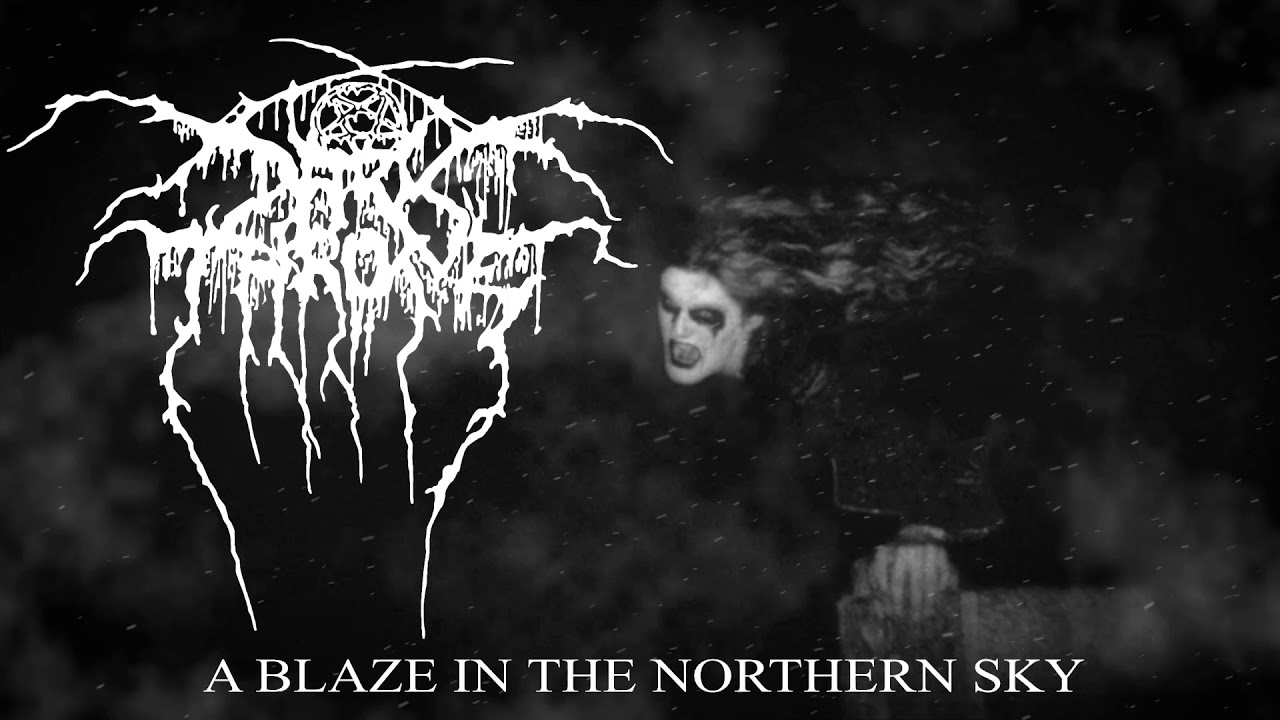
They traded slick studio polish for a sound that evokes a four-track cassette recorded in a freezing garage, put a stark black-and-white picture of Zephyrous on the cover and proved something that would become hugely important to extreme metal:
You don’t need a multi-thousand-pound mixing desk to sound fucking dangerous.
For me, A Blaze in the Northern Sky isn’t just a great album, it’s the moment I learned that heavy music doesn’t need to be pristine to be devastating. In fact, sometimes the dirtier and rougher it is, the more genuine it feels.
There’s something wonderfully liberating about A Blaze in the Northern Sky. You can almost hear Darkthrone looking at the increasingly polished world around them and deciding that they would rather sound fucking horrible if sounding horrible meant sounding like themselves.
That’s what I love about it.
There’s no sense that Darkthrone are trying to impress anybody. They’re not trying to demonstrate how technically good they are. They’re not trying to make the cleanest, biggest or most professional-sounding record they possibly can.
They’re just making the music they want to make.
Somehow that makes the whole fucking thing hit harder.
Because the second wave wasn’t simply about playing black metal faster or making it darker. It was about rejecting the idea that extreme music needed to become increasingly professional to remain powerful.
Darkthrone went backwards, and in doing so they went forwards at the same time.
A Blaze in the Northern Sky helped establish the sound and attitude that would define much of the Norwegian second wave. It drew a line in the sand between the death-metal world Darkthrone had come from and the colder, rawer black-metal aesthetic they were helping to create.
It didn’t invent black metal. Black metal had been around for years. But it helped redefine what black metal could sound like.
Over thirty years later, it still sounds fucking cold. It still sounds dangerous. It still sounds like four blokes looked at the future of extreme metal, decided they didn’t fucking want it, and deliberately walked the other way.
What a glorious decision that turned out to be.
Leave a Reply