For me, black metal begins and ends with two specific high-water marks: Darkthrone’s Transilvanian Hunger and Mayhem’s Freezing Moon. Darkthrone gave us the ultimate hypnotic blizzard, a relentless, lo-fi loop that buries you in three feet of snow and leaves you to freeze.
Freezing Moon is a different beast entirely: slow, deliberate, and undeniably evil.
To understand why that single track commands so much space, you have to look at the altar it was built on: De Mysteriis Dom Sathanas.
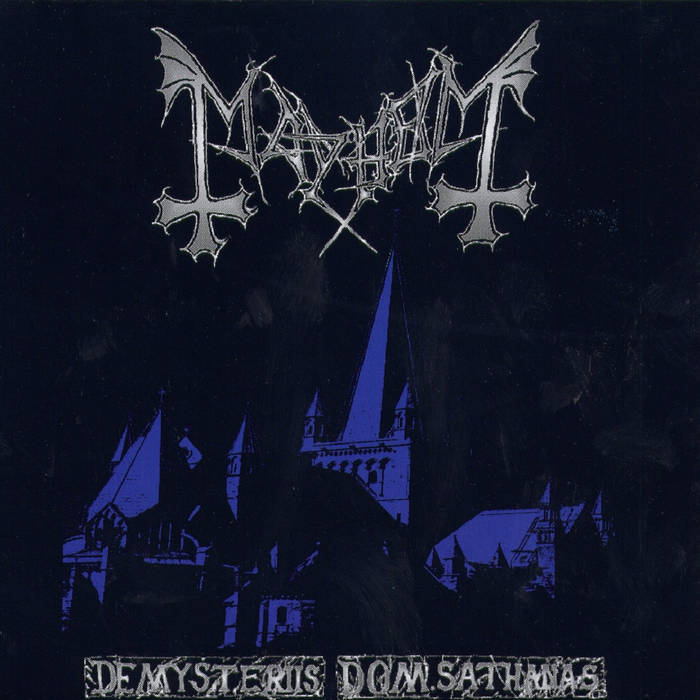
When the record finally dropped in May 1994, it arrived weighed down by enough real-world bloodshed, arson, murder, and madness to completely drown the actual music. The story surrounding Mayhem has been told so many times that the audio itself can feel like an afterthought.
Most people dwell on the headlines: the church burnings, Dead’s suicide, Euronymous’s murder, Varg Vikernes, the entire exhausting circus.
When the needle hits the wax, however, none of that sensationalist bullshit matters. The music stands on its own cold, dead feet.
Funeral Fog opens the album like the gates of Hell being dragged apart. There is no grand introduction or gentle build-up to ease you into the experience. It simply arrives with that dry guitar tone, Hellhammer’s relentless drumming, and Attila Csihar’s voice sounding like something that has been dead for several centuries and isn’t particularly happy about being resurrected.
The riffing is deceptively simple, a core reason De Mysteriis Dom Sathanas works so effectively. Nothing here screams for technical validation. Mayhem aren’t interested in flexing proficiency; they are interested in establishing an oppressive atmosphere.
The guitars carry that abrasive quality closely associated with the Norwegian second wave, using repetition to trap the listener rather than lead them along a standard narrative arc.
Then Attila enters, shifting the perspective entirely.
When the record first came out, his performance split opinion. Everyone expected high-pitched rasps, but Attila delivered something far more unhinged, guttural groans, operatic death-rattles, and theatrical, monk-like chanting.
It clicked instantly. It didn’t sound like a singer behind a studio microphone trying to sound tough. It sounded like an actual corpse being dragged across a graveyard to officiate a funeral.
Freezing Moon follows, opening with a riff that remains one of the greatest pieces of guitar work ever committed to tape. Bone rattling and razor-thin, built around those open-string minor trills that defined second-wave black metal, the track rejects breakneck speed for a mid-tempo, suffocating crawl.
When Hellhammer’s drums kick in underneath that main hook, it hits with a heavy, ominous weight fast thrash bands could only dream of achieving. The restraint itself is genuinely unsettling. The song refuses to rush, moving forward at its own miserable pace and dragging you further into the dark.
Attila’s vocals inhabit the same space as the instrumentation rather than sitting neatly on top. He whispers, growls, croaks, and howls, delivering an ancient ritual rather than standard rock lyrics.
De Mysteriis Dom Sathanas never sounds like a collection of musicians trying to make an extreme record for shock value; it sounds like a band creating something genuinely unpleasant.
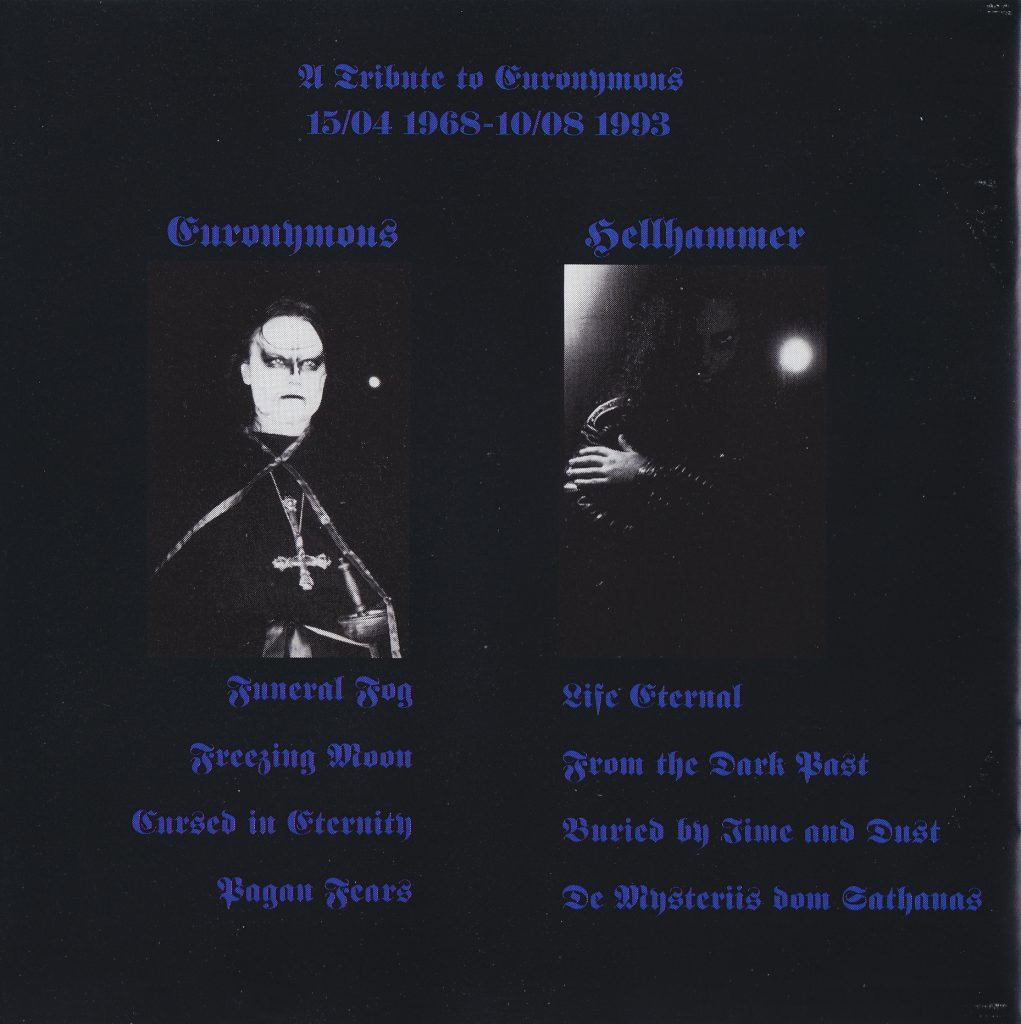
Cursed in Eternity keeps that momentum going with a sharper, more immediate energy. Hellhammer drives everything forward with relentless percussion, keeping the traditional black-metal aggression sitting right underneath the atmosphere.
Pagan Fears demonstrates how much variety exists within this narrow palette. It remains cold, ugly, and soaked in grim Norwegian atmosphere, yet the riffs carry a strange melodic quality that sticks. Underneath the filth sits something almost majestic, a direct refutation of the misconception that primitive production equals primitive songwriting. The production is deliberately hostile, but the riffs are unforgettable.
Life Eternal slows the pace again, delivering one of the album’s most haunting moments. A stark sense of space makes the composition feel enormous despite the stripped-back production. Without thick studio polish or cathedral-reverb plugins, Mayhem created a massive atmosphere through simple elements: the right riffs, Hellhammer’s precision, Attila’s deranged vocal performance, and that cold guitar tone.
From the Dark Past shifts into jagged, unpredictable territory, with the guitars constantly threatening to pull the arrangement apart. Melody remains buried beneath layers of dissonance. The album demands patience; you have to let the repetition work its way in until you stop hearing the production as “bad” and start hearing it as part of the architecture.
That dynamic peaks on Buried by Time and Dust. Hellhammer’s drumming becomes punishing, backing a relentless momentum that creates pure claustrophobia without sacrificing atmosphere.
The title track, De Mysteriis Dom Sathanas, closes the door. Having dragged the listener through funeral fog, frozen moons, pagan fears, and dark memories, the final piece delivers an enormous main riff, not through technical complexity or expensive amplifiers, but through sheer audacity.
Heavy doesn’t require breakneck speed, extreme downtuning, or endless distortion. Sometimes heavy means playing a riff slowly enough that the listener feels every note.
The album avoids monotony because the atmosphere surrounding the repetition constantly shifts. The vocals alter the emotional character, Hellhammer provides the motion, and the guitars supply the skeletal framework.
Decades later, black metal has been polished, over-produced, and sterilely quantized by computers until the life has been completely squeezed out of it. Thousands of bands have spent thirty plus years trying to copy this atmosphere with million-dollar plugins and studio trickery, and almost every single one fails.
You can buy the vintage guitar, recreate the distortion, mirror the microphone placement, and take photos in the woods in full corpse paint, but you cannot manufacture conviction.
Strip away the mythology, the murders, the church burnings, and the endless documentaries. Put the record on and just listen. Underneath the circus lies one of the most atmospheric pieces of extreme metal ever recorded.
That brings it right back to Freezing Moon. It remains my go-to track because the song itself is flawless, that riff, that pace, those drums, that voice.
De Mysteriis Dom Sathanas captured total, suffocating darkness on tape. Thirty years later, putting it on still drops the temperature in the room. Freezing Moon doesn’t pretend, show off, or care if you like it. It sits in the cold, waiting, and the rest of the album stands right beside it.
Leave a Reply