If you thought we were done with the aristocratic blood-suckers of the 1970s, think again. We are staying firmly planted in the foggy, cleavage-heavy landscape of Hammer’s experimental era. So, put on your most dramatic mourning veil and prepare for a masterclass in vanity, because we are dissecting the 1971 classic, Countess Dracula.
Now, before we dive into the vat of sacrificial virgin blood, let’s clear up the confusion: despite the title, there is no Dracula here. Christopher Lee is nowhere to be found. This isn’t a vampire movie in the traditional sense. It’s a a Gothic historical horror inspired by the legend of the terrifyingly dedicated Elizabeth Báthory. It’s a film about the ultimate horror: aging, and the desperate lengths a woman will go to for a good skincare routine.
The Setup: Skincare by Slaughter
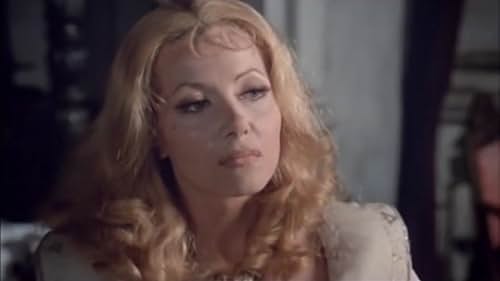
Our story begins in a fictionalized version of early 17th-century Hungary. We meet Countess Elisabeth Nádasdy, played by the legendary Ingrid Pitt. Pitt was the undisputed Queen of Hammer in the early 70s, bringing an undeniable sensuality to the screen that left the old-school monsters looking like timid shadows. Face it, she was the ultimate babe, who, here, just happened to have a thing for bathing in human blood. Well, nobody’s perfect.
Elisabeth is a widow. She’s aging, she’s bitter, and she’s surrounded by people who are just waiting for her to kick the bucket so they can inherit her castle. But then, a happy accident occurs. While striking a young servant girl in a fit of rage, some of the girl’s blood splashes onto Elisabeth’s face. When she wipes it off, she realizes the skin underneath is smooth, youthful, and wrinkle-free.
Does she call a dermatologist? No. Does she look for a nice night cream? Absolutely not. She realizes that bathing in the blood of young women restores her youth. This is the driving pulse of the film’s premise. The youth effect only lasts for a few hours. If she wants to stay young, she needs a constant supply of fresh, high-quality product. It turns the Countess into a serial killer with a ticking clock, and it sets the stage for one of the most cynical and mean-spirited entries in the Hammer catalog.
The Ingrid Pitt Factor: The Edge of Vanity
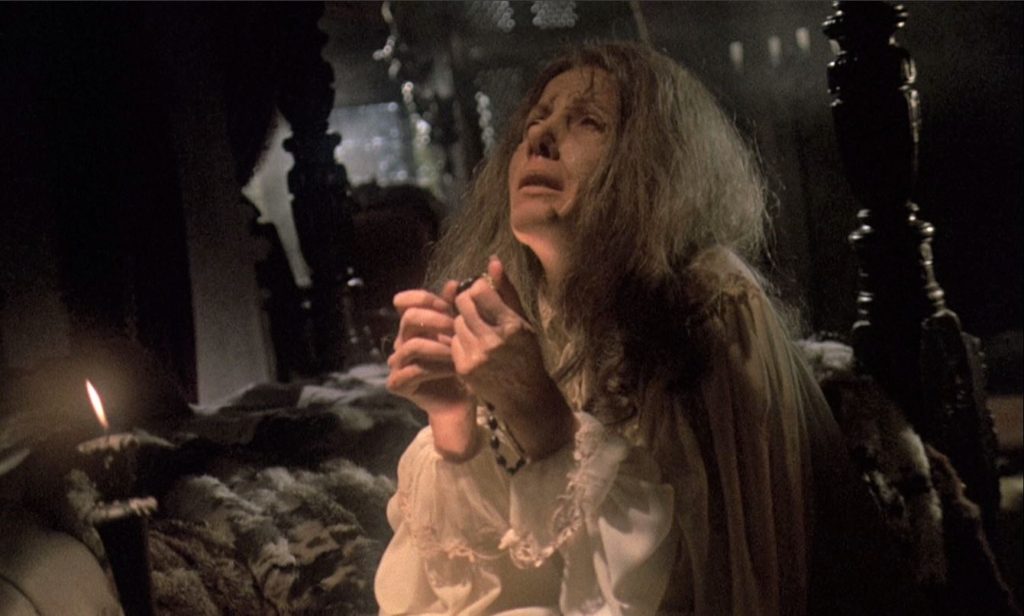
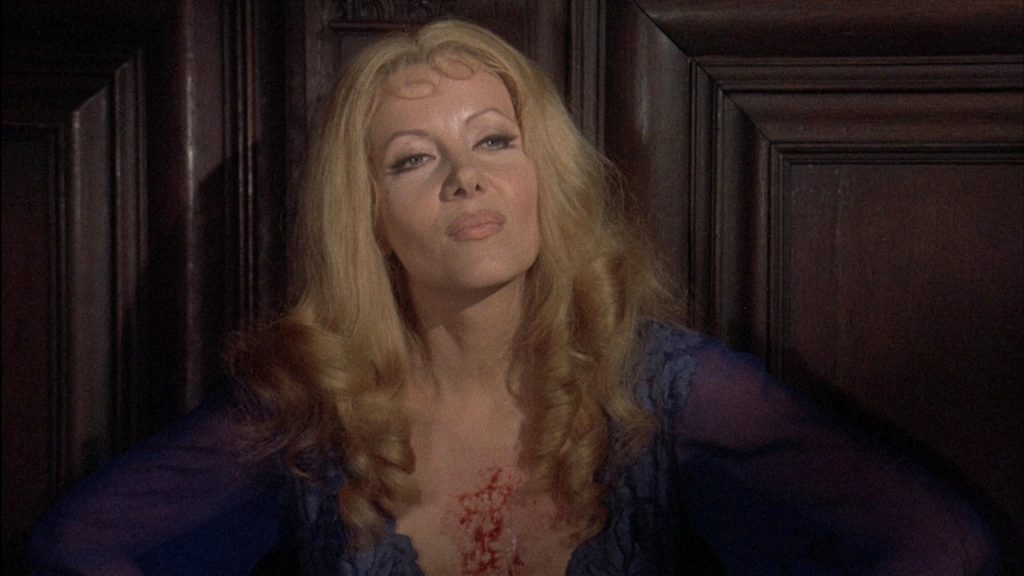
In Countess Dracula, Ingrid Pitt gives a dual-role performance that’s a horror fan’s delight. For half the movie, she’s buried under layers of aging makeup, looking like a withered, ancient crone, and for the other half, she’s the radiant, restored Countess.
Pitt infuses the role with magnetic intensity, holding the screen every second she’s on it. She doesn’t play Elisabeth as a victim of circumstance; she plays her as a sociopath. There is a scene where she looks in the mirror and sees a wrinkle returning, and the look of pure, murderous panic on her face is incredible. The horror is intimate and personal, seeing obsession consume her from within. We’re essentially watching a character addicted to her own youth. She’s obsessed with her own reflection, and she’s willing to liquidate the local peasant population to maintain the high. It’s a brutal, honest look at the cult of youth that feels surprisingly modern for a movie made in 1971.
The Support System: Nigel Green and the Enablers
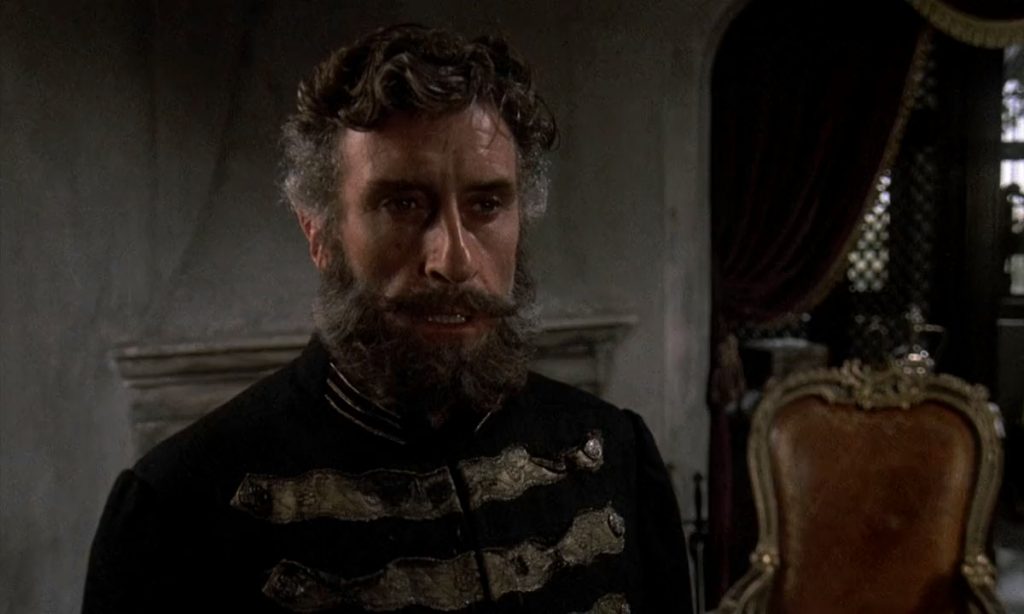
Every great villain needs a ‘Fixer’, the loyal, morally flexible aide who does the dirty work while their master schemes. In Hammer lore, these roles pop up often: think Renfield in Dracula, or the devoted guards in The Curse of Frankenstein, Dobi (Nigel Green) fills that slot with weary, cynical efficiency.
Dobi is the Countess’s lover and the commander of her guards. He’s the guy who has to do the literal heavy lifting, kidnapping girls, disposing of bodies, and keeping the castle staff from asking too many questions. He’s a man who knows he’s serving a monster, too loyal, and too compromised, to turn against her. The dynamic between them is beautifully absurd. They spend their nights plotting murders and their days pretending to be noble aristocrats.
Then we have the love interest, Imre Toth (Sandor Elès). He’s a young hussar who falls for the “fixed” version of the Countess, not realizing he’s essentially dating a 60-year-old woman who just had a literal blood-facial. The scenes where he tries to be romantic while she is preoccupied with her appearance highlight the tension between desire and vanity.
The Kensington Gore Fountain
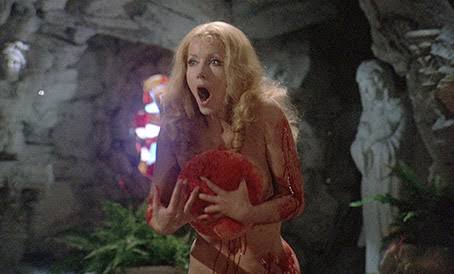
Hammer knew what their audience wanted by 1971: Blood. And Countess Dracula delivers it in buckets.
The Bath: While the movie is titled Countess Dracula, the blood bath is the centerpiece. The practical effects team used that signature bright-red Hammer gore to create a visual that is both gorgeous and repulsive. It’s the classic horror fans dream, high-contrast color, theatrical lighting, and the kind of visual horror that combines striking practical effects with the audience’s imagination to amplify the shock.
The Aging Makeup: The transition from young to old is handled with a mix of clever lighting and dissolve edits. It’s not CGI; it’s a guy with a brush and a lot of latex. When the Countess turns back into her old self in the middle of a scene, the effect is chilling. You see the light leave her skin, the shadows deepen, and the aesthetic gives way to genuine horror.
The Kill Scenes: The movie features some surprisingly mean-spirited kills. We’re talking about throat-slitting and stabbings that are performed with a clinical coldness. It moves away from the Stoker-esque romance of Dracula and into the proto-slasher territory of the 70s.
The Pacing: Blood, Highs, and Crashes
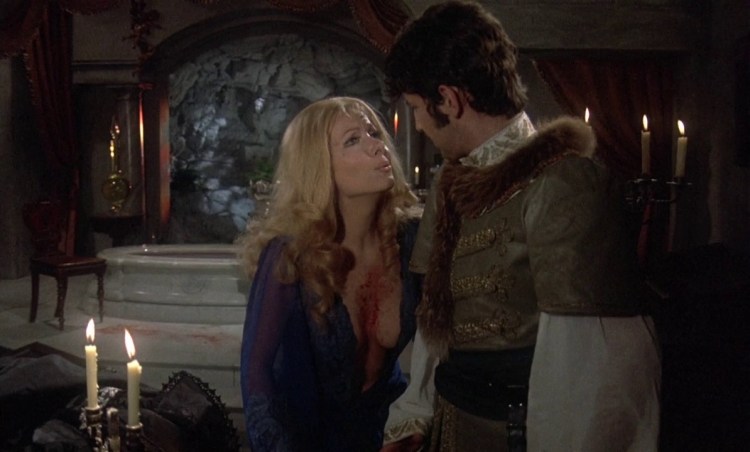
The pacing of the movie is built around the Countess’s fixes.
Phase 1: She gets a fresh supply of blood. She looks great. She’s charming, she’s partying, she’s winning over the young hussar.
Phase 2: The high starts to wear off. She gets twitchy. She gets irritable. She starts looking at the kitchen staff with a hungry eye.
Phase 3: The crash. She reverts to her old form, hides in her room, and screams at Dobi to go find her another donor.
This cycle keeps the energy rolling like a thunder storm. You’re not just watching a plot unfold; you’re watching a biological emergency. As a cult horror fan, you start rooting for the bad version of her just to see how far she’ll go. It’s the same midnight movie thrill we get from watching a creature transform, except here, the monster is wearing a silk gown and a tiara.
Dubbing and Dialogue
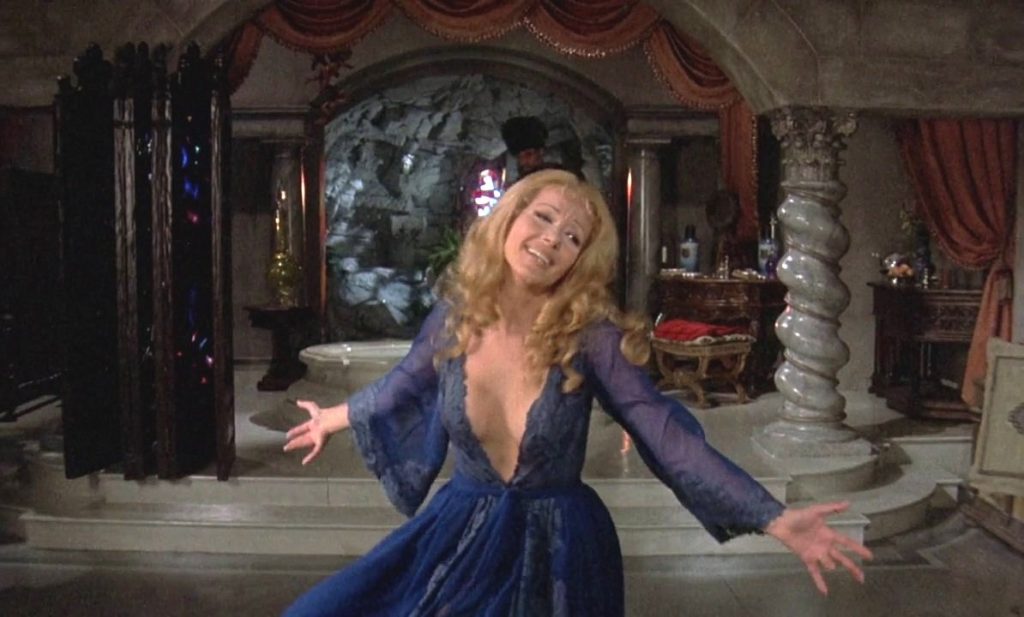
Because I love to poke fun at the classics, we have to address the dubbing. Much like Twins of Evil, some of Pitt’s dialogue was post-synchronized in post-production, contributing to the slightly stylized vocal tone in certain scenes.
The dialogue is also peak Hammer melodrama. Her obsession is summed up in her furious insistence that she will reclaim her youth, no matter the cost. The movie takes its ridiculous premise with 100% sincerity, which is exactly why it works as a cult classic. It doesn’t wink at the camera; it stares at you with blood-rimmed eyes and demands you take it seriously.
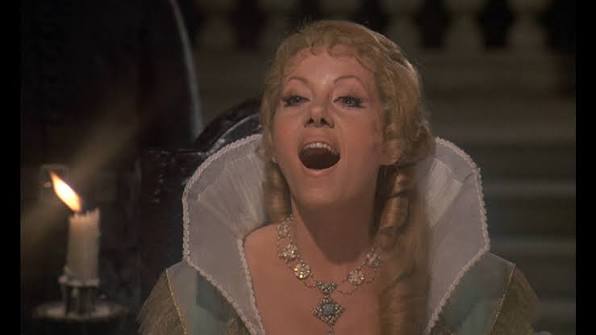
The Production Design: Gothic Splendor on a Budget
Directed by Peter Sasdy (who also did Taste the Blood of Dracula), the movie looks fantastic. Sasdy was the master of making a small budget look like a million pounds.The castle sets are reused, of course, but the way they are lit, with deep oranges, cold blues, and the ever-present fog, adds to its weight. The costumes are also lush and heavy, contrasting with the fluidity of the blood.
The guillotine makes a striking appearance toward the end, its practical construction impressively detailed. It underscores the historical brutality of the period, a grim reminder that Elizabeth Báthory’s world was one where death was public, immediate, and terrifyingly real.
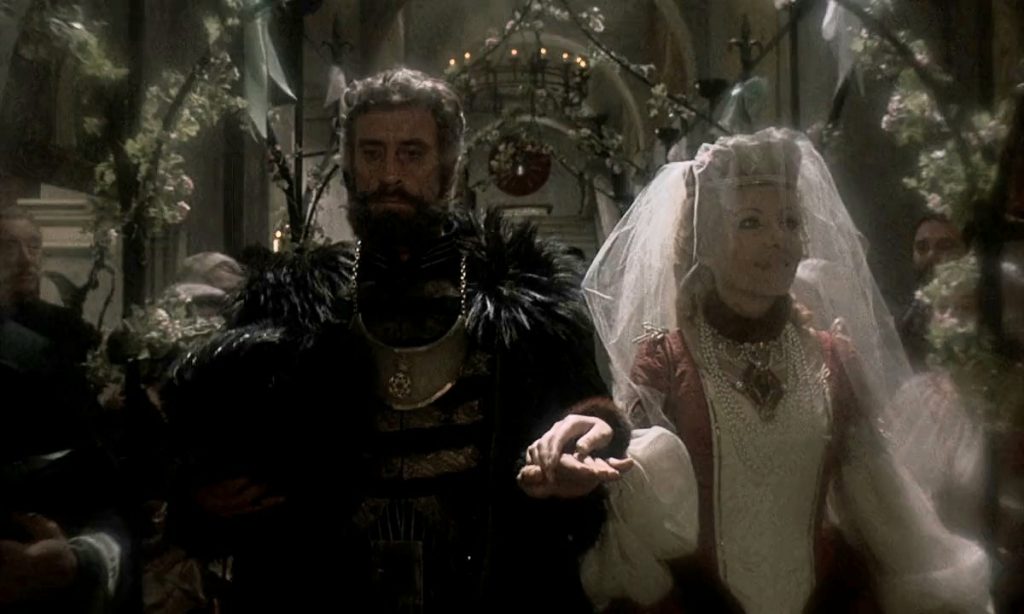
The Climax: The Wedding From Hell
The final act of Countess Dracula is a monumental spiral of bad decisions. The Countess decides she’s going to marry the young Imre. To do this, she needs the ultimate fix, enough blood to last through the entire ceremony and the wedding night.
As the wedding approaches, her deception begins to unravel. The strain of maintaining her youth becomes impossible to conceal, and the truth threatens to surface before the vows are spoken.
Her transformation can no longer be concealed, and the illusion shatters at the worst possible moment, delivering one of the most unforgettable climaxes in Hammer’s catalog. The veil is lifted, the secret is out, and the monstrous reality is revealed in front of the entire congregation. It’s tense, theatrical, and erupts in a flurry of screams and glinting steel.
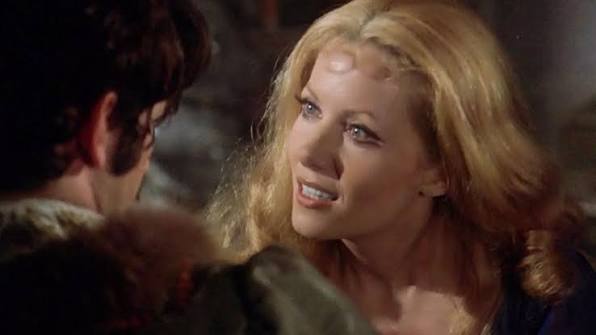
The Legacy: The Last of the Great Vamps
Countess Dracula was one of Hammer’s late-era attempts to reinvent its Gothic formula. They were moving away from the Universal Monster clones and trying to create their own icons. Ingrid Pitt’s Elisabeth Nádasdy is one of those icons.
She’s a different kind of beast, human, yet terrifying in her vanity and cruelty. She’s someone who has let her obsession with age become a literal creature. For the horror fan, this movie is a vital link in the chain. It connects the Gothic horror of the 50s with the body horror and slasher films of the late 70s and 80s.
It takes a historical figure and turns her into a high-glamour serial killer. It’s got:
The best blood-bathing sequence in cinema history.
Ingrid Pitt’s powerhouse performance.
A cynical, “No-One-Wins” ending.
The most expensive-looking knock-off aesthetics of 1971.
It’s the kind of movie that makes you want to buy a velvet cape and start a cult of youth in your basement (please don’t). It’s brisk, delightfully over-the-top, and revels in the sheer spectacle of horror.
Ultimately, Countess Dracula shows us that the scariest monsters aren’t mythical beasts or creatures from afar, they’re the ones obsessed with staying young at any cost.
Leave a Reply to Friday the 13th Part IV: The Final Chapter (1984) – Machetes and Mayhem Cancel reply