
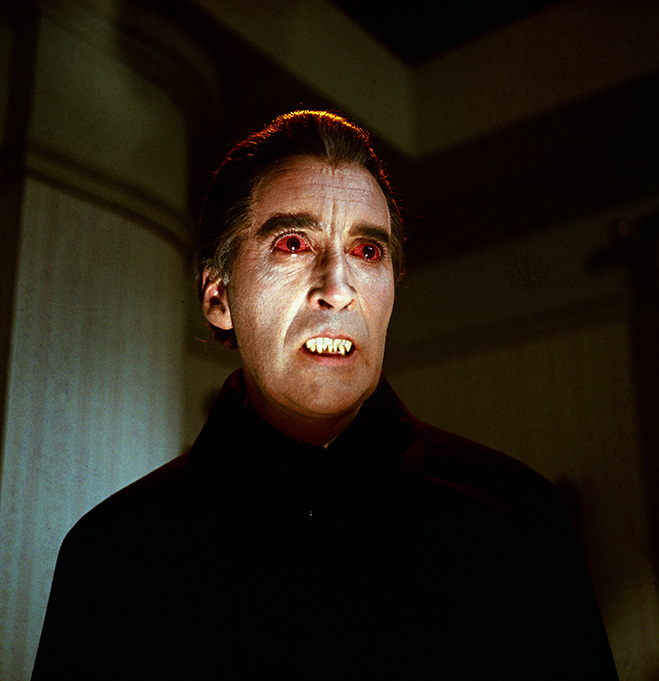
Hammer’s Dracula Has Risen from the Grave arrives not as a resurrection, but as an accusation.
This is not the aristocratic seducer of Horror of Dracula, nor the vengeful revenant of Prince of Darkness. This Dracula is something more corrosive and more disturbing: a consequence. A curse summoned not by ritual, but by guilt. A corpse dragged back into motion by cowardice, repression, and the refusal to confront evil honestly.
By 1968, Hammer’s Gothic universe is no longer about ancient evils invading modernity. It is about modernity manufacturing its own damnation. The village, the Church, the authorities — all have failed. And Dracula rises not because he is powerful, but because no one was strong enough to finish the job fully.
This is one of Hammer’s bleakest films, not because of its violence, but because of its moral rot. Evil here is not charismatic. It is inevitable.
The Sealed Tomb: When Faith Becomes Avoidance
The film opens with a premise as blunt as a gravestone: Dracula was never destroyed.
In a prologue thick with damp stone and clerical dread, a Monsignor and a young priest travel to Dracula’s castle to perform what should have been done long ago — the proper exorcism and consecration of the ground. They find the Count’s body impaled, preserved in an obscene half-life, staked but not sanctified. The evil was paused, not ended.
Already Hammer is indicting authority. The Church did not destroy Dracula. It sealed him away, boarded up the castle, and pretended the problem was solved. This is not faith — it is bureaucracy with incense.
The Monsignor’s failure is not spiritual weakness, but fear of contamination. He cannot bring himself to complete the descent required. He orders the castle sealed and leaves the task unfinished. Evil is locked behind a door, not confronted.
This is Hammer’s thesis statement:
What is buried improperly will return improperly.
Dracula does not rise because he is summoned by witches or cultists. He rises because men of faith failed to do the ugly work of eradication completely.
Paul: The Priest Who Knows Too Much and Believes Too Little
If earlier Hammer films positioned priests as flawed but resolute, Dracula Has Risen from the Grave gives us Paul, a priest crippled by spiritual exhaustion.
Paul is one of Hammer’s most interesting clerical figures because he is neither villain nor hero. He is simply broken. After the Monsignor’s death, Paul is blamed, shamed, and stripped of his position. He retreats into alcohol, guilt, and silence.
Paul knows Dracula exists. He knows the evil is real. And yet he does nothing.
This is crucial: disbelief is not the sin here. Inaction is.
Paul’s crisis is not theological but existential. He no longer believes his faith has teeth. The cross feels ornamental. Prayer feels bureaucratic. He has seen too much horror to maintain innocence, but not enough courage to confront it again.
Hammer rarely allows its priests to fail this completely. Paul is not corrupted by temptation — he is paralyzed by despair. And it is precisely this paralysis that allows Dracula to return.
Resurrection by Guilt: Dracula’s Return
Dracula’s resurrection is one of Hammer’s most potent symbolic moments.
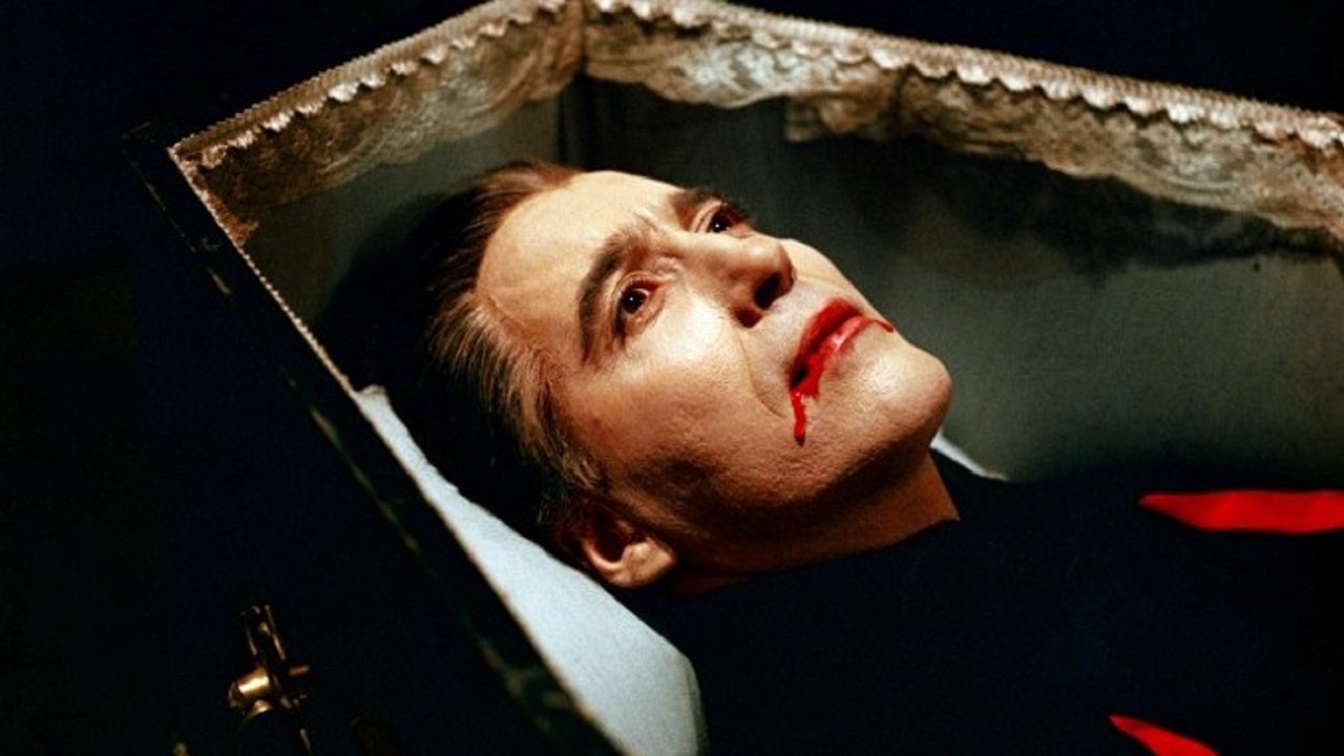
Paul, wandering drunk near the sealed castle, falls and cuts his forehead on a spike. His blood drips into the crypt and onto Dracula’s mouth. The blood of a priest. Not offered. Not sacrificed. Spilled carelessly.
The blood revives Dracula.
This is not ritual magic — it is accidental blasphemy. The sacred becomes fuel for the profane. Paul’s faith, emptied of conviction, becomes nourishment for the undead.
Hammer is being explicit:
When belief becomes hollow, it empowers the very thing it claims to oppose.
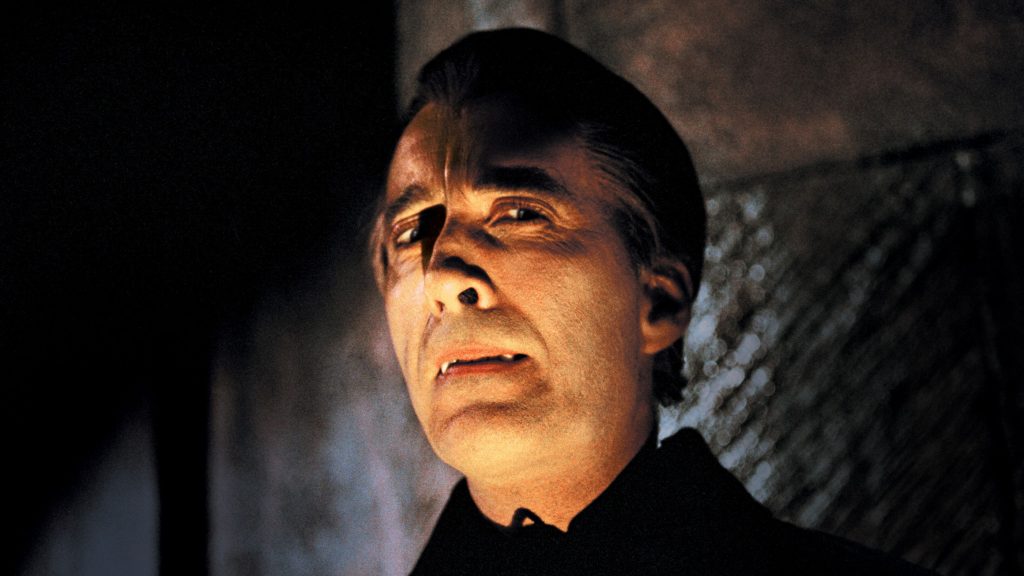
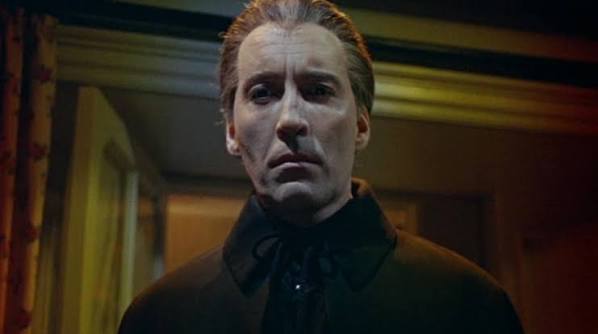
Dracula rises silently, without grandeur. Christopher Lee’s performance here is colder than ever. This is not a triumphant resurrection. It is a grim inevitability. Dracula does not celebrate. He simply continues.
This is Dracula as entropy.
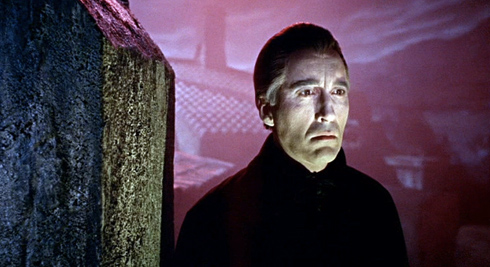
Dracula Reimagined: The Curse, Not the Count
Christopher Lee’s Dracula in this film is radically stripped down.
He speaks little. He seduces no one verbally. He does not charm — he overwhelms. His presence is less erotic than suffocating. The cape becomes a shroud. The eyes burn not with lust, but with accusation.
This Dracula is not interested in society or decadence. He is a walking punishment. He exists to expose weakness and harvest it.
Hammer here completes a transformation that began in Prince of Darkness: Dracula is no longer a character; he is a force. A consequence unleashed by neglect.
His victims are not chosen for desire but for proximity and vulnerability. He preys on the young woman Maria not because she tempts him, but because she is unprotected — spiritually and socially.
Dracula feeds where structures have failed.
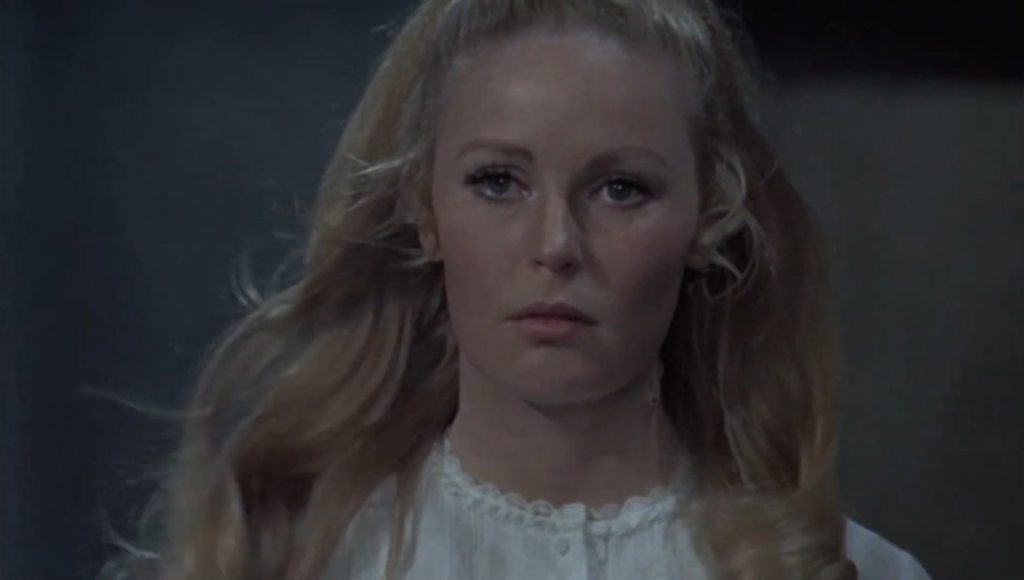
Maria: Innocence as Collateral Damage
Maria is one of Hammer’s most tragic female figures, precisely because she is not transgressive.
She does not rebel. She does not flirt with darkness. She is simply present in a world where authority has abdicated responsibility.
Her father is rigid, authoritarian, and spiritually hollow. The Church is present but inert. The village is passive. Maria is caught in a vacuum where rules exist without protection.
When Dracula takes her, it is not punishment for sin — it is the cost of negligence.
Hammer’s Gothic universe has shifted. Earlier films punished curiosity and desire. Dracula Has Risen from the Grave punishes obedience to broken systems.
Maria survives, but marked. Her suffering is the bill paid by those with no power.
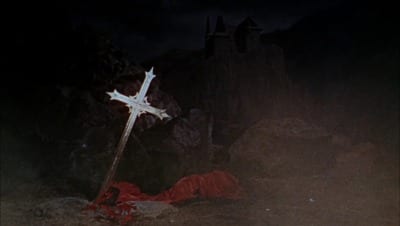
The Cross That Burns Back
One of the film’s most striking motifs is the cross that injures not only Dracula, but the priest who wields it.
Paul’s hand burns when he forces the cross against himself. Faith is no longer neutral. It demands commitment. Half-belief wounds the believer as much as the monster.
This is a brutal theological statement:
You cannot wield faith symbolically. It must be inhabited or it will turn on you.
The cross in this film is not a talisman — it is a test. Those who lack conviction are marked by it.
Dracula recoils from genuine faith, but thrives in its absence. The monster does not fear symbols; he fears certainty.
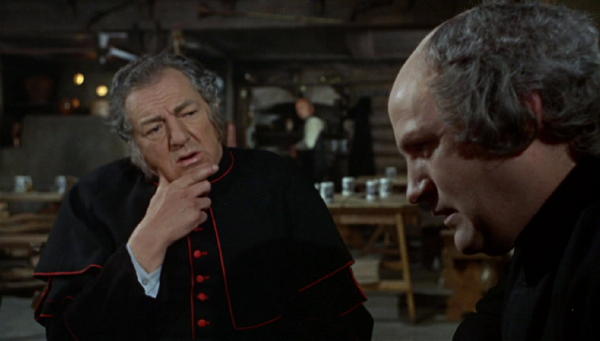
The Village: Moral Infrastructure Collapse
The village in Dracula Has Risen from the Grave is a study in institutional rot.
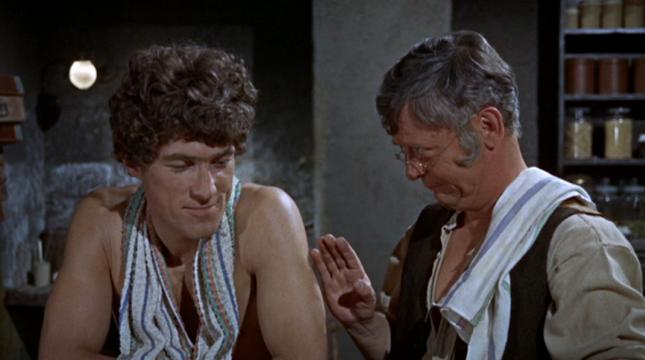
The tavern thrives. Authority is rigid but empty. The Church looms but does not act. Everyone knows something is wrong, and everyone waits for someone else to intervene.
This is Hammer’s most modern Gothic setting. Evil does not creep in from the outside. It emerges from the cracks of communal failure.
Dracula is not invading. He is filling a vacuum.
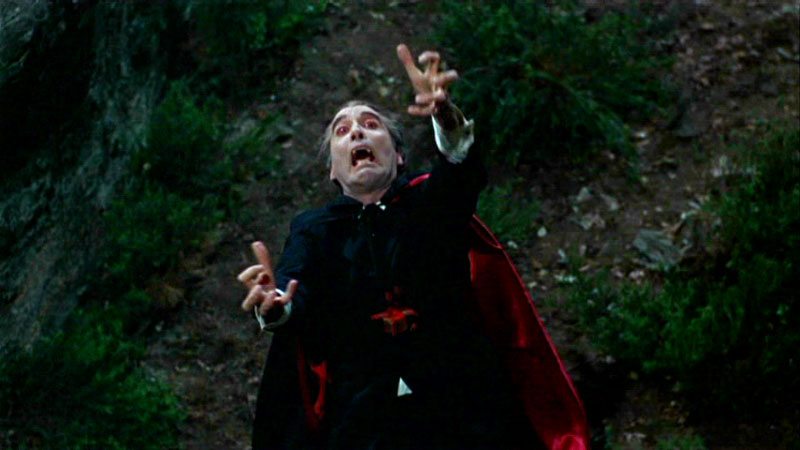
Death by Consecration: Ending the Cycle
The final destruction of Dracula is not triumphant. It is exhausting.
Paul must fully re-enter his role, not as an official, but as a believer willing to bleed. The destruction of Dracula requires not only ritual, but personal sacrifice.
When Dracula finally falls, it feels less like victory and more like damage control. Something ancient has been stopped, but nothing has been healed.
Hammer denies catharsis. The damage remains.
Final Thoughts
Dracula Has Risen from the Grave is one of Hammer’s most nihilistic entries, precisely because it refuses spectacle as salvation.
This is a film about what happens when belief decays into habit. When authority replaces responsibility. When evil is sealed away instead of destroyed.
Dracula here is not a romantic predator or a satanic prince. He is unfinished business. He is guilt with teeth.
For me, this film stands as a grim parable of spiritual infrastructure collapse. It tells us that evil does not need worship — it only needs neglect. That monsters thrive where systems fail. That resurrection is often accidental.
The grave did not hold Dracula because it was never sanctified.
And neither are we.
Leave a Reply