Welcome to 1970. The velvet-lined dream of the 1950s Gothic revival has not just ended; it has been eviscerated. Outside the gates of Bray Studios, the world is screaming. The counterculture has turned into a permanent riot, the Vietnam War is a televised charnel house, and the youthquake has moved on from ghost stories to the gritty, visceral reality of the New Hollywood.
In this climate, Hammer Film Productions released Scars of Dracula. It did not offer a progression of the myth. It offered a retreat. It is a film that smells of desperation, a work that attempts to reclaim its throne by turning up the volume on everything—more blood, more cleavage, more violence—while forgetting to provide a soul.
Resurrection by Spreadsheet
The opening of Scars of Dracula is a moment of profound ontological emptiness. In previous entries, the Count’s return was a ritualized event—a consequence of human sacrilege (Dracula Has Risen from the Grave) or the bored indulgence of the elite (Taste the Blood of Dracula). Here, the resurrection is stripped of all metaphysical weight. A giant bat—an ungainly, almost mechanical effigy of the supernatural—crashes into a cross-shaped weather vane, impaling itself. Its blood drips onto Dracula’s ashes below.
This is not a summoning; it is a refueling. It reduces the Prince of Darkness to a machine that simply needs the right liquid to restart its engine. The terror of the occult has been replaced by the grease of the franchise. By removing the human element from the resurrection, Hammer removed the moral culpability. Dracula doesn’t come back because we are sinful; he comes back because the bat says so.
It seens as if the writers were backed into a corner and their only way out was a rubber bat with an upset stomach. No ceremony, no stakes, no guilty gentlemen. Just a puppet barfing blood onto a pile of dust. It’s the ultimate contractual obligation opening. You can almost see the producers off-camera checking their watches. Dracula isn’t rising here; he’s being rebooted by a studio that realized they didn’t have a script but did have a distribution deal. It’s the cinematic equivalent of a zombie being poked with a stick until it stands up.
Retreating to the Castle
After the experimental success of placing Dracula in the Victorian urban sprawl, Scars retreats to the familiar comfort of the Transylvanian castle.
This return to the castle is a white flag. By moving the Count back to his mountain fortress, Hammer is attempting to restore a safety that no longer exists in the 1970s. The urban terror of Taste the Blood… was dangerous because it suggested the monster lived in the house next door. Scars… pushes the monster back into the Gothic elsewhere. It is a conceptual regression, a refusal to engage with the modern world. The castle is no longer a site of ancient power; it is a museum of a dying genre.
Hammer chickened out. Pure and simple. They had something going with the city-dwelling Dracula, but the suits got scared and ran back to the mountains. The result? A movie that feels like a greatest hits tour played by a band that’s clearly just doing it for the alimony. The villagers are still muttering in the pub, the fog is still being pumped in by the gallon, and the castle looks like a theme park attraction that’s been open for twenty years and needs a paint job. It’ssSafe gothic. It’s horror for people who find the real world too scary and want a comforting lie about a guy in a cape.
The Silent King in a Talkative Trap
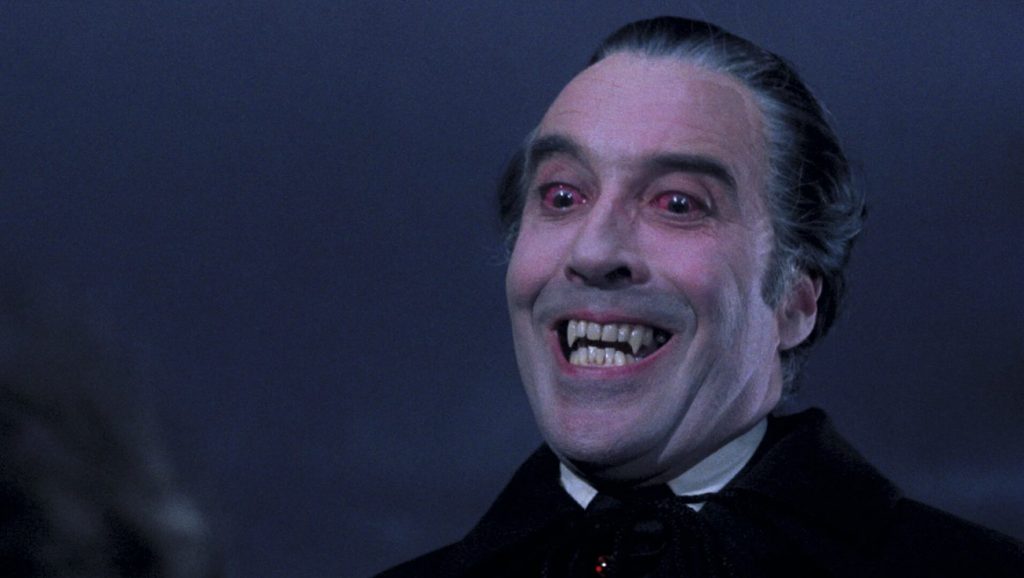
In this film, Christopher Lee is given more dialogue than he’s had in a while, but he doesn’t really seem to give a shit about it.
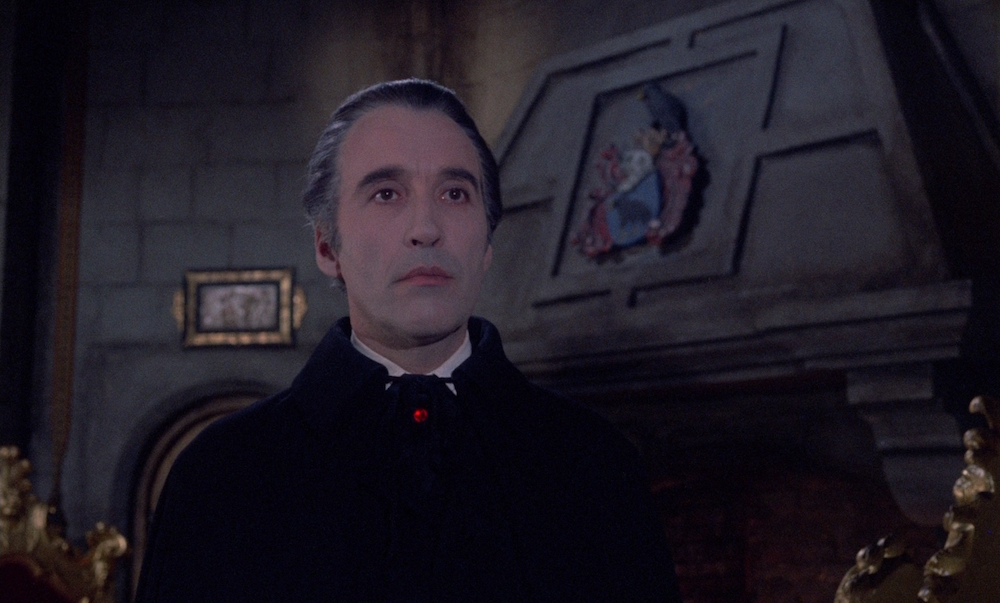
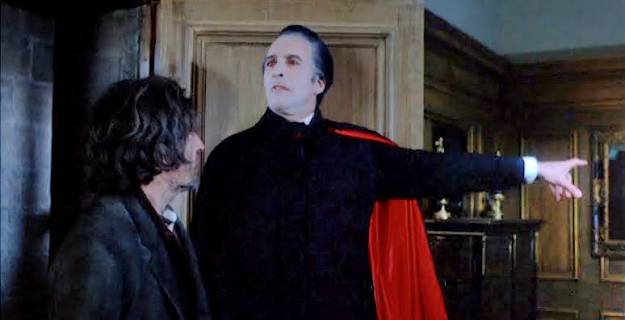
Lee’s performance here is a study in friction. He is a titan trapped in a narrative that is beneath him. For the first time, he is given lines that attempt to humanize the Count—to make him a host, a conversationalist. But Lee, sensing the thinning of the myth, performs these lines with a cold, aristocratic disdain. He is not talking to his guests; he is waiting for them to die. His dialogue isn’t a bridge to the human world; it’s a list of demands. His silence in previous films was a choice; his talking here feels like a concession to a script that doesn’t understand his silence.
Lee looks like he’s about to fire his agent in every single frame. He’s got more lines than Dracula (1958), and every one of them tastes like ash. He’s being forced to play spooky butler to a bunch of uninteresting teenagers. You can see the fury in his eyes, and for once, it’s not vampire rage—it’s professional irritation. He’s a Ferrari being used to pull a plow. He still has the presence, he still has the cape-work, but there’s no philosophy behind the fangs. He’s just a guy with a job he hates, and his job is biting people who are too stupid to leave the room.
Violence Without Grace
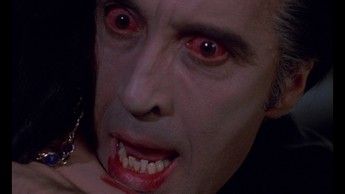
Scars of Dracula is notoriously violent, featuring scenes of stabbing and branding that were far more graphic than its predecessors.
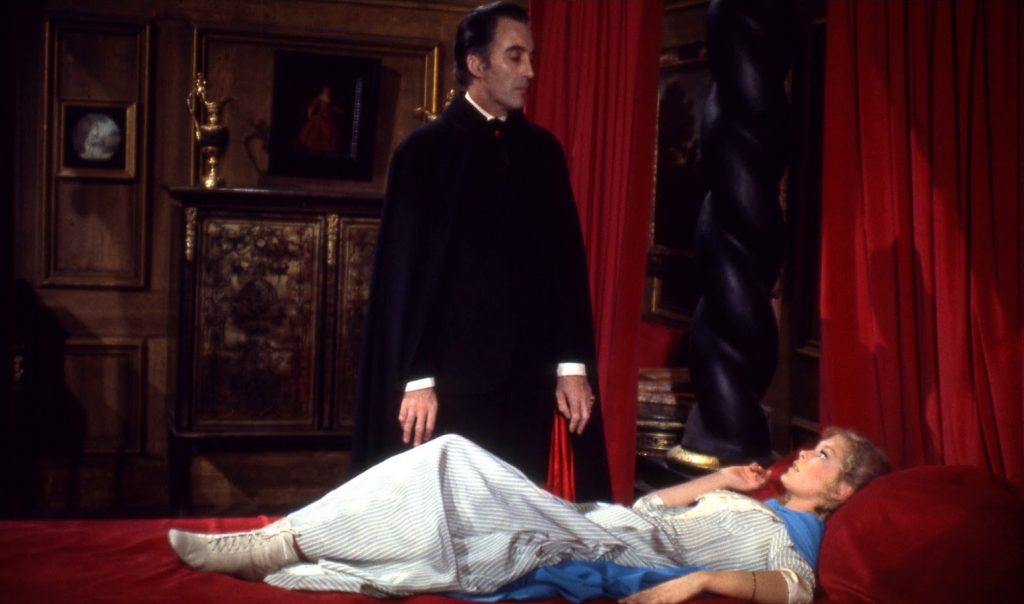
There’s a cruelty in Scars… that feels modern and ugly. In the earlier films, violence was a byproduct of the hunger. Here, it is an end in itself. The scene where Dracula burns his servant Tania with a heated iron, or the stabbing of the barmaid, represents a shift from upernatural predator to sadistic tyrant.
This is the raw, terrifying reality of 1970: the erosion of the romantic vampire. Dracula is no longer a lover; he is an abuser. He uses pain as a form of social control. This reflects the darkening of the cultural mood—the realization that power isn’t just seductive; it is frequently just mean. Dracula has become a literal branding iron.
This is where Hammer tries to compete with the sledgehammer school of horror. They can’t do the psychological stuff anymore, so they just start stabbing people. It’s mean-spirited in a way that feels desperate. Dracula isn’t charming anyone here; he’s just a bully with a medieval zip code. He treats his servants like garbage and his victims like furniture. It’s not erotic Gothic; it’s a proto-slasher with better costumes. They’re throwing blood at the screen because they’ve run out of ideas, and it shows.
The Lack of a Van Helsing
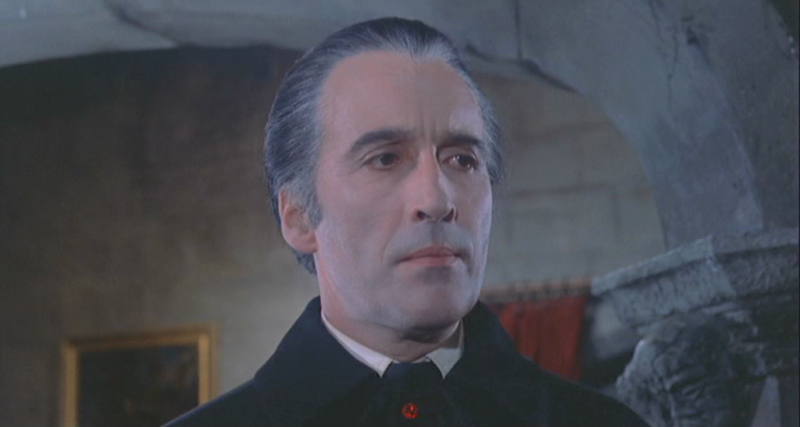
Without a strong protagonist—no Peter Cushing to balance the darkness—the film becomes an exercise in narrative drift.
The absence of a Holy Warrior figure like Van Helsing or even a spiritually grounded priest leaves the film without a moral compass. We are left with Klove—the broken, tortured servant—and a collection of interchangeable youths. This creates a moral vacuum. There is no one to challenge Dracula on a philosophical level, which means the Count’s eventual defeat can only be a physical accident rather than a spiritual triumph. The system isn’t being challenged; it’s just being interrupted.
You’ve got a cast of heroes who couldn’t find their way out of a paper bag. Simon Ward and Christopher Matthews are basically there to provide a reason for the camera to move. Without Cushing to ground the thing, Dracula is just bullying a bunch of kids. It’s like watching a heavyweight boxer fight a toddler. There’s no glory in it. And Klove? He’s just a weird, sweaty plot device who exists to feel bad about things. It’s a movie populated by victims, and that makes for a very long ninety minutes.
Death by Coincidence
Finally, we must address the divine intervention of the ending.
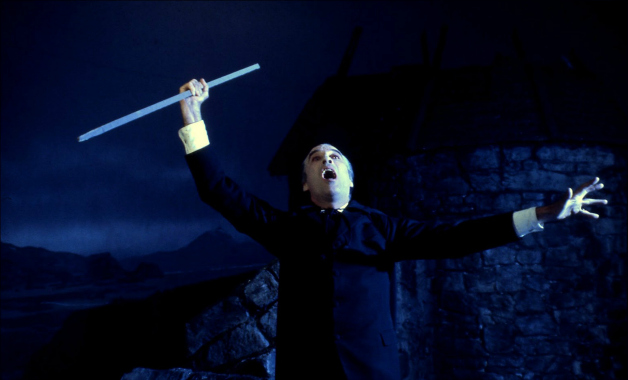
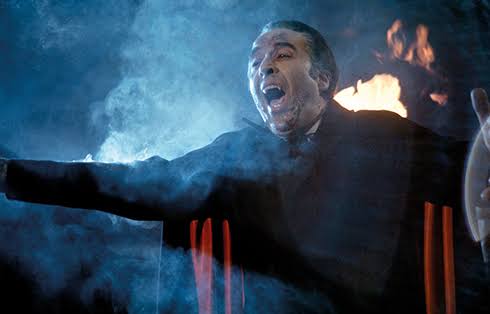
The death of Dracula in Scars… is perhaps the most hollow in the entire cycle. He is not outsmarted by human ingenuity or overcome by the power of faith. He is struck by lightning while holding an iron bar. It is an act of nature (or a very literal Deus Ex Machina) that removes the humans from the victory entirely.
If the resurrection was biological (the bat), the death is meteorological (the storm). The human characters are spectators to their own salvation. This is the ultimate tragedy: a world where evil is so powerful that only a freak weather event can stop it. It’s not a victory for the soul; it’s a victory for the environment.
He gets struck by lightning. Seriously. He’s standing on the roof, holding a metal rod like he’s trying to fix his TV reception, and God just decides to end the movie for us. It’s the ultimate “we ran out of money and script” ending. He catches fire, falls off the cliff, and we’re all supposed to cheer? It’s a joke. He didn’t die because of his scars or his sins; he died because he forgot basic electrical safety. It’s not a climax; it’s a power surge.
Cleavage as Content
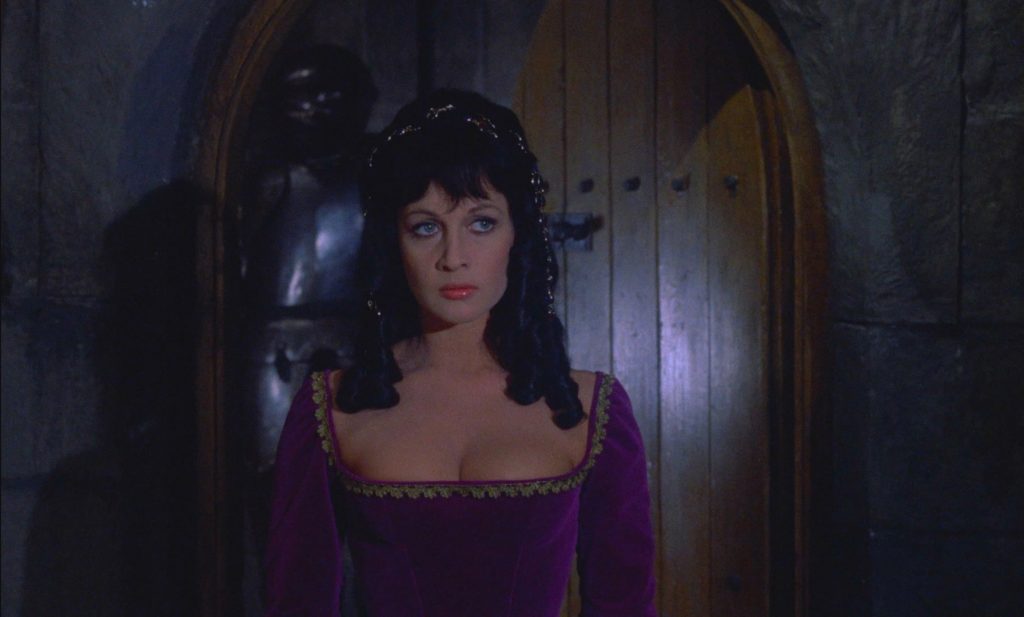
The female characters in Scars—Sarah, Tania, and the barmaid—represent the total collapse of the Gothic heroine. They have no agency, no interiority, and no defense. They are simply meat for the machine. In a post-1960s world, this feels like a reactionary move—a return to a patriarchal safe space where women are only there to be rescued or consumed.
Hammer stopped pretending they were making art and just started making calendars. The cleavage is dialed up to eleven, but the character development is at zero. The women in this movie exist to scream, show off the wardrobe, and wait for the Count to bite them. It’s lazy filmmaking. They’re treating the audience like we’re as simple-minded as the villagers in the pub. “Here’s some blood, here’s some skin, now go home and forget the plot.”
Final Thought
Scars of Dracula is the commercial corpse of Hammer Films. It is a film that has all the right imagery but none of the conviction.
It is symbols without substance. The cross is a prop, the bat is a puppet, and the castle is a set. When the symbols of the Dracula become stage properties, they lose their power to resist the mainstream.
Dracula isn’t a raw, terrifying reality here; he’s a logo. He’s being sold as a scented candle.The From the bat-vomit to the lightning bolt, everything is procedural. There is no spirit in the machine.
Scars of Dracula is a warning. It shows us what happens when a subculture survives for too long without evolution. It becomes a parody of itself, retreating into old castles and relying on old tricks while the world outside moves on.
It is a bad film, but it is a necessary one to witness. It proves that the real Scars of Dracula isn’t a bite mark—it’s the hollowed-out space where his soul used to be. The Count didn’t die in 1970 because of lightning; he died because he stopped standing for anything.
He is destroyed not because he was evil, but because he was exhausted.
Leave a Reply