When JP Nunez and I did our introductory article for FrightFest, we had a feast of horror titles to sort through and whittle down to five that each of us couldn’t contain our excitement for. Scarlet Blue was one of the first I picked. Aurélia Mengin’s sublime color use of reds and blues, mixing a cacophony of color into a neon haze of surreal dreaminess, presented a psychological odyssey by an uncompromising artist with remarkable talent. At that point, I had only read a synopsis and watched a trailer. After seeing this film as part of FrightFest this weekend, I can confirm that Scarlet Blue is so much more than just a movie: it’s a living, breathing work of art that exists to leave you breathless.

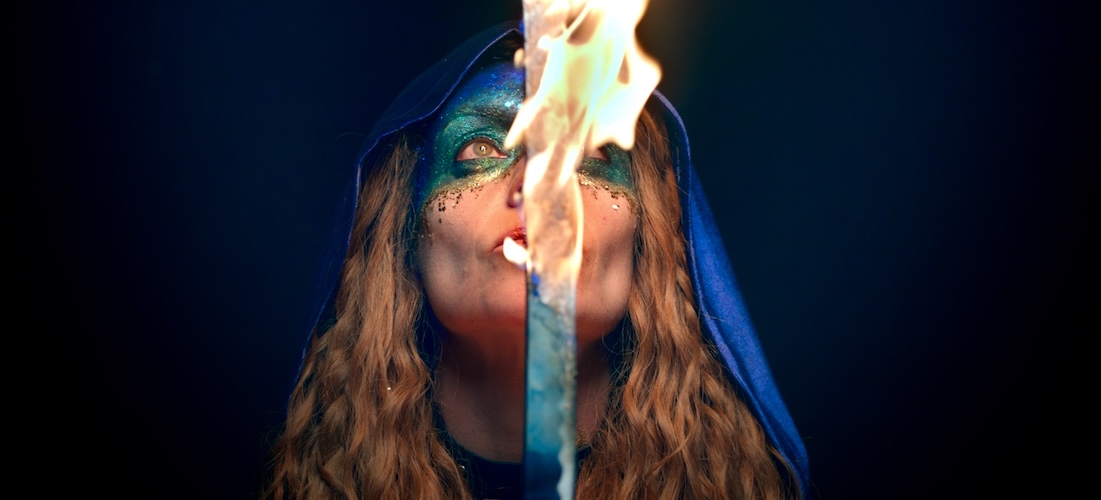
Centering around themes of schizophrenia and depression, the lead character, Alter, is portrayed by two actresses. When introducing the film to me via email, Mengin wrote, “To bring schizophrenia and personality splitting to life, I approached the character of Alter from two distinct facets: the first facet represents Alter when she is connected to reality, embodying the realistic part of the character, portrayed by Amélie Daure. The second facet represents the schizophrenic double, which encompasses all sequences where Alter experiences hallucinatory crises, primal urges, nightmares, and moments of madness. This borderline facet of Alter is played by Anne-Sophie Charron.”
It’s almost impossible to tell them apart once the two appear in full makeup side-by-side in Scarlet Blue. While that decision is methodical and innovative, it does make identifying each Alter actress slightly difficult.
Scarlet Blue throws audiences into the story via a therapeutic hypnotism already in progress. The view of Alter laying across the steel slab of a medical gurney with the alternate persona’s body lying on the steel slab underneath is indelible imagery, hooking you right away through the Bava-esque color and horizontally laid vertical shots, which aid in giving the film an extra-dimension of surrealism. It’s accentuated immediately, transporting the viewer into the film and intimately involving them in Alter’s consciousness. The trippiness of the experience tells the viewer what they’re in for and, without context, the fantastical fantasy imagery allures, begging a mystery that demands answers.

As her session with Léandro Lecreulx (Stefano Cassetti), Alter’s cave-dwelling healer, comes to a close, he provides her with a Polaroid camera and suggests taking photos before and after each episode so, together, they can identify clues to a deeply repressed memory affecting Alter. Lecreulx also suggests Alter talk with her mother (Patricia Barzyk), if only for insight. When asked about a pet as a child, Alter’s mother goes silent, implying a new layer to the enigma that isn’t easily deciphered.
Color is tremendously important in Mengin’s film, symbolically identifying characters, threats, and feelings. The use of neon almost seeks to disguise the vibrance through which each character’s colors shine but adds to the self-medicated lifestyle Alter traverses. Sex is another method Alter uses as a primal escape to avert an episode, finding a possible love interest in the red jumpsuited arms and bright blue hair dye of Chris (Mengin) in the process. Alter can’t explain it, but the amalgamated colors help her feel safe. If she could only confront the guilt and fear that’s stopping her from actually getting serious, she might be able to begin something even more meaningful with the girl of her dreams.
Scarlet Blue composes an identity crisis that isn’t based on sexuality, the way it’s recently been adopted in horror. Sexuality has become the underlying allegorical inference of identity films such as this year’s other visual stunner, I Saw the TV Glow, among others. Alter seems comfortable with her sexuality even if she sometimes makes impulsive choices. However, without her missing memories, she seems incomplete and unable to heal. The concept of self-realization comes into play as Alter learns about herself as if she’s a third party to the information. There’s a nuanced commentary on redemption and the many shades of gray that coincide while also delicately examining the pain and suffering of a mental health crisis.

Mengin’s Scarlet Blue is nothing short of wonderous and original. It’s rare to find a concept as attuned to its subject in the surreal space, working both in a visual and narrative sense. Many different areas of the movie are worthy of in-depth analysis, from Mengin’s tempered use of yellows to Alter’s differentiating emotional states. There is relatability in having such a complex central character, and watching these actresses work becomes a transcendental meditation into our personal thoughts about how the people who surround us make us feel. While plenty of films out there aim to make us fearful, romantic, or just plain sad, a film that provides heightened, simultaneous levels of safety and paranoia is far from typical. Scarlet Blue is a gem, piercing the veil of what a person struggling with schizophrenia may be experiencing, presenting those ups and downs in a way the audience becomes receptive and reactive to. Even at its most poignant, the film is deeply empathetic.
I liken Scarlet Blue to the 2002 David Cronenberg film Spider, mainly as a character study, where both leads suffer a similar mystery of memory that guides them to disturbing outcomes. Like a phantom limb, that nagging sensation of loss drives these characters to seek answers only to arrive at heartbreaking conclusions when making discoveries. Both films offer insight into the mental health struggles of others, with very different tones.
Scarlet Blue held its UK Premiere at FrightFest on August 23. It is currently touring the festival circuit, including Italy’s Torino Underground Cinefest on September 26. Keep an eye out for this one. It’s worth seeing on the biggest screen possible.
Leave a Reply