There is something wonderfully strange about watching the opening credits of The Fly from 1958 and seeing Vincent Price sitting there behind David Hedison and Patricia Owens. Third billing.
Vincent fucking Price.
This is before Price became the Vincent Price we all know and love: the towering presence of gothic horror, the sinister voice, the moustache, the eyebrows, the man who could walk into a room and make the temperature drop ten degrees. In 1958, he was still a supporting actor.
20th Century Fox wasn’t selling this as some cheap little midnight monster movie, either. This was glossy, widescreen, Technicolor science fiction, with David Hedison (credited here under his real name before briefly becoming ‘Al’ a few years later) as the tragic leading man, Patricia Owens providing the emotional heart, and Price doing what he did best: turning up and being bloody good.
It is equally fascinating to realise that Price was only a year away from House on Haunted Hill, before Roger Corman’s Poe films would finally cement him as one of horror cinema’s absolute greats.
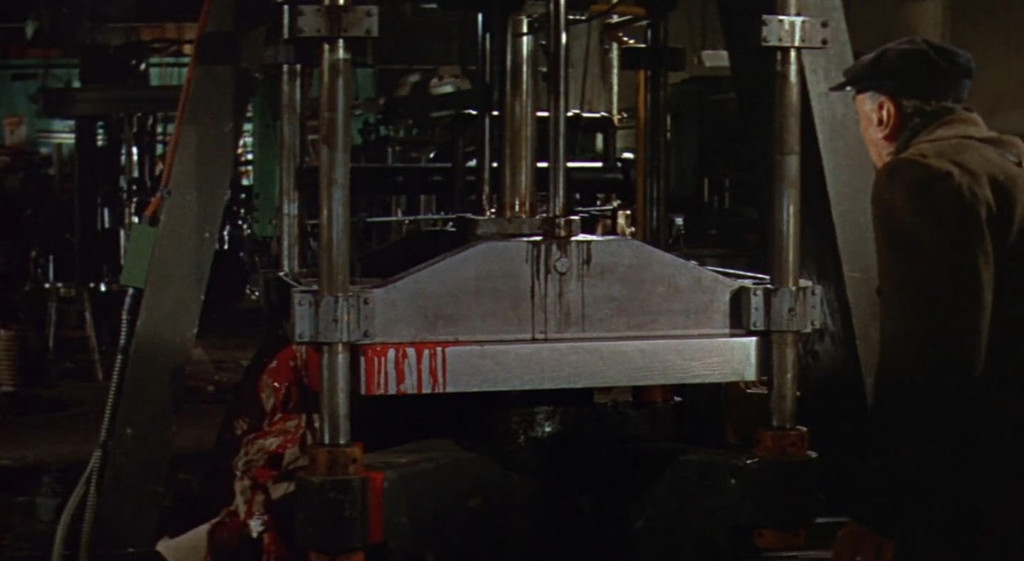
None of that helps the poor bastard who has just been flattened beneath an industrial hydraulic press, because that is precisely how The Fly begins.
Kurt Neumann doesn’t piss about.
Before we’ve even had much chance to find out what Andre Delambre has been up to in his laboratory, an elderly French-Canadian night watchman named Gaston makes his rounds through a dark foundry. He discovers high-society lady Helene Delambre standing beside the machinery at two in the morning, having apparently just turned her husband into a particularly unpleasant industrial by-product.
Vincent Price arrives. The police arrive. The doctor examines the remains.
“He’s dead.”
Well, thanks, Doc.
That clears that up.
The film immediately shifts into a wonderfully bizarre murder mystery. Set in Montreal, Vincent Price steps into the role of Francois Delambre, Helene’s brother-in-law, trying to work out why his sister-in-law has murdered his brother in such spectacular fashion.
The strange thing is that Helene isn’t exactly trying to hide what she did. She openly admits that she killed Andre.
What she won’t explain is why.
The Canadian police naturally find this rather suspicious, and things become even more wonderfully, absurdly civilized when Francois casually reveals that he’s secretly in love with his brother’s widow. The Inspector admits that he briefly suspected Francois himself, at which point the two men basically apologize to each other for the misunderstanding.
Lovely stuff.
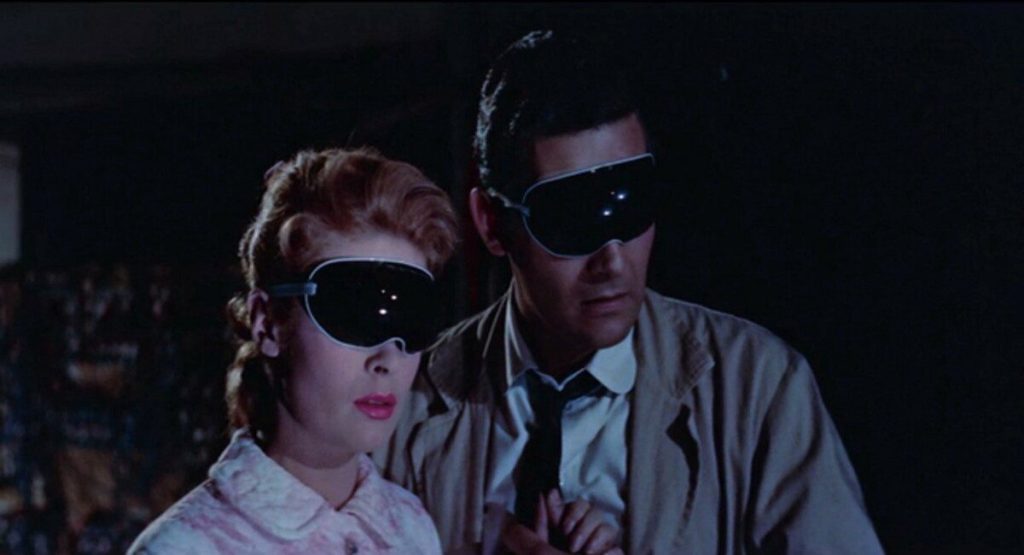
Meanwhile, we’ve still barely seen the bloody protagonist. In fact, David Hedison doesn’t actually appear until around half an hour into the film, when Helene’s flashback finally takes us back to the beginning of the story.
Andre is (or was, before his wife turned him into tomato purée) a scientist working on a machine capable of disintegrating matter and reassembling it somewhere else. It’s the sort of wonderfully bonkers 1950s science-fiction idea that requires absolutely no explanation beyond a laboratory full of electronic gadgets that buzz, whirr, and emit high-pitched chimes, which is a big part of the reason that I bloody love this film.
The early experiments are particularly brilliant because Andre’s scientific method seems to consist largely of:
“Let’s stick this in the machine and see what happens.”
First up is a ceramic plate, which successfully reappears with one rather significant problem: the Made in Japan marking has been reproduced backwards.
Andre is horrified, understandably, I suppose? Next comes the newspaper, and because apparently there is no logical scientific progression between newsprint and a living creature, Andre decides it’s time to try the family cat.
Poor Dandelo.
The poor bastard disappears into the machine and never comes back, leaving only his ghostly meow echoing around the basement. Two weeks later, Andre finally manages to transport a guinea pig successfully.
Science!
Don’t worry about the cat.
I’m sure he’s fine.
Probably.
The narrative then delivers one of its great pieces of dramatic irony. Andre gives a heartfelt speech about how wonderful it is to be alive, how exciting the future is, and how much humanity is going to achieve.
Moments later, he climbs into the machine himself. Along with a fucking fly. You can practically hear the audience screaming at the screen.
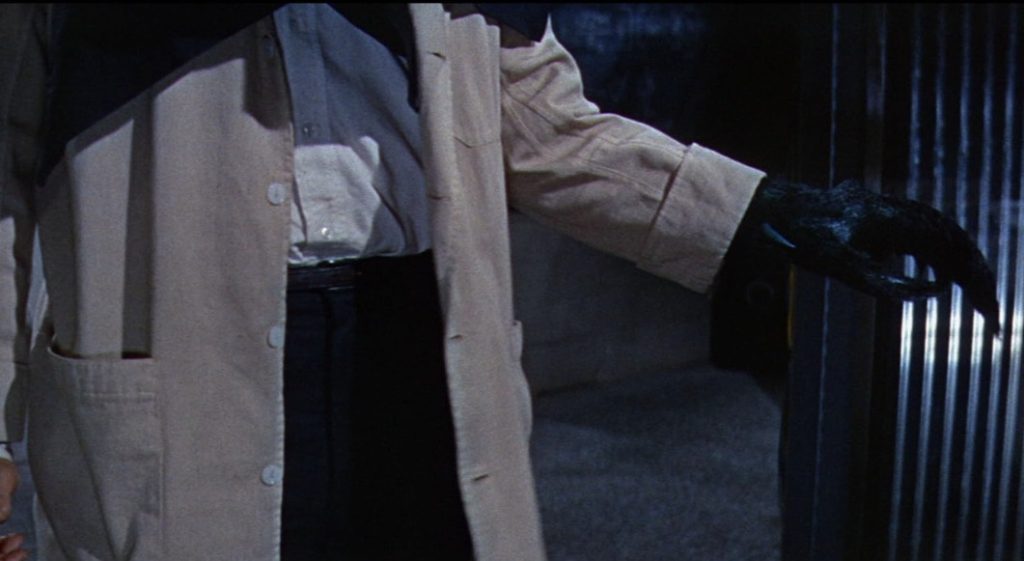
The film really begins to earn its reputation here. The transformation isn’t simply dumped in our laps. Neumann allows the suspense to build. Helene finds Andre behaving strangely. He starts communicating through typed notes pushed beneath the basement door (complete with a bell dinging on the typewriter). There is a bowl of milk involved. The entire house ends up participating in a ridiculous hunt for a white-headed fly. He sits in the darkness with a tea towel over his head.
Eventually, Helene pulls it away. There he is.
A bloke in a massive rubber fly mask.
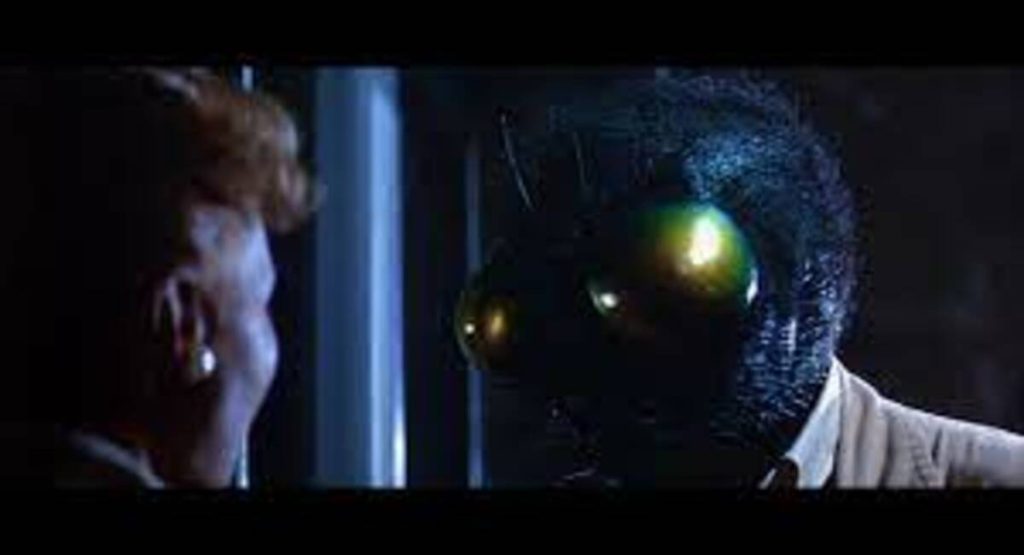
On paper, this should be fucking hilarious. Let’s be honest: there is definitely something inherently funny about looking at David Hedison and thinking, “Yep, that’s a giant fly.”
Yet Hedison sells it. His physical performance is fantastic. The twitching, the movements, the increasingly frantic attempts to communicate, and the sheer horror of what has happened to him make the ridiculous costume work far better than it has any right to.
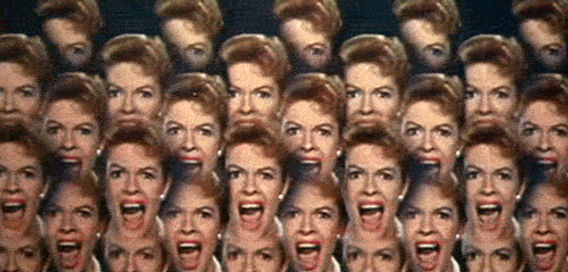
Consider that extraordinary shot from Helene’s point of view as she sees the world through the compound eyes of the creature. Everything fractures into a kaleidoscope of distorted images while she screams. It’s one of those moments where the film suddenly reminds you that beneath all the rubber masks and laboratory chime noises, this is actually a pretty fucking horrible situation.
We finally arrive at the ending. I’m not going to pretend there is any way to discuss it without spoiling it, because the climax is one of those sequences that deserves to be experienced rather than explained.
Jesus Christ.
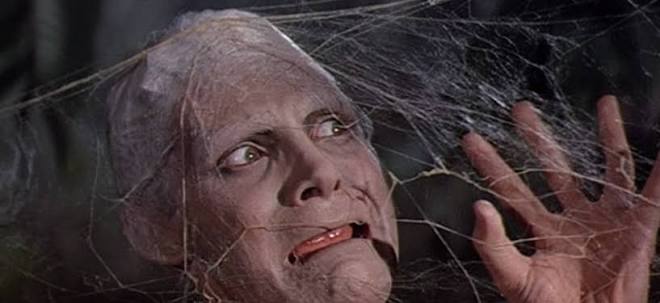
It involves a garden, a spider, a web, a tiny squeaky voice, and one of the most gloriously bizarre images ever committed to film. A creature with a human head is caught in a spider’s web, desperately squeaking for help as a massive spider crawls towards it.
“Help me! Help meee!”
Suddenly, this supposedly respectable 1950s science-fiction film has turned into one of the most fucking surreal horror scenes you’ll ever see. Francois and the Inspector arrive, see what’s happening, and the Inspector smashes both creatures with a rock.
Problem solved.
Well, sort of.
It’s magnificent.
What makes The Fly work so well is that it manages to balance the science-fiction spectacle with genuine tragedy. Beneath the big machines, the Technicolor photography, and the wonderfully silly practical effects is a story about a man who has fucked around with forces he doesn’t fully understand and is now desperately trying to hold onto his humanity.
It is why Hedison’s performance matters so much. The film could easily have become a parade of increasingly ridiculous fly makeup, but Andre remains a tragic figure throughout. You aren’t simply watching a monster emerge.
You’re watching a man disappear.
Vincent Price, meanwhile, is exactly what you want him to be: quietly authoritative, sympathetic, and effortlessly watchable. It is strange knowing that this is still the Vincent Price who hasn’t quite reached his horror-royalty phase yet, because watching him here you can already see why that future was waiting for him.
The Fly is a wonderful example of 1950s science fiction doing exactly what it should.
It’s big. It’s colourful. It’s scientifically ridiculous. It has machines that go ping. It has a giant rubber fly. It has a fucking cat trapped in hyperspace.
Underneath all of that, it has a surprisingly bleak little tragedy about scientific ambition and the terrifying consequences of getting something horribly, horribly wrong.
Seventy years later, the effects might make you laugh in places. The science will certainly make you laugh. Yet the film itself still works.
That final image?
Absolute perfection.
Leave a Reply