If there is one movie that feels like it was born for midnight screenings, it’s this one. It’s not about a giant lizard knocking over Big Ben. It’s not about a guy in a rubber suit trying to take a scientist to prom. It’s about the most terrifying thing imaginable: The people you love turning into boring, emotionless versions of themselves. In 1956, director Don Siegel (who would later give us Dirty Harry) looked at the suburban landscape of America, with its manicured lawns, white picket fences, and Keeping up with the Joneses attitude, and said, “What if those people were actually giant space cucumbers?” The result is a frantic, pulse-pounding dive into paranoia that still slams into you like a runaway freight train seven decades on.
The Frame Story (Or, The Studio Chickened Out)
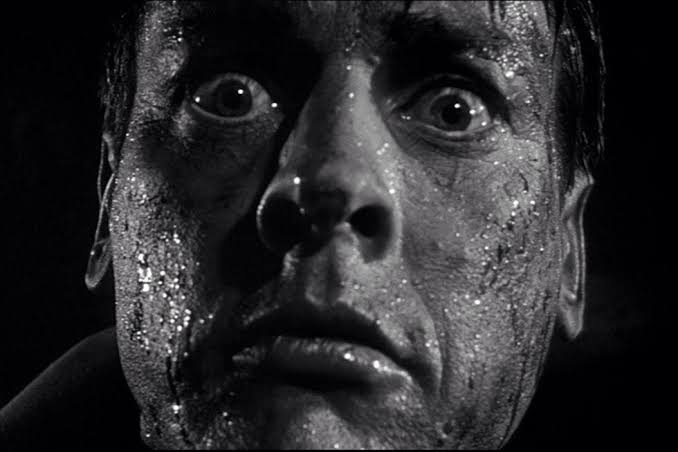
Before we even get to the meat of the story, we have to talk about the “Framing Device.” When you watch the movie, it starts in a hospital. Dr. Miles Bennell (Kevin McCarthy) looks like he’s been through a woodchipper. He’s sweaty, his hair is a mess, and he’s screaming about them coming. This was not the original opening. Originally, the movie started with Miles coming home to Santa Mira, and it ended with him on the highway screaming at the camera.
But the studio executives at Allied Artists saw the cut and collectively soiled their trousers. They thought the audience wouldn’t be able to handle a movie that ended with The End of Humanity. So, they forced Siegel to add the hospital scenes at the beginning and the end to provide a glimmer of hope.
For us geeks, though? We ignore the frame. In our minds, Miles is still on that highway, and the world is already doomed.
The Return to Santa Mira
Miles is a doctor returning from a medical convention. He’s a bachelor, he’s charming, and he’s played by Kevin McCarthy with the kind of Can-Do attitude that usually gets people killed in the first ten minutes of a slasher flick. He gets back to his town, and it seems normal. But then something shifts—subtle, wrong, impossible to name.
This is the core of the film’s edge. It’s not that the monsters are scary looking; it’s that they are too normal.
Little Jimmy: A kid runs into the road, screaming that his mother isn’t his mother. Miles, being a 1950s man of science, assumes the kid is just having a bad day.”
Wilma: A woman tells Miles that her Uncle Ira is an impostor. She says:
“I know it sounds crazy, but it isn’t. I’ve seen him. There’s no difference you can see… but he isn’t my uncle.”
This is where the movie gets psychological. It’s a critique of the blandness of the 1950s. If you take away a person’s soul and replace it with a desire for order and community, is there any visible difference? It’s a brutal poke at the American Dream.
The Practical Effects of the Pods
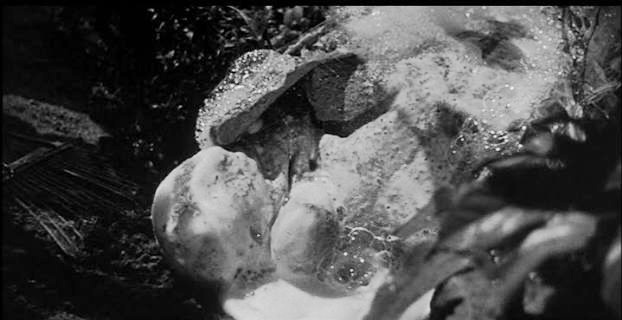
Let’s get into the goo. We have to talk about the Pod Design. In an era of limited budgets, the production team (led by art director Ted Haworth) had to figure out how to make Space Vegetables look threatening.
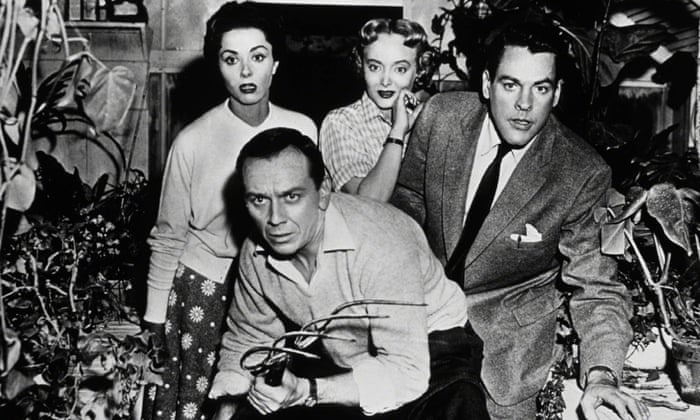
They didn’t go for tentacles or teeth. They went for Organic Horror. The pods are these giant, hairy, fibrous husks. When they bloom, they spill out this white, soapy foam. It’s disgusting in a very specific, cleaning-out-the-gutters kind of way.Inside the foam? The Clones. This is a highlight: The scenes where the pods are gestating. We see a blank, featureless body—it has no fingerprints, no face, just a rough human shape. It’s Body Horror in its infancy. There’s a scene where Miles and his friends discover the forming duplicates, first in a home, later in greenhouses, watching these things “pop” like wet bubbles, and the realisation hits that they are looking at themselves.
The practical trickery here is simple but effective:
Latex and Air: They used air bladders to make the pods breathe and pulsate.
Soap Suds: The foam was just high-volume suds, but in black-and-white, it looks like amniotic fluid from another galaxy.
Lighting: The film uses Noir lighting, deep shadows and harsh highlights, to make a cheap rubber prop look like a biological nightmare.
Red Scare or Red Herring?
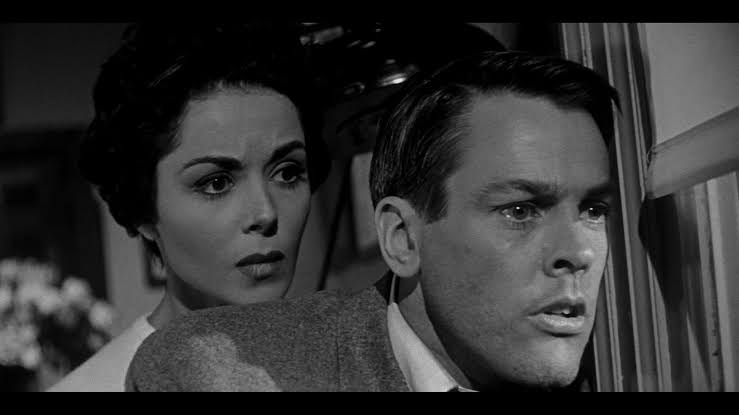
As Cult Horror Geeks, we love a good conspiracy theory. For decades, film scholars have argued about what Body Snatchers means.”
The Anti-Communist Theory: This was 1956. The Cold War was freezing. People were terrified of The Collective. The Pod People are the ultimate Communists, they have no individuality, they work together in perfect (and terrifying) harmony, and they want to convert everyone else. The movie is essentially saying: “If you don’t stay alert, your neighbor will turn you into a Bolshevik.”
The Anti-McCarthyism Theory: On the flip side, some argue it’s a critique of the Witch Hunts of the 1950s. The townspeople are turning on each other, looking for impostors, and demanding everyone act exactly the same. It’s a movie about the horror of conformity. The truth? It doesn’t matter. Whether it’s the Reds or the Feds, the result is the same: You lose your soul and you start caring about things like local zoning laws and orderly flower beds. That’s the real tragedy.
Becky Driscoll: The Ultimate Stakes
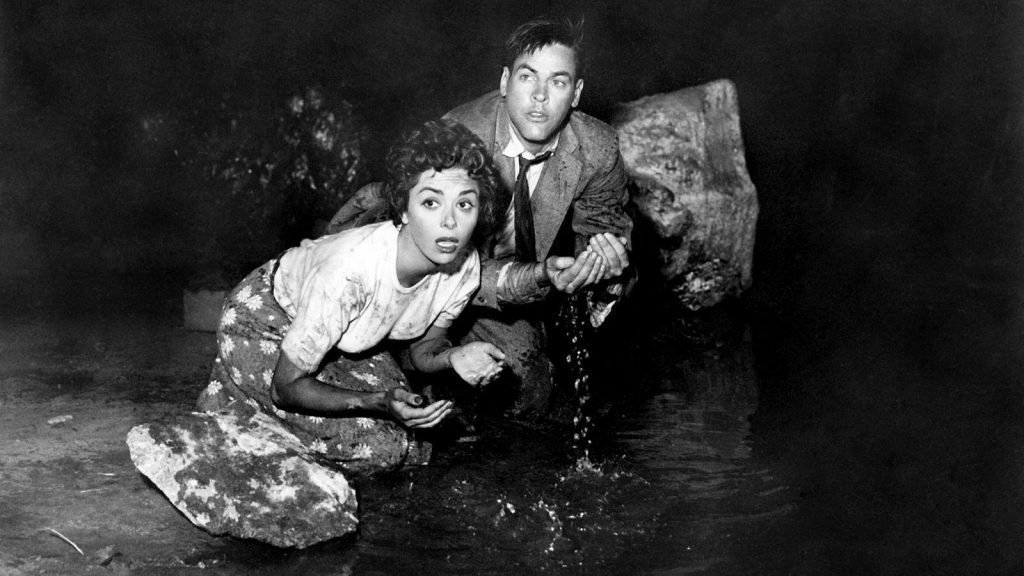
We have to talk about Becky (Dana Wynter). She’s Miles’ old flame, and she’s the emotional anchor of the movie. In many horror films of this era, the girl is just there to scream and get carried around (looking at you, Creature From the Black Lagoon).But in Body Snatchers, Becky is Miles’ partner in the stay awake marathon. They are the last two humans in a town of vegetables. Their chemistry is what makes the final act so devastating. They aren’t just running for their lives; they are running for their humanity.
The scene where they are hiding in the hills, pretending to be pod-people by walking with dead eyes, is one of the most tense sequences ever filmed. It’s Acting 101 meets Survival 101. If they show a single shred of emotion, a smile, a tear, a flinch, they’re caught. It turns the human face into a weapon and a weakness simultaneously.
The Rhythm of the Chase
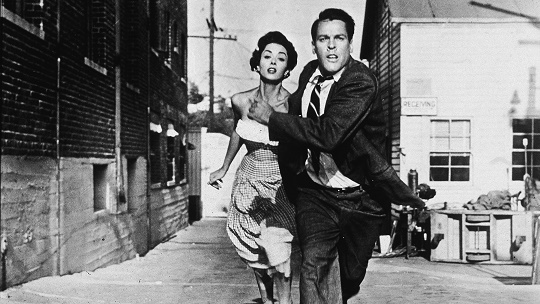
The second half of this movie is a sprinting marathon. Once the pod-people realise Miles and Becky are awake, the town transforms. The fire sirens go off. The trucks start rolling in filled with new pods. It’s an invasion that uses the infrastructure of the town against the heroes. The police aren’t there to help; they’re there to rehabilitate you into a pod.
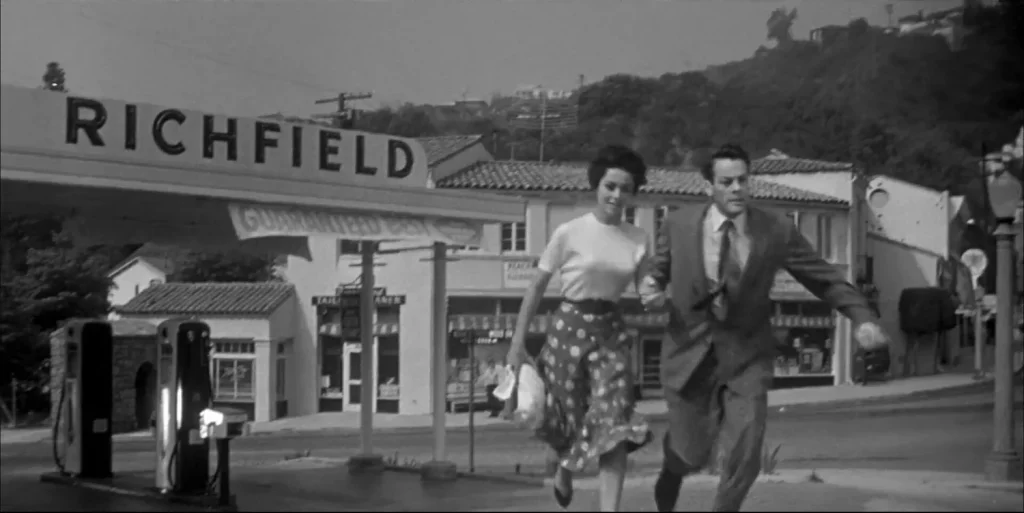
Don Siegel keeps the pace flowing. Every time Miles finds a hiding spot, someone he knows,the gas station attendant, the nurse, the sheriff, someone shows up with a calm, terrifying smile and a “Why don’t you just lie down and rest?” pitch. The horror here is politeness. The pod-people aren’t snarling monsters. They are your friends, and they are worried about you. They think you’re being difficult by wanting to keep your personality. It’s gaslighting on a planetary scale.
The Cave and the Kiss
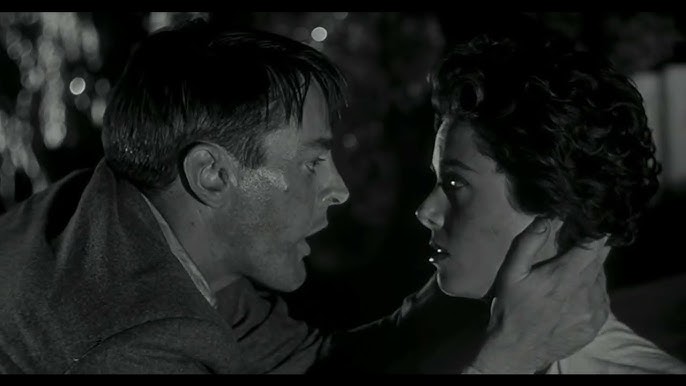
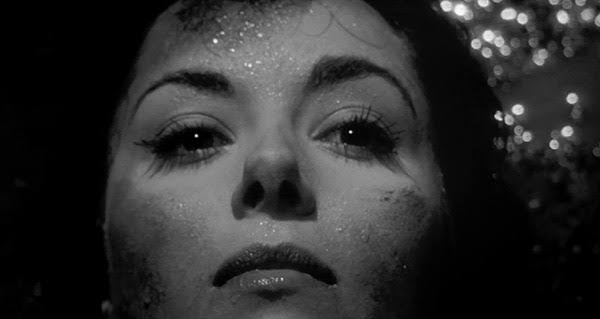
Miles and Becky have been running for hours. They are exhausted. They find a tunnel under a highway. Miles leaves for a second to investigate a sound. Becky, left alone in the dark, finally succumbs. She falls asleep. When Miles comes back, he picks her up and kisses her. This is the moment that ruins every viewer’s childhood. He pulls away, and the look on his face is pure, unfiltered shock.
He looks at her, and her eyes are… different. She says, in a flat, monotone that she has been to sleep and that everything is alright.
McCarthy’s reaction here is 10/10 horror. He doesn’t try to fix her. He realizes Becky is gone. The person inhabiting that body is a space-parasite. He drops her and runs out into the middle of the highway, screaming at the passing trucks.
The Highway Scene: You’re Next!
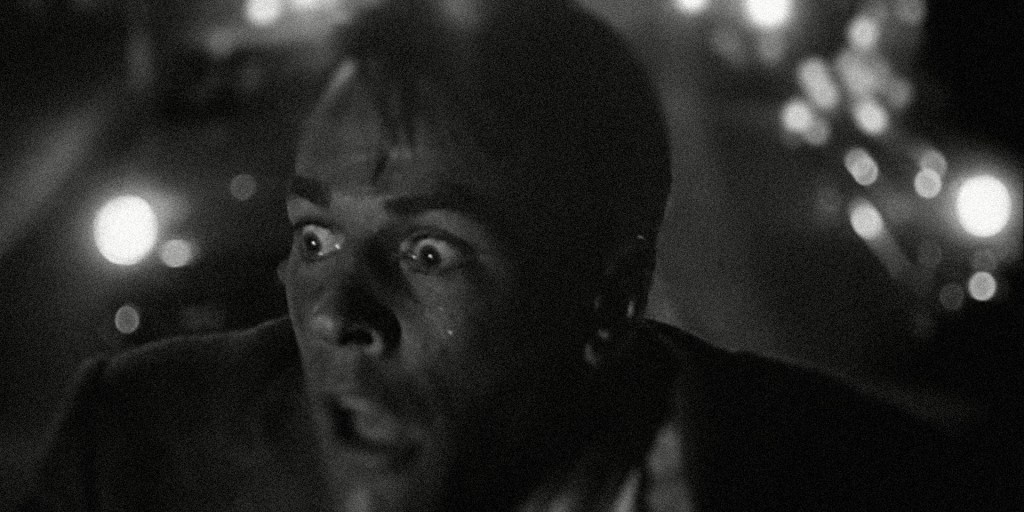
In a movie full of iconic moments, this one truly stands out as a shit your pants in paranoia kind of way. Miles is standing in the middle of a busy California highway, weaving between cars, screaming like a lunatic..
“They’re here already! You’re next! You’re next!”
The drivers just honk and pass him by. They think he’s a drunk or a crazy person. This is the ultimate punch to the gut. The world is being overtaken by a silent, invisible enemy, and the only person who knows the truth is being dismissed as a crackpot.It’s the ending that the movie deserved. It’s a warning to the audience: indifference is the Pod’s greatest weapon. If you don’t care about what’s happening to your neighbor, you’re already halfway to becoming a vegetable yourself.
Why we Love it
We love this movie because it’s the mark for paranoia, but we also have to admit it has its trashy charms:
The Science: The explanation for the pods is basically that they drifted to Earth from space and grew. That’s it! No complex biology, no interstellar travel explanation. Just space-seeds.
The Fashion: Even when running for his life from an extraterrestrial extinction event, Miles Bennell’s suit stays remarkably well-pressed.
The Psychiatrist: Dr. Dan Kauffman (the town shrink) is the first one to turn. Of course he is! In the 50s, the shrink was always the guy who wanted everyone to fit in and adjust to society. He’s the original Pod-Person.
The Invasion That Never Ended
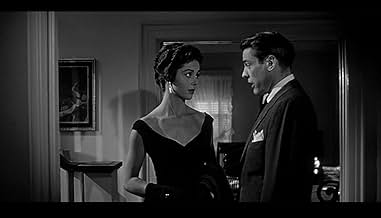
Invasion of the Body Snatchers is a horror essential. It’s got the tension we crave, the sfx we geek out over, and a message that is still terrifyingly relevant in the age of social media and groupthink.
It is also, strangely, the perfect companion piece to Creature From the Black Lagoon. One is about a monster you can see; the other is about a monster you become.
So, tonight, when you’re lying in bed and you hear a strange rustling under the floorboards just remember: Coffee is your friend. Sleep is the enemy. And whatever you do, don’t look at the giant seed pod in the corner of the room.
Leave a Reply to Twins of Evil (1971): Torches, Temptation, and Total Karnstein Carnage Cancel reply