Gather around, my freaks and geeks, because we’ve spent enough time talking about flickering shadows, rubber masks, and final girls. It’s time we talked about the soundtrack to our collective nightmares. I’m bringing music to the Archives, and there was only one place we could possibly start.
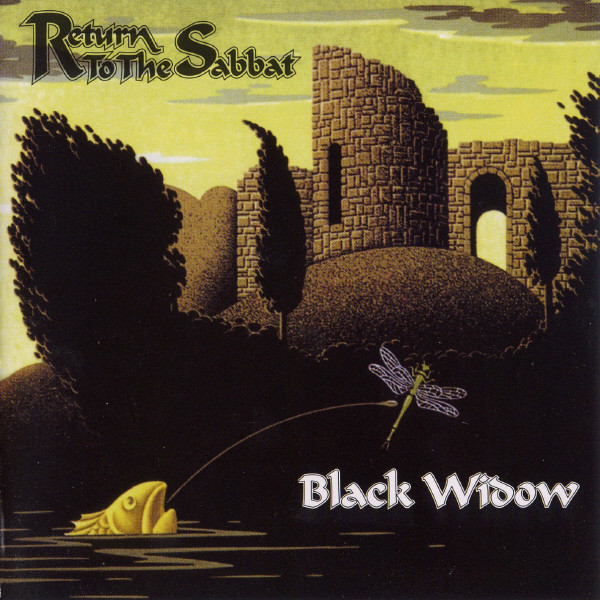
If you’re a regular here, you know I don’t do things by halves. When I love something, I worship it with the intensity of a pagan priest at a midnight bonfire. And I absolutely, unapologetically adore this record. We’re talking about Black Widow’s 1969/1970 transition piece, the ritualistic power captured in the Return to the Sabbat material.
This isn’t just classic rock. This is the drowning stones from which occult rock was born. Before the world decided that Black Sabbath was the only band allowed to be heavy and dark, there was Black Widow, and they were busy performing mock human sacrifices on stage while playing some of the most intricate, flute-driven prog-rock to ever grace a sacrificial altar.
To understand why this record hits like a silver stake to the heart, you have to understand the era. 1969 was a weird, paranoid time. The Peace and Love movement was curdling like old milk. The Manson murders had just sent a shockwave through the California hills, the Vietnam War was a meat grinder, and the youth were looking for something darker, something more real than the bubblegum pop on the radio. While Tony Iommi was busy tuning his guitar down in Birmingham to create that Doom sound, Black Widow (hailing from Leicester) was taking a different route. They weren’t just interested in the sound of evil; they were interested in the dramatics of it. They weren’t just a band; they were a traveling coven.
As were Coven. But that’s for another article.
At this point, they weren’t even called Black Widow yet; they had evolved from a soul-pop outfit called Pesky Gee! into something far more sinister. They shed the horns and the upbeat rhythms and replaced them with dusty grimoires and a fascination with the Left-Hand Path. Return to the Sabbat represents the band at their most untamed. It’s the sound of a group of musicians who had clearly spent too much time reading Aleister Crowley and Dennis Wheatley and not enough time worrying about their marketability.
It’s folk-horror in musical form.
If you think Dark Music has to be all distorted guitars and screaming, Black Widow is here to politely inform you that you’re wrong. The secret weapon of this record, the thing that makes it stand out, is the flute.
Clive Jones, the man was a wizard. He didn’t just play the flute; he made it sound like a panicked bird trapped in a cathedral. It feels less played and more summoned. It feels ancient, almost pre-Christian. When you combine that with Jim Gannon’s fuzzy, bluesy guitar work and Zoot Taylor’s swirling, gothic organ, you get a sound that is both complicatedly sophisticated and simplistically basic.
The production on the Return to the Sabbat versions of songs that would reappear on their later album is what I really love. It’s rougher than the official debut, Sacrifice. It’s got that ‘recorded in a basement with a single microphone and a lot of questionable incense’ vibe. It feels like a bootleg from a Satanic ceremony that we weren’t supposed to witness. There’s a hiss and a crackle to the tracks that makes it feel like a possessed object. It has an authenticity that the polished studio albums sometimes lack. This is the band in their raw state, before the labels tried to sand down the edges of their pentagrams.
And then there’s centerpiece of the record: Come to the Sabbat. If this song doesn’t make you want to put on a black robe and go stand in a field at 2:00 AM, then nothing will.
The chant “Come, come, come to the Sabbat! Come to the Sabbat, Satan’s there!” is one of the catchiest, most delightfully blasphemous earworms in music history. It’s a tribal call to arms. But here’s the kicker: for all the Satan talk, the band always claimed they were just storytellers. They were doing theatre. Their lead singer, Kip Trevor, would act out rituals on stage, involving the sacrifice of an actress named Kay Garrett.
It was sensational. It was camp. It was brilliant. But when you listen to the Return to the Sabbat version, the camp disappears. It feels genuine. It’s got a driving, percussive rhythm that builds and builds until you’re practically vibrating. It’s the ultimate occult rock track and standard bearer. It’s also the song that scared the BBC so much they banned it, which is the highest recommendation any record in the Archives can receive.
However, this record isn’t just a one-track pony. It’s a full-length descent into one man’s determination to resurrecthis love, no matter the cost:
Way to Power: This track feels like a slow climb up a spiral staircase in a ruined abbey. The organ work here is particularly haunting, providing a bedrock of dread for Kip Trevor’s vocals to dance over. It’s a song about the pursuit of forbidden knowledge, and it sounds exactly like it.
Conjuration: This is where the band’s prog-rock roots really shine. It’s complex, it’s jazzy in places, but it never loses that dark edge. It sounds like the soundtrack to a 1960s Hammer Horror film that was too weird to be released. The interaction between the flute and the guitar is telepathic.
Sacrifice: The climax. This is the track that caused the most controversy. It’s theatrical, it’s intense, and it features some of the best drum work on the record. It’s the sound of a band firing on all cylinders, completely committed to the bit. You can almost hear the flickering candles in the mix.
Attack of the Demon: A later addition to the lore, but in its early forms, it captures that frantic, 70s paranoia perfectly. Plus, it features some of Clive Jones’s most experimental wind-instrument work.
Yet, no matter how good this foundation was, or gow good their full debut would be, the history of Black Widow is one of the great “What Ifs” of the music world. In early 1970, they were poised to be the biggest thing in the UK. They were playing major festivals, they were getting massive press coverage, and they were the scary band everyone was talking about. They were the pioneers.
But then, in February 1970, Black Sabbath’s debut album dropped.
Sabbath was heavier in a literal sense. They were simpler. They were Metal. Black Widow, with their flutes and their mock sacrifices and their complex, jazzy arrangements, suddenly looked a bit arty and old hat to the burgeoning Heavy Metal crowd. The kids didn’t want a ritual; they wanted a riff.
The label got scared. They saw Sabbath’s success and pressured Black Widow to drop the occult imagery, fire the sacrificial actress, and become a straight rock band. And they did. And it was a disaster. Ironically, without the darkness, Black Widow lost their soul. They released a few more albums that were fine, but they lacked the fire of the Sabbat era. They became a footnote in music history, while Sabbath became gods.
So, why am I adding this to the site? Why do I adore this record so much?
Because it’s a perfect bridge between the hippie era and the horror era. It’s the musical equivalent of The Wicker Man or Blood on Satan’s Claw. It captures a very specific moment in time when the counter-culture was flirting with the abyss.
When I put on Return to the Sabbat, I’m not just listening to a record; I’m stepping into a world of flickering candles, blood ritual, and forbidden midnight masses. It’s atmospheric as hell. It’s music for people who prefer their rock and roll with a side of supernatural dread.
It also reminds us that heavy isn’t always about the volume of your amp or how many strings you have on your guitar. Sometimes, heavy is an idea. Heavy is a mood. Black Widow was as heavy as they come because they were willing to go all the way into the darkness. They didn’t just sing about the devil; they invited him to the party.
The Return to the Sabbat release itself is a bit of a unholy grail for collectors. It’s a collection of demo recordings and alternative takes that show the band in their most unfiltered state. For a long time, these were the lost tapes of the occult rock movement, and wouldn’t crawl from their crypt until 1999.
Black Widow understood that you need light to show the shadows. The jazz-inflected passages make the Satanic chants hit even harder. It’s a dynamic, breathing piece of art that still feels as fresh and blasphemous today as it did when first summoned.
Return to the Sabbat is an essential document for any self-respecting horror fan. It’s the blueprint for everything from Ghost to Uncle Acid & the Deadbeats. It is the sound of the 1960s dreaming of the 1660s.
If you haven’t heard it, clear your schedule. Dim the lights. Light a candle (black, preferably). And let the flutes take you back to a time when rock music was truly dangerous. This is the record that should have made Black Widow legends. It’s a cornerstone of occult rock that has been unfairly buried by the passage of time and the success of louder, simpler bands. But I’m digging it up, cleaning off the graveyard dirt, and putting it on the altar where it belongs.
Leave a Reply