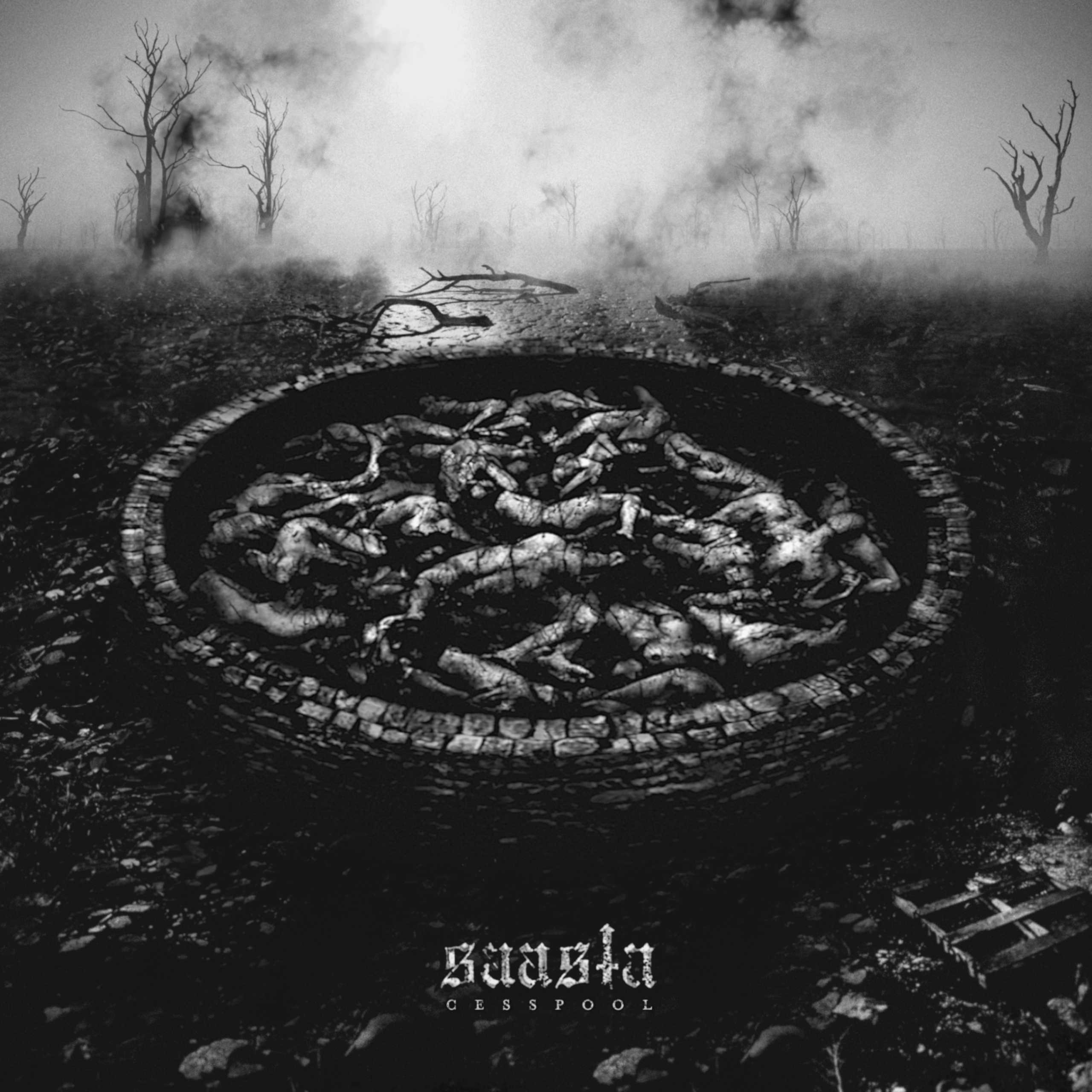
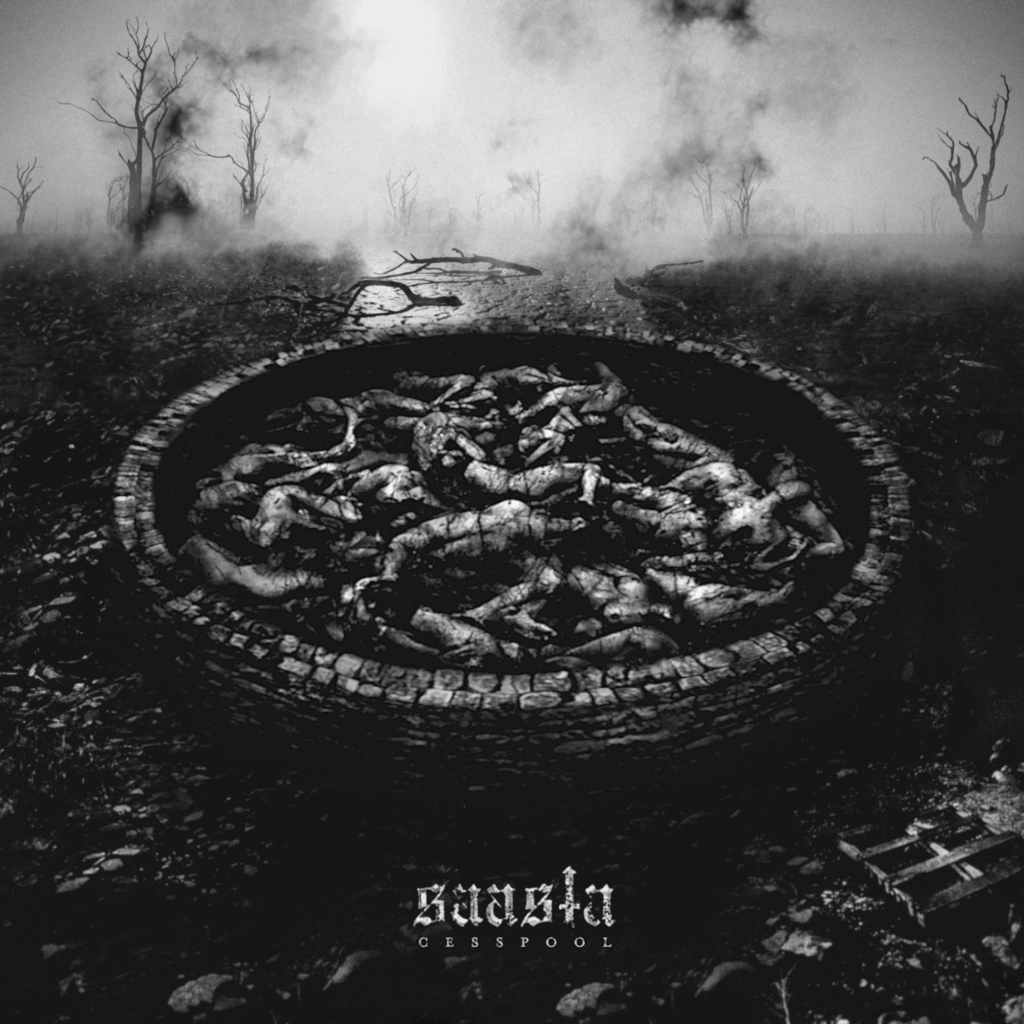
There are records that feel like they were recorded in a studio, and then there are records that feel like they were scraped off the floor of an abandoned slaughterhouse. Cesspool, the second full-length outing from Finnish extreme metal unit Saasta, is firmly the latter. Released via Inverse Records on May 8th, it is a twelve-track descent into a particular kind of sonic filth that feels less like a collection of songs and more like a physical endurance test.
If their 2023 EP, Black|Death|Doom, was a mission statement, Cesspool is the violent execution of that intent. Hailing from Kotka, Finland, Saasta has spent the last few years cultivating a reputation for being one of the most uncompromising acts in the modern underground. They describe their sound as rotten, heavy, and merciless. Usually, when a band uses those kinds of adjectives, it is marketing fluff. With Saasta, it feels like a medical warning.
The album is an honest-to-God monster of a record. It is big, ugly, and relentlessly bleak, yet it possesses a level of craftsmanship that elevates it beyond mere noise. This is Extreme Metal made by people who clearly believe that if you aren’t making the listener feel slightly ill, you aren’t doing your job correctly.
What makes Cesspool immediately fascinating is its structural ambition. This is not just a random assortment of riffs thrown together to meet a runtime. The band has divided the record into two distinct thematic halves: The Sanctum and The Abyss.
The Sanctum, comprising the first six tracks, is described by the band as a sequence that builds a lie. Musically, this translates to a series of songs that feel deceptively structured. There is a sense of order here, even if that order is being enforced by a spiked club. The opener, The Leeches, sets the tone immediately. It doesn’t invite you in; it kidnaps you. The guitar work from Topias Jokipii is thick and suffocating, moving between blackened tremolo picking and the kind of cavernous doom riffs that feel like they have their own gravity.
By the time you hit the focus tracks like The Coffin and The Imposter, the lie of The Sanctum begins to show its cracks. There is a palpable sense of tension throughout these first six songs, a feeling that the stability the band is projecting is fundamentally fragile.
Then comes the pivot. The second half of the record, The Abyss, exists solely to destroy everything the first half established. This transition is where Cesspool reveals its true character. As the album progresses through tracks like The Maelstrom and The Woe, the structures begin to dissolve. The music becomes more entropic, more desperate. It is a brilliant bit of conceptual sequencing. You aren’t just listening to a record; you are watching a breakdown in real-time. By the time you reach the final track, The Retribution, the lie is gone, and you are left staring into a void that Saasta has spent nearly an fifty minutes meticulously excavating.
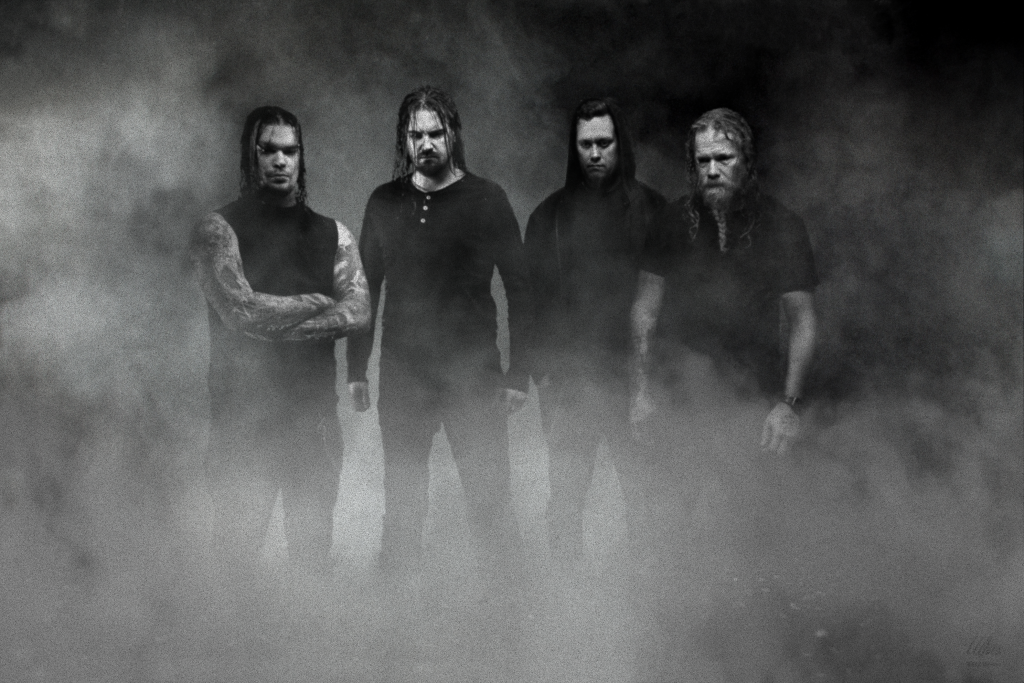
A record this heavy requires a specific kind of chemistry, and the four members of Saasta operate like a single, malignant organism.
Leevi Kärsämä’s vocal performance is nothing short of harrowing. He possesses a range that covers everything from gutter-bound growls to the kind of high-pitched, desperate shrieking that makes you wonder if he left the recording booth with his vocal cords intact. In tracks like The Plagued, he doesn’t sound like he is performing lyrics; he sounds like he is purging them. There is a tone to the delivery that keeps the record grounded in human misery rather than just genre tropes.
Behind him, the rhythm section of Janne Hietanen (bass) and Jimi Lahtinen (drums) provides the mechanical force necessary to keep this beast moving forward. Lahtinen’s drumming is particularly impressive. He manages to balance the frantic energy of Black Metal blasts with the slow, crushing deliberate nature of Funeral Doom. He knows exactly when to let a beat breathe and when to suffocate it.
The recording took place at the band’s own home studio throughout 2025, which likely accounts for the record’s incredibly tactile, lived-in feel. It sounds like it was recorded in a basement, but it doesn’t sound cheap. Every instrument occupies its own space in the muck. The bass is thick and audible, the guitars have a jagged, serrated edge, and the drums hit with a dry, punishing thud.
Saasta has also leaned heavily into a raw, DIY visual aesthetic that perfectly complements the music. Supporting a twelve-track album with five music videos is an ambitious move for an underground act, and the fact that they produced these themselves speaks to the band’s complete creative commitment.
The band’s own commentary on the release process is refreshingly honest, as well. They’ve spoken openly about the two years of poor decisions and questionable craftsmanship that led to this record. There is a admirable spirit in that admission, a rejection of the idea that art has to be perfect to be powerful. Cesspool is powerful precisely because it comes from a place flawed and human. It is the sound of a band wrestling with their own demons and winning by the narrowest of margins.
So, why does a record this relentlessly dark actually matter?
Because in a Modern Metal landscape that often feels over-produced and algorithm-friendly, Saasta represents a necessary counter-movement. There is a sense of reckless enthusiasm here. The band is pushing boundaries not because they want to be edgy, but because they seem genuinely compelled to see how much the spirit can carry before it snaps.
Cesspool is a record about the things we hide. It is about the gap between the face we show the world (The Sanctum) and the rot we carry inside (The Abyss). By the time you reach The Ironclad, one of the album’s most heavy tracks (whoch is saying something), the metaphor becomes undeniable. The music is an externalization of internal decay.
It is also, in its own twisted way, a very Finnish record. There is a specific brand of melancholy that runs through Finnish Extreme Metal thst I adore. It is a cold, isolated gloom that is different from the theatricality of other Blackened scenes. Saasta carries that torch proudly. They embrace the darkness not as a costume, but as a landscape.
Cesspool is as rewarding as it is loud, and it refuses to give the listener a moment of traditional catharsis. There are no soaring choruses or major-key resolutions here. There is only the march. But for those who find beauty in the breakdown, it is one of the best Extreme Metal releases of 2026.
It is a record that rewards repeat listens. Every spin reveals new layers of filth, a hidden guitar melody buried in the distortion, a subtle shift in the drum patterns, a particularly haunted vocal inflection. It is a work of high-level artistry disguised as a low-level assault.
Saasta has managed to create something that feels both immediate and timeless. It taps into the same primal energy that made early Death and Doom Metal so terrifying when it first appeared. It is the sound of the sewer being dragged into the light, and it turns out the sewer has a lot to say.
Ultimately, Cesspool is a triumph of vision over comfort. It is an honest, ugly, and magnificent record that stands as a definitive statement for the band. In their own words, they’ve thanked those who helped drag this thing into the light. We should be thanking them for bringing it to us.
Cesspool is a landmark of the abyss. If you have the stomach for it, dive in. Just don’t expect to come out clean.
Leave a Reply