Listening to an album sung entirely in a band’s native tongue is a unique experience. After all, a lot of what I get from music is based as much on the words I am hearing as the sounds themselves. Now, when that involves black metal, as a lot of you know, without a lyric sheet you’re usually struggling anyway, but when the record in question is then in a language you don’t understand, well, you don’t know if the person making those tortured noises is praising Satan or reading out their shopping list.
However, as a reviewer of all things metal, it is also something of a blessing in disguise. I get sent a lot of albums and, for every one I cover here, there are five or six that I don’t because they simply don’t appeal to me. They all receive exactly the same treatment, though. I sit down, put my headphones on and try to absorb every last note, every subtle shift in tempo and every vocal inflection. But when one of those elements is suddenly removed, everything changes. You’re no longer judging an album by what it is saying, but by how it makes you feel. Without the distraction of language, every guitar melody, every blast beat and every rasped vocal becomes another brushstroke on a much larger canvas.
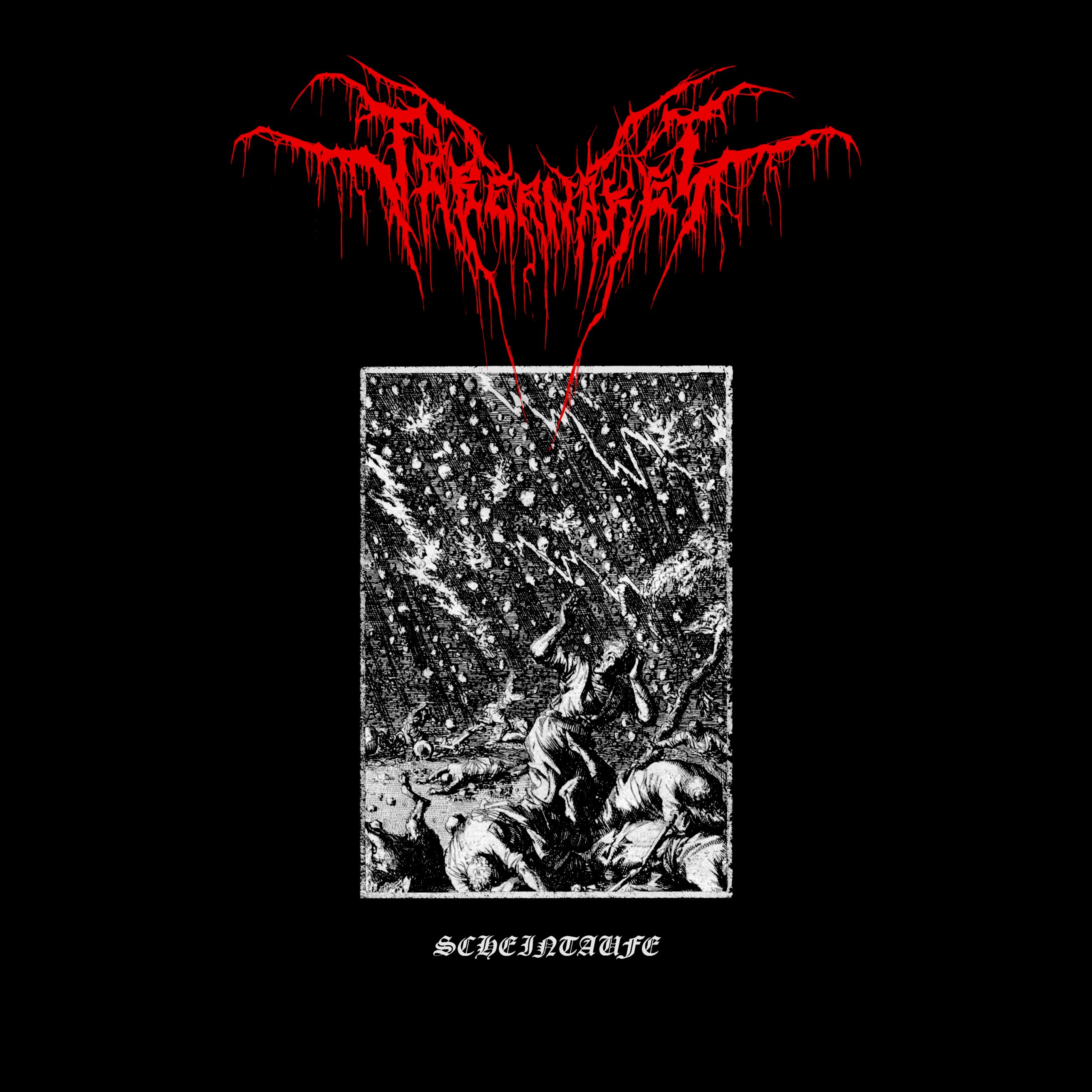
And Scheintaufe by Tabernakel paints one hell of a picture.
Created entirely by Ignis Nefandus, Scheintaufe is an album that understands something a surprising number of modern black metal bands seem to have forgotten. Authenticity has very little to do with how many layers of tape hiss you can bury a recording beneath. Raw production is part of black metal’s DNA, but somewhere along the way too many artists started confusing poor sound quality with atmosphere. Tabernakel never falls into that trap.
This is a record that feels ancient without sounding dated. The guitars still carry that coarse, frostbitten edge that defined the genre’s formative years, while the production possesses a depth and clarity that allows every instrument room to flow like a river of blood. Rather than sanding away the rough edges, it frames them, giving the music a sense of grandeur that many deliberately lo-fi recordings struggle to achieve. It somehow manages to sound as though it has been unearthed from the early nineties whilst benefiting from everything modern production has learned in the decades since.
That balance is what makes Scheintaufe so compelling.
From the moment Krypta Des Sinnes bursts into life, there is an overwhelming sense that Ignis Nefandus understands pacing. This isn’t forty-eight minutes of relentless blast beats designed to batter the listener into submission. Instead, the album constantly ebbs and flows, allowing darker melodic passages, subtle shifts in rhythm and carefully placed moments of restraint to give the heavier sections even greater impact. Tracks such as Im Nebel and Wie Die Gischt refuse to settle into predictable patterns, while Schmerz Trug Ich Aus carries an almost mournful quality beneath its icy exterior and eight minute run time. By the closing instrumental Ödnis, the track itself feels less like an ending and more like the final exhale after a long, freezing journey.
Perhaps what impressed me most was how little Scheintaufe feels like an exercise in nostalgia. Yes, its heart undeniably beats to the rhythm of early black metal, but this isn’t an album desperately trying to convince you it was recorded in 1993. It isn’t interested in recreating the past note for note. Instead, it captures something far more elusive: the feeling those records inspired when they first emerged. That sense of isolation. The oppressive atmosphere. The uncomfortable feeling that you were listening to something that existed completely outside the accepted boundaries of heavy music.
That isn’t easy to achieve.
Black metal has spent years trapped between two extremes. On one side you have bands polishing every rough edge until the music loses its identity. On the other, artists who seem convinced that making an album sound as though it was recorded inside a collapsing garden shed somehow makes it more authentic. Scheintaufe quietly sidesteps both arguments. It proves that atmosphere isn’t created through poor production, but through strong songwriting, intelligent arrangements and an instinctive understanding of mood.
There are no unnecessary gimmicks here. No desperate attempts to modernise the genre. No empty nostalgia. Just eight songs that understand exactly what black metal is capable of when it trusts the music to speak for itself.
Scheintaufe won’t convert people who have never understood black metal, nor should it. It wasn’t written for them. It was written for those who remember why this music felt dangerous in the first place, while also recognising that a genre doesn’t have to remain frozen in time to stay true to itself. Tabernakel have crafted an album that honours black metal’s past without becoming imprisoned by it, and in doing so have delivered one of the year’s most absorbing and thoughtfully realised releases.
Leave a Reply