Long before Western record collectors began dropping small fortunes on original Evil Records pressings, Japanese black/thrash pioneers Sabbat were building one of the most distinctive legacies in extreme metal. Based in Kuwana, Mie Prefecture, far from the major music centres of Tokyo and Osaka, the band would spend decades doing things very much on their own terms, developing a sound and identity that would eventually earn them an almost mythical reputation among underground metal devotees. More than forty years after forming, they still haven’t left.
The story begins in 1983, when bassist Masaki Tachi, better known as Gezol, guitarists Ozny and Elizaveat, drummer Valvin, and vocalist Toshiya formed a band called Evil. With the exception of Ozny, the musicians had already played together in various school bands, including Aburamushi, Hot Rod and Black Beast, performing covers of New Wave of British Heavy Metal favourites such as Iron Maiden and Demon. Evil played its first show in August 1983, initially combining original material with covers of bands such as Venom.
In early 1984, Toshiya left the group, with Gezol taking over vocal duties. During the summer of that year, the remaining members adopted the name Sabbat, establishing the identity that would carry them through the decades. Their early sound was rooted in the primitive aggression of Venom and the emerging extreme metal underground, but there was already something distinctly their own about the band’s approach.
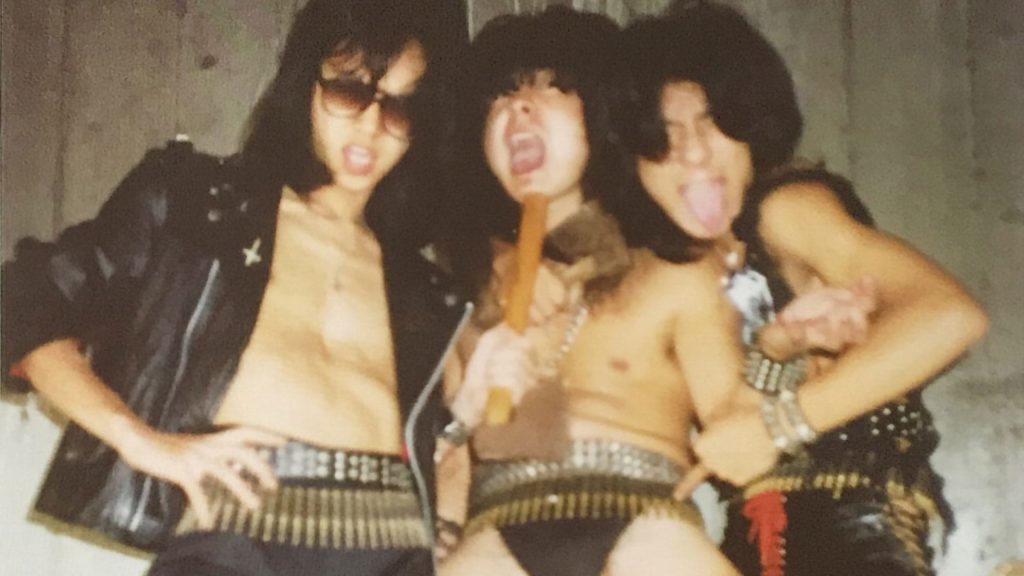
Operating from Kuwana meant that Sabbat were developing outside the more visible centres of Japanese metal. There was no major-label machinery behind them, and rather than wait for someone else to take an interest, Gezol established Evil Records in 1985, giving the band a means of releasing their own material. The first Sabbat 7-inch appeared in June that year, featuring Black Fire and Mion’s Hill. Just 300 copies were pressed, making it an understandably sought-after item for collectors today.
The following month brought the first significant lineup change, when Gezol’s brother Shinji Tachi, known as Samm (also using the name Gero), replaced Valvin behind the drum kit. With Gezol, Ozny, Elizaveat and Samm in place, Sabbat began establishing themselves as a live force, taking their music beyond their hometown and playing across Japan.
Their growing profile brought an unexpected moment of exposure in August 1986, when Sabbat appeared at the Under The Castle festival on 3 August. The performance was televised, an unusual bit of mainstream visibility for a band whose music and image were hardly designed to win over the average television audience.
That brief moment of wider exposure was followed by considerable internal upheaval. During a two-night engagement in Tokyo later that month, Ozny became involved in a physical altercation with a concertgoer following the first night’s performance. Sabbat played the second night without him, and Ozny subsequently performed one final show with the band before his departure was agreed. The group continued as a trio, with Gezol, Elizaveat and Samm forming the lineup responsible for much of the material that would establish their underground reputation.
In June 1987, the trio entered the studio to record Born by Evil Blood, their second 7-inch release. Evil Records issued the record in a pressing of 1,000 copies, and it was followed in early 1988 by Desecration, limited to 500. January 1989 brought the release of The Devil’s Sperm Is Cold, also limited to 500 copies. These three releases became an important part of Sabbat’s early catalogue, helping the band attract attention beyond Japan and finding an audience among the international tape-trading and underground metal communities.
However, the band’s live activities were about to come to an abrupt halt. A death within the Tachi family in August 1987 led Gezol and Samm to withdraw from performing live. On 13 September, the pair staged what was intended to be Sabbat’s farewell performance in Nagoya. Just 43 people attended.
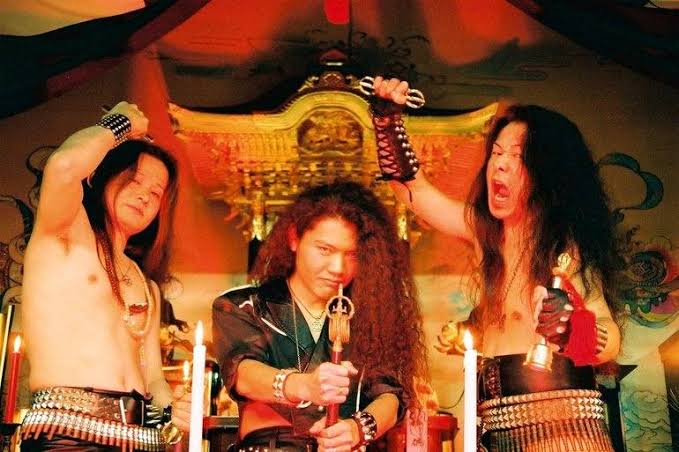
It wasn’t the end of Sabbat as a recording project, though. The band continued releasing material through Evil Records, even as their live presence virtually disappeared. The distinction is important: Sabbat hadn’t simply vanished, and the years that followed would see further releases despite the lack of regular performances.
By early 1989, Gezol wanted to bring the band back to the stage, but Elizaveat wasn’t interested in returning to regular activity. Samm had also moved on, joining fellow Japanese thrash metal band Sacrifice and becoming involved in his own project, Satanas. Nevertheless, Sabbat managed two performances that year, both with different lineups.
The first, in May, featured Gezol alongside guitarist Barraveat, drummer Zorugelion and vocalist Possessed Hammer. It was a one-off arrangement rather than a permanent reunion. On 10 October, Gezol persuaded Elizaveat to return for another performance, this time with Zorugelion behind the kit. This was billed as their official reunion show, although Elizaveat’s agreement was for that single appearance rather than a full-time return.
Zorugelion subsequently became Sabbat’s permanent drummer, replacing Samm. The band also had to find a new guitarist, but before that could happen, there was still recording work to be done. In 1990, Sabbat released The Seven Deadly Sins EP, which featured Samm on drums, while recording the Sabbatical Demon demo with Zorugelion. Despite the changes in personnel, Gezol was determined to keep the band moving forward.
In October 1990, Sabbat entered the studio to begin recording their debut full-length album, Envenom. Elizaveat handled the guitar parts, with newly recruited guitarist Temis Osmond contributing guest solos. By the time the album appeared on CD in 1991 through Evil Records, Osmond had replaced Elizaveat permanently. The resulting lineup of Gezol, Osmond and Zorugelion would take Sabbat into the next stage of their career.
The band didn’t waste much time establishing themselves beyond Japan, either. In September 1991, they travelled to Europe to promote Sabbat and make contacts within the underground scene. A planned German performance failed to materialise, and an intended European release of Envenom through Austrian label Lethal Records also fell through. Nevertheless, the trip represented another step towards bringing Sabbat’s music to a wider audience.
What makes the band’s history particularly interesting is how little of it followed the conventional path. They began as a group of musicians in a relatively obscure Japanese location, established their own record label, released music in tiny quantities, experienced lineup disputes and a lengthy interruption to their live activities, and eventually returned with a full-length album that helped introduce them to an even wider underground audience.
Gezol’s commitment to Sabbat never really wavered. While the original lineup changed and former members pursued other projects, he continued to build the band’s catalogue, documenting their activities through studio albums, demos, EPs, splits, compilations and live recordings. The sheer scale of the discography would become one of Sabbat’s defining characteristics, with Evil Records providing the foundation for much of that activity.
There is also something revealing about how Gezol himself viewed the band. In a 1995 interview published in the underground metal magazine SHISM, he described Sabbat as black samurai metal, drawing on the spirit of the samurai as part of the band’s identity. It was an appropriately uncompromising description from a musician who had spent more than a decade building a band that refused to follow anyone else’s expectations.
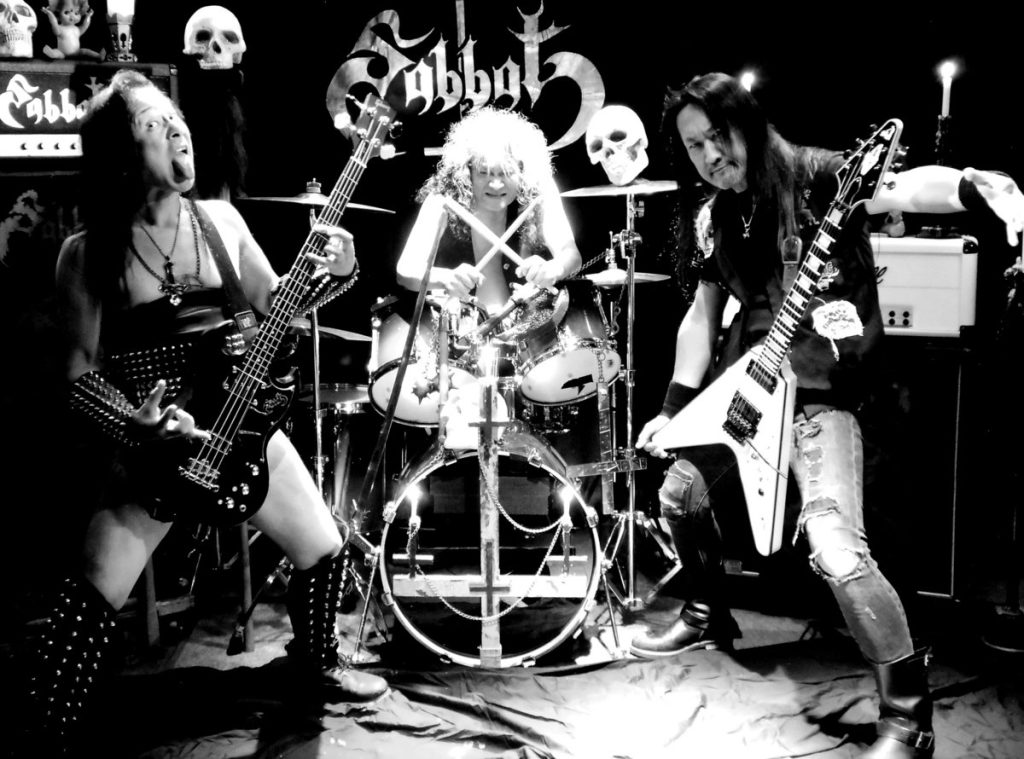
And remarkably, that iron-willed commitment hasn’t faded. More than four decades after forming in Kuwana, Sabbat are still actively recording and tearing up stages, with the core Envenom-era trio of Gezol, Temis Osmond and Zorugelion remaining intact for over thirty-five years. Still operating out of Mie Prefecture and Nagoya, Gezol still takes the stage in the same spiked leather, bullet belts and corpse paint he wore in 1985, presiding over a staggering catalogue that now spans well over a hundred studio albums, live records, splits and ultra-limited 7-inch pressings.
Sabbat’s story isn’t simply one of an early Japanese black/thrash band making obscure records that collectors would eventually spend small fortunes tracking down. It’s the story of a band that built its own infrastructure, survived considerable upheaval and simply refused to leave the battlefield. From the original Evil days right through to the present, Gezol has maintained an unbroken underground dynasty—and the extreme metal world is considerably more interesting for it.