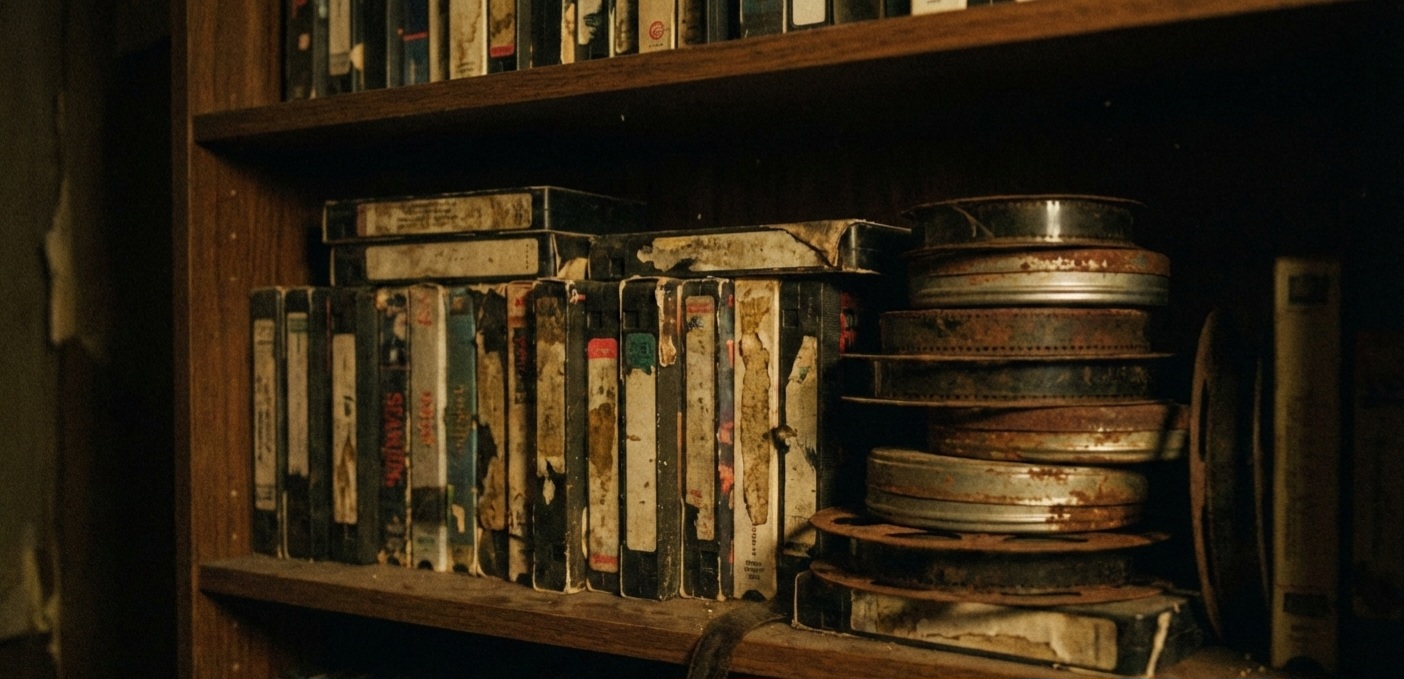

That scream. I’d forgotten about that scream. The one where a man’s soul seems to have been wrenched from his body as the realisation of what has just happened hits him square in the face. The door slams. Then utter blackness. The credits start to roll, and underneath it all, there is still that scream.
It’s been a while since I watched SAW, long enough for me to forget, but each time I return to it that scream haunts my dreams for days afterward.
In the cold, clinical light of 2026, revisiting James Wan’s 2004 debut is a slap to the system, reminding us how claustrophobic and inventive horror can still be. This isn’t just a slasher; it’s a puzzle-box that birthed a franchise, while remaining, at its heart, a gritty, low-budget masterpiece. Join me as we step into the bathroom that changed everything. Talking of which…

The Bathroom
The setup is a perfect hook for horror obsessives. Two men, Adam and Lawrence, wake up in a dilapidated, filth-encrusted bathroom, chained to pipes, with a corpse lying in a pool of blood between them. It’s a tense, silent setup that suddenly erupts into frantic panic.
James Wan and Leigh Whannell (who also stars as Adam) didn’t have a blockbuster budget. They had a room. And in that room, they crafted a sense of dread that bigger-budget films can’t replicate, no matter how hard they try. The sharp edits, grimy green-and-yellow palette, and the relentless ticking of Jigsaw’s cassettes turn the bathroom into a claustrophobic, hellish gauntlet. You aren’t just watching a movie; you’re trapped in the drain with them.
The budget constraints forced a kind of creativity that a lot of modern horror lacks. The bathroom is a masterpiece of production design. It feels damp. It feels like it smells of copper and rot. For a fan of the genre, this environment is a playground of details, the heart-shaped box, the hidden cameras, the rusted hacksaws. It’s a fresh start for survival horror, one that makes the setting just as deadly as the killer.

A New Kind of Monster
Before he became the moral mastermind of the later sequels, John Kramer (Tobin Bell) was a calculating figure of quiet, but deadly, menace. The brilliance of Jigsaw is that he doesn’t kill; he just places people in catch-22 situations where their own survival instinct is the blade.
This isn’t the silent stalker of Halloween or the mad slasher of Friday the 13th. Jigsaw is an architect. The logic of his traps (the Reverse Bear Trap, the Razor Wire Maze) represents a new peak in horror. It’s about the psychology choice. When Amanda has to dig a key out of her boyfriends stomach, the dread isn’t just in the blood; it’s in the panicked realization that time is almost up. Jigsaw isn’t a villain in his own mind; he’s a teacher. That twisted morality is the reason that kept fans coming back for nine sequels.

Grime as Fine Art
The cinematography in SAW turns a single bathroom into a character in its own right. The lighting casts every rusted pipe and grimy tile in stark relief, while flickering bulbs create uneven shadows that heighten the sense of unease. Wan’s editing, snappy cuts and occasional speed-up shots, keeps the viewer off-balance, echoing the disorientation of Adam and Lawrence as they struggle against their chains. Every detail, from the doll perched on the tricycle to the cluttered, filthy floor, reinforces the claustrophobic, oppressive atmosphere. The film stock and dim, industrial-style lighting make the space feel real, immediate, and inescapable, turning a low-budget set into a fully realized stage for terror.
The Reverse Bear Trap
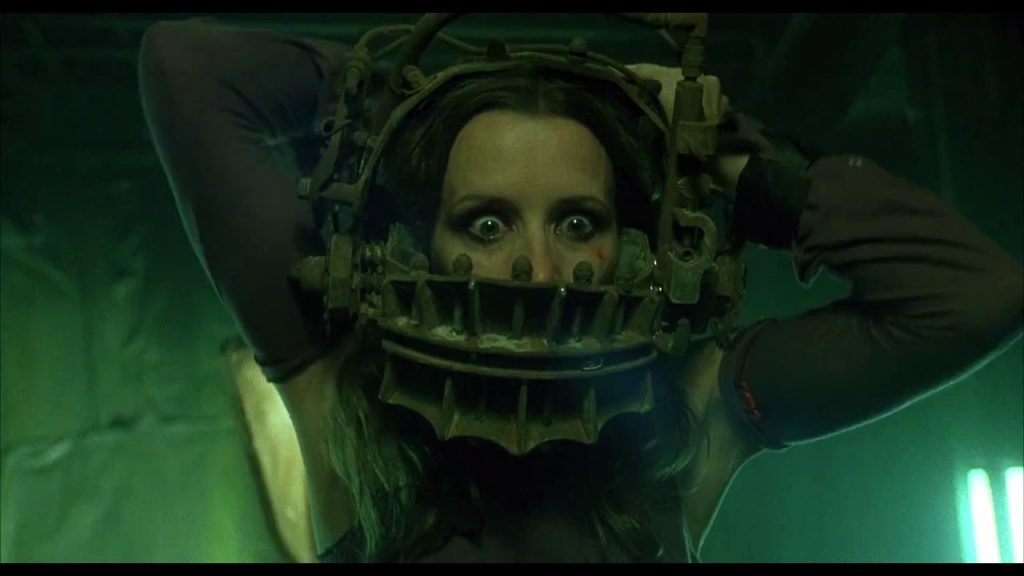
If you’re a connoisseur of practical effects, the Reverse Bear Trap is your Mona Lisa. It’s a brutal, mechanical horror designed to make your skin crawl. The way it looks, heavy, rusted, and functional, gives it an authenticity that no amount of digital effects could match.
When it’s strapped to Amanda’s head, the rapid pacing of the scene makes the fear almost tangible. We don’t need to see the trap go off, the threat of it doing so is enough to make the audience’s breath hitch. It’s the moment that defined the franchise and proved that a simple, terrifying idea is more powerfuk than any million-dollar monster. The nature of the trap suggests a killer who is patient, methodical, and profoundly broken.
The Performances of Cary Elwes and Leigh Whannell
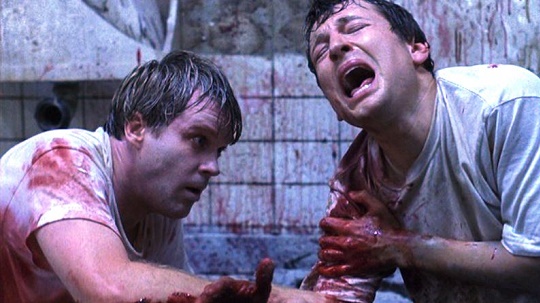
The base of the movie depends entirely on the chemistry between Lawrence (Cary Elwes) and Adam (Leigh Whannell). Elwes brings a controlled intensity as the doctor who thinks he can out-logic the situation, while Whannell provides the panic of a man who knows he’s out of his depth.
Their dialogue, the accusations, the half-truths, the frantic attempts to find a way out, makes the bathroom scenes feel like a play. There is a dark humor in their desperation, a twisted look at how quickly a civilized man turns into a savage when a hacksaw is placed in his hand. Elwes, in particular, bears the heavy responsibility of the film’s right-and-wrong stakes, and his slow slide from professional surgeon to desperate father builds quietly, until it erupts.

The Final Choice
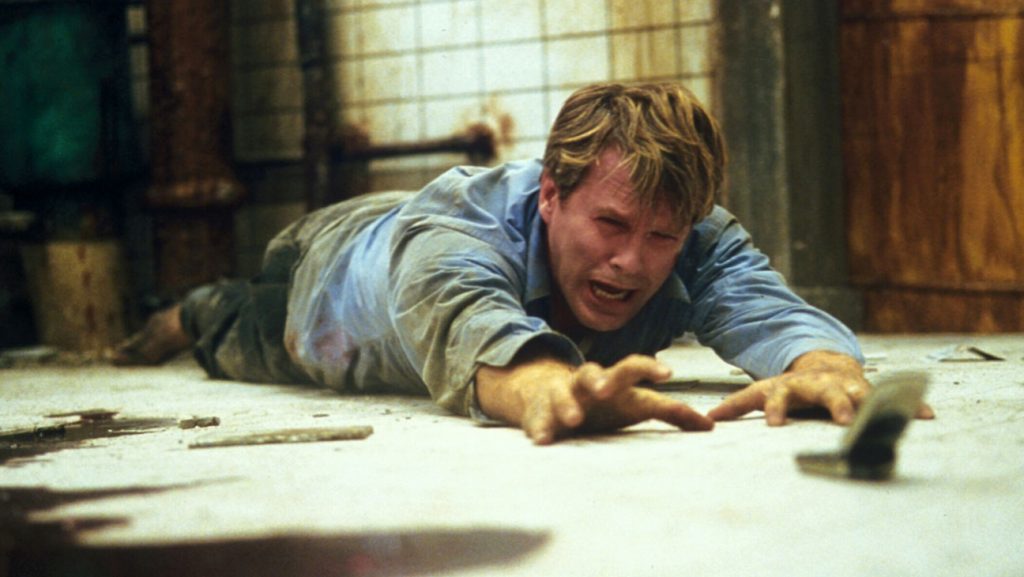
We have to talk about the titular act. The saw. The realization that the hacksaws aren’t meant for the chains, they’re meant for the bone. This is where SAW earns its reputation.
The sawing scene, set to Charlie Clouser’s driving industrial score (Hello Zepp), is one of horror’s most gripping sequences. It’s not shock for shock’s sake; it’s the inevitable payoff of Jigsaw’s game. The scream as Lawrence makes his choice is the sound of a man being broken and reborn at the same time. The effects of the leg removal are simple but effective, relying on the editing to let the audience’s imagination fill in the wet, crunching details.

Game Over
And then, the twist. The moment that made theater audiences audibly scream. The corpse in the middle of the room, the one we’ve been staring at for ninety minutes, stands up.
The montage that follows, connecting all the clues, the breadcrumbs that Jigsaw left behind, is a perfect example of storytelling at its most satisfying. John Kramer was there the whole time. He was the observer of his own masterpiece. The reveal is that the game was winnable, but human nature is too flawed to see the path.
That final ‘Game Over’ and the slamming of the door is the ending that most horror movies dream of. The utter blackness. The credits. And, of course, that scream. It’s a moment of pure perfection that redefined 21st-century horror.

The Detective Tapp Subplot
While the bathroom is the heart of the film, the B-plot involving Detective Tapp (Danny Glover) and Detective Sing adds a police procedural layer that heightens the vibe. Danny Glover plays Tapp with a single-minded obsession, a man consumed by the hunt for a killer. He’s a man destroyed by the case, living in an apartment filled with newspaper clippings and wild theories.
The sequence in Jigsaw’s lair is a study in mounting unease. The rapid cuts of the fight, the strobing lights, and the ruthless precision of the neck-slitting trap make it clear that Jigsaw was always three steps ahead. Tapp’s obsession is the tragic counterpoint to Lawrence’s pragmatism. It reminds the audience that once you enter Jigsaw’s world, you never truly leave, even if you survive the game.
Charlie Clouser’s Score
As a former member of Nine Inch Nails, Clouser brought an industrial, metal aesthetic to the score that perfectly matched the film’s visuals. The track Hello Zepp has become as iconic as the Halloween theme or the Friday the 13th ‘chi-chi-chi-ha-ha-ha.’
The music builds with a sensation that mimics a racing heartbeat. When the theme kicks in during the final reveal, it elevates the twist to a level of cinematic history. For a fan of the series, the score is the glue that holds the movie together, creating a sensory assault that lingers long after the scream fades.

Why I Love It
A single bathroom. Two men. One corpse. A saw. SAW doesn’t waste a second. From the moment the chains rattle to the final slam of the door, every second is loaded with consequence. You don’t watch this movie, you’re trapped in it, counting down with Adam and Lawrence as the clock drags them toward their choices.
The traps aren’t just props, they’re extensions of Jigsaw himself: cruel, precise, and impossible to outthink. The Reverse Bear Trap, the razor wire, the hacksaws, they all demand action, forcing desperation into its purest, most terrifying form. And yet, in the middle of that terror, there’s a kind of perverse humor: the human instinct to fight, to reason, to bargain with a world that won’t give you mercy.
Then there’s the scream. That final, shattering wail that rises from the body at the moment of ultimate realization. It doesn’t just close the film, it detonates in your brain, a reminder that survival isn’t a given, and horror isn’t polite. SAW is brutal, brilliant, and unrelenting. It doesn’t need a city-wide apocalypse or CGI monsters. It only needs a room, a trap, and a person facing the impossible. And that’s enough to make you never, ever look at a bathroom the same way again.
Leave a Reply to Corporate Retreat Turns Team-Building Into a Bloodsport Cancel reply