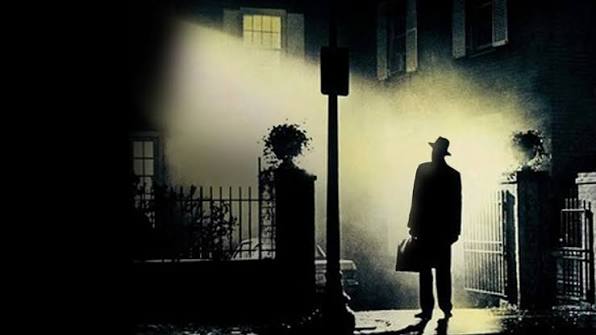
We need to stop pretending that The Exorcist is just another classic movie that you check off a list so you can feel culturally literate. I am so tired of the modern elevated horror crowd—the ones who think a movie is only good if it’s a metaphor for hereditary trauma or a deeply moving exploration of menopause—trying to claim this film as one of their own. They want to sanitize it. They want to turn the most visceral, terrifying piece of cinema ever made into a polite discussion about psychology.
Give me a break.
The Exorcist isn’t a metaphor for puberty. It isn’t a meditation on the anxiety of the single mother. It is a war report from the front lines of a battle between the Eternal and the Meat. It is a movie that looks you dead in the eye and asks: “When your science fails, when your doctors are baffled, and when your ‘rationality’ is stripped away, what do you do with the thing under the bed that knows your name?”
If you think this movie is dated because the special effects aren’t CGI-slick, or because it takes its time to build, you’ve missed the point so spectacularly that you might as well go back to watching superhero movies where the stakes are as thin as the green screens they’re filmed on. William Friedkin didn’t make a horror movie; he made a documentary of the impossible. And today, more than fifty years later, it remains the masterpiece of the genre—a burning, unapologetic reminder that there are things in this universe that hate us simply because we exist.
The Desert of the Soul
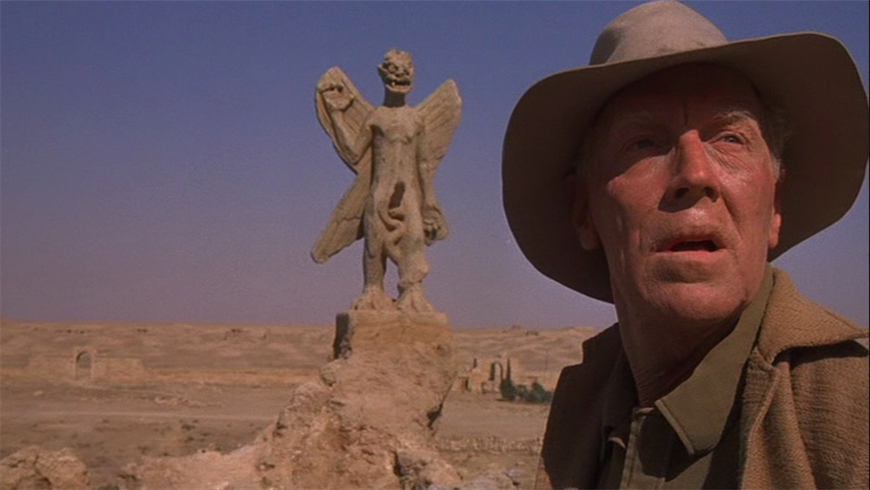
To fully understand The Exorcist you have to understand that the possession doesn’t begin in Regan’s bedroom; it begins in the earth. The opening sequence in Northern Iraq is often dismissed by casual viewers as slow or disconnected, but they are ignorant of the ideological foundation being laid. Friedkin takes us to the ruins of Hatra, a place where the sun is so hot it feels like an indictment. Here, Father Merrin—a man whose face is a map of spiritual exhaustion—encounters the demon in its most ancient, unpurified form.
When Merrin finds the small, green stone head of Pazuzu, the editing shifts. The sound of the wind becomes a low, guttural growl. The dogs begin to fight in the dust. This is the reaction of nature itself, showing us that the world is not a safe, orderly place. It is a predatory landscape. The confrontation between Merrin and the giant statue of Pazuzu, silhouetted against a dying sun, is the statement for the entire film: Evil is not a mental health crisis. It is a sovereign entity. It has a history. It has a weight.
This prologue serves as a direct warning for the audience. It demands that we step out of our comfortable, Western secularism and acknowledge the undercurrents of the ancient world. The transition from the dust of Iraq to the polite streets of Georgetown is a jarring reminder that we have built our civilization on top of an abyss. We think we are safe because we have central heating and paved roads, but the demon doesn’t care about our infrastructure. It is the raw, terrifying reality that has been waiting in the dirt for five thousand years, and it is finally coming home.
The Sterility of the Needle: When Science Becomes the Slasher
Let’s talk about the first half of this movie, because that’s where most modern audiences start checking their phones. They’re waiting for the head-spinning. They’re waiting for the green pea soup. They’re waiting for the fun stuff. But if you’re actually paying attention, you realize that the most horrifying scenes in the movie don’t involve a demon at all.
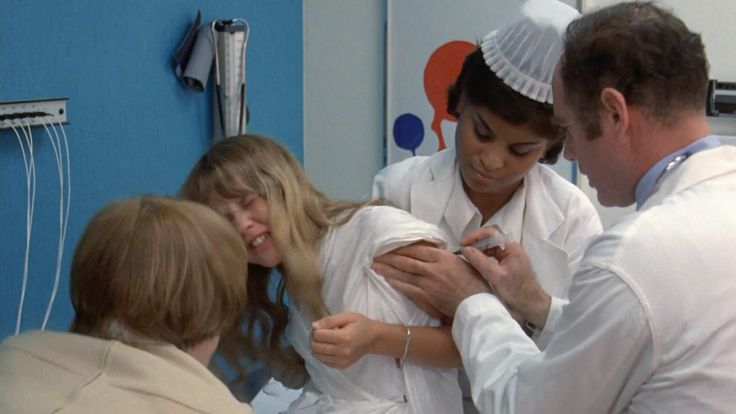
When Regan MacNeil is taken into that hospital, Friedkin treats the medical staff like a group of high-tech cultists. The room is cold, the machines are screaming, and they are sticking a needle into a child’s neck while blood spurts out in a rhythmic, terrifying arc. There is no music. There is no spooky lighting. It’s just the human body being treated like a broken engine.
This is where the movie’s thesis begins. We live in a world that has traded the Priest for the Psychiatrist. We think that if we can just name a thing—if we can call it temporal lobe seizures or hyper-kinesia—we can control it. We’ve become so arrogant in our enlightenment that we’ve forgotten that the hospital is just a more expensive version of the slaughterhouse.
Friedkin, coming from a documentary background, films these scenes with a clinical, detached cruelty. He wants you to feel the failure of the institution. He wants you to see that for all our wires and our brain scans and our academic theories, we are utterly powerless against a force that doesn’t play by the rules of biology. Every time a doctor suggests another test, or another pill, it’s a direct indictment of the modern world’s cowardice. We are too scared to admit that the problem might be spiritual, so we just keep stabbing the meat until it’s too late.
The Voice of the Profane
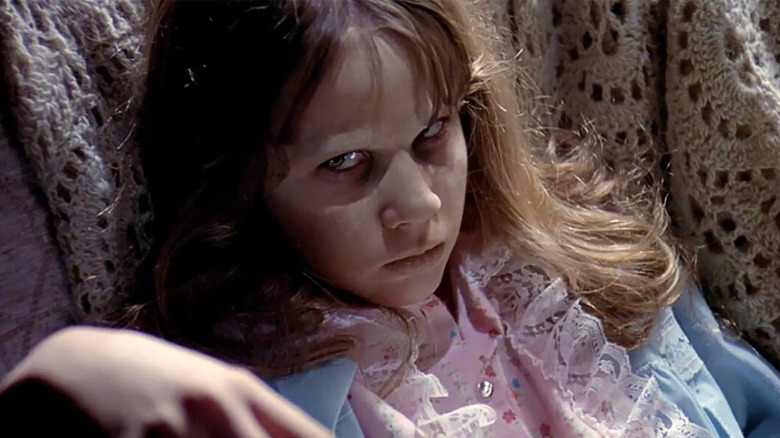
If the evil has a song, it isn’t a choir of angels; it’s the sound of an abattoir. We need to have a serious talk about the audio design of The Exorcist, because it is a masterclass in visceral aggression. Friedkin and his team didn’t just use spooky wind noises; they used the sounds of bees in a jar, the shrieks of pigs being led to slaughter, and the distorted cries of animals in pain.
The voice of Pazuzu, famously provided by Mercedes McCambridge, is the voice of Hell itself. It is a direct, confrontational connection to the listener’s primitive brain. McCambridge didn’t just step into a recording booth and do a scary voice. She allegedly lived the role. She reportedly swallowed raw eggs, chain-smoked like a furnace, and drank whiskey until her throat was a jagged mess of scar tissue. She was in the trenches of the performance, creating a sound that feels like it’s being dragged out of a throat filled with broken glass and wet earth.
This soundscape rejects surface-level analysis. You don’t think about the sound in The Exorcist; you react to it. It is a rhythmic and dramatic assault on the senses. When the demon speaks, the frequency of the voice is designed to unsettle the human nervous system. It is the a voice that shouldn’t exist coming out of a throat that hasn’t developed the vocal cords to produce it. This is why the movie still works today—CGI can give you a monster, but it can’t give you the sound of a soul being shredded.
Why the Ritual Matters
We’ve reached a point in horror where the final girl usually wins because she’s strong or because she deals with her trauma. That’s nice. It’s very 21st-century. It’s also completely useless when you’re dealing with the King of the Demons.
The Exorcist understands something that modern horror is too cowardly to admit: you cannot defeat real evil with self-care. You cannot defeat it with inner strength. You can only defeat it with the ritual. You can only defeat it by submitting to something greater than yourself.
Father Karras is the perfect protagonist. He is a man of God who has lost his way. He’s a psychiatrist-priest—the ultimate symbol of the conflict between science and spirit. He looks at his dying mother in a filthy tenement and he wonders where God is. He’s tired. He’s broken. He’s human.
And the demon loves it.
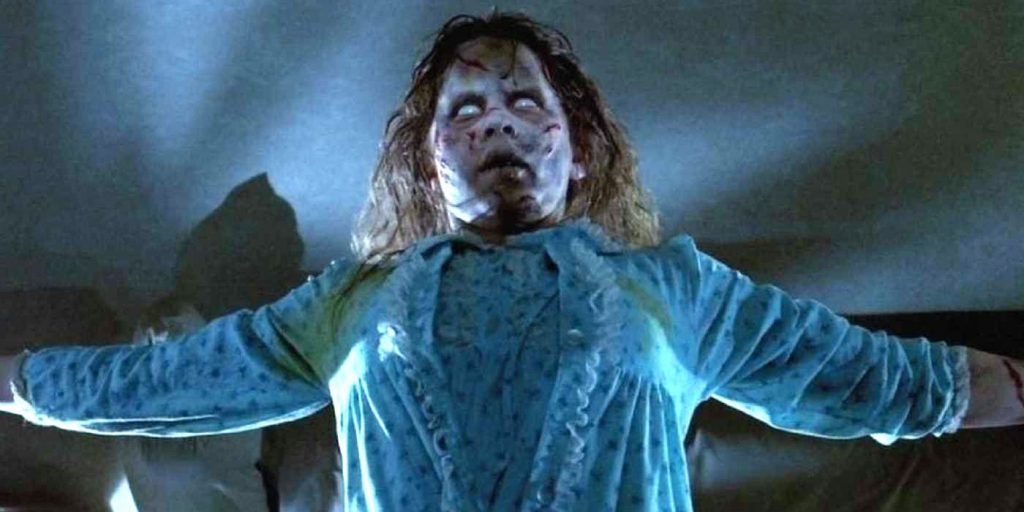
The possession of Regan MacNeil isn’t really about Regan. It’s a trap set for Karras. It’s Pazuzu looking at this doubting, intellectual priest and saying, “Let’s see if you still believe in the soul when I’m throwing vomit in your face.” The bedroom becomes the battleground between tormented and tormentor. Every act of desecration—the crucifix scene, the levitation, the foul language—is designed to break Karras’s will. It’s a test of his ideological conviction as a man of the cloth.
When Father Merrin finally arrives, the tone shifts. Merrin understands that the battle isn’t about the girl; it’s about the sacred versus the profane.
“The power of Christ compels you!”
This isn’t just a line of dialogue. It’s a weapon. It’s an act of uncompromising resistance against the chaos.
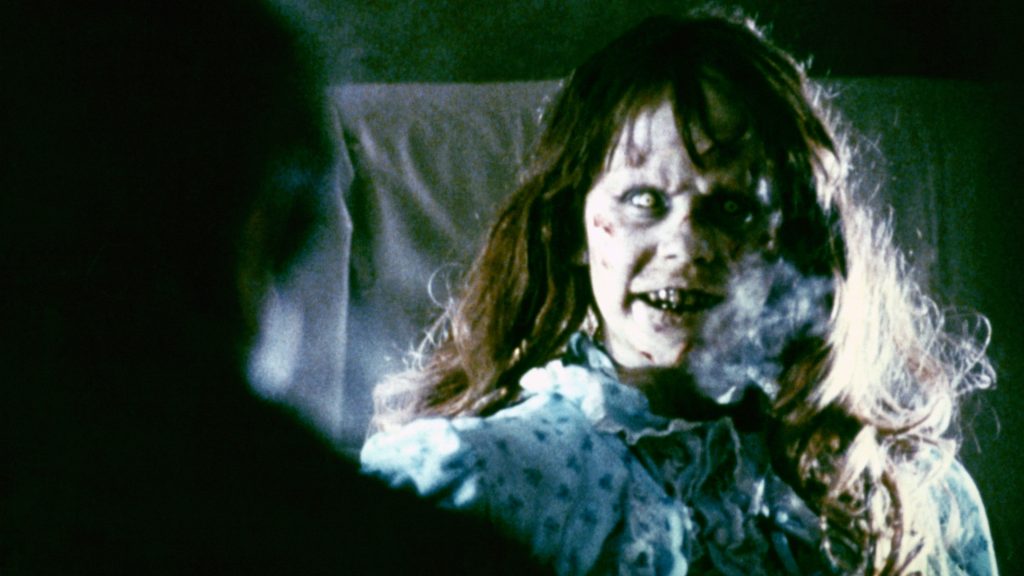
Most horror fans today don’t get the weight of that. They think the exorcism is just the boss fight at the end of the movie. It’s not. It’s a liturgy. It’s a formal, rhythmic, and dramatic confrontation where the physical world is set aside in favor of a spiritual war. And Friedkin films it in a room that is literally freezing—a detail that adds a layer of physical suffering to the actors that you just can’t fake. You can see their breath. You can feel the cold. It’s the heart of the scene meeting the spirit of the text.
The Desecration of the Icon
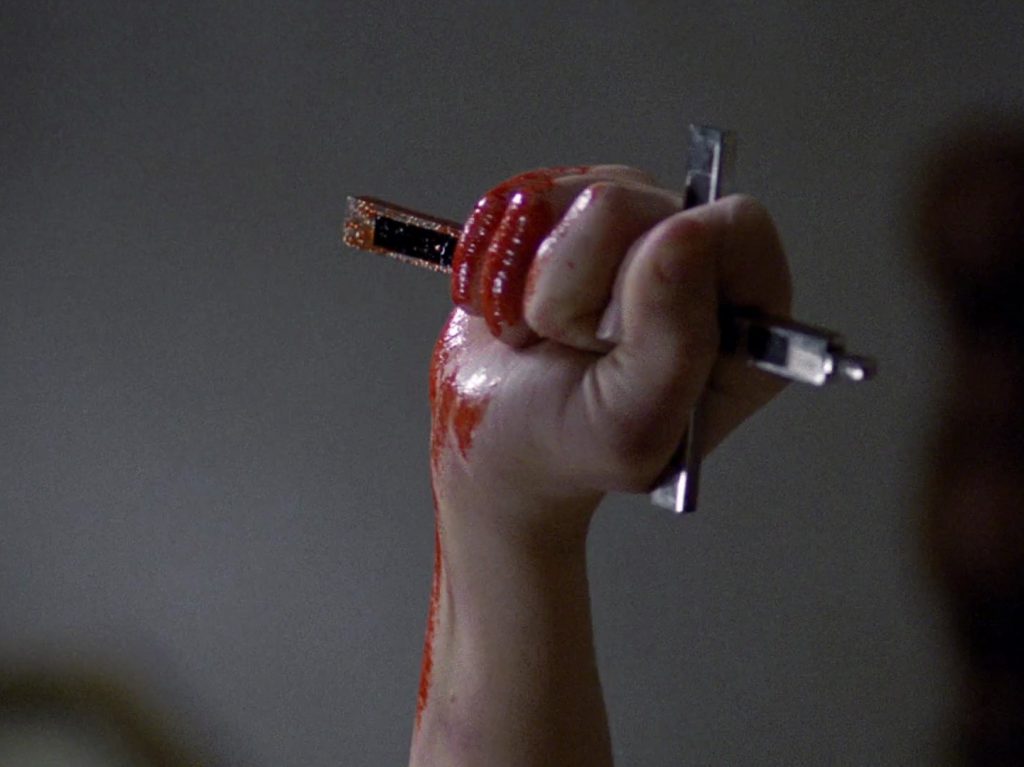
I know that even today there are people who say the movie is sensationalist. They say it’s gross-out horror. They act like the scene where Regan uses the crucifix is just there for shock value.
Those people are ignorant.
If you aren’t shocked by The Exorcist, you aren’t paying attention. It’s supposed to be shocking. It’s supposed to cross the line. Horror is the only genre that is named after a physiological reaction—if it doesn’t make you feel sick, if it doesn’t make you want to look away, it hasn’t done its job.
These elements of The Exorcist—the vomit, the urine, the blood—are essential. They are a reminder that we are all just biological machines held together by hope and habit. When the demon desecrates Regan’s body, it is a reminder that without the spiritual core, we are nothing but slabs of flesh. I love that Friedkin doesn’t shy away from the nastiness. He doesn’t give us a safe exorcism where the girl just sleeps while the priests pray. He gives us a war zone.
He treats the audience like adults. He says, “You want to see what Evil looks like? It looks like a twelve-year-old girl stabbing herself with a cross while she screams things that would make a sailor blush.” It’s a direct, confrontational connection. It’s Friedkin looking at the offended crowds of 1973 and saying, “Go back to your dramas. This is for the people who want to see the terrifying truth.”
The Blatty/Friedkin Duality: A Conflict of Conviction
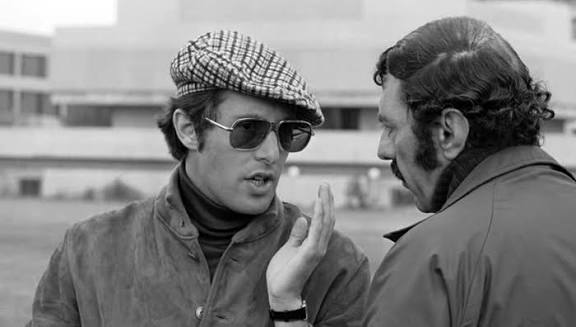
To understand this film, you have to understand the war behind the camera. On one side, you had William Peter Blatty, the author and devout Catholic. He wanted a film that was a pulpit for the Church—a movie that would prove the existence of God by showing the existence of the Devil. On the other side, you had William Friedkin, the Jewish agnostic documentarian who didn’t care about theology; he cared about the visceral impact of the image.
This friction is why the movie is a masterpiece. If Blatty had directed it, it might have been too preachy. If Friedkin had written it, it might have been too hollow. Together, they created a work that operates with a powerful duality. It is both a deeply thematic, philosophical exploration of faith and a punchy, opinionated attack on our comfort.
The film rejects the surface-level analysis of good vs. evil and instead focuses on the necessity of sacrifice. The ending—where Karras invites the demon into his own body—is the ultimate act of ideological conviction. He doesn’t win by being good. He wins by being uncompromising. He takes the darkness into himself and leaps into the abyss, choosing a physical death to achieve a spiritual victory. It is the most selfless ending in the history of cinema.
Final Thoughts
So, why are we still talking about this? Why does The Exorcist still hold the crown while so many other horror movies from the 70s have faded into obscurity?
Because it’s honest.
It’s honest about the fact that sometimes, there is no logical explanation. It’s honest about the fact that death is messy and painful and unfair. And it’s honest about the fact that, sometimes, the only way to find your salvation is to go through the fire.
Karras’s final act is the ultimate sacrifice. It’s not a defeat. It’s a victory. He regains his faith not through a book or a sermon, but through a direct, encounter with the enemy. He sees the Devil, and therefore, he knows that God must exist. It’s a dark, violent, and beautiful resolution that rejects the safe endings of modern cinema.
If we lose movies like The Exorcist, because peoples sensibilities get offended, we lose the soul of the genre. We trade our hacksaws and our holy water for metaphors and social commentary. We start caring more about whether a movie is problematic than whether it’s powerful.
I refuse to do that. I will defend The Exorcist to the death because it’s one of the few things left that still has the balls to be truly horrific. It’s a reminder that there is a reason to the carnage, and that if you can’t handle the heat of Pazuzu’s breath, you have no business calling yourself a horror fan.
The first time I saw this movie, I didn’t feel enlightened. I felt terrified. I felt small. I felt like I had seen something I wasn’t supposed to see. And that, my friend, is exactly what horror is supposed to be. It didn’t educate me or comfort me — it marked me, and I’ve been carrying the scar ever since.


Leave a Reply to Neil Gray Cancel reply