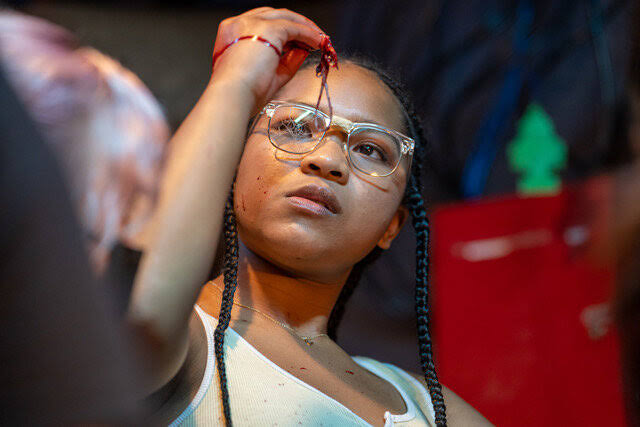
I have to be honest. When I first heard there was a movie called The Angry Black Girl and Her Monster, I scoffed at it. I thought the title sounded pretty silly, so I didn’t think the film would be any good. Then something unexpected happened. I sat down to watch it, and I was blown away. This movie works on pretty much every level. To my surprise, it ended up being one of my favorite cinematic experiences of 2023.
The characters in it are excellent, the horror is fun, and the story is downright captivating. Above all else, what struck me the most was the humanity behind all the monster mayhem. Despite what the title might seem to imply, The Angry Black Girl and Her Monster is way more than just a thrill-a-minute scarefest.
The film also has some real emotional and thematic substance, and it uses its Frankenstein-inspired story to convey a message that’s both utterly timeless and scarily timely. It’s a message we’d all do well to remember a bit more often. Let’s take a deep dive into The Angry Black Girl and Her Monster and see just what this under-the-radar gem has to say about the human condition.
The Basic Plot of The Angry Black Girl and Her Monster
Before we do that, let’s take a minute to go over the basic plot of the movie. The Angry Black Girl and Her Monster centers around a brilliant high schooler named Vicaria (Laya DeLeon Hayes), and it starts with a brief prelude explaining the girl’s history with death. Her mother died unexpectedly when she was only eight, and several years after that, she lost her brother, Chris (Edem Atsu-Swanzy), to gang violence.

Those two tragic losses have led her to believe that death is a disease that spreads like an infection, and she’s determined to find the cure. Through her Frankenstein-esque experiments, she discovers a way to bring her brother back from the grave, and at first, it seems like a great success. However, as you can probably guess, things quickly take a turn for the worse. Chris turns into a monster and goes on a deadly rampage. The only one who can stop him is the teen scientist who gave him life.
“They Called Him a Monster”
From that brief plot synopsis, it might not seem like The Angry Black Girl and Her Monsteris anything more than a stereotypical cautionary tale against playing God, but trust me, there’s a lot more to this film than meets the eye. To begin, it’s important to look at Chris’s arc, and we can take our cue from the touching words his sister speaks to him right before his second death.
With barely enough energy left to speak, Chris says, “I’m a monster. My name is Monster,” but Vicaria will have none of it. She beautifully affirms his humanity, saying, “No, you’re Chris. You’re my daddy’s son, my mother’s child.” Then, when her friend Jada (Amani Summer) asks why he hurt so many people, Vicaria responds, “They called him a monster, and he believed it. They made him one.”
In other words, Chris may have done some terrible things, but those evil actions don’t define him. He’s still a human being who deserves to be loved, and his monstrous killing spree doesn’t change that. In fact, as bad as those murders are, we can’t lay the blame entirely at Chris’s feet. He was pushed into becoming a killer by people and circumstances outside his control, and to see how we have to rewind the movie and examine his victims one by one.
The Monster’s Victims
The first time Chris attacks someone, he does it out of self-defense. He and his sister are held up at gunpoint by a local gangbanger named Curt (Jeremy DeCarlos), and he only becomes violent when the guy pulls the trigger and shoots him.
Sometime after that, Vicaria comes across a dead police officer, whom she assumes was Chris’s second victim, but things are not always as they seem. A few scenes later, we hear a gangbanger named Jamaal (Keith Holliday) brag about killing a cop, so the corpse Vicaria saw is most likely Jamaal’s handiwork, not Chris’s.
Afterwards, Chris also goes after Jamaal, a police officer who calls him a monster and tries to arrest him, and some friends and family members who attack him because they don’t believe it’s him. In every case, he only becomes violent when he’s provoked. Just like Vicaria says at the end, he turns into a monster because people call him one. Literally.
In fact, if we pay close attention to the final confrontation between Chris and Vicaria, it’s not even clear that he’s trying to harm his sister, at least not initially. See, he pops up right as Jamaal is attacking her, and when he kills the guy, he could very well be defending his sister. However, when Vicaria sees him, she acts just like everyone else.

She assumes he’s a vicious killer, so she immediately runs and hides. She doesn’t even consider the possibility that he might be trying to help her, so who knows how things would’ve played out if she had tried talking to him. Maybe he would’ve calmed down and shown himself to be the loving brother she always knew, or maybe she was right, and he would’ve just killed her.
We’ll never know, but the point is that she’s no different from the other characters in The Angry Black Girl and Her Monster. The only person who treats Chris like a human being is Vicaria’s friend Jada, and significantly, Chris doesn’t hurt her. He’s gentle with her because she’s kind to him, but he acts like a monster to everyone else because they all treat him like one first.
Human Stories
If you’re a genre veteran, you probably know that good horror movies often use their monster mayhem to mirror the human stories they tell. The Angry Black Girl and Her Monster is no different. As we’ve seen, it’s about a monster who’s pushed into violence by forces outside his control, and if we examine the human drama in the film, we’ll find a very similar dynamic at play.
Let’s start with Chris (before he died and came back to life). The movie’s introduction tells us that he got involved in a local gang at some point, but it doesn’t say why. However, if we read between the lines a bit, it’s not hard to figure that out for ourselves.
He was just a kid when he and Vicaria lost their mother, and after she died, his father started working two jobs. He was a mechanic by day and a security guard by night, so he probably didn’t have much time to spend with his children. Because of that, Chris had to face the one-two punch of intense grief and an absent father (even if understandably so), and that’s a deadly combination. He was probably desperate for the loving attention he could no longer get from his parents, so he was left very vulnerable to the kind of seductive brainwashing gangs often employ to attract new members.
Similarly, after Chris died, Vicaria’s father was in so much pain he turned to drugs to help him cope, and at one point in The Angry Black Girl and Her Monster, Vicaria herself is forcibly recruited by her brother’s former gang to help cut their drugs. She refuses at first, but when one of the gangbangers puts a machete to her neck, she has no choice but to comply.

Last but not least, we have to talk about a man named Kango (Denzel Whitaker). He’s the leader of the local gang that controls Vicaria’s neighborhood, and when we first meet him, he seems like a despicable human being. He shows absolutely no remorse for sending Chris on the mission that led to his death or for getting Vicaria’s father addicted to drugs, so you can’t help but hate this guy with a burning passion.
However, as The Angry Black Girl and Her Monster goes on, we slowly come to sympathize with him. Towards the end of the film, there’s a scene where he gives his sick grandmother a glass of water, and he lovingly kneels next to her while he does it. It’s admittedly a brief moment, but it adds a surprising touch of humanity to this otherwise monstrous gang leader, and it gives us a glimpse into why he probably entered gang life in the first place. His grandmother almost certainly has expensive medical bills, so he most likely joined the gang to get her the money she needs to pay those bills.
On top of that, Kango also plays an important role in the third act of this movie. He helps Vicaria end her brother’s reign of terror, and he shows that he really cares about her and wants her to make it out alive. Again, this surprising twist humanizes the character quite a bit, so you realize that he’s more than just a gang leader. He’s also a human being capable of showing genuine love and concern for others.
The Message Behind the Monster
Now that we’ve gone over the various ways The Angry Black Girl and Her Monster hammers home its main theme, we’re finally ready to take a step back and look at the bigger picture. What does it all mean, and what important lessons can this film teach us about the human condition?
First and foremost, I want to be clear about what the movie isn’t trying to say. It’s not telling us that we should just let all criminals off the hook. People like Kango should definitely be taken off the streets and punished, and nothing in The Angry Black Girl and Her Monster implies anything to the contrary.
Instead, the film makes two important points. For starters, it shows us that no matter what people do, they can never lose their basic humanity or the dignity that comes with it. That dignity is inalienable, so while people sometimes need to be punished for their actions, they still deserve to be loved, just like Vicaria still loved her brother even after he went on a murderous rampage.
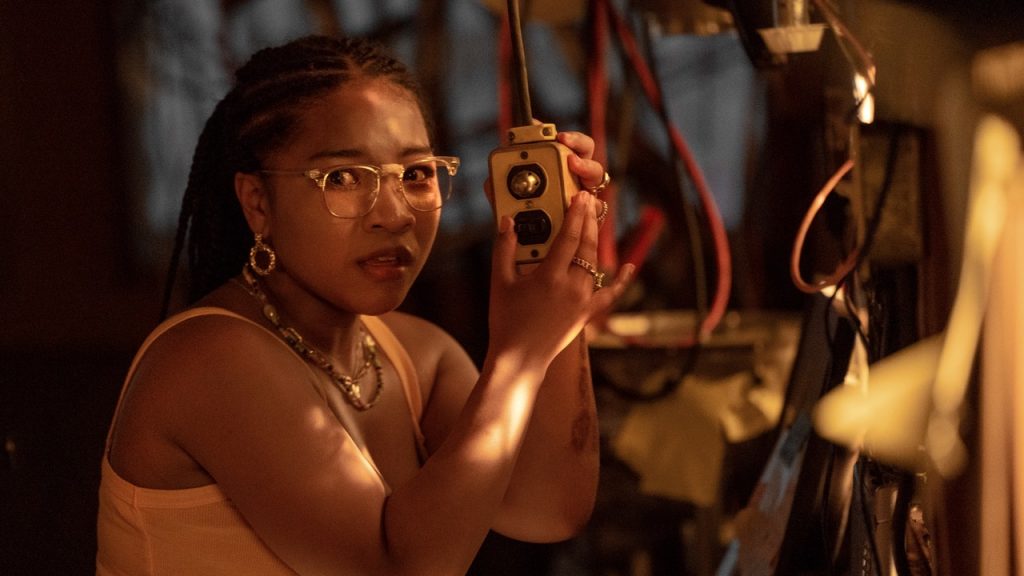
Secondly, the characters in The Angry Black Girl and Her Monster aren’t anomalies. People are often pushed into bad choices by factors outside their control in real life, too. For instance, they can be literally forced at gunpoint (or at machete’s edge) like Vicaria; they can be overwhelmed by grief and loneliness like Chris and his father; or, like Kango, they may have to choose between hurting people and letting someone they love die.
But regardless of how it happens, the fact is that people who victimize others are also often victims themselves. As the old saying goes, hurt people hurt people, so if we want to make the world a better place, we can’t just focus on punishing criminals. We also have to combat the conditions that push people to commit crimes. Otherwise, we’ll just allow these cycles of violence and misery to continue, and few horror movies illustrate that important truth as well as The Angry Black Girl and Her Monster.

Leave a Reply