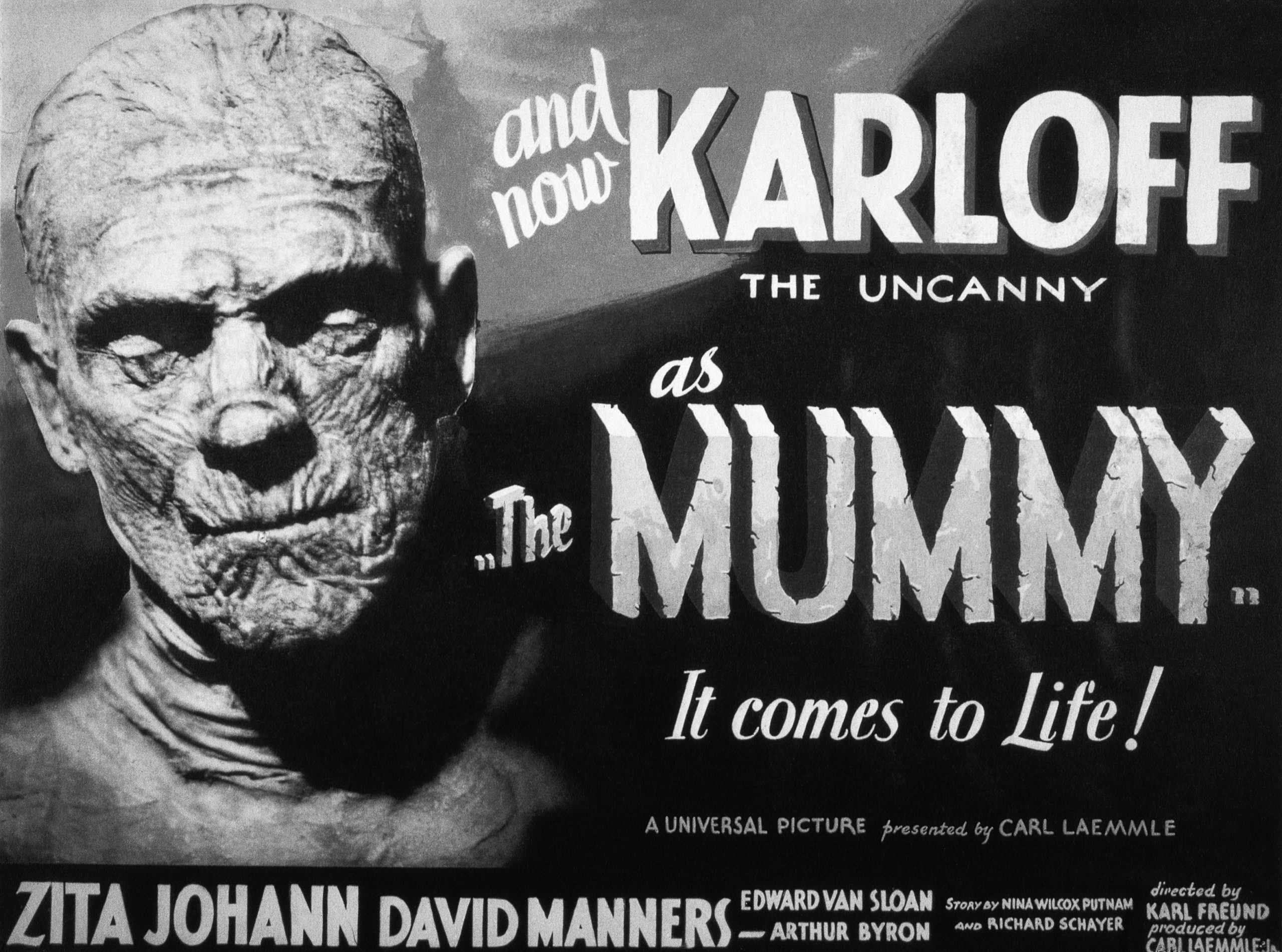
Most horror films of the 1930s make a hell of a lot of noise. They rely on booming organ music, villagers running around with flaming torches, or mad scientists screaming at the heavens while lightning cracks over a laboratory.
The Mummy doesn’t bother with any of that.
Released in 1932 and directed by Karl Freund, this isn’t a modern action film where a CGI corpse jumps around doing backflips in a sandstorm. It’s slow, deliberate, quiet, and completely fucking unsettling.
At its core, this isn’t even a creature feature. It’s a 73-minute film about an ancient Egyptian priest who gets buried alive for being too horny, wakes up 3,700 years later, puts on a tweed suit, and tries to gaslight a woman into killing herself so they can date in the afterlife.
It’s mad. And it’s brilliant.
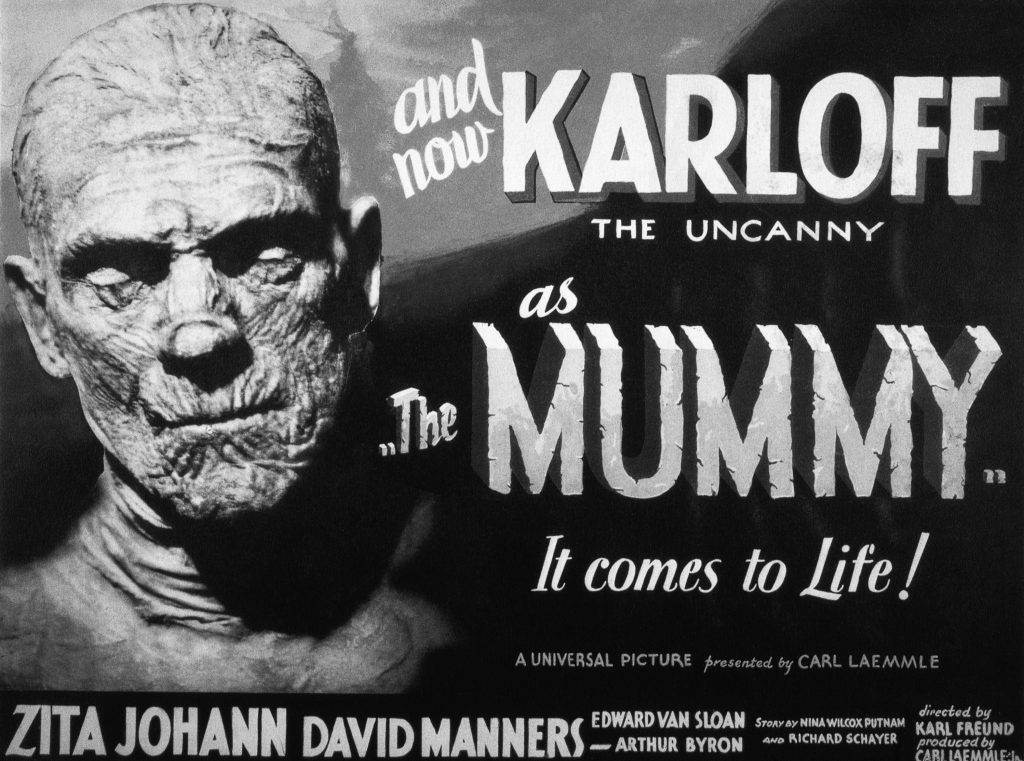
We open in 1921 with a British archaeological expedition in Egypt. They unearth the sarcophagus of Imhotep, played by Boris Karloff (credited simply as “Karloff” or “Karloff the Uncanny” to keep the illusion going). Along with the body, they find the Scroll of Thoth.
Now, every single rule of basic survival dictates that when you dig up a guy whose heart wasn’t ripped out and stuck in a jar, meaning the ancient authorities thought he was far too dangerous to go to the afterlife, you leave his personal library alone.
So they leave it alone, right?
Of course they don’t.
A young assistant named Ralph stays behind, decides to translate the scroll out loud, and accidentally reads the magic spell that brings Imhotep back to life.
What follows is one of the absolute best pieces of horror staging in cinema history. Karloff doesn’t jump up and chase him. He slowly opens his eyes, his hands move, and he simply reaches out to grab the scroll. We don’t even see him walk out of the room. We just see his tattered bandages dragging behind him across the floor.
Ralph doesn’t scream. He doesn’t run. His brain simply snaps on the spot. When the senior archaeologist comes back into the tent, Ralph is sitting in the corner, laughing hysterically and cackling: “He went for a little walk!”
Honestly, it’s the only rational reaction to accidentally reviving a three-thousand-year-old priest.
Flash forward ten years to 1932.
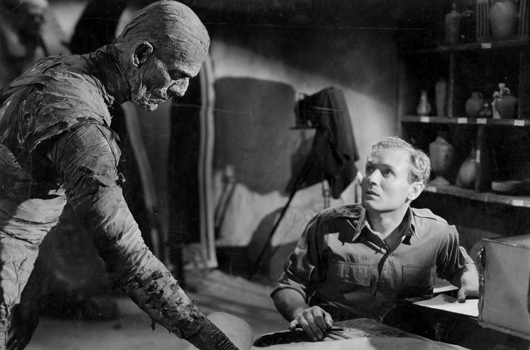
Imhotep has spent a decade navigating modern society. He’s ditched the bandages, wrapped himself in a heavy cloak, and goes by the name Ardeth Bey.
Karloff looks astounding.
Freund, who shot Metropolis and Dracula before stepping behind the camera here, lights Karloff’s face like a cracked clay pot, thanks to hours of agonising work by makeup legend Jack Pierce. He barely moves. He doesn’t blink. He stands there looking like a man who has been dead for three millennia and finds the modern world intensely irritating.
Ardeth Bey casually strolls up to another team of British archaeologists, points them toward the tomb of Princess Ankh-es-en-amon, and essentially says, “Look over there, lads. Crack that one open.”
They dig it up, bring the artifacts to the museum in Cairo, and that’s where the real madness begins.
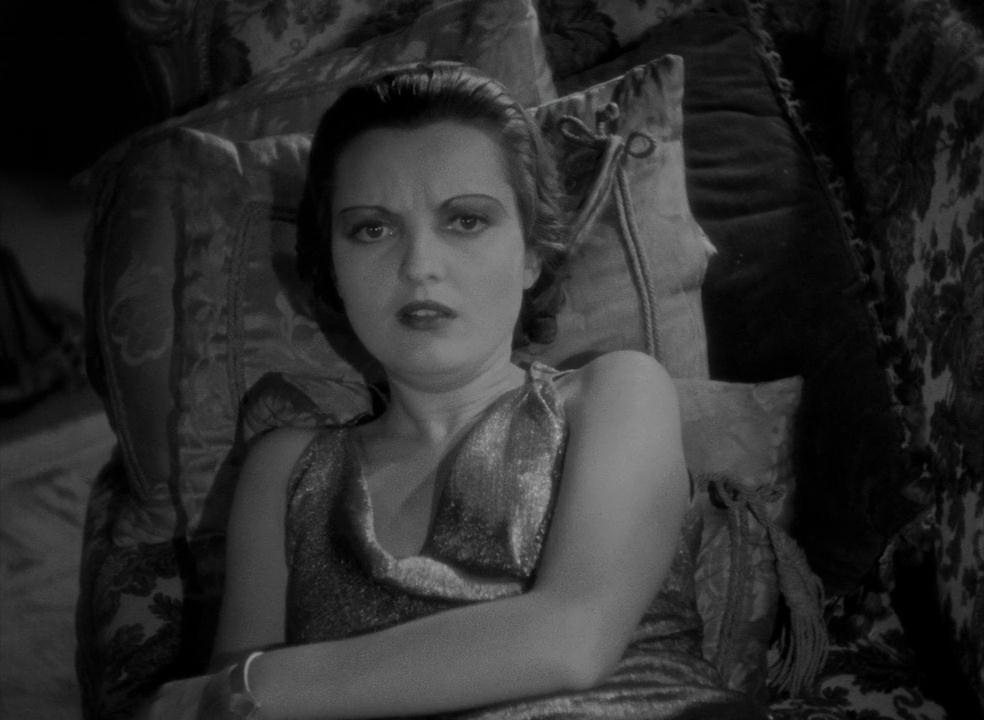
Enter Helen Grosvenor, played by Zita Johann. She is half-white, half-Egyptian, and happens to be the dead ring-a-ding reincarnation of Imhotep’s lost love. The moment Imhotep spots her, he puts the psychic hard word on her, trying to force her to remember her past life so he can sacrifice her, mummify her, and live happily ever after as undead royals.
Zita Johann is fantastic here, mostly because she plays the whole thing like she’s fighting off a brutal migraine while being aggressively hit on by a walking piece of beef jerky.
Then we get the flashback sequence explaining why Imhotep was sealed up in the first place.
It turns out he tried to steal the Scroll of Thoth to bring Ankh-es-en-amon back from the dead around 1370 BC. The Pharaoh’s guards caught him red-handed, stripped him, wrapped him up, and buried him alive.
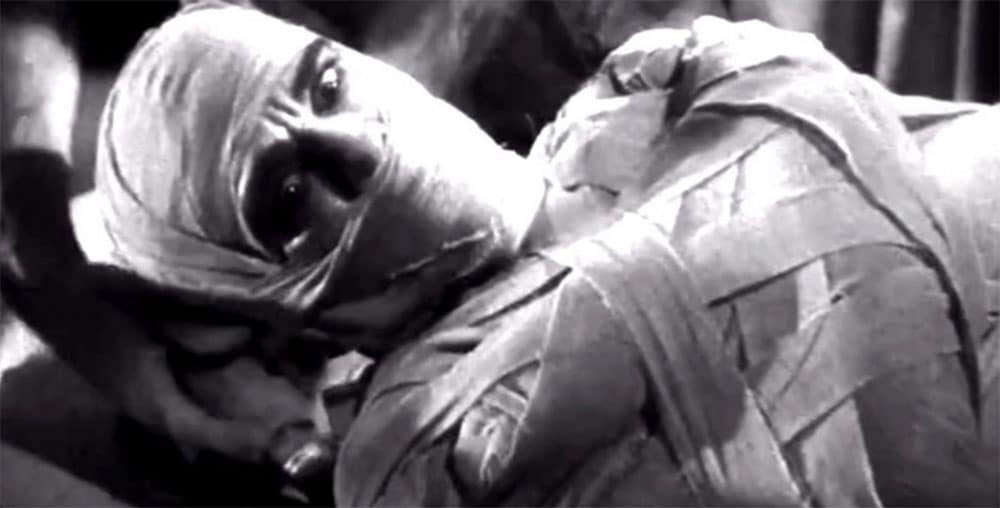
The scene where they bind Karloff’s face while he looks directly into the camera with absolute, helpless dread is genuine nightmare fuel. The horror doesn’t come from gore; it’s the sheer claustrophobic panic of being sealed in a box while completely conscious.
The climax takes place in the museum, where Imhotep tries to complete the ritual. Helen realizes that no amount of modern science or frantic British men with revolvers is going to save her, so she prays directly to a statue of the goddess Isis.
Isis basically says, “Not on my watch, mate,” and raises her bronze arm, striking the Scroll of Thoth with a ray of light that burns it to ash.
Without the scroll powering him, Imhotep’s magic instantly evaporates. He ages 3,000 years in five seconds, crumbling into a heap of bones and dust right on the museum floor.
He doesn’t get taken out by a grand hero moment. The creepy old bastard simply collapses into dirt because his magic paper caught fire.
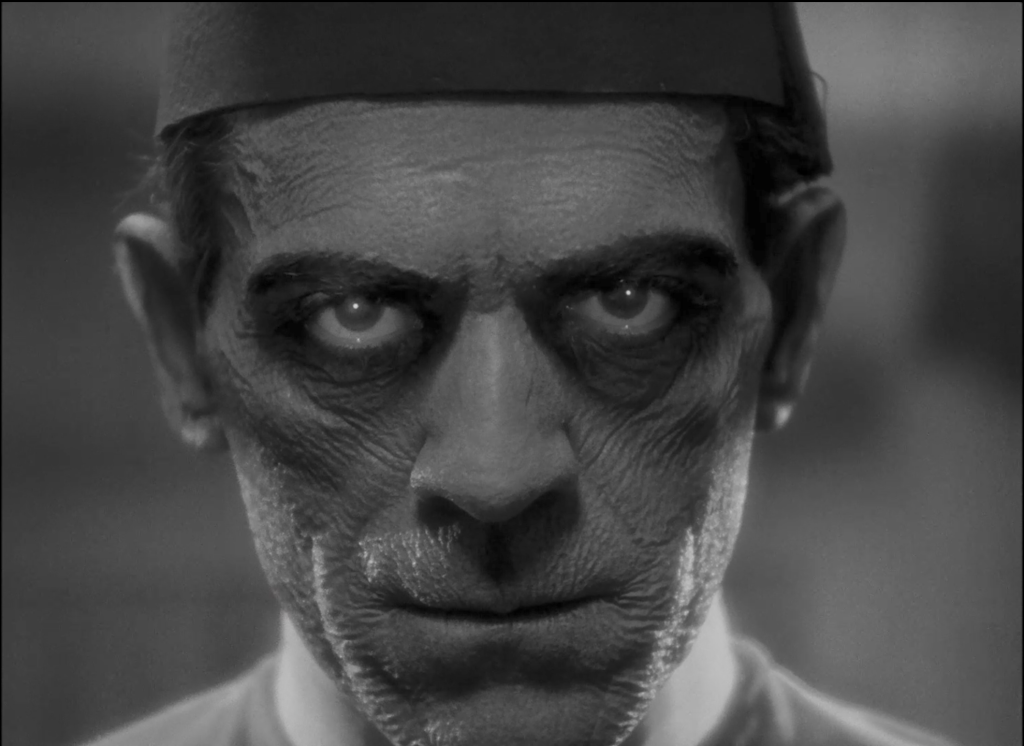
What makes The Mummy work so remarkably well is Freund’s lighting and atmospheric control. The whole film feels heavy, dusty, and suffocating. The shadows don’t just sit in the corners; they feel like they’re actively creeping across the room.
And at the center of it all is Karloff.
Without shouting or relying on monster makeup tricks, he creates a character who is simultaneously monstrous, tragic, and utterly terrifying through sheer physical stillness.
It’s short, it’s eerie, it’s beautifully shot, and it features a man going completely insane because a corpse went for a stroll.
It’s a work of art.
Leave a Reply