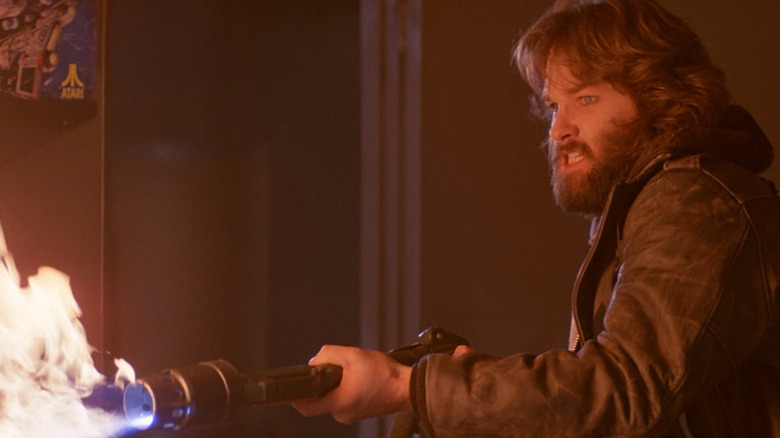
When John Carpenter’s The Thing landed in theaters in the summer of 1982, it didn’t just walk through the front door; it burst through the wall like something that had run out of room inside its own skin. It was a high-tension, high-octane masterpiece that arrived at the worst possible time. Audiences were busy falling in love with a brown, finger-glowing alien who just wanted to eat Reese’s Pieces and phone home.
Carpenter, however, had a different plan. He wanted to give us an alien that didn’t want your candy—it wanted your cellular identity. It wanted to digest you, mimic you, and then sprout a dozen extra limbs from your chest while your best friend was trying to give you a light for your cigarette.
Critics called it disgusting and nihilistic, dismissing it as cold, excessive, and downright unpleasant. But we know the truth: those critics just couldn’t handle the glorious, pulsating, practical-effects-driven rhythm of Rob Bottin’s creature shop. It crashed into theaters during the most unlikely summer for nihilistic horror, and it remains the gold standard for anyone who loves their horror with a side of “how the hell did they do that?”
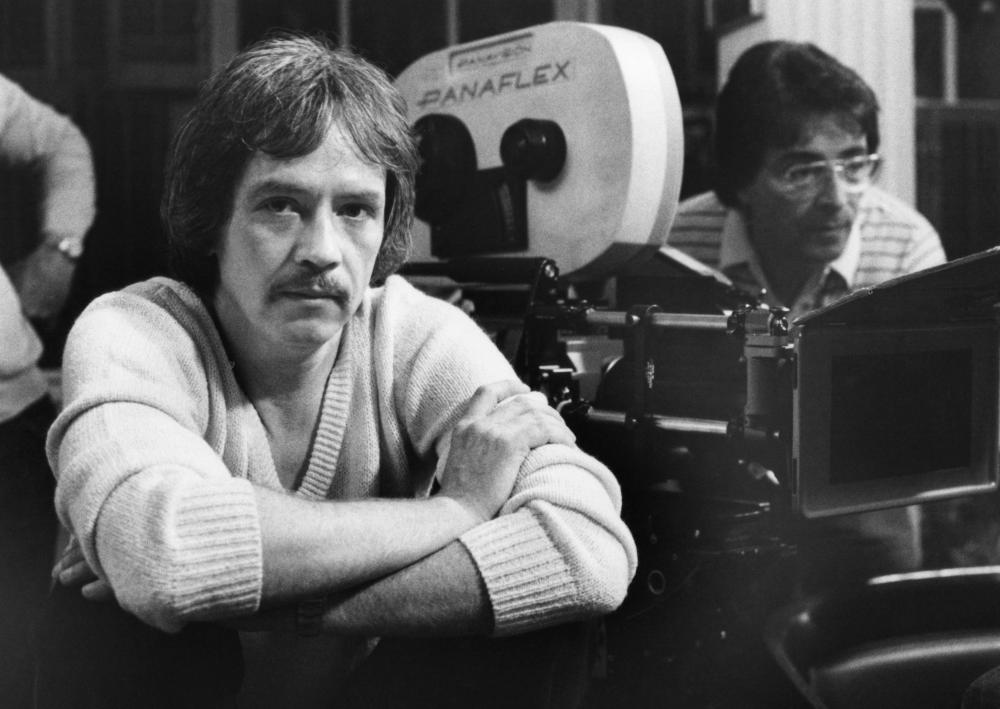
The King of the Cold—John Carpenter at the Helm
By 1982, John Carpenter was the reigning champ of lean, mean horror. He’d already given us the slasher blueprint with Halloween and the atmospheric fog-machine madness of, well, The Fog. But with The Thing, he had a bigger budget, a darker vision, and a burning desire to return to the roots of John W. Campbell Jr.’s original novella, Who Goes There?.
Carpenter didn’t want the heroic military vibe of the 1951 film. He didn’t want a super-carrot walking through doorways. He wanted a nihilistic, alcohol-soaked pressure cooker where the monster was invisible until it was far, far too late. He realized that the true horror of the shapeshifter isn’t just the teeth and the claws—it’s the paranoia.
It’s the idea that your best friend, the guy you’ve been playing poker with for six months, is actually a cosmic parasite waiting for the right moment to turn his head into a spider. Carpenter shifted the energy from an external chase to an internal, psychological meltdown. It’s the ultimate Who-Done-It where the “it” is a bunch of sentient, hungry meat.
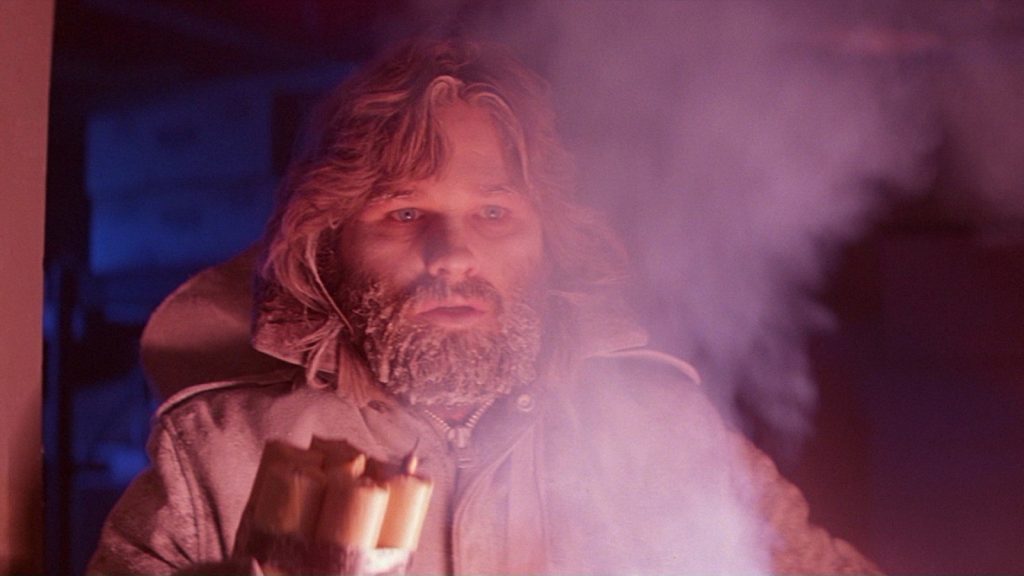
The Legend of MacReady
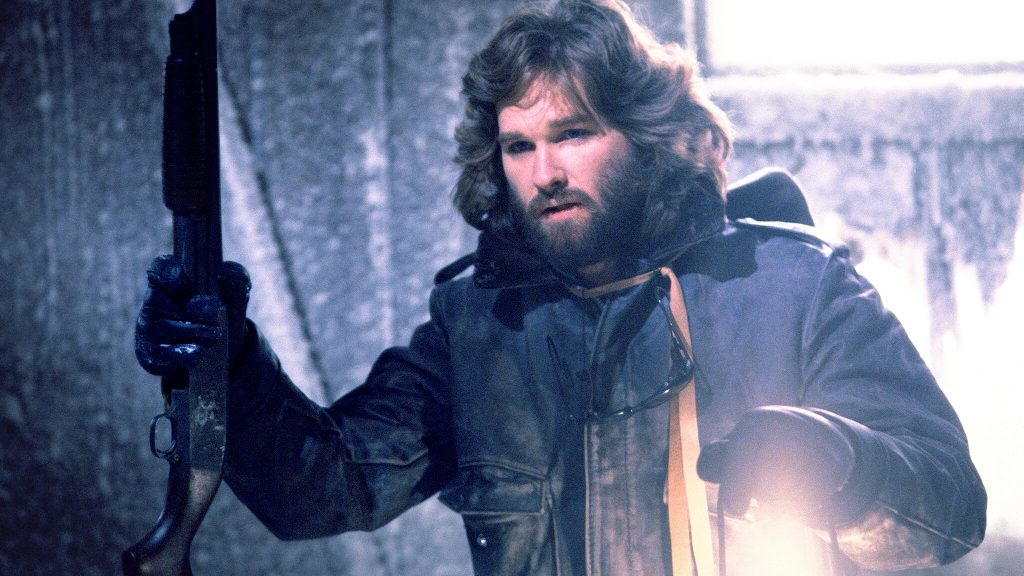
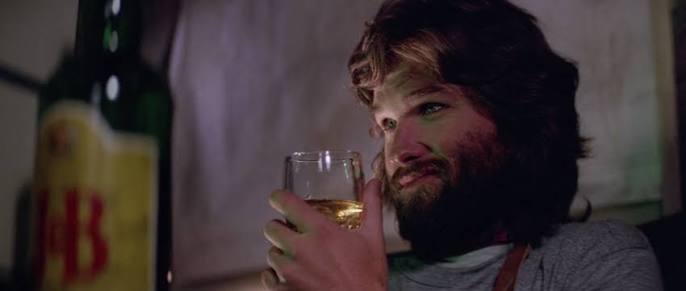
If Bruce Campbell is the King of the Deadites, Kurt Russell’s R.J. MacReady is the Patron Saint of Antarctic Grit. MacReady isn’t a classic hero, not by a long shot. When we first meet him, he’s in his private shack, draped in a massive sombrero and a fur-lined coat, losing a game of chess to a computer. His reaction? He pours his J&B scotch into the circuit board and calls the machine a cheating bitch.
That’s our hero: a cynical, tired pilot who just wants to be left alone but ends up being the only person with the stones to pick up a flamethrower when the DNA starts hitting the fan. Russell plays MacReady with a no-nonsense energy that grounds the absolute insanity of the effects. He isn’t screaming in terror; he’s trying to solve a problem with a bundle of dynamite. He’s the anchor in a sea of shifting meat, providing the kind of resilience that makes us root for the guy even when he’s threatening to blow everyone to kingdom come.
Outpost 31—The Fellowship of the Doomed
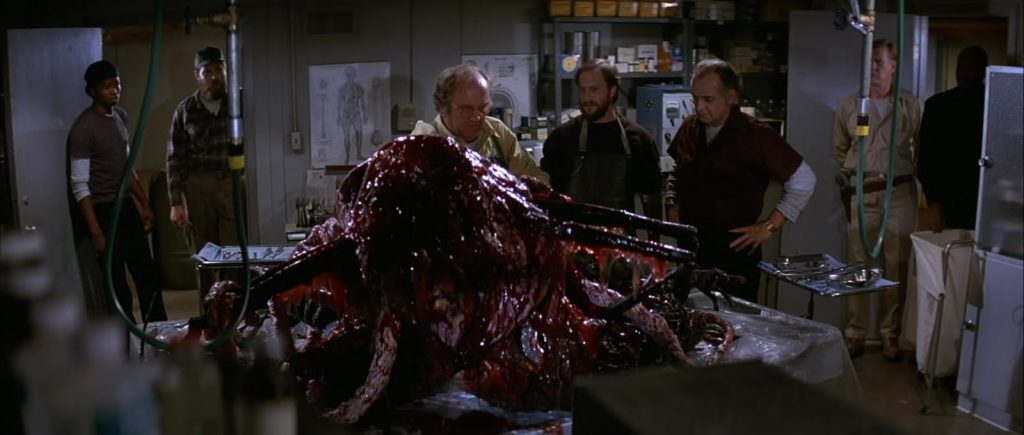
The cast of The Thing is a masterclass in character acting. You’ve got Keith David as Childs—the massive, skeptical presence who serves as the perfect foil for MacReady. You’ve got Wilford Brimley as Dr. Blair, the man who does the math, realizes they’re all dead, and decides that a shed and a shotgun are his only friends.
Unlike the 1951 crew, who were all buddy-buddy Air Force guys, the residents of Outpost 31 are a group of blue-collar workers who have spent way too much time in a frozen box together. There’s a layer of frost on their relationships before the alien even shows up. The set design is a character itself—a claustrophobic, flickering labyrinth of metal and shadows. It’s a haunted house at the end of the world, where every dark corner feels like it’s breathing.
The Practical Effects Revolution—Rob Bottin’s Fever Dream
Only in his early twenties, Rob Bottin basically lived on the set, sleeping in the creature shop and working himself into a hospital stay to create the most insane practical effects ever captured on film.
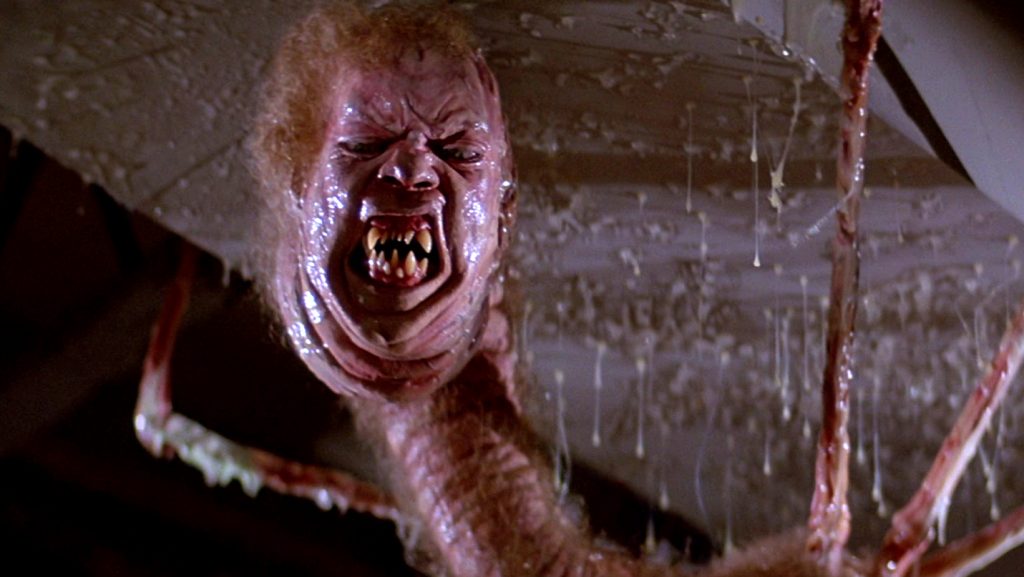
The effects aren’t just scary—they are absurdly creative. They are so grotesque and biologically impossible that they circle back around to being a dark, twisted kind of art. Bottin ignored the rules of anatomy. He figured that if an alien is made of sentient cells, it doesn’t need to look like a simple, standard monster. It can look like a nightmare buffet.
The Kennel Scene (The Banana Dog): The moment the Norwegian Dog starts peeling apart like a piece of fruit is the moment horror changed forever. Tentacles, spider-legs, and a flower head that sprays yellow goop everywhere. It’s a chaotic, wet, and noisy sequence. There’s no CGI here, folks. It’s all puppets, cables, and a lot of KY Jelly. It told the 1982 audience: “Throw away your expectations. Your logic has no power here.”
The Chest Defibrillation (The Big Mouth): This is the most jaw-dropping moment of The Thing. Norris is on the table, seemingly dead. Dr. Copper goes to shock his heart back to life with the paddles. Suddenly, Norris’s chest cavity opens up like a giant set of shark teeth and chomps Copper’s arms off. It’s a jump scare that pays off with literal splat.
The Spider-Head: Seconds after the chest-chomp, Norris’s head detaches itself, sprouts spider legs and eyes on stalks, and tries to scuttle out of the room. It is the ultimate B-movie visual. David Clennon (playing Palmer) utters the most iconic line in the film:
“You gotta be fucking kidding.”
That line is the soul of this genre. It acknowledges the sheer, hilarious impossibility of the horror while still being absolutely terrified by it.
The Blood Test
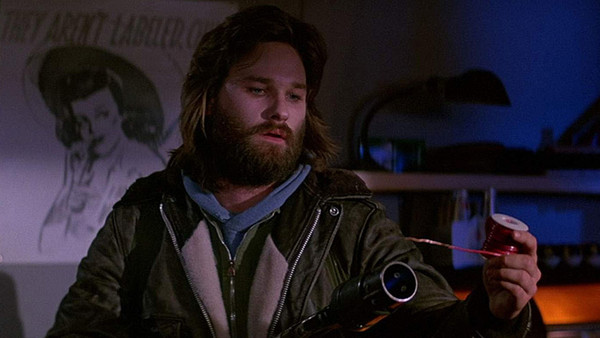
The Blood Test in The Thing is the movies tactical peak. MacReady has the remaining survivors tied to a couch. He’s got a petri dish for each of them. He’s got a hot copper wire. He knows that every part of the Thing is a whole—it has a survival instinct. If he touches the blood with the wire, the blood will react.
The tension is unbearable. Ennio Morricone’s pulsating, heartbeat-like score drives the anxiety through the roof. The camera pans across the sweating faces of the crew. Each hiss of the wire hitting the blood is a small explosion of nerves. When the test finally hits the Thing (who happens to be Palmer), the reaction is violent. Palmer doesn’t just reveal himself; the Thing inside him violently writhes, sprouts multiple limbs, and scuttles along the ceiling in a grotesque display that makes earlier transformations look tame.
The Downward Spiral—Blair and the Basement
While MacReady is fighting on the front lines, Dr. Blair has been doing the terrifying math. His computer model predicts total global assimilation in 27,000 hours.
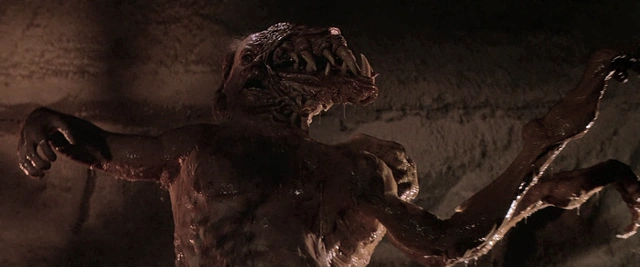
Blair’s descent into madness is chilling. He destroys the radio, the helicopters, and the tractors—killing their only hope of escape to save the rest of the world. He’s locked in a toolshed, where he spends his time building a miniature spaceship out of spare parts (the ultimate mad scientist DIY project). When the crew finally checks on him, they find that Blair isn’t crazy—he’s just been replaced. The Blair-Thing in the finale is a massive, multi-limbed monstrosity that represents the alien’s final, desperate attempt to survive. It’s huge, it’s slimy, and it’s the perfect boss battle for MacReady’s dynamite.
The Ending—The Great Maybe
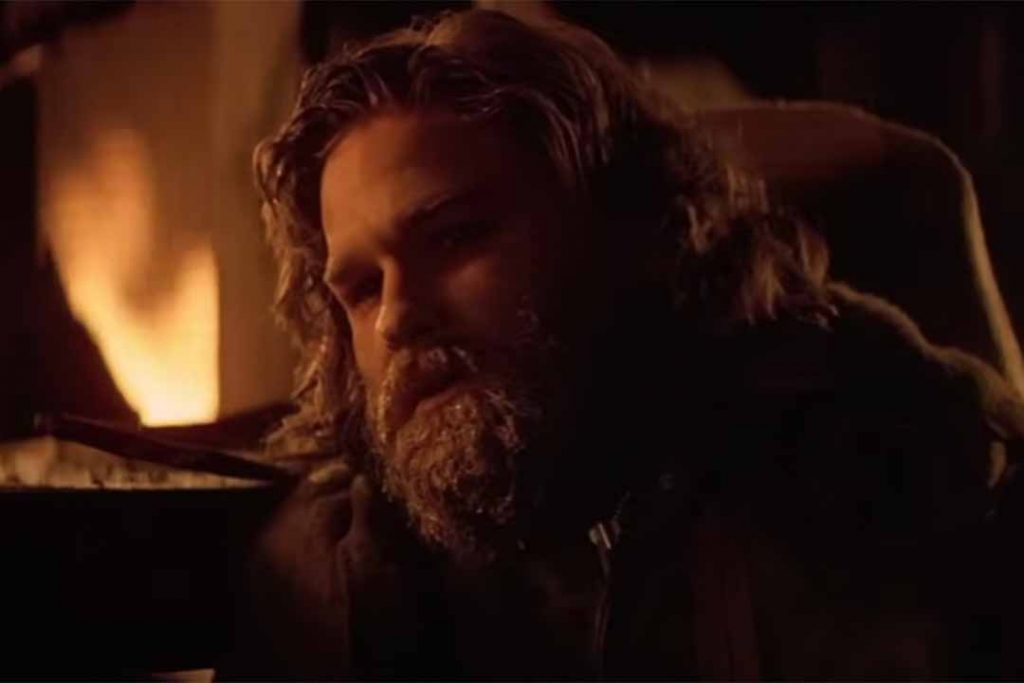
The final scene of The Thing is a masterpiece of ambiguity. The base is a flaming wreck. The alien is “dead.” Only MacReady and Childs are left, sitting in the snow as the fires die down and the cold starts to move back in. They look at each other. Neither knows if the other is human. They are too tired to fight, and the freezing Antarctic night is going to kill them anyway.
“Why don’t we just wait here for a little while… see what happens?”
It’s a nihilistic, beautiful, and haunting conclusion. There’s no triumphant radio broadcast like in the 1951 version. There’s just two men, a bottle of scotch, and the creeping suspicion that the Thing might have won after all. Fans still argue about the breath and the eye glint to this day—the hallmark of a true classic.
Why It Flopped (and Then Conquered)
In June 1982, The Thing had a major problem: E.T. Audiences wanted the cute, finger-glowing alien. They didn’t want the dog-melting, head-sprouting alien who wanted to eat their DNA. Carpenter’s film was too dark, too gross, and too hopeless for the summer of Spielberg.
But the VHS era changed everything. The Thing found its believers in the dimly lit living rooms of the mid-80s. People realized that the effects weren’t just gore—they were a technical achievement. The story wasn’t morose—it was a tight, effective thriller. Today, it’s widely considered one of the greatest horror films ever made, and it remains the pinnacle of practical-effects craftsmanship.

Anatomy of a Monster
Even though The Thing is pure, relentless horror, it shares a dedication to practical effects, body horror, and claustrophobic tension with the best of 1980s creature features.
The Physicality: Everything is wet. Everything has weight. When a creature moves, you hear the squelch and the crunch.
The Wit: The humor is dry and cynical. It’s the laugh or you’ll scream mentality.
The Creativity: Bottin and Carpenter were geeking out on what they could pull off. They were pushing the limits of the frame, just like B-movie directors who had to make a monster out of a bucket of slime and a dream.
Final Thoughts—Thaw Out the J&B
John Carpenter’s The Thing is the ultimate evolution of the creature feature. It took the “Watch the Skies” paranoia of the 50s and brought it down to the microscopic, melt-your-face-off level of the 80s. It’s a movie that rewards repeat viewings. Every time you watch it, you notice a new detail—a glance, a missing piece of clothing, a shadow on the wall.
It’s a puzzle box made of flesh and bone. So, here’s to MacReady, the Spider-Head, and the finest flamethrower therapy session ever filmed.
Leave a Reply