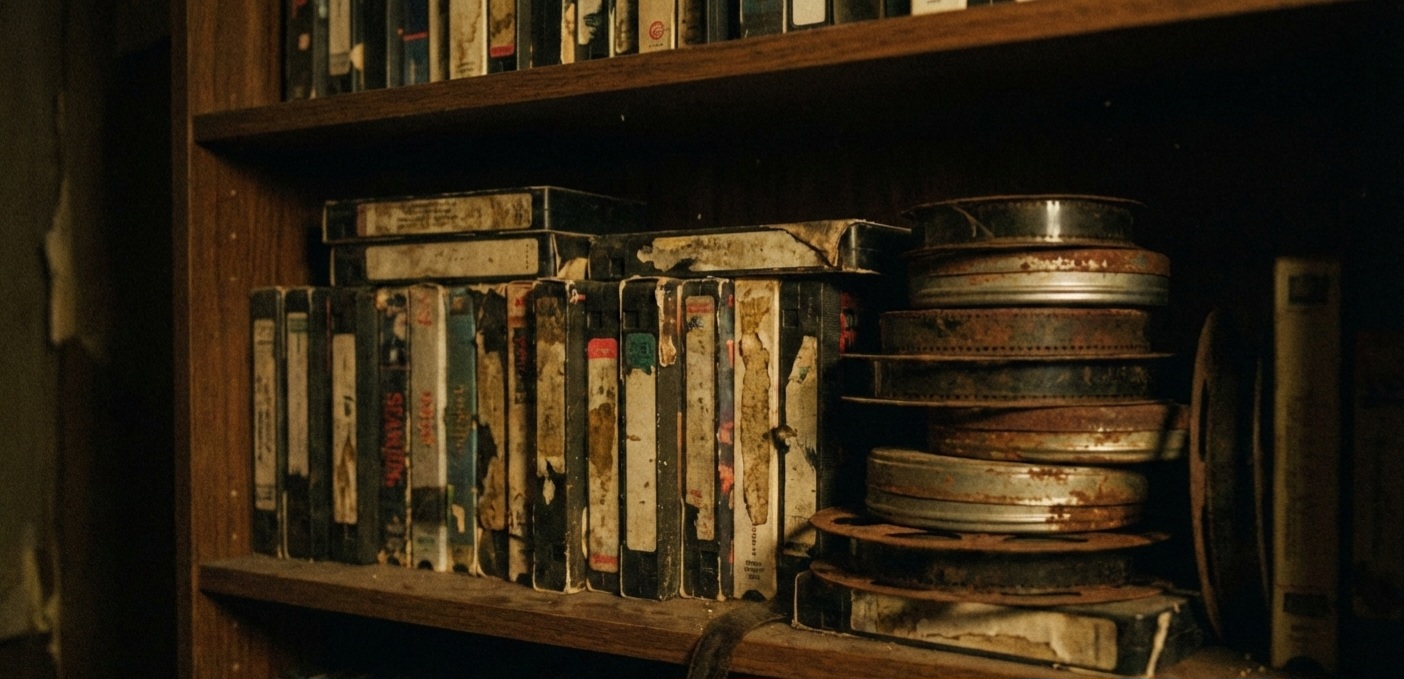

Hold onto your parkas and check the perimeter, because we’re heading back to 1951—the era of black-and-white tension, Geiger counters, and the birth of one of the most resilient myths in horror history. Before John Carpenter gave us the shapeshifting, head-sprouting, masterpiece of 1982, there was the Granddaddy of the Glacier: The Thing from Another World.
Produced by Howard Hawks and officially directed by Christian Nyby — though many swear Hawks had both hands on the wheel — this movie didn’t just scare audiences; it helped codify the isolated-outpost-under-siege template that would echo through decades of sci-fi horror. It’s fast-paced, it’s snappy, and it features a monster that is basically a giant, pissed-off space carrot.
Let’s crack open the ice and dig into the history of the film that taught us to “Watch the skies!”

The Source Material—Who Goes There?
Long before the cameras rolled, there was John W. Campbell Jr. and his 1938 novella, Who Goes There?. In the book, the creature is a shapeshifter—a terrifying chameleon that can mimic any living thing it touches.
Now, in 1951, Hollywood didn’t have the makeup wizardry of Rob Bottin. Trying to show a guy’s chest turning into a mouth or a dog’s head splitting open like a blooming flower would have looked like a mess of wet cardboard and string. So, Hawks and Nyby made a choice that would define their version: they ditched the shapeshifting and turned the Thing into a physical, unstoppable powerhouse.
They traded the psychological “Who can I trust?” paranoia for a high-speed “How do we kill this vegetable?” action-horror hybrid. It was a gamble, but it gave the movie a frantic, rhythmic energy that fits right in with our love for fast-talking, high-stakes B-movies.
The Hawksian Hero—Dialogue at 100 MPH
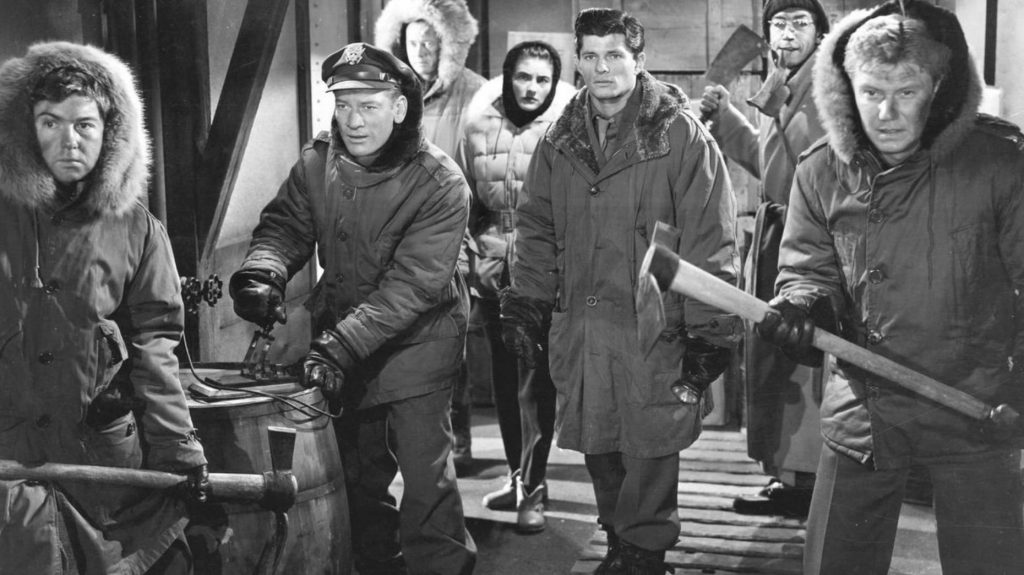
If you watch The Thing from Another World and think, “Wow, these guys talk really fast,” you’re spotting the Howard Hawks influence. Hawks loved overlapping dialogue. Instead of characters waiting for their turn to speak like they’re in a school play, they talk over each other, interrupt, and banter with a natural rhythm.
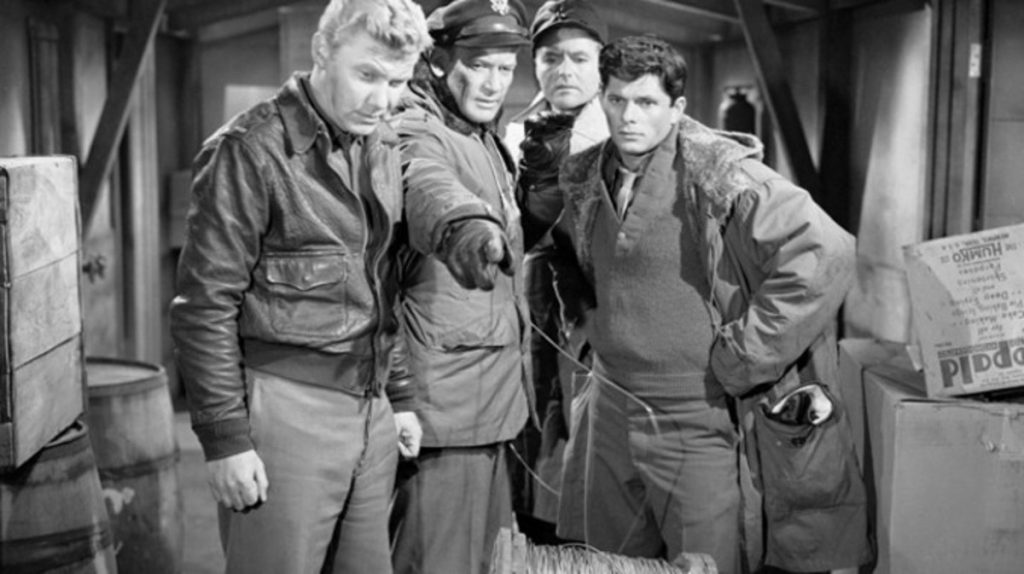
The Crew: The film focuses on Captain Patrick Hendry (Kenneth Tobey) and his crew of Air Force guys sent to a remote Arctic research station. They aren’t brooding loners; they’re professionals who actually like each other. They joke, they rib one another, and they treat the discovery of a crashed flying saucer like a particularly interesting day at the office—until things go south.
The Girl: Then you’ve got Nikki (Margaret Sheridan). In an era where many horror heroines were just there to scream and faint, Nikki is a powerhouse. she drinks the guys under the table, ties the Captain’s hands behind his back (for “research,” of course), and plays a key role in the final plan to electrocute the monster. She’s the spiritual aunt of the tough-as-nails women we see in 80s creature features.
The Discovery in the Ice
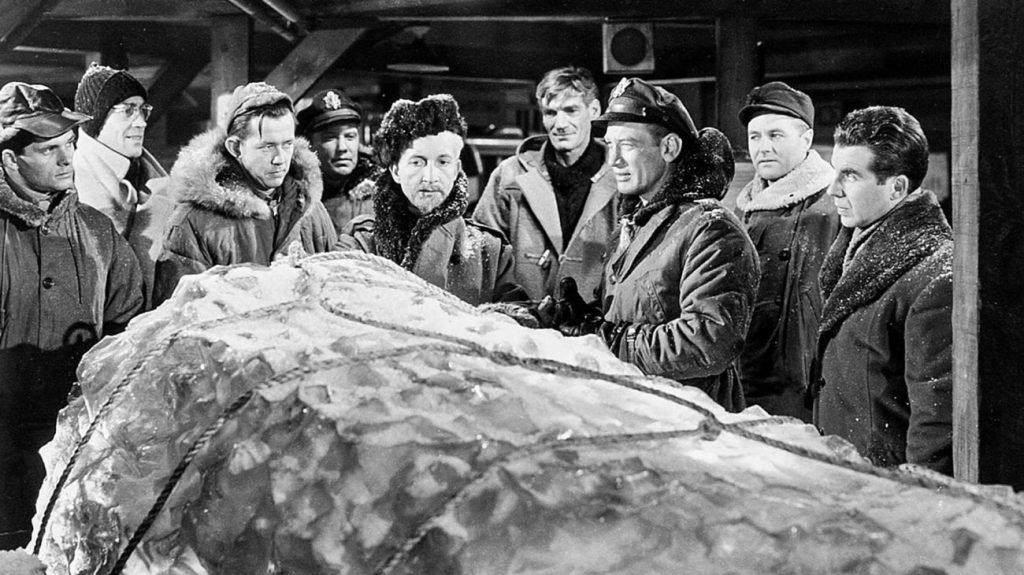
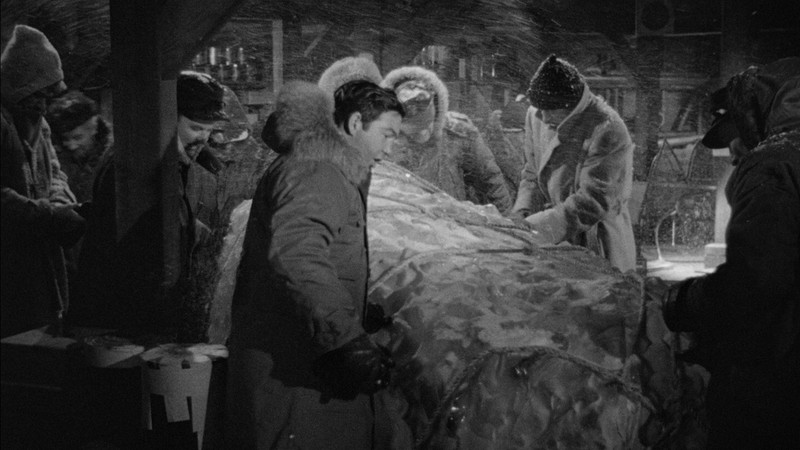
The first act of the movie is a masterclass in building tension. The crew finds a metallic object buried in the ice. To see how big it is, they all stand in a circle around the perimeter. It’s a stunning visual—until they realize they’re standing on a perfect circle. It’s a flying saucer.
In a moment of pure “oops” that any horror fan can appreciate, they try to use thermite to melt the ice and get the ship out. Instead, the whole thing blows up, leaving them with nothing but a frozen pilot thrown clear of the blast.
They haul the ice cube back to the station, and this is where the classic B-movie bad decisions begin. A nervous guard drapes an electric blanket over the block of ice to hide the sight of the frozen alien. The ice melts, the alien wakes up, and suddenly, the Research Station is the world’s coldest killing field.
The Monster—The Super-Carrot from Space
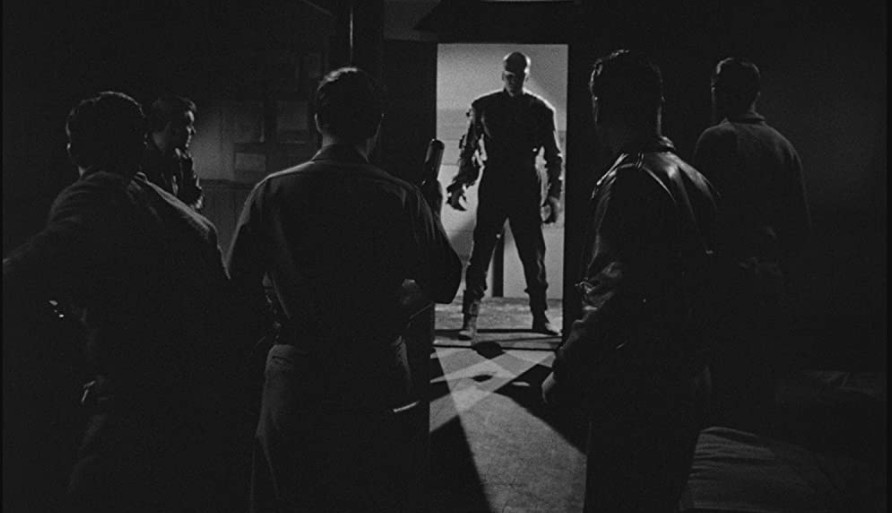
Let’s talk about the Thing itself. Played by James Arness (who would later become a Western icon in Gunsmoke), the creature is a tall, imposing figure with claws and a head that looks like a mutated bulb.
The scientists in the film, led by the knowledge-at-any-cost Dr. Carrington, discover that the creature isn’t animal or human—it’s vegetable. It lives on blood, and it reproduces by dropping seeds from its palms.
It sounds ridiculous on paper, but in the context of the film, it’s terrifying. It’s a creature with no emotions, no heart, and no mercy. It doesn’t want to talk; it wants to use the crew as fertilizer for its babies. The scene where they find the alien seeds growing in a bed of human blood is pure body horror decades before the term was even invented.
Science vs. The Military—The Real Conflict
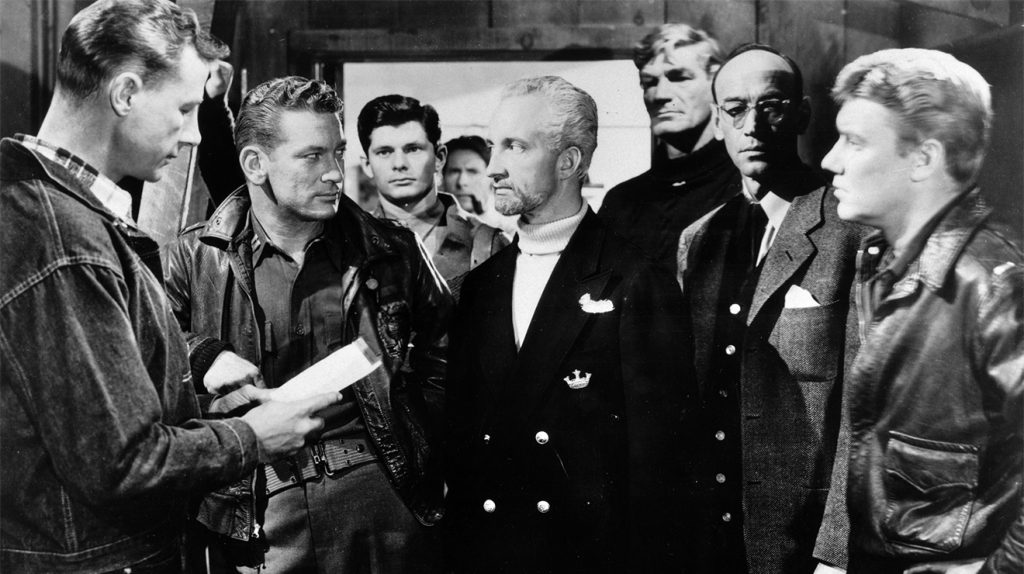
While the monster is the physical threat, the real drama comes from the clash between Captain Hendry (the military man who wants to survive) and Dr. Carrington (the scientist who wants to communicate).
Carrington is the quintessential mad scientist archetype, but he’s played with such icy conviction that you almost understand his point of view—almost. In a fur hat that feels loaded with Cold War-era paranoia, he is willing to sacrifice his entire team just to learn a few secrets from the stars.
The tension between kill it and study it is what keeps the movie’s engine humming. It’s a theme that would be revisited in everything from Aliens to Jurassic Park. But here, in the frozen North, the military’s kill the fucking thing approach is the only thing standing between humanity and becoming a side salad.
Kerosene and Kilowatts
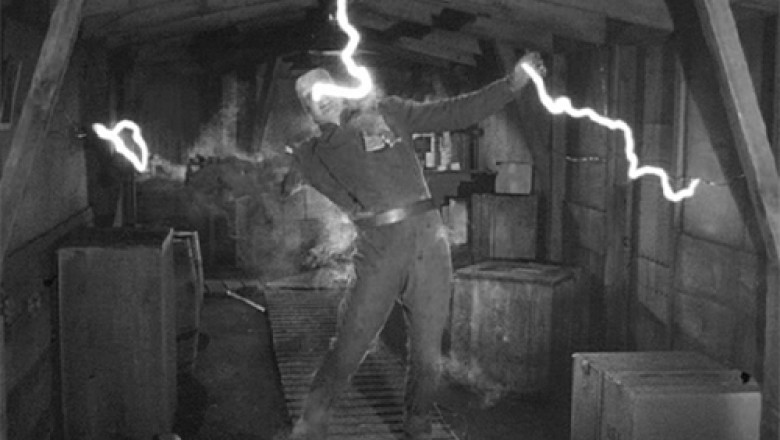
Even without the shape-shifting gore of the ’82 version, the 1951 film has some incredible creature feature action sequences.
The Greenhouse Fight and The Vampire Limb: The crew corners the Thing in a greenhouse. They don’t have fancy pulse rifles; they have axes and dogs. The resulting scrap is chaotic, gritty, and surprisingly violent for the 50s. Earlier, the sled dogs manage to tear off one of the Thing’s arms — which the scientists later study as it begins reacting and attempting to regenerate.
The Fire Sequence: In one of the most famous stunt sequences in early horror, the crew tries to burn the Thing using buckets of kerosene. Arness — along with stunt performers — endured full-body fire gags for these takes, no digital flames here, just guys in a suits covered in accelerant. The sight of the flaming creature jumping out of a window into the snow is an all-time classic monster moment.
The Final Trap: Because the Thing is a super-carrot, bullets don’t do much more than make holes in the leaves. The crew realizes they have to cook it. They set up a bolt strip — a walkway rigged with massive amounts of electricity.The finale is a high-voltage showdown. As the Thing approaches, the tension builds as the men wait for it to step onto the electrified grid. When they flip the switch, the alien is literally fried into a pile of ash. It’s a satisfying conclusion that leaves the audience cheering for the humans.
“Watch the Skies!”—The Cold War Subtext
You can’t talk about The Thing from Another World without talking about the era it was born into. 1951 was the height of the Red Scare. The idea of an unfeeling, unstoppable invader that could infiltrate and destroy from within was a direct reflection of the fear of Communism.
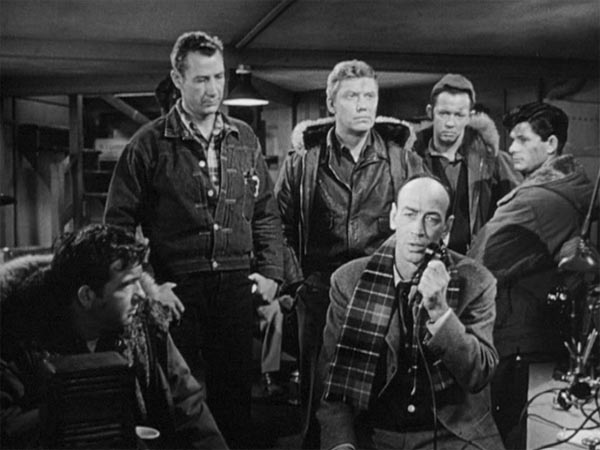
The movie ends with the famous radio broadcast by reporter Ned Scott:
”Everyone of you listening to my voice, tell the world, tell this to everybody wherever they are. Watch the skies. Everywhere. Keep looking. Keep watching the skies.”
It’s a chilling warning that the monster isn’t just a one-off; it’s a sign of things to come. It turned the movie from a simple creature feature into a cultural touchstone. It tapped into a universal fear of the unknown that still resonates today.
The Evolution of the Thing
While Christian Nyby is the credited director, horror historians have debated for decades how much Howard Hawks actually directed. The overlapping dialogue, the strong female lead, and the focus on men doing a job are all Hawks hallmarks. Regardless of who called “action,” the result is a film that moves with a modern sensibility.
When John Carpenter decided to remake the film in 1982, he didn’t try to replace the 1951 version. He went back to the original Campbell novella and restored the shapeshifting element. The two films exist as perfect bookends:
1951: A masterpiece of atmosphere, dialogue, and external threat.
1982: A masterpiece of paranoia, practical effects, and internal threat.
Both are essential viewing for anyone who loves the vibrations of a well-oiled horror machine.
Why We Still Love the Super-Carrot
The Thing from Another World holds up because it doesn’t waste a second of your time. It’s a lean, mean, 87-minute machine.
The Dialogue: It’s snappy, funny, and keeps the energy high even when the monster isn’t on screen.
The Setting: The claustrophobia of the Arctic base is a perfect pressure cooker for the plot.
The Practicality: From the man on fire stunts to the real-life sled dogs, everything feels tangible and dangerous.
The Legacy: It helped define the Atomic Age alien-invasion blueprint that many later films would build upon.
It’s a film that respects its audience’s intelligence while still delivering the B-movie thrills we crave. It’s about the triumph of human ingenuity (and a lot of electricity) over a mindless, hungry universe.
Final Thoughts—Keep the Blanket Off the Ice
Tod Browning’s Freaks showed us the monsters were human. Candyman showed us the monsters were myths. But The Thing from Another World showed us that sometimes, the monster is just a hungry, alien organism that needs to be dealt with before it plants its seeds in our backyard.
It’s the ultimate midnight movie for a rainy night. It’s fast, it’s fun, and it’s got just enough horror to keep us coming back for more. Just remember: if you find a flying saucer in your backyard, leave the thermite at home and keep the electric blanket in the closet.
Leave a Reply