To understand Twins of Evil, you have to understand the state of Hammer Film Productions in 1971. They were under pressure. Hammer was responding more broadly to the rise of grittier, modern horror in the late 60s/early 70s (including Night of the Living Dead), plus declining US box office returns and shifting audience tastes, and realised that just having Christopher Lee hiss at a crucifix wasn’t enough to pay the bills anymore. They needed to up the ante. They needed more blood, more adult themes, and, most importantly, the Collinson Twins.
This movie is a head-on collision between Gothic melodrama and 70s exploitation. It’s got Peter Cushing at his most Peter Cushing, a Satanic count who looks like he fronted a prog-rock band, and one of Hammer’s most memorable ‘good twin/bad twin’ variations.
The Plot (A Tale of Two Collinsons)
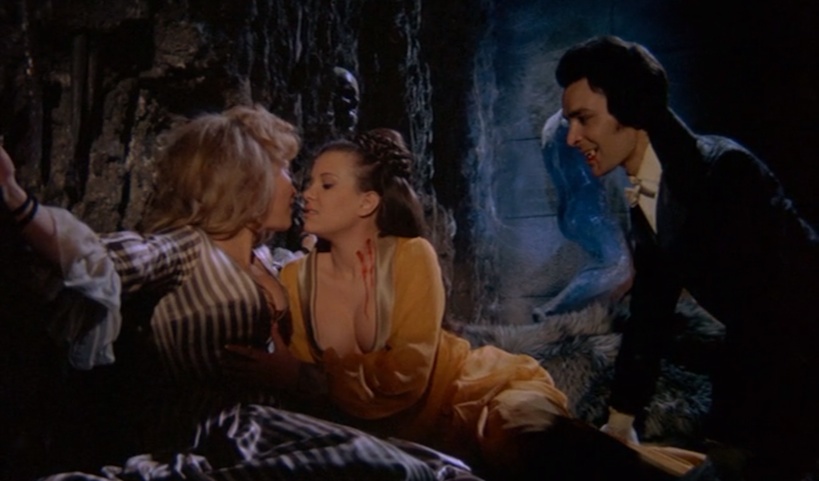
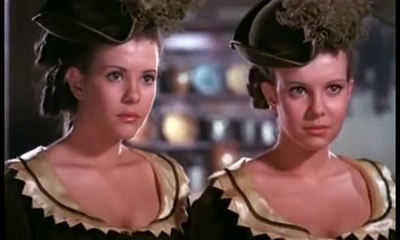
We open with the arrival of Maria and Frieda Gellhorn (played by real-life Playboy playmates Mary and Madeleine Collinson). They are two orphaned sisters moving in with their uncle in a village that makes the town from Body Snatchers look like Las Vegas.
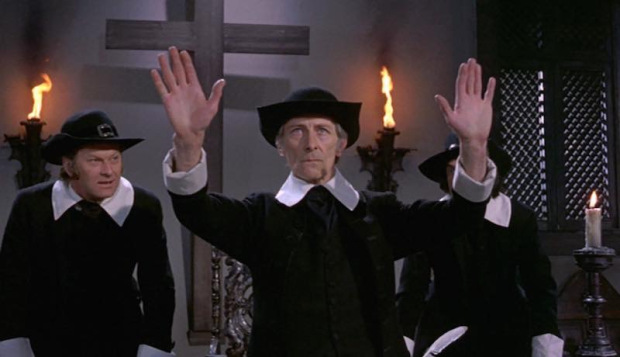
Their uncle is Gustav Weil, played by the legendary Peter Cushing. Now, usually, Cushing is our hero, the wise Van Helsing, the noble scientist. But here? Cushing plays a fanatic. He leads a group called The Brotherhood, a bunch of puritanical fun-sponges who spend their Friday nights burning witches at the stake.
Across the valley sits the castle of CountKarnstein (Damien Thomas). The Count is bored. He’s rich, he’s handsome, and he’s tired of the local village girls. So, Count Karnstein conducts a Satanic ritual that revives the Karnstein vampire lineage, embodied by Mircalla (played in spectral form by Katya Wyeth). It’s less a clean resurrection and more occult revival imagery.
The stage is set: You’ve got the oppressive, fire-and-brimstone religious nuts on one side, and the decadent, blood-drinking aristocrats on the other. And stuck in the middle are the twins. One is Good (Maria), and one is Bad (Frieda). And in a Hammer movie, Bad just means you’re tired of your uncle’s 4:00 AM prayer meetings and you think the vampire in the castle is kind of a hottie.
The Cushing Factor: The Edge of the Zealot
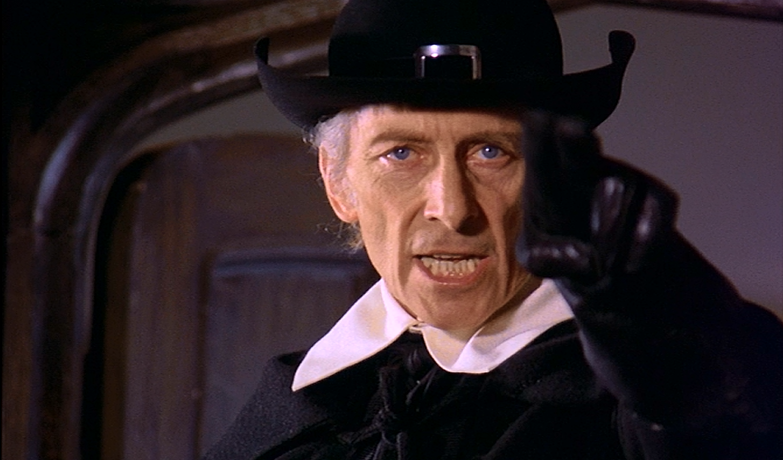
Let’s geek out over Peter Cushing for a second. In most reviews, people focus on the monsters. But in Twins of Evil, the real Creature is Gustav Weil.
Cushing brings an incredible, frantic energy to this role. He’s not a villain in the traditional sense; he truly believes he’s doing God’s work. When he’s leading the Brotherhood through the woods with torches, his eyes have that piercing, direct and engaging intensity that only Cushing could deliver.
The true heart of darkness of the film comes from the moral ambiguity. You’re rooting against the guy who burns girls alive, but you’re also rooting against the vampire who wants to turn everyone into a juice box. Cushing’s performance is so powerful that it elevates what could have been a trashy exploitation flick into a genuine Gothic tragedy. He represents the horror of Human Extremism, which is way scarier than a guy with plastic fangs.
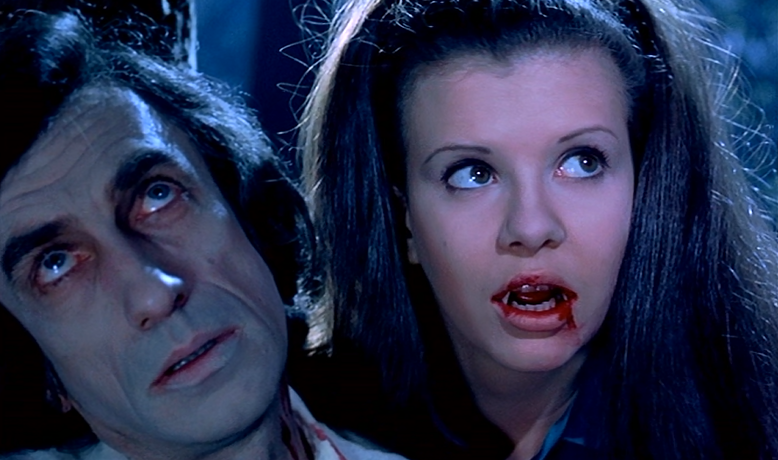
The Practical Effects (The Gore-Hound’s Delight)
By 1971, the Hammer Formula for blood was well-established. They used Kensington Gore, that bright, vivid, almost neon-pinkish-red syrup that looks nothing like real blood but looks amazing on technicolor film. And it works, too perfection.
• The Resurrection: The scene where Count Karnstein brings Mircalla back to life involves a lot of dripping blood and a ceremonial dagger. It’s ritualistic, moody, and perfectly executed.
• The Beheadings: Hammer wasn’t shy about the guillotine or the sword in this one. There’s a specific practical effect involving a head being lopped off that is so 70s it hurts. You can see the waxwork, you can see the neck stump, and you absolutely love it.
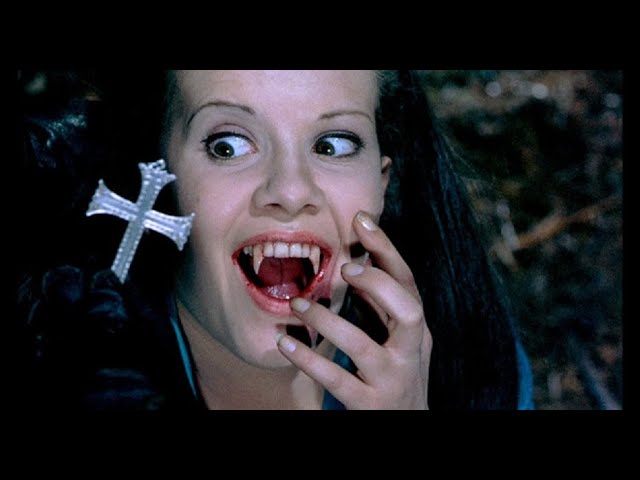
• The Vampire Bites: The makeup is classic Hammer. White powder, heavy eyeshadow, and those dental-appliance fangs that make it look like the actors are trying to eat a very difficult sandwich.
The real appeal here is the atmosphere. Hammer was the king of the recycled set. They used the same castle hallways and woodland paths for twenty years, but they knew how to light them. The use of fog machines in Twins of Evil is legendary. There is so much dry ice on the floor that you’re surprised the actors didn’t trip over the atmosphere itself.
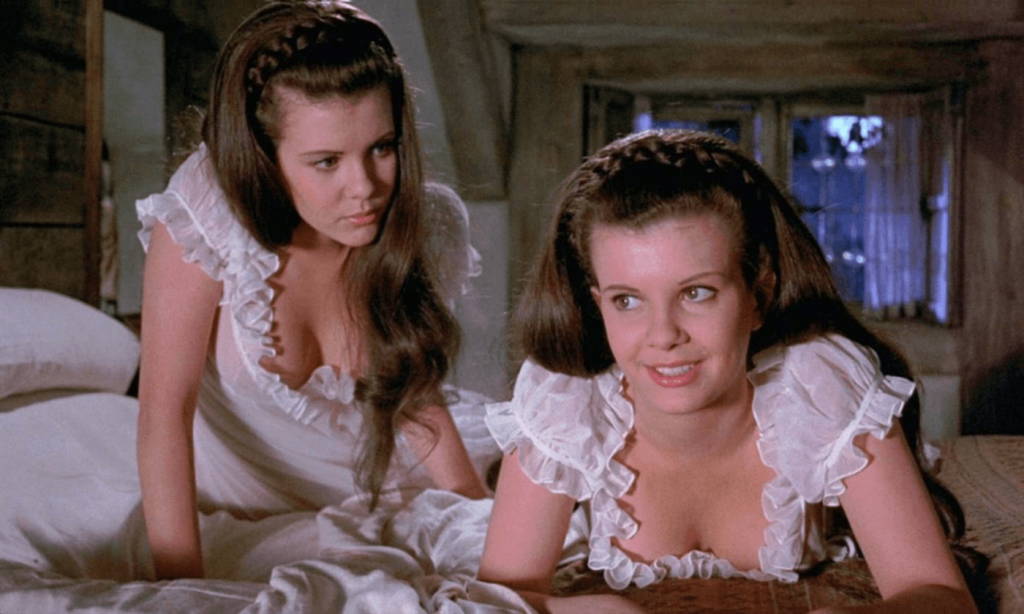
The Collinson Twins: Beyond the Gimmick
Let’s address the elephant in the room. Hiring the first twin Playboy playmates was a total marketing gimmick. But here’s the thing: it actually works for the movie.
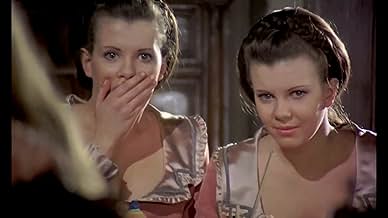
The Good Twin/Bad Twin dynamic is handled with a surprising amount of rhythm. Frieda (the Bad one) is the catalyst for the whole plot. She sneaks out to the castle because she’s bored of her uncle’s burn the witch lifestyle. Her transformation into a vampire is one of the highlights of the film.
Both twins were dubbed in post-production because their German accents were too thick for the production’s liking. It adds this weird, ethereal quality to them where they look identical and sound identical, making the switcheroo scenes genuinely effective.
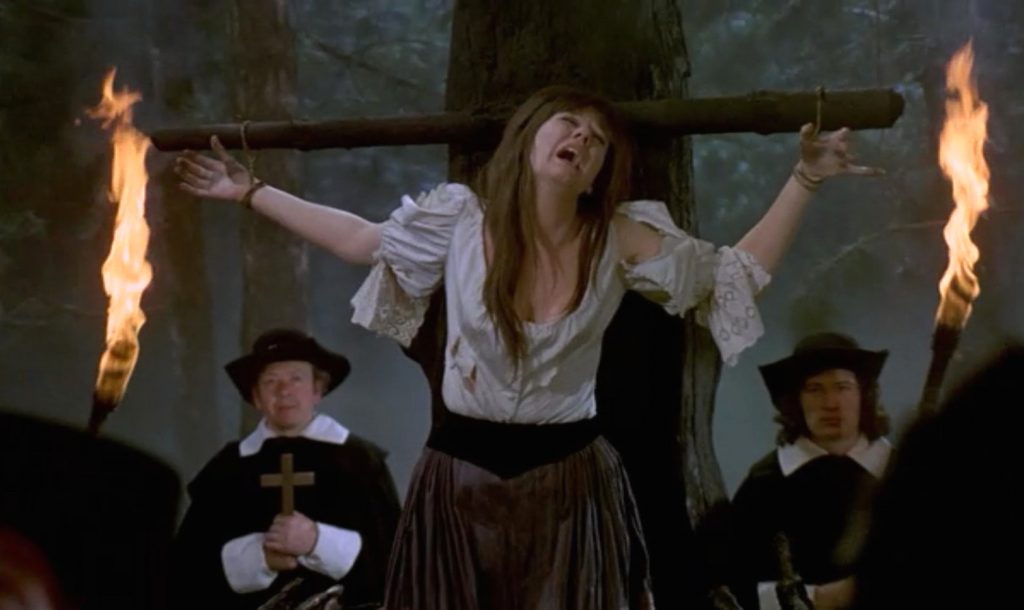
The 18th Century Karen’s
We have to poke fun at The Brotherhood. These guys are the ultimate Karen’s of the 18th century.
They spend the entire movie marching around the woods, looking for any woman who might be enjoying her life too much. If a girl wears a dress that’s too bright? WITCH! If she’s seen walking near the castle? WITCH! If she can read? WITCH!
The absurdity of their investigative techniques is a highlight of the film. At one point, they basically decide that if a girl is pretty and doesn’t like them, she’s clearly in league with Satan. It’s a hilarious, pitch-black satire of religious paranoia that keeps the movie from becoming too self-serious.
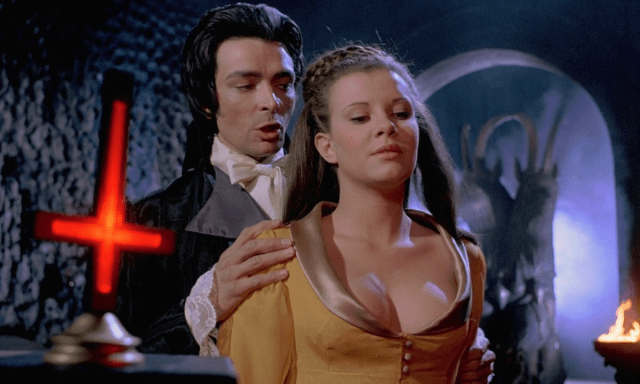
The Count and the Satanic Debauchery
Count Karnstein is the quintessential 70s vampire. He’s not the imposing, silent Dracula of Christopher Lee. He’s a New Romantic vampire. He wears silk robes, he has a feather-cut hairstyle, and he spends his time doing edgy things like sacrificing chickens and trying to look bored while people die around him.
The scene where he resurrects Mircalla is peak cliche horror. It’s got the incense, the chanting, and the slow-motion reveal. It’s the kind of Satanic Panic imagery that would eventually drive parents crazy in the 80s, but here it’s just pure, atmospheric fun.
The Count is the perfect foil for Cushing’s Weil. One is a man of repressed, violent purity, and the other is a man of indulgent, violent sin. They are both monsters; the Count just has a better tailor.
Hammer Pacing
The last thirty minutes of Twins of Evil is a masterclass in Hammer pacing.
Once Frieda is turned and the town realizes there are vampires in the castle, the rhythm goes into overdrive. We get:
1. The Mistaken Identity: Maria gets blamed for Frieda’s crimes (classic twin trope).
2. The Prison Break: The Hero (Anton, the bland but progressive young teacher/scholar) has to save the good twin from her own uncle’s pyre.
3. The Castle Siege: The Brotherhood finally decides to take their torches to the source of the problem.
The finale is a chaotic blur of fire, swords, and Peter Cushing looking like he’s about to pop a vein in his forehead. The death of the Count is particularly satisfying, it involves a massive decorative pike and a lot of the aforementioned Kensington Gore. It’s the exact ending that Twins of Evil needs. No talking the monster down. No finding its inner child. Just a big piece of metal through the chest and a dramatic fall from a balcony.
The Production Disasters
If you’re a real cult horror fan, you know that Twins of Evil was a bit of a nightmare to film.
• The Director: Director John Hough, who later directed The Legend of Hell House, was trying to modernize the Hammer style. He used a lot of handheld camera work and zooms that were very trendy in the 70s, which gives the movie a more frantic energy than the older, statelier Dracula films.
• The Script: It was written by Tudor Gates, the man responsible for the erotic-leaning Karnstein trilogy. He wanted to focus on the twin aspect as a psychological thriller, but the studio kept saying, “More fire! More Cushing! More teeth!”
• The Budget: By 1971, Hammer was facing financial strain and declining profitability, leading to increased reliance on recycled sets and tighter budgets. If you look closely at the Castle Karnstein exteriors, they are the same matte paintings used in at least three other movies. Hammer frequently reused castle matte paintings and standing sets across productions, including this one. The village is just three facades and a lot of cleverly placed fog. But that’s the charm It’s trash that thinks it’s fine art, and it almost pulls it off.
Why This Movie Still Matters
Twins of Evil is part of Hammer’s late-period evolution toward more explicit violence and sexuality, preceding the full-on slasher boom of the mid-to-late 1970s.
It takes the Creature Feature elements, the vampire, the transformation, and mixes them with social horror. It’s about the fear of the other, whether that other is a supernatural blood-sucker or a religious fanatic who lives next door.
For the horror geek, it’s a triple-threat:
1. The Giallo-esque Aesthetics: The bright red blood and the focus on the twins’ beauty.
2. The Gothic Atmosphere: The castles, the capes, and the torches.
3. The Cushing Masterclass: A performance so good it belongs in a much better movie, which is exactly why it makes this movie so great.
A Double Shot of Gothic Glory
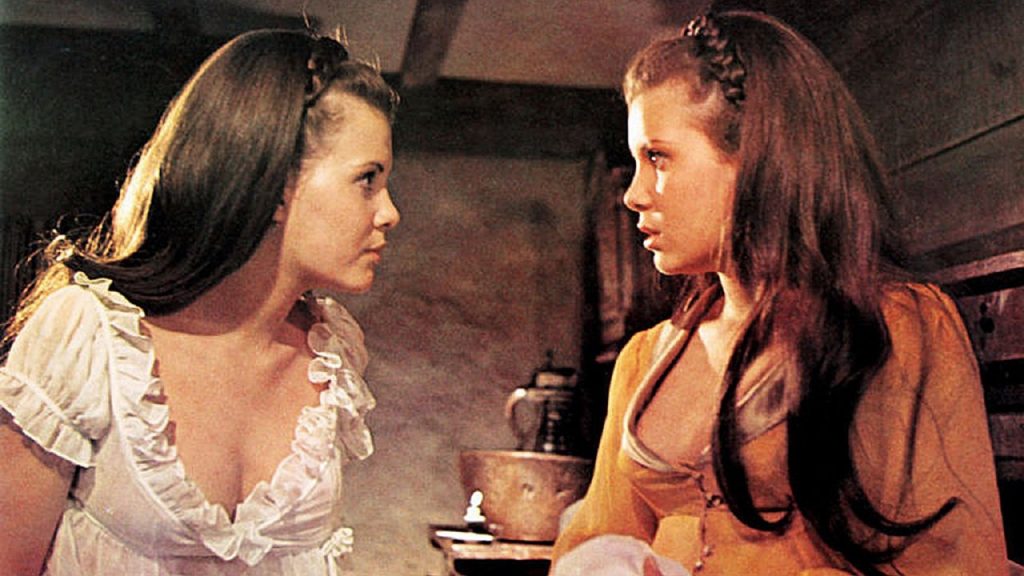
Twins of Evil is a Hammer Classic. For all it’s flesh, blood, and more flesh. It’s got the humor of the absurd Brotherhood, the edge of the brutal executions, and the final pieces of the Karnstein lore.
• The Humor: Is found in Count Karnstein’s “I’m too sexy for this coffin” attitude.
• The Edge: Is found in the grim reality that Maria almost gets burned alive by her own family.
• The Geekery: Is in every single drop of that beautiful, bright-red Kensington Gore.
It’s the perfect movie to watch at 1:00 AM when you want something that is both high-class Gothic and low-brow Exploitation. It’s the mullet of horror movies: Business in the front (Peter Cushing), party in the back (vampire twins).
Leave a Reply to Countess Dracula (1971): The Glamorous Horror of Eternal Youth Cancel reply