I appreciate movies that hold their cards close to their chests for the majority of their runtime, refusing to reveal what the central conflict is truly about. There’s something exciting and intriguing about being brought along for a mystery and attempting to guess at what is actually going on. When the surprise is unveiled, it’s even better if it’s something completely unexpected.

Where Did All the Children Go?
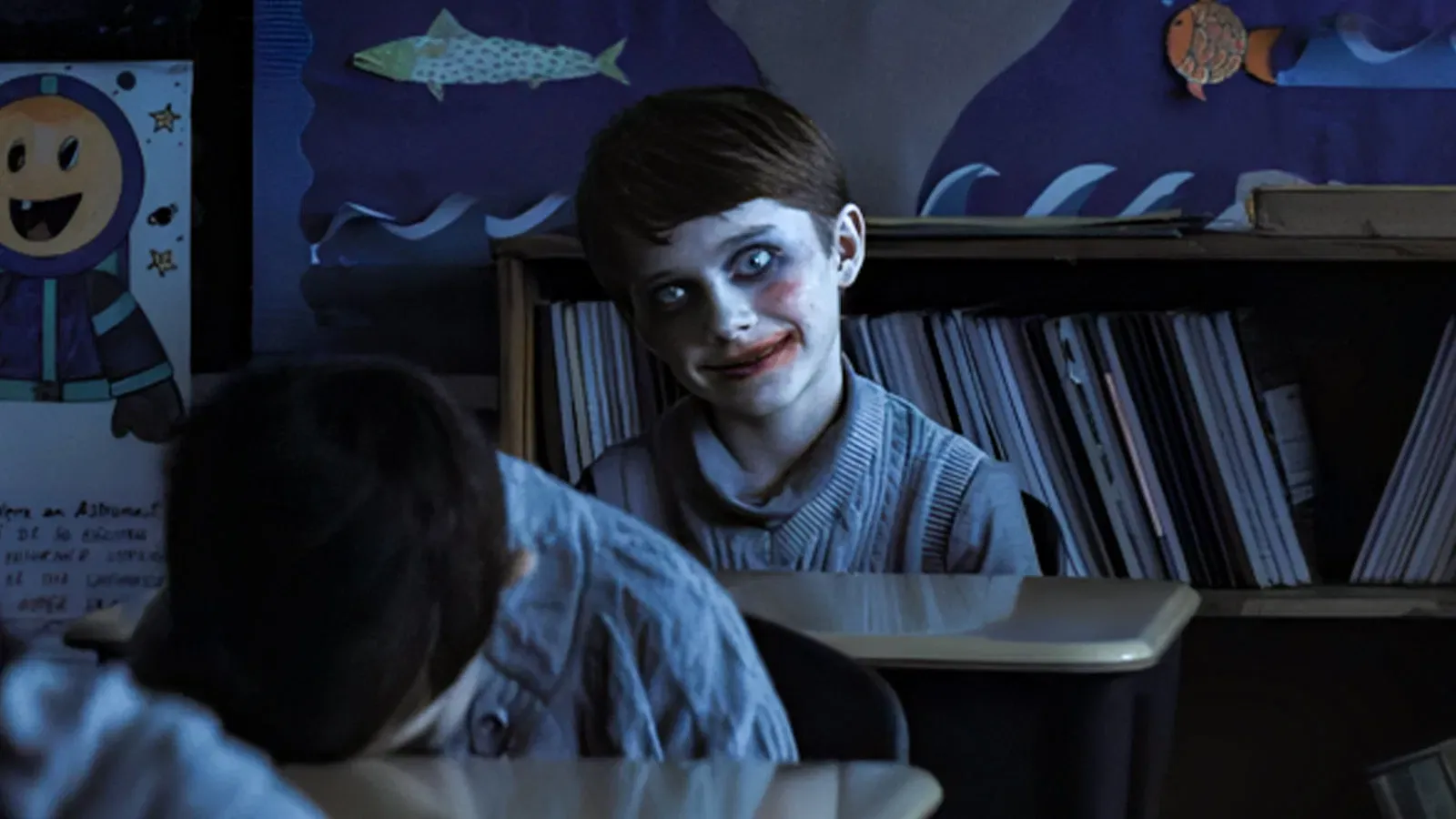
Zach Cregger’s follow-up to the fantastic and original Barbarian, Weapons, is precisely one of those kinds of films. It’s fantastic at setting up its basic premise: seventeen children have disappeared from a third-grade school classroom in Maybrook, Pennsylvania. Only one is left behind. The teacher, Justine Gandy (Julia Garner), claims she has no idea what has happened to them. Archer Graff (Josh Brolin), as well as the other children’s parents, don’t believe her.

The police question Justine thoroughly, as well as Alex Lilly (Cary Christopher), the sole remaining child. Justine continues to insist she knows nothing, and Alex has little to say. The investigation reaches a standstill, and the school, which had previously shut down, reopens after a month. Justine, Alex, Archer, and the rest of the community are emotionally distraught. Justine especially. She falls back into her alcohol addiction after Archer grills her at a school meeting. Archer, meanwhile, starts his own investigation into the disappearance.
That’s the setup. As much as I would like to tell you about all the characters and actors that appear throughout the rest of the film, my better judgment prevents me from doing so. A mystery like this is best experienced cold, without any foreknowledge of where the story is going or how it’s going to get there. I can, however, talk about the methods the film uses to tell its unique story. I’d like, also, to take a stab at what the ultimate meaning behind the film is.
A Non-Linear Narrative
Weapons takes a non-linear narrative approach to its storytelling, delivering its tale through separate sections at a time, each section based around another character. Yes, this is an ensemble piece, although Garner’s Justine probably comes closest to being the main character. Through this method, the film is able to progress along the story’s timeline, skipping events at some points, and then doubling back to elaborate on them through later sections. The added benefit of viewing events from different perspectives also sheds light on the various happenings.

The tension that this builds is tremendous, and the central mystery at the film’s core guides the movie’s events towards an inevitable conclusion. It’s as if you’re watching a coin drop down one of those funnels at a mall, as it spins faster and faster, till it eventually reaches the center and drops from view. I was never once bored throughout the entire film; I was always guessing, How does this connect to this? Where is Weapons leading us? Why is it called Weapons in the first place?
Complex Victims
Propelled by this fascinating story are equally fascinating characters.
Justine is a damaged alcoholic who has boundary issues when it comes to her relationships, not just with fellow adults, but also with her students. Garner plays her sympathetically, but you can also tell she has some maturing to do. As she deals with the fallout of her student’s disappearance, it’s interesting to both like and pity her character. Eventually, she begins her own investigation, and what she uncovers propels her to act.
Josh Brolin plays Archer multi-dimensionally as well. He instantly gains our sympathy from losing a child, but it’s difficult to see him come down hard and vilify Justine. He loves his son, Matthew, but he’s never expressed it, and that adds to the grief he is feeling. It also propels him in his search for his son.
Alex doesn’t get much screen time until the end of the film, but when he’s finally given time to shine, he does so brilliantly. Cary sells his character’s predicament with appropriate fear, resilience, and strength. Revealing his character’s circumstances would spoil the mystery.
Thematic Core (WEAPONS)
After the film reached its pulse-pounding finale, I was initially left with a bit of a question as to what it all meant. And it seems, audiences around the world have also been arguing about the meaning (or lack thereof) as well. (Spoilers in the above link, btw). It appears as if the film isn’t asking any questions, but making several statements. One, perhaps, on the way witch hunts can cause innocent people undue harm. Another, on the resilience of children and on how they can, and will, (and should) turn the tables on their tormentors.
There have been other reads as well, some arguing that the film is an allegory for school shootings. Another, from the director himself, making a statement on how alcohol addiction can warp a child’s surroundings and relationship to their parents.

Whatever the ultimate message is, there is something here, but it’s not one that’s readily apparent, and it may take some digging to get to. That’s not a criticism in any sense of the word, but rather just worth taking note of.
There were still some questions left by the core narrative as well, but these aren’t flaws in the film. The motives behind the mystery aren’t made explicitly clear, but personally, I like a little intrigue left over in my horror/mystery films.
Success After Success
Coming right on the heels of Barbarian, Weapons is another resounding success of a horror film for Zach Cregger. Even better, in my case, is the fact that I viewed this film right after the nearly equally great Together. Do yourself a favor and see both of these horror films before they leave theatres. This is original, well-done content, and we should all be supporting it.
Leave a Reply